


The story so far: Battling its worst economic crisis in years, Nigeria is also facing serious security challenges amid a resurgence of kidnappings in its troubled northern region. Over 600 people, including at least 300 schoolchildren, have been kidnapped in the northeastern and northwestern parts of Africa’s most populous nation since the end of February.
The recent surge in abductions after a brief period of relative calm has refocused international attention on the country’s rapidly deteriorating security situation, bringing back to mind the 2014 abductions when Boko Haram insurgents kidnapped 276 girls from a school in Chibok town of Borno State in northeastern Nigeria.
Since the abduction of the Chibok girls, mass kidnappings have been a recurring nightmare, with nearly 1,500 students abducted from schools in 17 different incidents over the past decade. Over 4,000 people have been reportedly kidnapped since May last year after President Bola Tinubu took office. Despite extremist groups and local armed gangs continuing to rely on kidnappings for political and financial gains, the President remains committed to a no-ransom policy.
Also Read | Nigeria’s new President faces old problems
The recent resurgence: what happened?
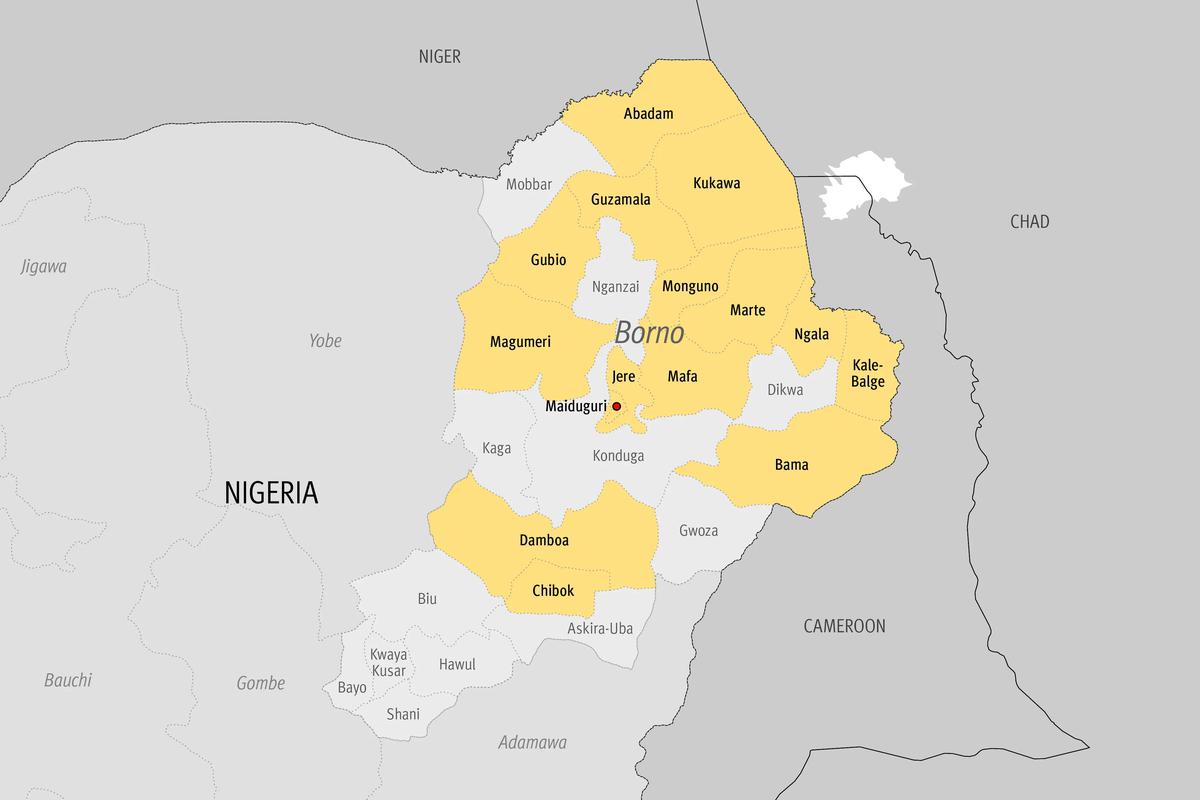
Reports of a mass abduction first emerged from a remote area in northeastern Borno earlier this year. On February 29, suspected Boko Haram militants abducted at least 200 internally displaced people, mostly women and children, while they were gathering firewood outside their camps, in the Ngala Local Government Area. The United Nations said victims were ambushed near the border with Chad and taken hostage.
In Borno, an estimated 1.9 million out of a total of 3.6 million displaced individuals (as of 2022) live in displacement camps, as per the Internal Displacement Monitoring Centre (IDMC). They often leave their camps to search for food and firewood due to limited aid.
A map of the local government areas in northeastern Borno State of Nigeria.
Similar incidents were reported from the northwestern region in quick succession. On March 7, 287 students were kidnapped from a government school in the Chikun area of Kuriga town in Kaduna State. According to reports, hundreds of gunmen arrived on motorcycles and surrounded the school just as classes were about to start. The attackers abducted children and a few staff members, demanding one billion naira (about US $600,000) for their release.
Around 48 hours later, assailants attacked a boarding school in Sokoto State at around 1 a.m., abducting 15 children from the hostel as they slept. The gunmen fled before security forces could arrive.
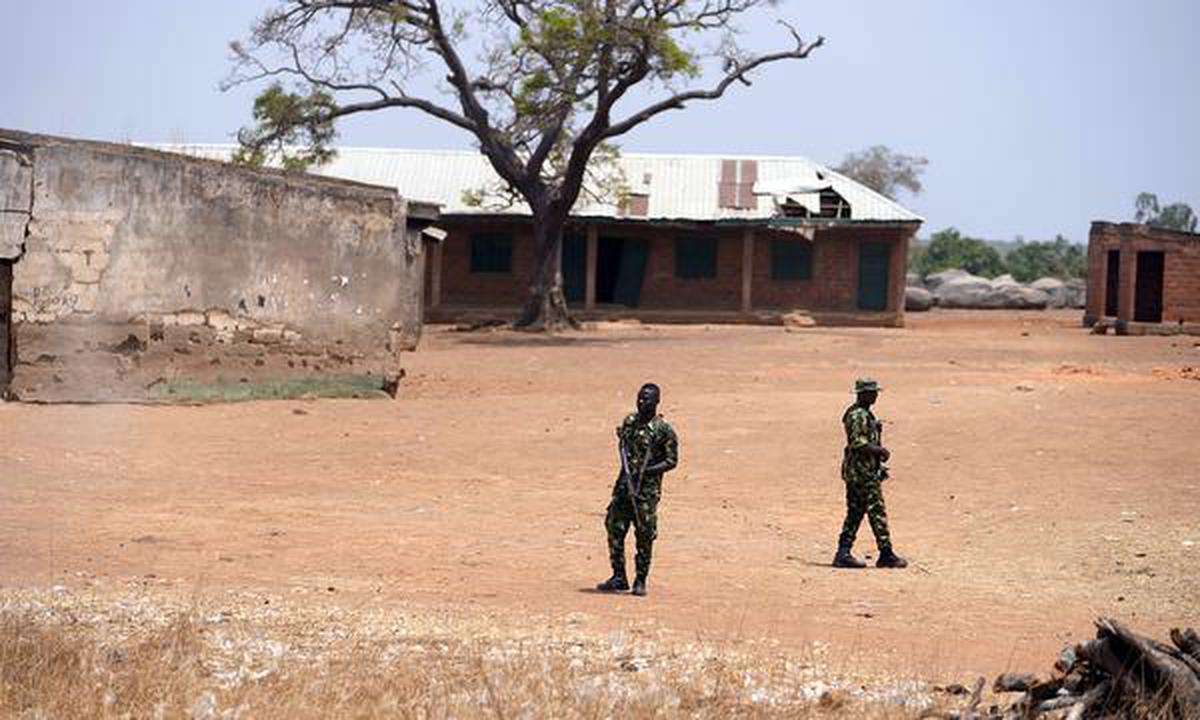
Nigerian soldiers patrol the Kuriga school where students were kidnapped, in Kaduna in March 2024.
| Photo Credit:
AP
Tragedy struck the northern region again on March 11. Sixty-one people were kidnapped from a remote village in Kaduna. Locals told Reuters that armed men attacked the Buda community around midnight, firing sporadically. Nearly 100 others were abducted by gunmen in two attacks in Kaduna between March 16 and March 17.
The spate of kidnappings drew condemnation from human rights activists, with the United Nations High Commissioner for Human Rights Volker Türk saying that he was “appalled” by the recurrent mass abductions. “Children have been abducted from schools and women taken while searching for firewood. Such horrors must not become normalised,” Türk said. He called for perpetrators to be identified and brought to account “as a first step towards reining in the impunity that feeds these attacks and abductions.”
Nigeria last experienced a surge in targeted attacks on educational institutions in 2021. Approximately 150 students were kidnapped by armed men in four months. Although most were eventually released, at least five were killed.
The 2014 kidnapping of girls from their dormitory in Chibok continues to be one of the worst crimes committed in recent years.The incident sent shockwaves and sparked the viral #BringBackOurGirls campaign on social media. Of the 276 abducted, several were forced to marry and endure physical and psychological abuse. A decade later, 98 are still missing.
The tactic has since been adopted by criminal gangs seeking ransom.

Michelle Obama with the campaign slogan, calling for the safe return of the Nigerian schoolgirls.
Who’s behind mass abductions?
At the time of the first attack in February, Boko Haram emerged as the primary suspect, given its track record of violence in Nigeria. The group has been engaged in a prolonged insurgency, causing widespread devastation and displacement. As noted earlier, kidnapping has been a key component of their terror tactics.
However, with no organisation claiming responsibility for the recent abductions and assaults, there are suspicions that local armed gangs in these regions, commonly referred to as bandits, might be behind the incidents.
Relatively new actors in the turbulent security landscape, bandits are believed to be an outcome of years of conflict over land and water between nomadic herdsmen and farming communities. . While disputes earlier centred around such basic needs, bandits have evolved into organised armed groups in recent times. Mainly present in the northwestern and central regions of the country, they have taken to looting, kidnapping for ransom, and forcibly seizing control of valuable assets like gold mines and farmlands.
The Armed Conflict Location & Event Data Project, which analyses political violence and protests worldwide, said in a recent report that while the February kidnapping might be the doing of violent extremist organisations active in the northeast, bandits could be responsible for the three other abduction incidents in March.
What’s fuelling the kidnapping ‘epidemic’?
The rise of kidnapping as a ‘lucrative’ industry in Nigeria has stemmed from a combination of economic, security, and political issues, including a struggling economy, high unemployment rates, surging inflation, increasing food insecurity, and instability in the delta region. Ransom payments have become the primary motivation behind kidnapping incidents, as successive governments have struggled to tackle these complex security challenges.
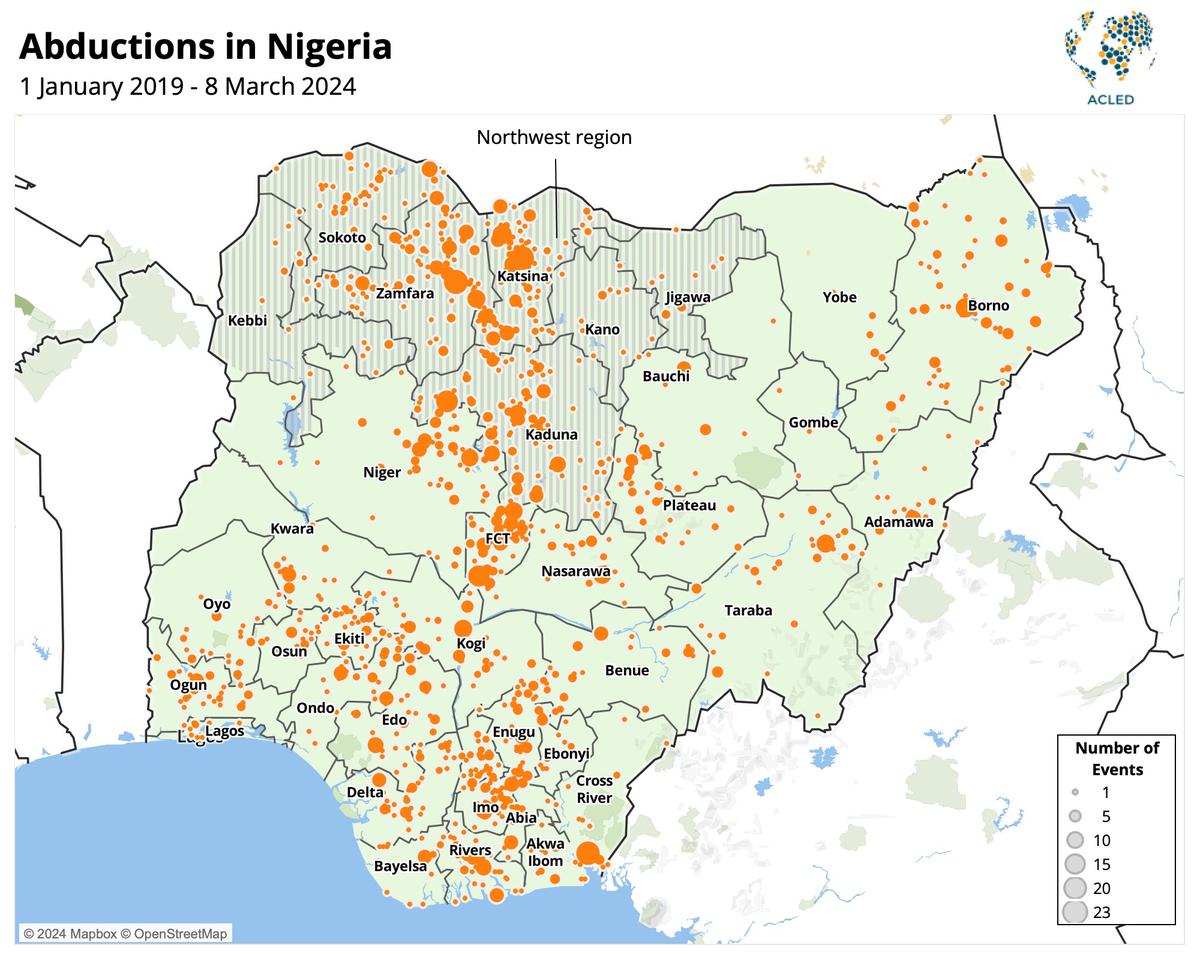
Africa-focused consulting company SBM Intelligence says Nigeria faces security crises across all six geopolitical zones, including threats from Boko Haram, bandit groups, criminal youth gangs, sea piracy, and agitation by armed separatists. “The country’s security threats vary and overlap. The Boko Haram insurgency is expanding westwards, and the Indigenous Peoples of Biafra’s agitation is becoming more dangerous,” it adds.
Nigeria’s economic challenges have worsened due to monetary policies which caused the currency to plummet against the dollar, leading to widespread protests and increased desperation. This, in turn, drives youth to join armed gangs. The ransom menace has escalated in recent years, with armed gangs controlling significant territories and amassing a formidable arsenal of weapons, even capable of downing military planes. These gangs have seized control of mining sites and farmlands, forcing rural residents into labour and threatening the country’s food security by controlling vital agricultural areas.
As per former federal lawmaker Shehu Sani, bandits target schoolchildren because they know “it will evoke public sympathy for the pupils, and pressure will be mounted on the government to bow to their demands.”
How is the Nigerian government handling the situation?
While government security forces are working to obtain the safe release of the victims, President Bola Tinubu has rejected the idea of paying ransom for nearly 600 people abducted in separate incidents this month. Nigeria’s information minister Mohammed Idris said the President has directed troops to urgently secure the release of hostages without paying a dime for ransom. “The President has directed that security agencies must as a matter of urgency ensure that these children and all those who have been kidnapped are brought back to safety and also in the process ensure that not a dime is paid for ransom,” the Minister said.
Notably, in Nigeria, anyone found paying a ransom to free a hostage could face at least 15 years in jail. This law was enacted in 2022 due to the increasing prevalence of kidnappings for ransom in the region.
Security operations, however, are expected to last months as government forces navigate the remote forest areas where the victims are being held. Activists say the government must initiate dialogue with the bandits to resolve the ongoing conflict, expressing concerns over the potential consequences of using force.
“The Nigerian authorities should seek the safe release of those kidnapped, put in place adequate measures to prevent more kidnappings, particularly of vulnerable students, and hold perpetrators to account,” the Human Rights Watch has said.