




Skip to content
  • Facebook
  • X
  • Linkedin
  • WhatsApp
  • Associate Journalism
  • About Us
  • Privacy Policy
  • 033-46046046
  • editor@artifex.news
Artifex.News

Artifex.News

Stay Connected. Stay Informed.

  • Breaking News
  • World
  • Nation
  • Sports
  • Business
  • Science
  • Entertainment
  • Lifestyle
  • Toggle search form
  • India Agrees To Cut Tariffs On US Frozen Turkey, Duck: Trade Body World
  • Virat Kohli’s Comment On Sunil Chhetri’s Retirement Video Cannot Be Missed Sports
  • England Stars To Not Play In IPL Playoffs? ECB Provides Explosive Update Sports
  • Afghan women stage rare, private protests on International Women’s Day World
  • Singapore green fuel levy on travellers ignites funding debate Business
  • India’s Diplomacy Touched New Heights In Last 30 Days: PM Modi Nation
  • Indian drugmakers seek govt tax reliefs, incentives to spur innovation Business
  • “India Are Missing Virat Kohli”: Ex-India Star’s Rant Amid Ranchi Test Is Viral Sports

IISc scientists develop synthetic antibody to neutralise deadly snake bite toxin

Posted on February 22, 2024 By admin


A file photo of a Blue Krait.
| Photo Credit: Photo for representation only

Scientists at the Indian Institute of Science (IISc.) in Bengaluru have developed a synthetic human antibody that can neutralise a potent neurotoxin produced by the Elapidae family of highly toxic snakes, which includes the cobra, king cobra, krait and black mamba.

According to IISc., the team adopted an approach used earlier to screen antibodies against HIV and COVID-19 in order to synthesise the new venom-neutralising antibody. “This is the first time that this particular strategy is being applied to develop antibodies for snakebite treatment,” said Senji Laxme R.R., PhD student at Scripps Research Institute and the Evolutionary Venomics Lab (EVL), and co-first author of the study published in Science Translational Medicine.

Closer to universal solution

Researchers say that this development takes us one step closer to a universal antibody solution that can offer broad protection against a variety of snake venom.

Snakebites cause thousands of deaths every year, especially in India and sub-Saharan Africa. The current strategy for developing anti-venom involves injecting snake venom into equines like horses, ponies and mules, and collecting antibodies from their blood.

But there are several problems.

“These animals get exposed to various bacteria and viruses during their lifetime. As a result, anti-venom also includes antibodies against microorganisms, which are therapeutically redundant. Research has shown that less than 10% of a vial of antivenom actually contains antibodies that are targeted towards snake venom toxins,” said Kartik Sunagar, Associate Professor at the Centre for Ecological Sciences and joint corresponding author of the study.

The antibody developed by the team targets a conserved region found in the core of a major toxin called the three-finger toxin (3FTx) in the elapid venom. Although different species of elapids produce different 3FTxs, a handful of regions in the protein are similar. The team zeroed in on one such conserved region – a disulphide core. They designed a large library of artificial antibodies from humans, which were displayed on yeast cell surfaces. They then tested the antibodies’ ability to bind to 3FTxs from various elapid snakes around the world.

After repeated screening, they narrowed down their choice to one antibody that could bind strongly to various 3FTxs. Among the 149 variants of 3FTxs in public repositories, this antibody could bind with 99.

Tests on animal models

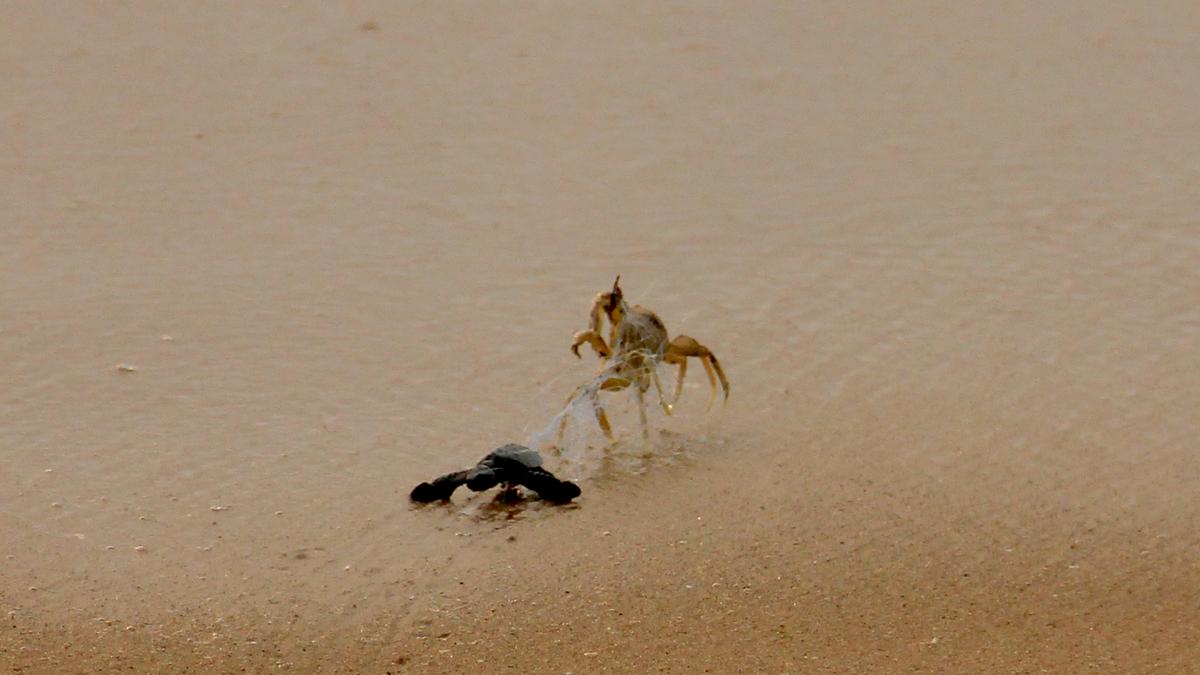
The researchers then tested their antibody on animal models. In one set of experiments, they pre-mixed the synthetic antibody with a toxic 3FTx produced by the Taiwanese banded krait, and injected it into mice. Mice given just the toxin died within four hours. But those given the toxin-antibody mix survived past the 24-hour observation window, and looked completely healthy.

The team also tested their antibody against the whole venom of the monocled cobra from eastern India and the black mamba from sub-Saharan Africa, and found similar results. The efficacy of the antibody was found to be nearly 15 times that of the conventional product.

Crucially, when they first injected the venom and then gave the antibody after a time delay – 0 minutes, 10 minutes and 20 minutes – the antibody was still able to save the mice.

The conventional product, however, only worked well when injected alongside the venom. A delay of even 10 minutes significantly reduced the potency of the conventional antivenom.



Source link

Science Tags:antibody snake bite, IISc scientist synthetic antibody neutralise deadly snake bite toxin, neutralise deadly snake bite toxin, snake bite, snake bite toxin, synthetic antibody to neutralise deadly snake bite toxin, synthetic human antibody, universal anti-venom

Post navigation

Previous Post: Daily Quiz | On Communist States
Next Post: Australian Teenager Suspended From School For Spraying Milk On Tourists In Viral Stunt

Related Posts

  • One giant step: Moon race heats up Science
  • What is nucleosynthesis? – The Hindu Science
  • Rare blue supermoon brightens the night sky this week in the closest full moon of the year Science
  • Why is the R21/Matrix malaria vaccine being called ‘revolutionary’? | Explained Science
  • Honourable mention for bioeconomy in Interim Budget, with trillion-dollar potential in mind Science
  • The Science Quiz | Asymmetry in biology Science

More Related Articles

Cracking the mystery of how the chemical origins of life formed Science
Post-surgical infections more likely due to skin bacteria than hospital bugs, study finds Science
With bad news from Cassini, is dark matter’s main rival theory dead? Science
What is the technology behind manufacturing a semiconductor chip? | Explained Science
Year after Titan’s fatal dive, explorers vow to pursue ocean mysteries Science
Rising temperatures are leading to torrential rains in the Himalayas Science
SiteLock

Archives

  • July 2024
  • June 2024
  • May 2024
  • April 2024
  • March 2024
  • February 2024
  • January 2024
  • December 2023
  • November 2023
  • October 2023
  • September 2023
  • August 2023
  • July 2023
  • June 2023
  • May 2023
  • April 2023
  • March 2023
  • February 2023
  • January 2023
  • December 2022
  • November 2022
  • October 2022
  • September 2022
  • August 2022
  • July 2022
  • June 2022
  • May 2022

Categories

  • Business
  • Nation
  • Science
  • Sports
  • World

Recent Posts

  • West Bengal Forms Seven-Member Panel To Review New Criminal Laws
  • Railway Cops Rescued Over 84,000 Children Under Risk In Stations, Trains In Last 7 Years
  • Donald Trump Close Aide Shalabh Kumar To NDTV
  • Top Democrat Adam Schiff calls on U.S. President Joe Biden to exit presidential race
  • Jyothi Yarraji Wants To Learn From Her Mother’s Struggles And Shine At Olympics 2024

Recent Comments

  1. ywdVpqHiNZCtUDcl on UP Teacher Who Asked Students To Slap Muslim Classmate
  2. bRstIalYyjkCUJqm on UP Teacher Who Asked Students To Slap Muslim Classmate
  3. GkJwRWEAbS on UP Teacher Who Asked Students To Slap Muslim Classmate
  4. xreDavBVnbGqQA on UP Teacher Who Asked Students To Slap Muslim Classmate
  5. aANVRzfUdmyb on UP Teacher Who Asked Students To Slap Muslim Classmate
  • Iran Slams Argentina’s Bid To Arrest Minister Over 1994 Bombing Attack World
  • Qatar signs 27-year gas deal with Britain’s Shell World
  • 115 Runs Conceded In 10 Overs – Glenn Maxwell’s Fiery Ton Sees Netherlands Star Bas De Leede Set Unwanted World Record Sports
  • Kota Cops Tie Up With Facebook-Parent Meta To Prevent Student Suicides Nation
  • Indian Navy ships free hijacked Iranian fishing vessel off Somalia, rescue Pakistani nationals World
  • Sea Lion Swims Out Of Enclosure As Heavy Rain Floods Pool At New York Zoo World
  • Watch | 15 years on, justice and economic progress elude Sri Lanka’s Tamils World
  • Rohit Sharma’s Mother Showers Kisses On Son, India Captain’s Reaction Is Gold Sports

Editor-in-Chief:
Mohammad Ariff,
MSW, MAJMC, BSW, DTL, CTS, CNM, CCR, CAL, RSL, ASOC.
editor@artifex.news

Associate Editors:
1. Zenellis R. Tuba,
zenelis@artifex.news
2. Haris Daniyel
daniyel@artifex.news

Photograher:
Rohan Das
rohan@artifex.news

Artifex.News offers Online Paid Internships to college students from India and Abroad. Interns will get a PRESS CARD and other online offers.
Send your CV (Subjectline: Paid Internship) to internship@artifex.news

Links:
Associate Journalism
About Us
Privacy Policy

News Links:
Breaking News
World
Nation
Sports
Business
Entertainment
Lifestyle

Registered Office:
72/A, Elliot Road, Kolkata - 700016
Tel: 033-22277777, 033-22172217
Email: office@artifex.news

Editorial Office / News Desk:
No. 13, Mezzanine Floor, Esplanade Metro Rail Station,
12 J. L. Nehru Road, Kolkata - 700069.
(Entry from Gate No. 5)
Tel: 033-46011099, 033-46046046
Email: editor@artifex.news

Copyright © 2023 Artifex.News Newsportal designed by Artifex Infotech.