







Total deep science tech investments have doubled in the last three years, and crossed $1 billion in the 2021-2023 period, according to a newly released report by VC firm Ankur Capital which focuses on deep tech/science investments.
Titled ‘The India Deep Science Tech Report,’ the report notes that investments have consistently doubled every three years since 2010, with projections to surpass $10 billion by 2029.
Suraj Nair, investment associate-deep tech at Ankur Capital and co-author of the report.
| Photo Credit:
Special arrangement
“The growth is driven by two factors. On the one hand, more seed-stage investments are happening in deep science tech. Secondly, growth-stage investments have also kicked in. For example, most first-generation biotech companies, founded between 2013 to 2015, are now going to raise series A or b or further,” says Suraj Nair, investment associate-deep tech at Ankur Capital and co-author of the report.
According to the report, while the number of investments has been growing linearly, the number of investment rounds over $5 million has been growing exponentially.
“This number too, has followed the rule of three: it has doubled in every 3-year period,” reads the report, which pegs the current global deep tech market size at $300 billion+.
AI and biotech leading
AI and biotechnology have been leading the funding and innovation in deep science tech in India as per the report.
Around 80% of the total deep-tech investments in the country since 2010 have been in AI and biotech firms.
As per the report, the Indian AI companies witnessed some significant follow-on funding in recent years with five investments over $10 million in 2022 and two in 2023.
However, it also notes that the number and quantum of fresh investments in AI deep science has slowed in the past few years, and the follow-on funding numbers have been skewed by some large rounds.
“Over half of the $700M+ in follow-on funding captured is driven by Grey Orange as they have grown and absorbed $370M in the last 5 years to build out the physical infrastructure that leverages their AI algorithms,” it reads.
Optimistic future
Dr. Ezhil Subbian, co-founder at Bengaluru-based String Bio, a synthetic biology start-up which converts greenhouse gases into biological products using a proprietary microbial platform, believes that the capital that has come in over the last decade paints a rosy picture of the future for biotech start-ups in India.

Dr. Ezhil Subbian, co-founder at Bengaluru-based String Bio
| Photo Credit:
Special arrangement
“Around 10-12 years back, we barely had two or three biotech-focused VCs in India. Whereas now the numbers have gone up. Some of the mainstream VCs have already invested in biotech and foreign capital firms are looking to invest in India,” she adds.
As per the report around $900 million has been invested into biotechnology start-ups between 2013-2023. The timeline between subsequent rounds of investments has reduced since 2020 to less than two years.
Therapeutics and diagnostics saw 91% of the follow-on growth investments. The need to develop technologies against Covid, other similar zoonotic diseases and anti-microbial resistance became the key drivers, according to the report.
Subbian notes that biotech has reached a point where the tools and technologies have converged and a lot more bio-based consumer-facing products are coming to market.
If large-scale biomanufacturing was done largely for pharma needs earlier, over the last decade there has been increased focus on biomanufacturing for food and agricultural products and new biomolecules for biomaterials, she points out.
“AI has been there for around 60 years, but finally the technology is consumer-ready now. Similar is the case with biotech too,” she says, further adding that India and its biotech capital Karnataka, having demonstrated cost-effective bio-manufacturing capabilities already, stand to gain in the future days.
Material science gaining momentum
While AI and biotech have been leading the show, advanced material science has also been gaining momentum in recent years, says the report. While the number of fresh investments in the space went down in 2022 and 2023, the report notes that follow-on investments in the domain have risen steadily.
Within the domain, energy storage solutions have attracted maximum funding, comprising 55.3% of the total funding gone into the sector. This is followed by space tech (28%) and climate materials (16.7%).
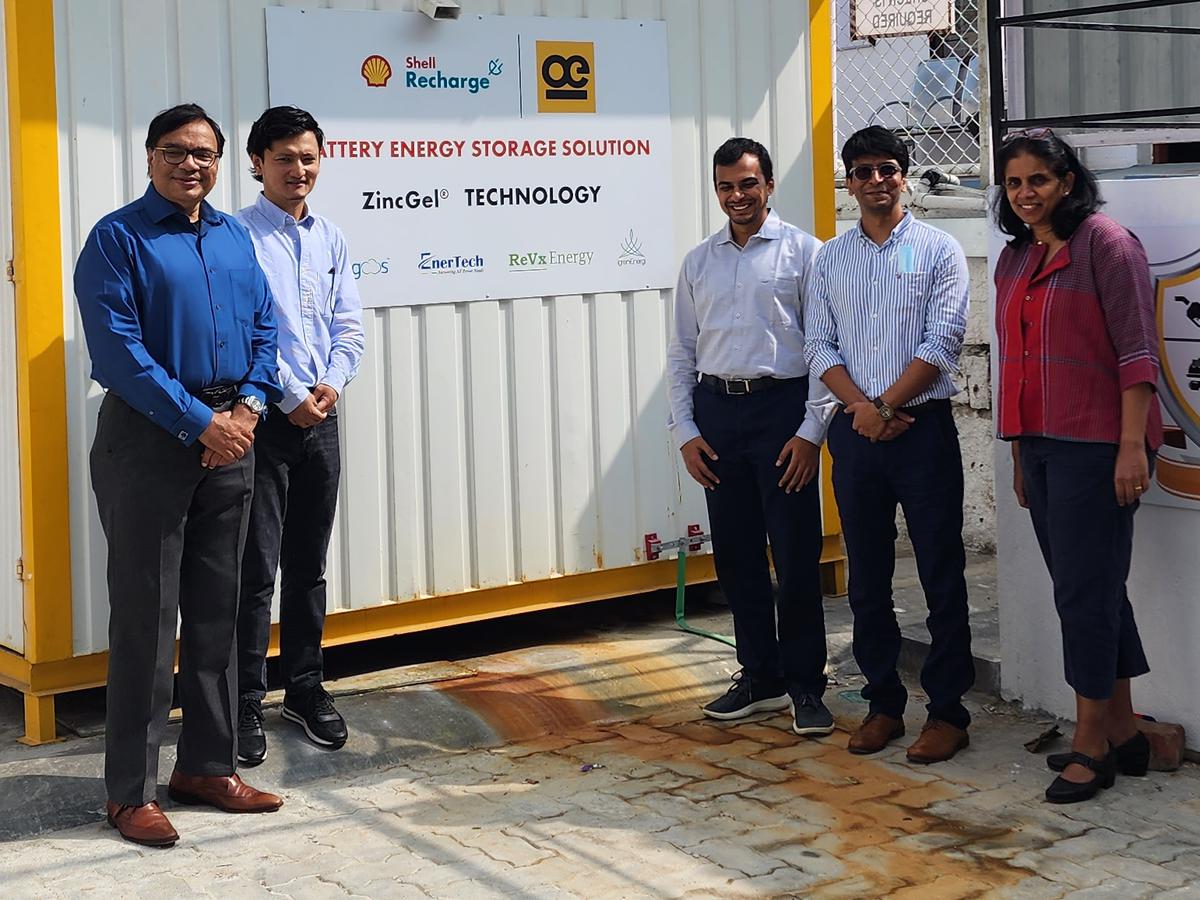
Co-founders of Offgrid Energy Labs with Ankur Capital team
| Photo Credit:
Special arrangement
Tejas Kusurkar, co-founder and CEO at battery-tech startup Offgrid Energy Labs, believes that in the materials domain, companies with a focus on sustainability will do well in the future. Founded in 2018, Offgrid has developed novel formulations to overcome performance issues and scalability of existing zinc-based battery technology.
“There is certainly an increased intent around sustainability from the private sector. Aspects like recyclability, reducing the cost of existing manufacturing, safety and local availability of components used, lesser carbon footprint, reduced energy in manufacturing and so on are getting more attention. I would say that overall, in materials, everything is going towards sustainability,” says Kusurkar.
Moonshots needed
While the report highlights concerted policy push on key sectors, availability of grants for early stage startups and availability of talent as enabling factors of the deep tech ecosystem in India, it also identifies lacunae in the ecosystem which is still its early stages.
These include limited participation from domestic corporates and strategic investors, lack of diversified growth capital across sectors, the limited ability of early-stage start-ups to attract and retain talent, and regulatory challenges.
Nair of Ankur Capital points out that although growth capital has started coming in for Indian deep science tech companies, there is still a long way to go.
“The struggle has always been to get the five-to-ten-million-dollar cheque which is typically a Series A or Pre-series B. That’s a critical phase because revenues would still have not kicked in. Start-ups in this stage need big cheques to set up large facilities and get those revenue cycles kicked in. The ecosystem needs to see more of it,” he says.
Dr. Abdur Rub, CEO of the Wadhwani Research Center for Bioengineering, feels that the ecosystem players in the country must take more moonshots.
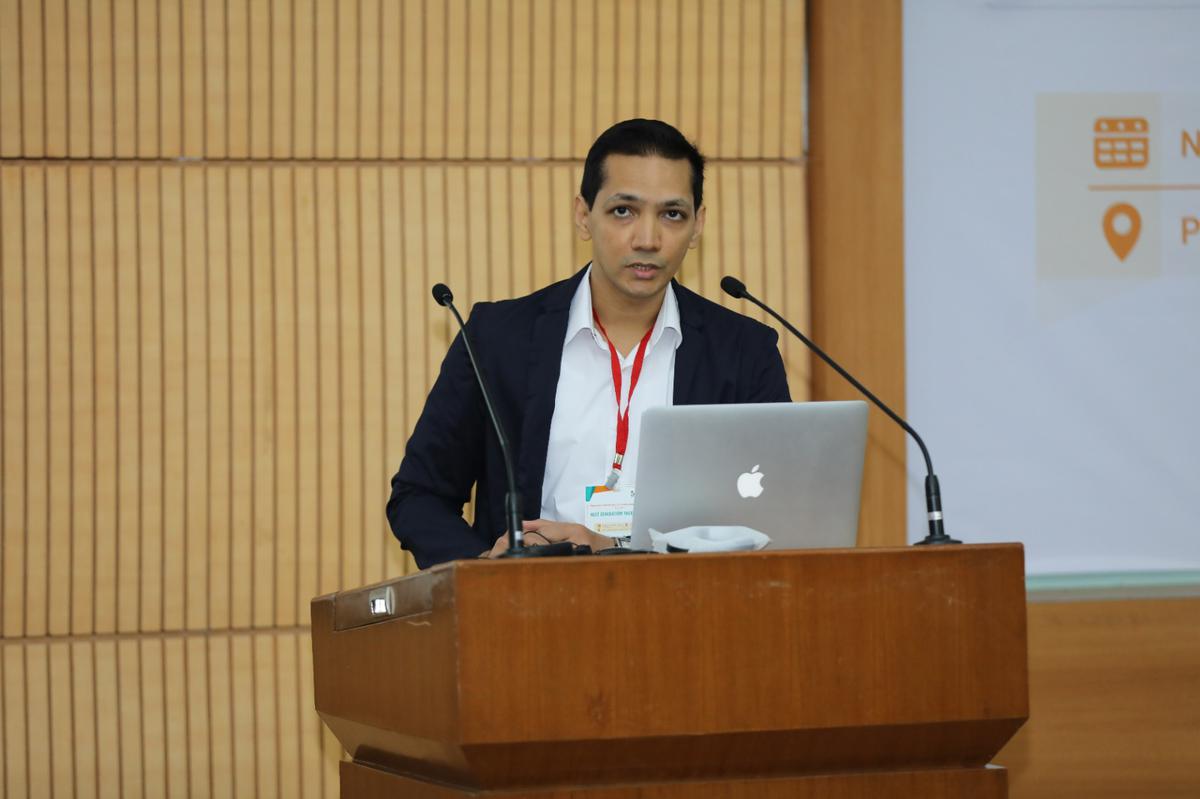
Dr. Abdur Rub, CEO of the Wadhwani Research Center for Bioengineering
| Photo Credit:
Special arrangement
“We need to have a longer vision of R&D. You can’t do research and development and science on tight budgets and short leashes. We need to take a very long-term view of projects, and capital is essential. I’m not even talking about VC capital. First, the government capital and then, the private sector capital can aid enormous amounts of R&D and develop deep capabilities. There’s no shortcuts to this,” he says.
Rub notes that the amount of money or funding that is available to Indian researchers is significantly less than their global peers for comparable research. Given that most of the tools required for research come from the West, accessing that research infrastructure with less money becomes a bottleneck for the researchers and innovators here.
“The government is increasing the funding, but at a slower rate. I think we need to do more. We need more philanthropic funding and private sector funding coming into research,” Rub adds.