Skip to content
  • Facebook
  • X
  • Linkedin
  • WhatsApp
  • Associate Journalism
  • About Us
  • Privacy Policy
  • 033-46046046
  • editor@artifex.news
Artifex.News

Artifex.News

Stay Connected. Stay Informed.

  • Breaking News
  • World
  • Nation
  • Sports
  • Business
  • Science
  • Entertainment
  • Lifestyle
  • Toggle search form
  • Smriti Irani’s “Proxy” Jibe After Congress Fields A Non-Gandhi From Amethi Nation
  • The Hindu Morning Digest, March 10, 2024 World
  • Rupee falls 4 paise to close at 83.52 against U.S. dollar Business
  • Slovakia vs Ukraine Live Streaming Euro 2024 Live Telecast: When And Where To Watch Sports
  • IPL | Professional cricket not easy, nobody gives you discount for age: Dhoni opens up on playing competitive cricket post retirement Sports
  • What Vasundhara Raje Said After Being Named In BJP’s 2nd Rajasthan List Nation
  • Video Shows Rapper Sean ‘Diddy’ Combs Kicking, Dragging Girlfriend In 2016 World
  • Chief Justice DY Chandrachud On “Ideological Framework” Of New Criminal Laws Nation

A case of capex under the ‘macroscope’

Posted on February 1, 2024 By admin


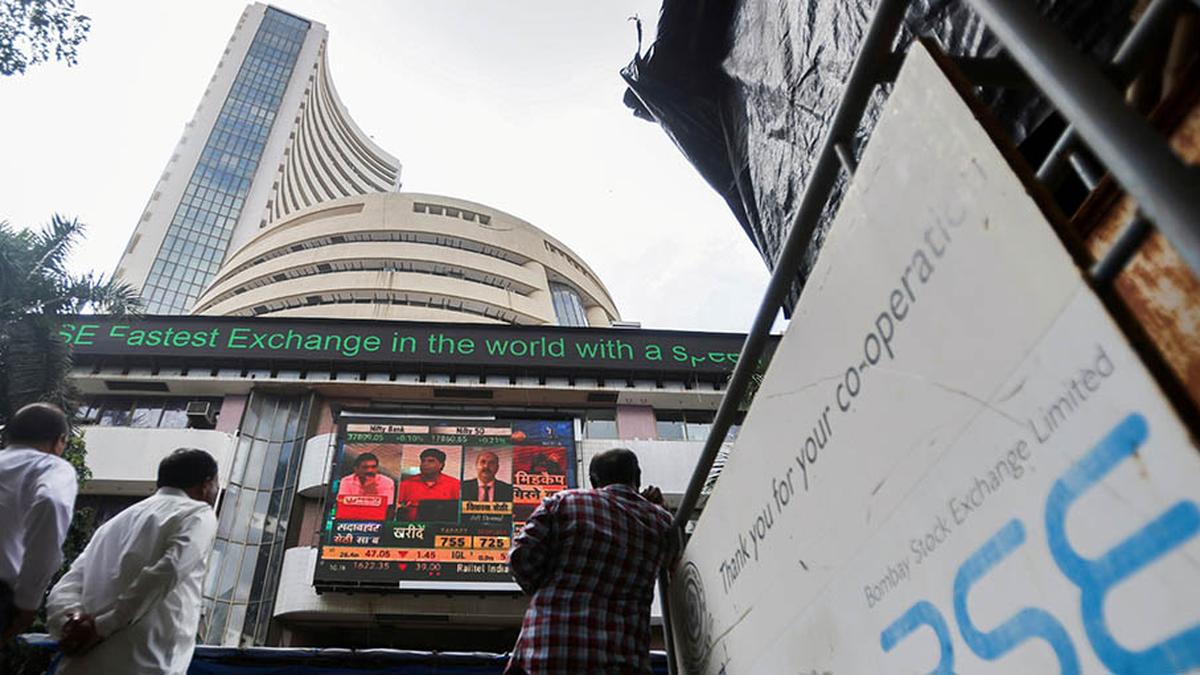
‘The FY25 interim Budget carries forward the ethos of public capex a notch higher, thereby bolstering the government’s commitment to high quality spending’
| Photo Credit: REUTERS

India’s economic recovery in the early post COVID-19 pandemic phase was distinctly underscored by a strong performance in exports and domestic investments. While exports benefitted from an easing of global supply chains and a structural pick-up in services exports, domestic investments are a manifestation of the government’s relentless capex push.

Interim Budget 2024 | Highlights

The prioritisation of capex continues

As such, India’s investment ratio is estimated by the National Statistical Office to have improved to 29.8% of GDP in the financial year 2023-24 from its recent low of 27.3% in 2020-21. With this, India stands out as the fourth best country (followed by Mexico, Italy, and South Africa) in the G-20 space with respect to an improvement seen in the investment ratio, three years after COVID-19.

The FY25 Interim Budget carries forward the ethos of public capex a notch higher, thereby bolstering the government’s commitment to high quality spending. The budgeted capex by the central government, an important metric for capacity creation in the economy, is slated to touch a record high of ₹11.11 trillion in FY25. As a ratio to GDP, this would tantamount to 3.4% of GDP, the highest in the last two decades. As a share of total expenditure, this comes to 23.3%, the highest in 32 years

Out of the budgeted capex outlay of ₹11.11 trillion, nearly two-thirds is earmarked for economic services (the lion’s share of approximately 46% is accounted for by hard infrastructure sectors such as roads and railways. In case of the railways, the Finance Minister has announced the identification of three major economic rail corridors under the PM Gati Shakti programme to improve logistics efficiency and reduce cost; energy, mineral and cement corridors; port connectivity corridors; high traffic density corridors, and 40,000 normal rail bogies will be upgraded to meet Vande Bharat standards

Defence capex, a niche priority segment under the Atmanirbhar Bharat campaign, will see a record high allocation of ₹1.72 trillion (although it is budgeted to remain unchanged at 0.5% as a ratio to GDP between FY24 and FY25). This will be supplemented with the launch of a new scheme for strengthening deep-tech technologies for defence purposes and expediting ‘atmanirbharta’.

Loans and advances (form of capital transfers) is budgeted to jump to ₹1.71 trillion in FY25, implying a 20% annualised growth. This will enable States to continue marching in lock step on capex creation at the ground level. After all, States play an equally important role in the creation of regional infrastructure — on an annualised trailing basis, States had a share of approximately 44% (as of December 23) in general government capex.

A tango with the capex push

While the focus on hard infrastructure is easily palpable, the government has also been active in pushing forward its inclusion agenda with interlinkages with the infrastructure sector. In this context, despite its limitations, the FY25 Interim Budget has placed an adequate and timely emphasis on the housing sector. With the target of three crore houses for PM Awas Yojana (Grameen) being nearly met, the Finance Minister expanded the scope to include two crore additional houses in the next five years. This has the potential to boost affordable housing, which in turn would support rural infrastructure demand.

Further, the capex thrust is also seen to be integrating the government’s green energy ambitions. As per the FY25 Interim Budget, one crore households would obtain 300 units of free electricity every month through rooftop solarisation. While each household is expected to save between ₹15,000 to ₹18,000 annually, this would help in the creation of solar assets, especially in rural parts of the country.

Some weak spots in the capex story

Notwithstanding the unambiguous policy focus on government capex, there seems to be a slowdown in capex spending by public sector enterprises (PSEs). The PSE capex budget for FY24 has been axed from ₹4.88 trillion in initial Budget estimates to ₹3.26 trillion in the revised estimates. This will result in PSE capex contracting by approximately 10% in FY24. Going forward, PSE capex is budgeted to increase modestly to ₹3.43 trillion in FY25, implying a growth of approximately 5%. As a ratio to GDP, PSE capex is slated to moderate to 1.0% in FY25, the lowest in recent history.

The high point of this Budget is fiscal consolidation. While subdued PSE capex takes away some sheen from the overall capex thrust by government agencies, this is getting compensated by the better-than-expected pace of fiscal consolidation — the FY25 Interim Budget has pegged the fiscal deficit target at 5.1% of GDP, lower than the consensus expectation of 5.3%-5.4%.

With gross g-sec borrowing now slated to moderate to a three-year low of ₹14.13 trillion, the private sector would benefit from better availability of lendable resources, hopefully at a lower rate (the 10Y g-sec yield closed 8 bps lower at 7.06%, its lowest levels in six months). This would bring collateral benefits to the overall economy. Fiscal rectitude and conservatism have been the hallmarks of this government’s Budget making.

Vivek Kumar is Co-Head, Research, QuantEco. Shubhada Rao is Founder, QuantEco


Source link

Business Tags:Atmanirbhar Bharat campaign, domestic investments, early post COVID-19 pandemic phase, economic services, exports and domestic investments, g-sec borrowing, global supply chains, government and capex push, green energy ambitions, hard infrastructure sectors, India’s economic recovery, India’s investment ratio, interim budget, National Statistical Office, rooftop solarisation, services exports

Post navigation

Previous Post: Interim Union Budget 2024 | Taxes
Next Post: The problem of moving attention away from services

Related Posts

  • Markets continue record run; Sensex, Nifty climb to lifetime highs Business
  • NPCI inks pact with Bank of Namibia for developing UPI-like instant payment system Business
  • U.S., Korea raise concerns on India’s decision to impose import restrictions on laptops, computers Business
  • India should not become sicker before it becomes richer: Chief Economic Adviser Business
  • DBS Bank sees CAD sliding below 1% of GDP, cites strong services exports, benign commodity prices Business
  • Budget session of Parliament from July 22 Business

More Related Articles

Markets decline in early trade on heavy foreign fund outflows; selling in Reliance, TCS Business
Budget 2023 | Defence budget rises 13%; revised estimate for pension rises Business
Stock Market Today: Markets decline in early trade after record-breaking rally Business
Explained | What is RBI’s pilot programme for facilitating ‘frictionless’ and ‘timely’ credit? Business
Centre bans onion export till March; Nashik farmers protest Business
Centre to buy tomatoes from Andhra Pradesh, Karnataka and Maharashtra to sell in northern cities Business
SiteLock

Archives

  • July 2024
  • June 2024
  • May 2024
  • April 2024
  • March 2024
  • February 2024
  • January 2024
  • December 2023
  • November 2023
  • October 2023
  • September 2023
  • August 2023
  • July 2023
  • June 2023
  • May 2023
  • April 2023
  • March 2023
  • February 2023
  • January 2023
  • December 2022
  • November 2022
  • October 2022
  • September 2022
  • August 2022
  • July 2022
  • June 2022
  • May 2022

Categories

  • Business
  • Nation
  • Science
  • Sports
  • World

Recent Posts

  • Ex Soldier Praises Op To Retrieve 3 Bodies
  • High Court Raps Maharashtra Over Advisory Board For Disabled Persons
  • Dark Side Of Manifesting And Believing Our Thoughts Have Too Much Power
  • Earthquake of magnitude 6.7 strikes Philippines
  • No Vinay Kumar, BCCI To Pick Bowling Coach From These Two Former Stars: Report

Recent Comments

  1. ywdVpqHiNZCtUDcl on UP Teacher Who Asked Students To Slap Muslim Classmate
  2. bRstIalYyjkCUJqm on UP Teacher Who Asked Students To Slap Muslim Classmate
  3. GkJwRWEAbS on UP Teacher Who Asked Students To Slap Muslim Classmate
  4. xreDavBVnbGqQA on UP Teacher Who Asked Students To Slap Muslim Classmate
  5. aANVRzfUdmyb on UP Teacher Who Asked Students To Slap Muslim Classmate
  • Netanyahu says ending Gaza war now would keep Hamas in power World
  • Chief Of Defence Staff Anil Chauhan Nation
  • “In An Election, Hands Off!” Supreme Court Adjourns Voter Turnout Data Plea Nation
  • “Team India Is Much Better”: Yograj Singh Ahead Of Asia Cup Clash vs Pakistan Sports
  • Centre On Indians Forced To Fight Russia-Ukraine War Nation
  • IPL 2024 Live: Can Rishabh Pant's Winless DC Stop The CSK Juggernaut? Sports
  • EU eyes tariffs to ‘choke off’ Russian grain sales World
  • I am happy they revived the Buchi Babu tournament, says Buchi Babu’s great-grandson Ramesh Sports

Editor-in-Chief:
Mohammad Ariff,
MSW, MAJMC, BSW, DTL, CTS, CNM, CCR, CAL, RSL, ASOC.
editor@artifex.news

Associate Editors:
1. Zenellis R. Tuba,
zenelis@artifex.news
2. Haris Daniyel
daniyel@artifex.news

Photograher:
Rohan Das
rohan@artifex.news

Artifex.News offers Online Paid Internships to college students from India and Abroad. Interns will get a PRESS CARD and other online offers.
Send your CV (Subjectline: Paid Internship) to internship@artifex.news

Links:
Associate Journalism
About Us
Privacy Policy

News Links:
Breaking News
World
Nation
Sports
Business
Entertainment
Lifestyle

Registered Office:
72/A, Elliot Road, Kolkata - 700016
Tel: 033-22277777, 033-22172217
Email: office@artifex.news

Editorial Office / News Desk:
No. 13, Mezzanine Floor, Esplanade Metro Rail Station,
12 J. L. Nehru Road, Kolkata - 700069.
(Entry from Gate No. 5)
Tel: 033-46011099, 033-46046046
Email: editor@artifex.news

Copyright © 2023 Artifex.News Newsportal designed by Artifex Infotech.