





The leaders of Russia and China are skipping the G-20 summit, but their absence — and rifts over the Ukraine war — will have a big influence on the proceedings.
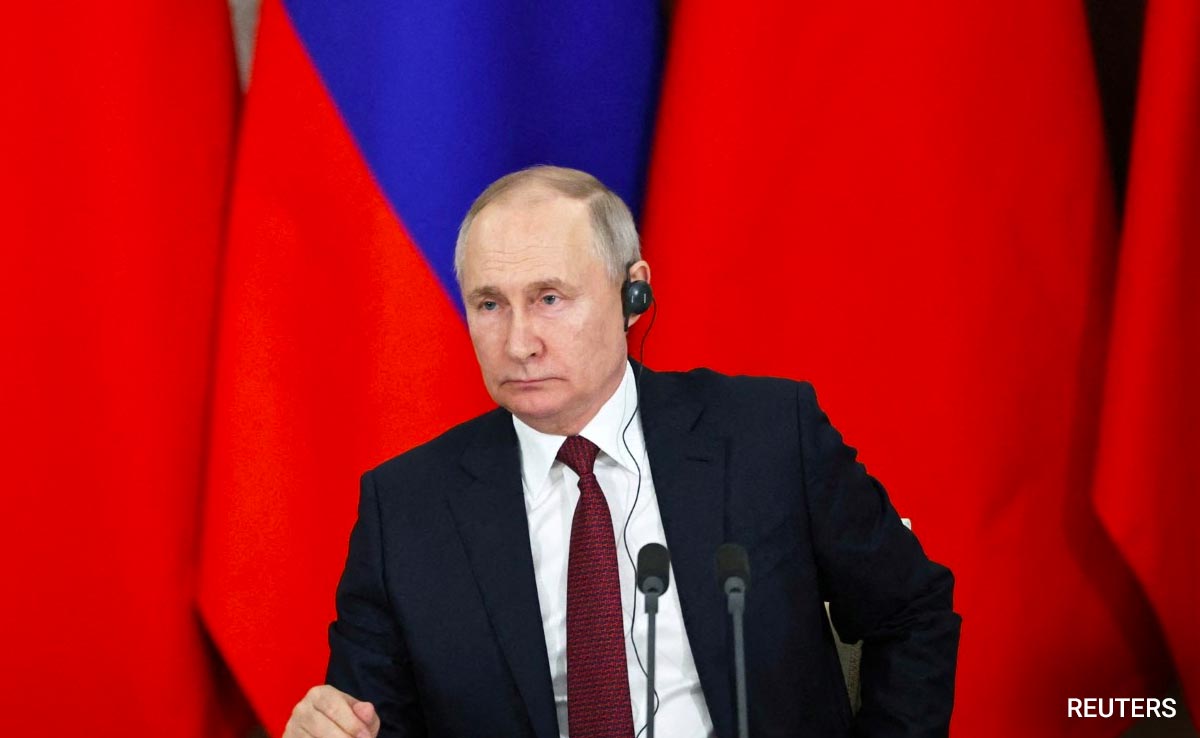
Russian President Vladimir Putin won’t be at the G-20 Leaders’ Summit, but he and the Russia-Ukraine war are likely to have a bigger effect on outcomes than even the lack of Chinese President Xi Jinping.
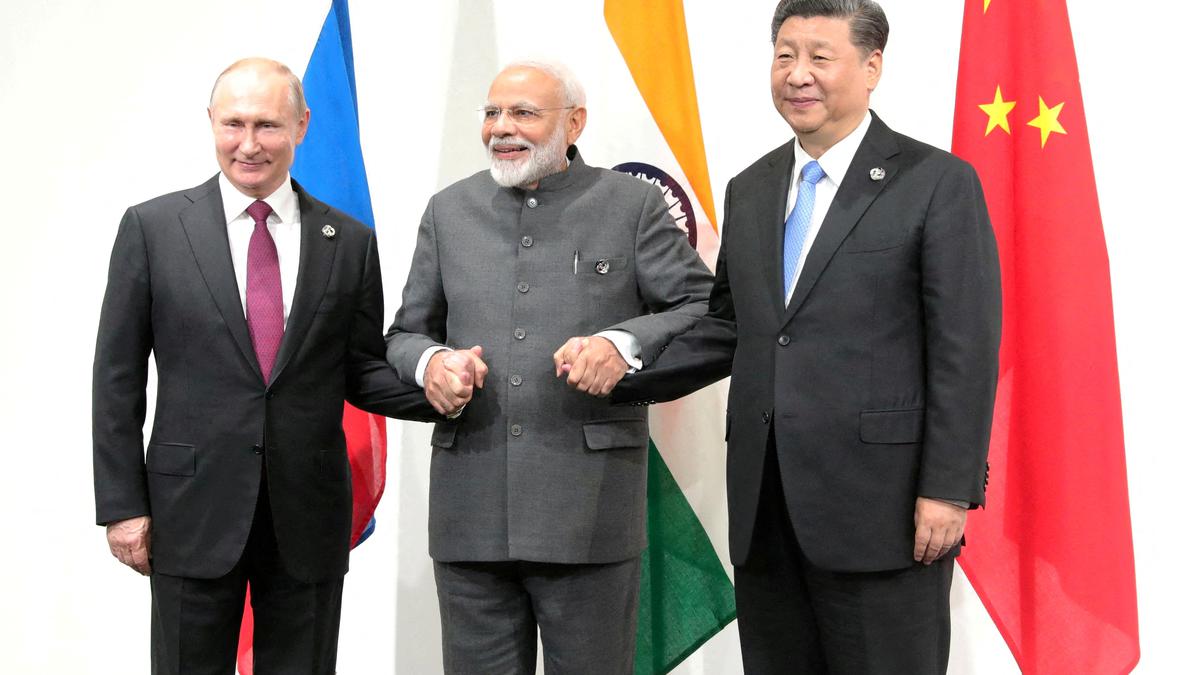
Days before world leaders prepared to gather in New Delhi for the summit on 9-10 September, news emerged that China’s leader had decided not to attend. Mr. Xi’s absence will undoubtedly stifle progress on the many issues plaguing the global economy.
However, it’s Mr. Putin and the war in Ukraine that is likely to dominate proceedings and hamper progress on urgent matters before the G-20.
With Russia a member, this is not surprising. But the G-20’s make-up — consisting of Western states and leading nations from the Global South — has made it even more difficult for the organisation to function effectively.
Behind the stage
The G-20 is much more than just an annual two-day Leaders’ Summit. Most of its work happens in the background, through networks of technocrats and policymakers, who can find ways to resolve problems, even when relations between their leaders deteriorate.
Beside the issue of an ongoing conflict, the ‘in’ tray is full this year.
Global inflation remains high, and growth is slowing and below historical trends. China is experiencing its own economic challenges of slowing growth, deflation and a housing market crisis, which could have significant knock-on effects for the rest of the world.
Many economies are struggling with debt. Nearly half of the world’s developing countries need urgent financial assistance as the financial consequences of the pandemic have finally caught up with them.
All this is before considering long-term issues like climate change or sustainable development. Progress on both fronts is falling further behind schedule.
But this is exactly why the G-20 was created. It brings together the world’s 20 largest economies, which account for 85 per cent of global GDP, 75 per cent of global trade and two-thirds of the world’s population. To the extent that the world has a government, the G-20 is it.
Struggle for consensus
On the issue of Russia and Ukraine, there are three distinct factions within the G-20.
There is Russia, which has rejected the validity of discussing the war at the G-20, arguing that as an economic body it has no business considering security matters. Increasingly, as the war has dragged on, this has been China’s position, too, as it draws closer to Russia.
Then there are the Western states, which initially pushed for the G-20 to expel Russia — something for which there is no provision — and, failing that, have insisted that it condemns Russia and the invasion in the strongest terms.
Finally, there is the majority of the membership from the Global South, which has tried to stay neutral in the conflict. They are more concerned about the war’s consequences, including its effect on food and energy prices, which particularly affect developing economies.
With such divisions, the G-20 has struggled to reach consensus. None of the ministerial-level meetings hosted by this year’s chair India have ended with the usual communique that summarises the consensus of the group on the topics discussed. Instead, India has issued ‘chair’s summary and outcome’ documents that merely summarise discussions and note the disagreements.
Ahead of the New Delhi summit, diplomats are again scrambling to devise a form of wording for the final communique that would be accepted by all parties, facing the possibility of failing to do so for the first time in G-20 history.
Signs of progress
Despite these disagreements, the G-20 has managed to make progress on some issues.
G-20 meetings have been one of the main forums through which reform of the Multilateral Development Banks has been discussed.
The proposals include reforming the internal policies of the World Bank and other development banks to allow them to borrow more capital and lend it at concessional rates — especially for climate projects — as well as increases of funding from leading states. The U.S. recently promised to increase its contributions by USD$50 billion, calling on its allies to do likewise to increase the total to $200 billion.
Campaigners have called for the reforms to go further, but they still offer the prospect of a significant increase to development bank funds. The focus on climate financing also reflects the growing importance of the issue in developing economies.
While reforms won’t be finalised at the summit, the G-20 has proved itself a useful forum to maintain and progress negotiations.
Another G-20 initiative has been the Common Framework for Debt Treatments, agreed in 2020, which is the first multilateral mechanism for forgiving and restructuring the sovereign debt of low-income countries.
The Common Framework is notable for involving both the traditional lenders from the Paris Club and new ones like China. It has already allowed Zambia to restructure USD$6.3 billion of its debt, a large part of which is owed to China.
While the framework has shortcomings — for one, it doesn’t include private creditors — it does at least represent a lifeline to many developing economies on the verge of defaulting on their debts.
The framework’s continuation illustrates that the G-20 functions, even in the face of very public disagreements.
This persistence can be explained by more than just the technocrats working and cooperating behind the scenes.
Over the past two years, the G-20 has been chaired by developing economies: Indonesia and India.
Because of their neutrality, these countries have greater credibility when they try to manage the stand-off between the West and Russia, so the G-20 can function in some way.
With the next two hosts, South Africa and Brazil, sharing a similar inclination, the G-20 might continue to function, even if the thornier global problems prove beyond its capacity to address.
In an era of fragmenting global governance, that might be the best that can be achieved.
(Tom Chodor is a Senior Lecturer in Politics and International Relations at the School of Social Sciences, Monash University. )
(Originally published under Creative Commons by 360info™.)