



Masato Tsuji has been observing insects since he was a child. He loves studying flies, so much so that he shows them horror movies and scares them – all to understand what happens in their brain when they’re afraid.
“Our discovery may provide a clue to treat psychiatric diseases stemming from exaggerated fear, such as phobia and anxiety disorders,” Dr. Tsuji, an assistant professor at the University of Tokyo, told this writer.
Do flies feel fear like we do?
It’s easy to question our understanding of a fly’s feelings. After all, the fly’s brain and evolutionary history differ from ours. Fear is also a humanised emotional state. So we can’t say for sure whether flies have feelings.
However, previous research has shown that flies exhibit defensive responses that resemble fear-like emotional states. The response leads to changes in the internal brain state. So flies offer an opportunity to study the neural and molecular basis of a fear-like state.
A horror movie for flies
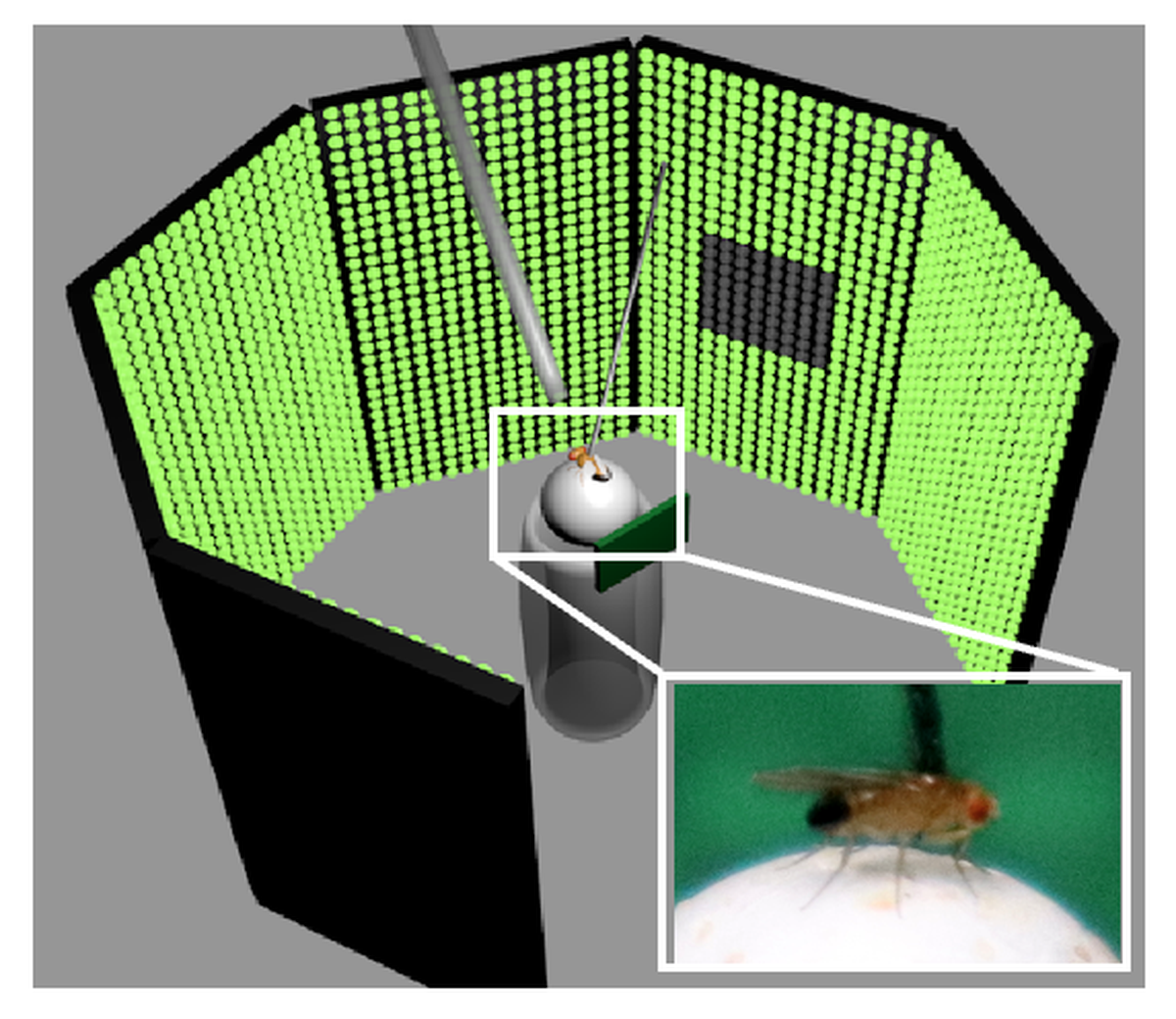
To understand fear, researchers Dr. Tsuji, Yuto Nishizuka, and Kazuo Emoto built a virtual reality arena – a mini theatre for flies – fit with lights, cameras, screens, and a scary action scene.
The virtual reality arena to study fly behaviour.
| Photo Credit:
Masato Tsuji
What scares flies? A puff of air and a small black dot the size of a spider, their natural predator, moving around.
But first, the researchers had to get tiny fruit flies (Drosophila melanogaster) one by one into the mini theatre. It was a delicate task. First, Dr. Tsuji tethered a sedated fly to a small rod with a dribble of glue on its back. Once it woke up, it would find itself on a small Styrofoam ball suspended over a thin layer of air created using an air compressor. The fly could rest or walk around on the ball.
After the fly became acquainted with the setup, the movie began on an LED screen in front. While the dot moved on the screen, a small nozzle over the fly blew puffs of air.
Flies avert their gaze
As the dot moved after an air puff, the flies started to walk on the ball, turning away from the dot. All flies responded to the dot only when paired with an air puff as well.
Some flies froze or jumped, but most turned and ran away from the threat.
According to Dr. Tsuji and his team’s paper, published in the journal Nature Communications in July, a cluster of 20-30 neurons in the visual regions of the fly’s brain is responsible for this behaviour.
The fear neurochemical
Dr. Tsuji’s team took advantage of the variety of tools to genetically modify and study fruit flies to isolate a set of mutant flies. By manipulating and recording the activity of their neurons, they found that a neurochemical called tachykinin activated the flies’ aversion behaviour.
That is, flies that had a mutation that deprived them of neurons that could release tachykinin didn’t display the threat avoidance behaviour, even if they retained other visual and motor responses.
“This molecule causes anxiety-like symptoms in mice and humans,” Dr. Tsuji said. “At the level of molecules or genes, perhaps the fear-like mechanism is preserved across animal species.”
That could explain why we may look away from scary scenes in films or animals like snakes.
A neurochemical wave of fear?
Dr. Tsuji focused further on the finer details of the activity of tachykinin-releasing neurons.
Normally, an influx of calcium ions coincides with the electrical activity of neurons. More calcium in the neurons indicates an active neuron; less calcium shows an inactive neuron.
So a microscopy technique called calcium imaging helped Dr. Tsuji’s team visualise how neural activity in fearful flies changes with time.
To their surprise, they found that the activity of the tachykinin-releasing neurons increased and decreased rapidly, as the amount of calcium in their neurons went up and down like a wave.
Such oscillating neural activity is rare for Drosophila melanogaster, though the evidence has been accumulating as the technology has developed to record such small and fast neural activity fluctuations.
When the team artificially generated the wave-like calcium activity patterns in their neurons, flies turned away from the stimulus. “That wave signal, we believe, is functioning as a fear-like command that drives the escape behaviour,” Dr. Tsuji said.
An application
Neural activity oscillation occurs in the fly brain only during a fear-like emotional state. However, Dr. Tsuji speculated that in the brains of the people with phobias and anxiety, the wave-like neural activity pattern could occur even in response to a neutral stimulus.
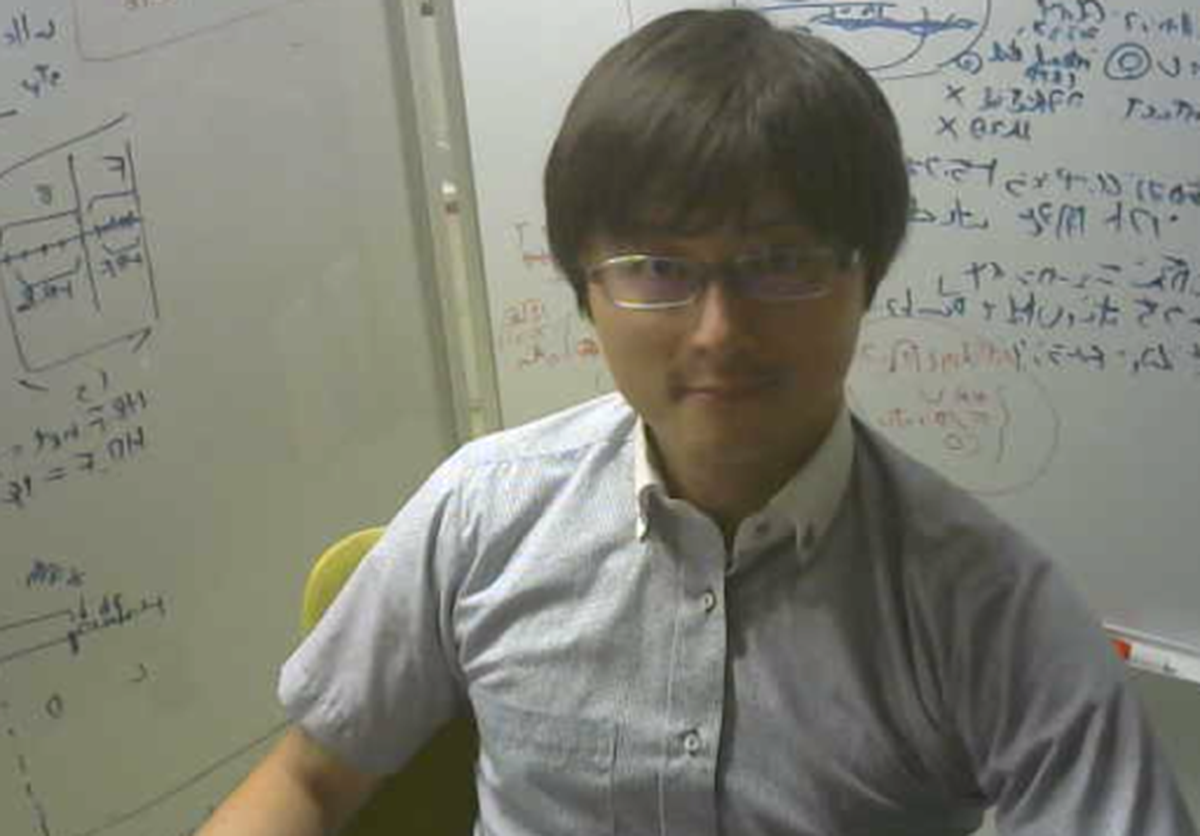
Masato Tsuji, an assistant professor at the University of Tokyo.
| Photo Credit:
Special arrangement
He expressed hope that their work would cast light on why phobic patients overreact to usually non-frightening stimuli. “If I can be speculative, one possibility is that humans have similar neural circuitry that drives the escape behaviour in the brain.”
“If this possibility is true, perhaps we can intervene with such activity patterns in a targeted way to help alleviate the fearful symptoms,” Dr. Tsuji added.
Mapping the fear circuit
The neurons regulating the aversion behaviour are in the visual region of the fly’s brain, so the team wants to understand how they regulate vision. That is, how is visual information transmitted to elicit the fear response?
They are now working to reveal further details of fear and its effects on vision in flies. “We want to build a complete circuit diagram of how fear regulates vision,” Dr. Tsuji said.
His curiosity as a child observing insects in his garden might one day help discover the intricate workings of their little brains sensing fear, and potentially benefit many patients suffering from phobic disorders.
Ravindra Palavalli Nettimi is a project specialist at the Office of Research Strategy and Development at the University of Tokyo.