

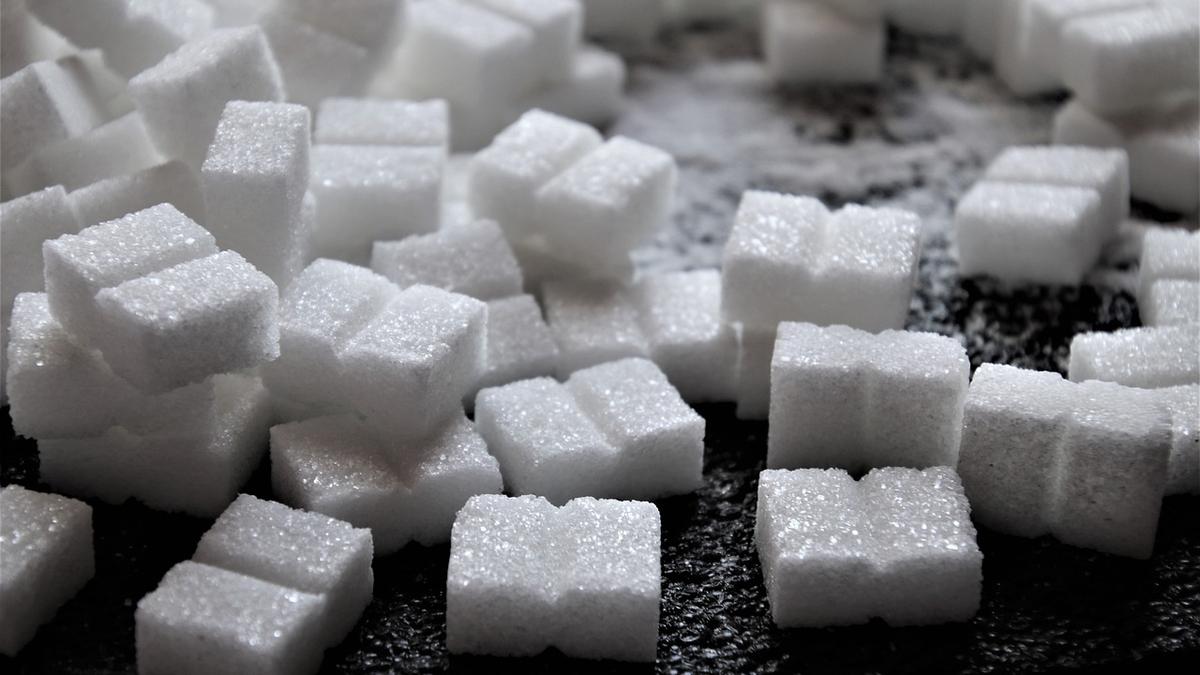
The story so far: News agency Press Trust of India (PTI) learnt from sources that India is in negotiations with Brazil to resolve a long-standing dispute about sugar at the World Trade Organisation (WTO). The Ministry of Commerce and Industry is also coordinating with the concerned departments to arrive at possible alternatives. The same approach has been adopted with other complainants in the dispute.
Back in 2019, the South American nation had submitted a complaint against India alleging that the latter’s according of sugar subsidies was inconsistent with global trade rules.
Who all are involved and what all has happened until now?
In February 2019, Brazil, Australia and Guatemala sought consultations with India, concerned about domestic support measures to agricultural producers of sugarcane and sugar. They alleged that India for five years, from 2014-15 to 2018-19, provided domestic support in excess of the permissible 10% of the total value of production— thus, inconsistent with the norms laid out under the organisation’s Agreement on Agriculture.
The countries argued that the minimum prices of sugarcane and sugar, specifically fair and remunerative prices (FRP) alongside specific states enforcing higher minimum prices, incentivised Indian sugarcane farmers. This led to increased domestic production of sugarcane and sugar. It contended that with production exceeding domestic demand, and ensuing increases in sugar stocks, the government also intervened in the market with assistance programmes, thereby facilitating lowered prices for the commodity in the global market.
The complainant also argued against India’s mill-specific Minimum Indicative Export Quota (MIEQ) wherein sugar mills must export an allocated amount of sugar by the end of each season (October-September). It alleged that certain support measures were dependent on compliance with the MIEQ, or otherwise dependent on export performance. MIEQ allocates the minimum quantity of sugar which must be exported and distributes that quantity among individual sugar mills operating in India.
India is the second-largest producer of sugar in the world behind Brazil, which also is the largest exporter.
WTO constituted a panel to study the allegations in October 2019, which submitted its report in December 2021.
What did the WTO conclude?
The multilateral trade organisation held that India was acting inconsistently with its obligations under Article 7.2 (b) of the Agreements on Agriculture (AoA) as far the domestic support was concerned. This article stipulates that members cannot provide support in excess of the relevant de minimis standards.
It held that the ‘price support’ would entail “assistance from a government or other official body in maintaining prices at a certain level regardless of supply or demand.” In FRP, while the prices may appear to be paid by the mills, they are set by the government, it said.
The WTO asked India to withdraw its exports subsidies within 120 days from the circulation of the report. It also sought that the country withdraw the proscribed subsidies (as per the multilateral organisation’s rules) meant for production assistance, buffer stock, marketing and transportation along with the duty-free import authorisation (DFIA) scheme.The report concluded that India was providing “lump sum assistance” for expenses emanating on account of sugar towards maximum admissible export quality or MAEQ (which works as a marketing assistance listing upper limit for exports) of sugar mills for the sugar season 2019-20. It broadly covered marketing including handling, quality upgradation, debagging and re-bagging and other processing costs.
What was India’s defence?
Following the report in December 2021, the Indian government stated the panel had made “certain erroneous findings” about the schemes meant to support sugarcane producers and exports. It held the findings of the panel were “completely unacceptable to India”, adding, “The panel’s findings are unreasoned and not supported by the WTO rules. The panel has also evaded key issues which it was obliged to determine, Similarly, the panel’s findings on alleged export subsidies undermine logic and rationale.”
It said that the measures in contention were within its obligations under the WTO agreements, and that there would be no impact on the country’s existing policy measures in the sector.
In its appeal, India held that the panel “grossly errs” in holding that the MAEQ were of the “same essence” as other alleged export subsidies. “India considers that the panel has cherry-picked a few broad similarities while ignoring the differences between MAEQ and other alleged exports subsidy measures,” it said.
Further, it contended that FRP and state-advised prices do not constitute ‘applied administrative prices’, that is, prices for agricultural products determined by administrative actions of the government and not market forces. It was before the consultations that India had argued that market price support could only exist when the government or its agents pay or procure the product. Thus, it would be incorrect to conclude that India provided any market price support to sugarcane producers, it said.
What are we looking at?
Concerns about the WTO ruling may potentially spiral on two fronts— agricultural subsidies in the broader ecosystem and potential uncertainty about its prices in lieu of expected lower production.
News agency Reuters reported earlier in June that India is not considering sugar exports until at least the first half of the next season. It learnt from sources that this was because the government was worried that El Nino weather pattern could reduce rainfall and dent production. India, the world’s second-largest exporter of sugar, had allowed exports of 6.1 million tonnes for the ongoing season. With the quota exhausted, it is presently not exporting sugar. Industry body Indian Sugar Mills Association (ISMA) lowered its production estimates to 32.8 million tonnes for the ongoing sugar season, owing to an output drop in Maharashtra and a marginal increase in Uttar Pradesh. Annual domestic consumption is pegged at 27.5 million tonnes.
For comparison, India had exported 11 million tonnes in the year-ago period. The production stood at 35.9 million tonnes. All this translates to potential grounds for price uncertainty domestically and outside; especially since more demand for sugar rises during summer for producing aerated beverages and ice creams.
As for the proceedings in the WTO, bilateral consultations are the first step to resolve a dispute. If the sides are unable to resolve the matter through consultation, either can approach the dispute settlement panel. The latter files a report which can be challenged before an Appellate Body. However, the body is unable to review cases at present given ongoing vacancies, emerging from differences among member countries in appointing members.