

Since 2007, Gaza has also been subject to an Israeli blockade.
The scale of Hamas’ attack on Israel on 7 and 8 October is unprecedented and the failure of the Israeli army and secret services, astonishing. Yet for observers such as former Israeli ambassador to France, Elie Barnavi, the events that have unfolded in the region over the past days were “surprising but predictable”.
On the ground, from which I have just returned, there is a clear sense of growing despair and latent violence among the Palestinian population. No one is talking about “peace” any more, but rather “the end of the occupation”, as young people evoke “resistance, by all means”.
This is the context in which Hamas carried out its attack. And the militant organisation used this despair to legitimise itself and win the support of a section of Palestinian public opinion.
Gaza, an open-air prison
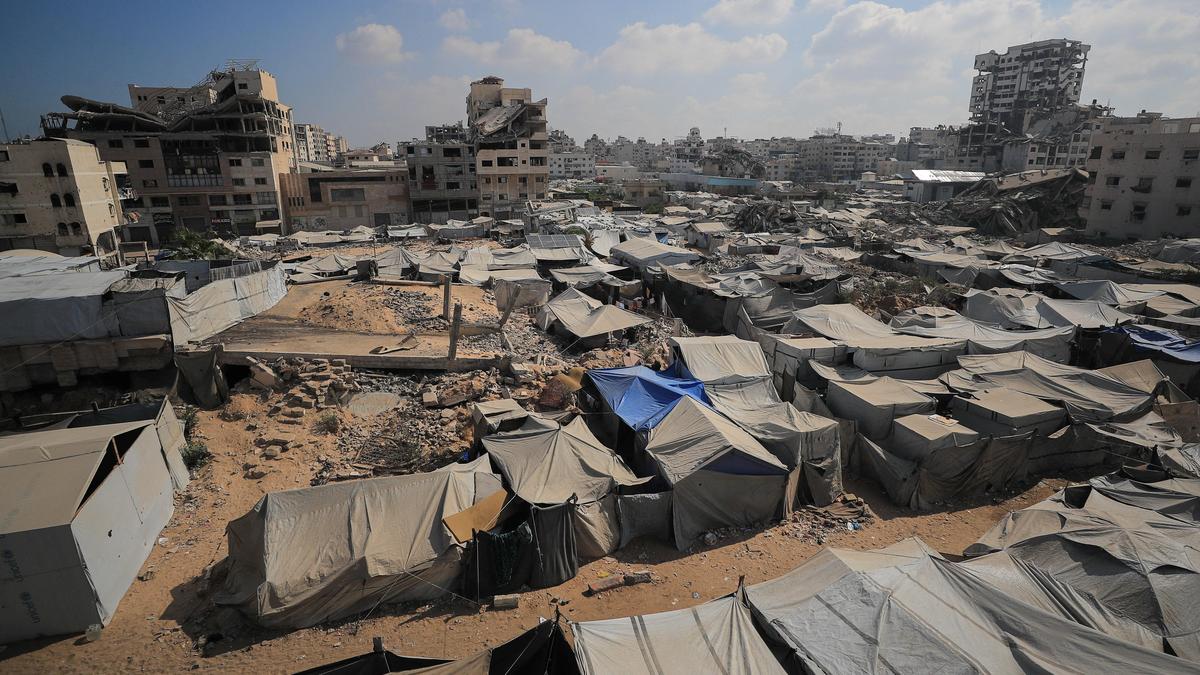
In Gaza, where Hamas operates, 2.3 million Palestinians are crammed into 365 km2, making the Gaza Strip one of the world’s most densely populated territories. More than two thirds of the population live below the poverty line and, according to the Israeli NGO B’Tselem, the unemployment rate is 75% among people under 29.
Since 2007, this territory has also been subject to an Israeli blockade by sea, air and land, which almost entirely deprives it of contact with the outside world.
Gazans are regularly cut off from water and electricity, and depend mainly on international aid. Entry into and exit from Gaza depend on permits given by Israeli forces and are extremely rare, earning it the nickname of “open-air prison”.
In these conditions, the Gazan population, and in particular the youth, who are isolated from the world, are becoming increasingly radical. Most feel they have nothing left to lose and no longer believe in political solutions or peace. The idea that the occupation of the Jewish state must be resisted through violence, as advocated by Islamist groups, is gradually spreading. This is playing into the hands of Hamas and Islamic Jihad, who are gathering more and more fighters.
The West Bank, a dismembered territory
In the West Bank, the Hamas attack was not condemned, some Palestinians even showed their support in demonstrations.
The rest of the world is astonished that anyone could support such cruelty, which is unequivocally unacceptable. But we must also look at the roots of this support.
The Palestinian territory is completely dismembered. More than 280 settlements and 710,000 Israeli settlers have been counted by the United Nations. Palestinian homes are regularly destroyed.
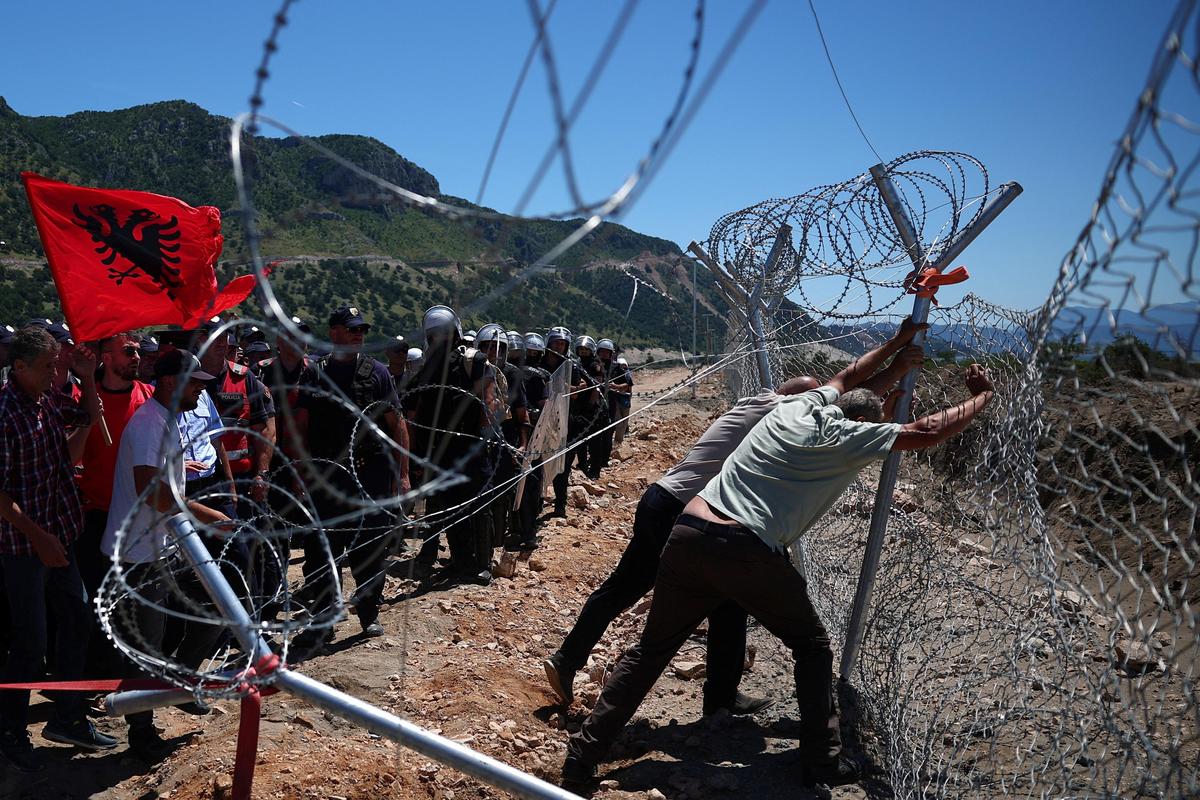
Since 2002, more than 700km of wall have been built between the Palestinian territories and Israel. This security wall was supposed to follow the 315km green line outlined in the 1947 UN partition plan, but the past years have seen it snake on and on, gradually encroaching on Palestinian territory and isolating certain Palestinian towns.
One Palestinian MP told me “It’s the Arab Wailing Wall”, while others referred to it as the “Wall of Shame”. Even East Jerusalem is increasingly occupied, including the Esplanade of the Mosques, home to the Al-Aqsa Mosque, Islam’s third-holiest site. In fact, the name that the Hamas gave to its attack, “Operation Al-Aqsa Flood”, shows just how the Islamist group has managed to act as a soundboard to the population’s grievances.
Daily despair
The freedom of movement of the inhabitants of the West Bank is extremely limited – they depend entirely on permits obtained from the Israeli authorities. Every day, Palestinians have to laboriously cross through checkpoints.
Some children explain to me that they cross the checkpoint between Abu Dis in the West Bank and Jerusalem to go to school; they go alone because their parents don’t have the necessary permits and spend at least an hour there every day. Older students tell me that they used to be able to walk to their university, but now there’s the wall and a checkpoint. The UN estimates that there are around 593 checkpoints, mostly designed to protect Israeli settlers.
The economic situation in the West Bank is also deplorable. Israeli restrictions on the movement of people and goods – such as bans on the importation of certain technologies and inputs, bureaucratic controls, checkpoints, gates, earth mounds, roadblocks and trenches – are choking development. The poverty rate stands at 36% and the unemployment rate at 26%.
The Israeli army, especially since the arrival of the most recent Netanyahu government, has stepped up its interventions and preventive raids. Before the Hamas attack, 200 Palestinians had been killed since the beginning of the year. The UN counts 4,900 Palestinian political prisoners and notes the deplorable conditions in Israeli prisons and the ill-treatment inflicted.
Political deadlock, latent violence
Added to all this is the political impasse. There have been no elections in Palestine since 2006. The Palestinian Authority, recognised as the legitimate representative of the Palestinian people, has become an empty shell with no real power. Power is concentrated in the hands of 87-year-old Mahmoud Abbas, who has lost the support of his people. After the repeated failure of negotiations between the Palestinian Authority and Israel, some even consider Mahmoud Abbas to be an accomplice to the Israeli occupation. Corruption is paralysing all Palestinian institutions.
The population no longer expects anything from politics and even less from negotiations. Since the beginning of the year, there has been a resurgence of “lone wolf” attacks driven by despair. Like the Palestinian driver who, at the end of August, ploughed into a group of Israeli soldiers as he was about to cross a checkpoint.
It is this same despair that drives a section of the Palestinian population to rally around Hamas’s cruel attacks today. As Elie Barnavi points out, we could even fear the outbreak of a new intifada.
Hamas’ rise
Over the years, Hamas has been able to weaponise these sentiments and so affirm itself as the “true defender” of the Palestinian cause.
In 2006, the militant group won the Palestinian legislative elections. Despite the democratic nature of these elections, the result was not recognised by the international community, which refused to allow a terrorist organisation to take power. Hamas therefore fell back onto the Gaza Strip, of which it took control. From Gaza, it continued to radicalise and delegitimise the Palestinian Authority, and waited for momentum to build before putting its words into action. In the eyes of the organisation, this moment has arrived. The leaders no doubt felt that the context was favourable for a large-scale attack.
On the one hand, the internal destabilisation in Israel offered a breach of which Hamas could take advantage. Never has Israel been as divided as it has been since the arrival of Netanyahu’s coalition of ultra-Orthodox and national-religious parties. Large-scale demonstrations against the reform of the justice system shook the country for several months. In an unprecedented move, Israeli reservists, essential to Israeli defence, refused to serve for weeks in protest against the reforms.
Shifting geopolitics
Hamas likely also had an eye on geopolitics, sensing that the balance of power in the region is shifting. Witness the agreement between Tehran and Riyadh, and the Abraham Accords which normalised Israel’s relations with the Gulf states. Today, global tectonic plates continue to wobble, the status quo in Nagorno-Karabakh has been shattered and Africa is experiencing one coup after another. The time was ripe for the group to strike.
Fifty years after the Yom Kippur War and 30 years after the Oslo Accords, the past days’ tragic events ought to be viewed through the prism of a complex conflict that has pitted two peoples against each other since 1948. Hamas has instrumentalised the anger and despair of Palestinians to commit unprecedented violence, thereby delegitimising a legitimate cause.
Marie Durrieu, Doctorante associée à l’Institut de Recherche Stratégique de l’École Militaire en science politique et relations internationales (CMH EA 4232-UCA), Sciences Po
This article is republished from The Conversation under a Creative Commons license. Read the original article.
(Except for the headline, this story has not been edited by NDTV staff and is published from a syndicated feed.)
Waiting for response to load…