


During his election campaign in October, Donald Trump was asked if Gaza could be rebuilt. He replied: “Gaza could be better than Monaco,” adding, “It has the best location in the Middle East, the best water, the best everything.” Ever the real estate developer, one might think Trump’s response hinted at business opportunities. Indeed, it seems likely that discussions within the Trump family have touched on the potential of rebuilding Gaza, because just a few months earlier, Trump’s son-in-law, Jared Kushner, remarked that Gaza’s “waterfront property … could be very valuable.”
Optimists might interpret Trump’s comparison to Monaco as a vision for transforming Gaza—a 41-kilometre-long and 10-kilometre-wide strip of land—into a thriving hub of prosperity and tourism. Monaco, after all, is synonymous with luxury and wealth. Supporters of this view might argue that Trump was expressing an idealised aspiration for Gaza’s potential. However, such statements overlook immense obstacles, such as decades of conflict, political instability, staggering number of deaths and the extensive destruction of infrastructure. Kushner’s remark about Gaza’s “waterfront property” may have highlighted its economic potential due to its Mediterranean location, a feature often lucrative for trade and tourism. But his words trivialised the dire humanitarian crisis in Gaza, a region grappling with grinding poverty, massive unemployment and extremely limited access to essentials like clean water and electricity.
It’s as if Trump were to reassure Californians after devastating wildfires: ‘Don’t worry, folks, I am going to rebuild your homes and infrastructure better than ever before’.
Unfortunately, statements like these risk sounding tone-deaf against the immediate suffering of Gaza’s population. The flattened place faces one of the world’s most severe humanitarian crises, with 90% of its people reliant on international aid. Beyond the destruction caused by recent events, the region’s deep-rooted challenges—including political divisions between Hamas and Fatah, the Israeli-Egyptian blockade and cyclical violence—persist. These harsh realities, which existed long before the October 7 Hamas attacks in 2023, underscore the monumental task ahead for any rebuilding effort.
An Elusive Ceasefire
Even as Israel dispatched senior officials, including the Mossad chief David Brnea, to Doha for ceasefire talks on Saturday, airstrikes in Gaza persist, deepening the misery of its 2.3 million residents, the overwhelming majority of whom are now homeless. The destruction since Hamas’s deadly attacks on Israel has been so extensive that experts believe rebuilding Gaza may be nearly impossible. While the talks may lead to a ceasefire and the release of nearly 100 Israeli hostages held by Hamas, the future of Gaza remains uncertain. Without a concrete rebuilding plan and timeline agreed upon by all stakeholders, the path forward is bleak. According to various recent UN and World Bank reports, restoring Gaza’s homes, infrastructure and shattered economy could take decades and require billions of dollars.
An Irreversible Tragedy?
United Nations agencies have repeatedly warned that rebuilding Gaza after Israel’s offensive against Hamas—one of the deadliest and most destructive military campaigns since World War II—could take decades. Before this catastrophic war, Gaza was already suffocating under an Israeli and Egyptian blockade imposed after Hamas seized power in 2007. Years of division between Hamas and the Western-backed Palestinian Authority, coupled with four previous wars between Israel and Hamas, had already devastated Gaza’s economy
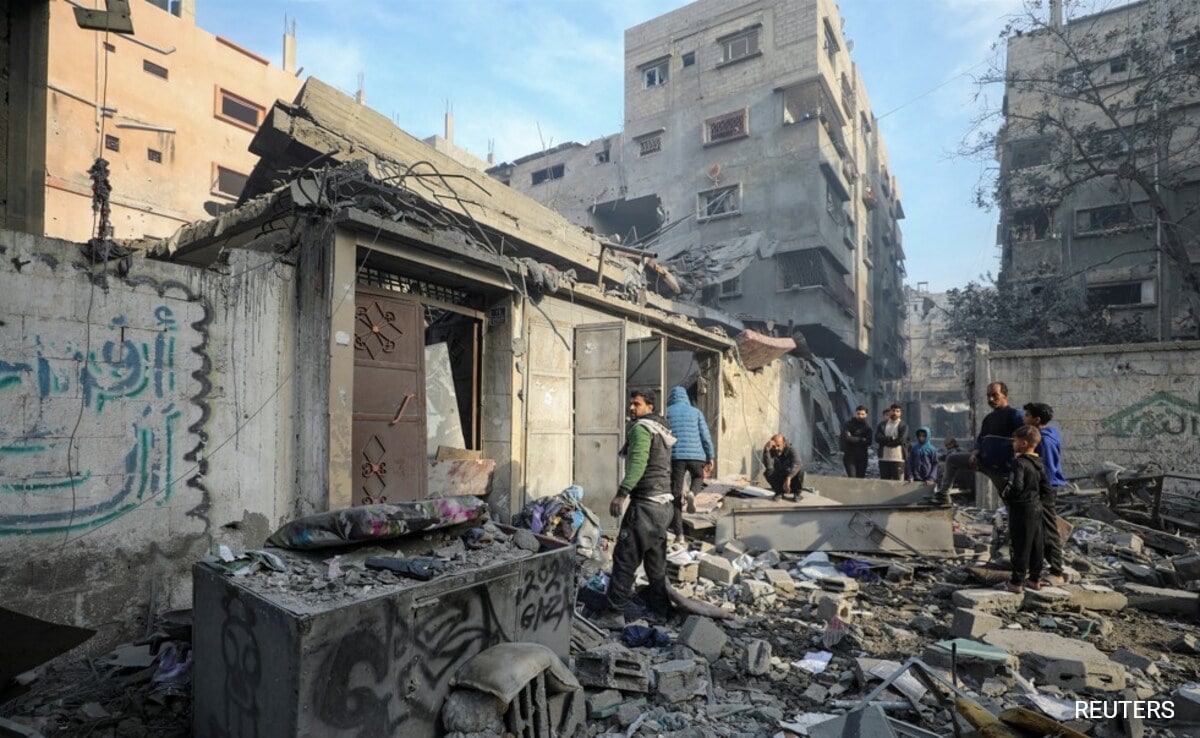
The current war has left Gaza in shambles, with entire neighbourhoods wiped off the map and critical infrastructure reduced to ruins. Roads are impassable, most hospitals are out of commission and the majority of schools funded by the UNRWA are now little more than mountains of rubble. Those that survived have become human shelters. Over 50 million tons of debris—laced with decomposing bodies and active ordnance—will need to be cleared before rebuilding can even begin, a process experts estimate will take well over a decade. To put the destruction into perspective, many experts have said that Gaza’s devastation rivals Ukraine’s after two-and-a-half years of war, despite being less than half the size of the capital Kyiv.
The destruction isn’t confined to Gaza. In the West Bank, Israel revoked work permits for around 1.50,000 Palestinians following the October 7 attacks, cutting off a vital source of income for families. A military crackdown, which Israel says is aimed at militants, has disrupted everyday life, with army raids and checkpoints paralysing economic activity and movement. The ripple effects are catastrophic, as unemployment in the West Bank has skyrocketed from under 13% to 32% and over 3,00,000 jobs have been lost since the Hamas attacks.
The economic toll is staggering. Gaza’s economic output plummeted to just over $221 million in the six months spanning late 2023 and early 2024—a fraction of the $1.34 billion recorded in the same period a year earlier.
Israel Clears Its Position
Israel maintains that the blockade is essential to prevent Hamas from acquiring weapons and holds the militant group responsible for Gaza’s dire conditions. The Israeli response to the UN reports was blunt. Its ambassador to the UN, Danny Danon, reacting to the report, said: “There is no future for the people of Gaza as long as they remain under the occupation of Hamas.” But there is pressure on Netanyahu to come up with a credible and practical rebuilding plan for Gaza, which he has yet to do.
Decades To Rebuild
In a September 2024 report, Mutasim Elagraa, coordinator of UNCTAD’s assistance to Palestinians, emphasised the monumental challenge in rebuilding Gaza: “If we want to return Gaza to pre-October 2023, we need tens of billions of dollars, or even more, and decades.” Achieving the ultimate goal of placing Gaza on a path toward sustainable development will demand even greater time, resources and global commitment. The Shelter Cluster, a global NGO, estimates it would take 40 years to rebuild Gaza if there are no further wars and if blockades are eased.
As violence continues unabated, the prospects for recovery and rebuilding remain grim. Without immediate international action and a comprehensive recovery plan, Gaza risks becoming a permanent humanitarian catastrophe.
Surviving On Aid
It is important to emphasise that the people of Gaza have depended on foreign assistance ever since the Israeli army left the strip in 2006 after 38 years of occupation. Following the 2006 election, Hamas and Fatah were always at loggerheads, which resulted in Mahmoud Abbas-led Fatah coming to power in the West Bank and Hamas government in Gaza. Both Palestinian territories have had the UN agency UNRWA working in the region since 1949. The UNRWA budget for the year 2023 was well over $1 billion. It got another $100 from NGOS and individual donors
Here’s a non-exhaustive list of the aid Gaza has received over the years:
- From 2014-2020, U.N. agencies spent nearly $4.5 billion in Gaza. More than 80% of that funding was channelled through the UN agency for Palestinian refugees. Some 280,000 children in Gaza attend schools run by UNRWA, which also provided health services and food aid.
- Qatar provided $1.3 billion in aid to Gaza since 2012 for construction, health services and agriculture. That included a $360 million pledge in January for 2021 and another $500 million pledged for reconstruction after the war in May 2021. Qatar’s aid also went to needy families and to help pay Hamas government salaries.
- The Palestinian Authority was believed to have spent $1.7 billion on Gaza in 2020, mainly on salaries for tens of thousands of civil servants who stopped working when Hamas took over in 2007
- Egypt pledged $500 million in aid after the May 2021 war, but it’s unclear how much had materialised. It certainly sent construction crews to clear rubble over the summer.
- Germany and other European countries had pledged to spend nearly 70 million euros ($80 million) on water projects in Gaza that year, in addition to their contributions to UNRWA.
- The US spent at least $5.5 million in Gaza that year on cash assistance and healthcare, in addition to contributing $90 million to UNRWA operations in Gaza and the occupied West Bank. The US was the single largest donor to UNRWA
- Israel had granted work permits to 10,000 Gazans, providing a crucial source of income for families with no known connection to Hamas.
Who Will Foot The Bill?
Even if Israel agrees to a rebuilding plan for Gaza after a potential ceasefire, the critical question remains: who will bear the cost? Israel is highly unlikely to finance reconstruction, fearing that doing so could be interpreted as an admission of guilt. Notably, after the brief 2010 war, Israel contributed over $10 million to Gaza’s reconstruction, but many within Israel criticised the move, arguing it implied culpability.
Wealthy Arab states, such as Saudi Arabia and the UAE, have frequently linked reconstruction aid to achieving a permanent solution to the Palestinian issue—one that includes the establishment of a fully-fledged Palestinian state. Qatar has always been a generous donor, but will it help again? It remains to be seen. However, Israel’s Prime Minister, Benjamin Netanyahu, has made it clear that his plans do not align with such aspirations. He has rejected the idea of a Palestinian state, dismissed Hamas governance and suggested indefinite Israeli control over Gaza’s security. Netanyahu has proposed outsourcing civilian administration to local Palestinians, but there is no clarity on how such an arrangement would function in practice
Equally pressing is the human toll of the war, which has left profound mental and physical scars on hundreds of thousands of survivors. More than 46,000 people have been killed in Gaza since the October 7 Hamas attacks, while scores have died in the West Bank. Israel, too, has endured tragedy, with over 1,200 people killed in the initial Hamas attacks and more than 250 taken hostage. The trauma for families on both sides is likely to be deep and long-lasting, complicating prospects for healing and reconciliation.
India’s Role
Any meaningful transformation of Gaza will require far more than economic investment; it will demand a resolution to deep-seated political, social and humanitarian challenges.
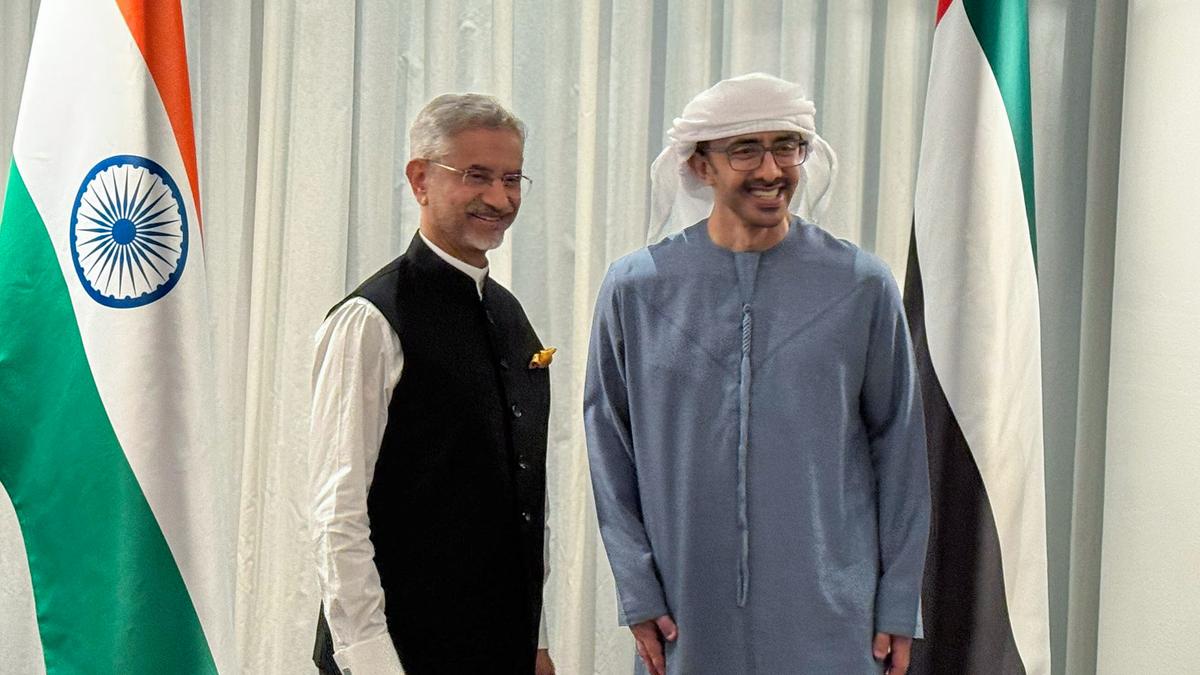
India has consistently advocated for dialogue as the path to peace in West Asia. In a podcast interview on Friday, Prime Minister Narendra Modi reiterated India’s commitment to peace: “I am in favour of peace, and I will cooperate in every effort for it. I tell this to Russia and Ukraine, Israel and Palestine. Our credibility has increased because of this.” India has also remained steadfast in its support for a two-state solution for Palestinians, a position aligned with that of many other nations.
India’s perspective is one of hope. History may forget the destruction of Gaza but, ultimately, will honour the vision and resilience of those who rise to transform it into something extraordinary. Perhaps, as Trump last October suggested, Gaza could one day resemble Monaco—a beacon of hope and prosperity where despair once prevailed.
(Syed Zubair Ahmed is a London-based senior Indian journalist with three decades of experience with the Western media)
Disclaimer: These are the personal opinions of the author