

Skip to content
  • Facebook
  • X
  • Linkedin
  • WhatsApp
  • YouTube
  • Associate Journalism
  • About Us
  • Privacy Policy
  • 033-46046046
  • editor@artifex.news
Artifex.News

Artifex.News

Stay Connected. Stay Informed.

  • Breaking News
  • World
  • Nation
  • Sports
  • Business
  • Science
  • Entertainment
  • Lifestyle
  • Toggle search form
  • U.S. official says Iran war truce ‘terminated’ hostilities for war powers deadline
    U.S. official says Iran war truce ‘terminated’ hostilities for war powers deadline World
  • Punjab To Conduct Study To Find Cause Of Rising Infertility Among Couples
    Punjab To Conduct Study To Find Cause Of Rising Infertility Among Couples Nation
  • Access Denied World
  • Key Meeting At PM’s House As BJP Zeroes In On New Delhi Chief Minister
    Key Meeting At PM’s House As BJP Zeroes In On New Delhi Chief Minister Nation
  • Radio Station In Poland Replaces Journalists With ‘AI’ Presenters
    Radio Station In Poland Replaces Journalists With ‘AI’ Presenters World
  • Access Denied
    Access Denied Nation
  • Keralam pollution control board asks Kochi Corporation to stop vehicle washing, waste dumping near Kadambrayar at Brahmapuram
    Keralam pollution control board asks Kochi Corporation to stop vehicle washing, waste dumping near Kadambrayar at Brahmapuram Nation
  • Access Denied World
Countries tighten research security as China’s dominance grows

Countries tighten research security as China’s dominance grows

Posted on January 9, 2025 By admin


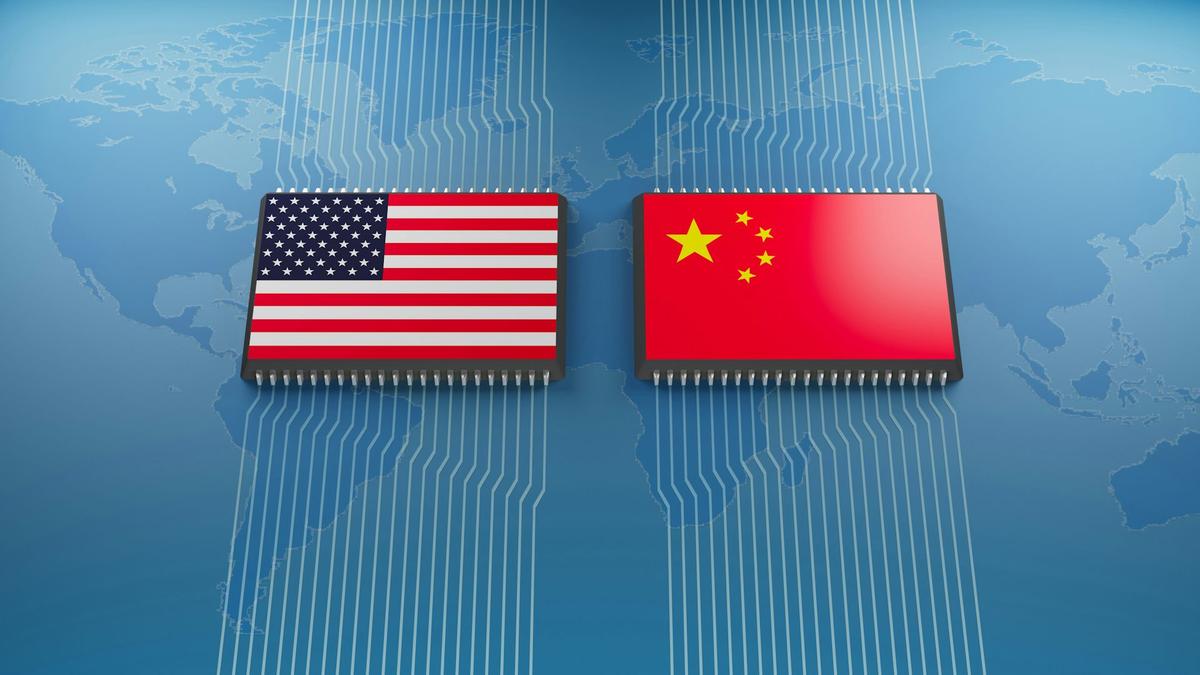
Amid heightened tensions between the United States and China, the two countries signed a bilateral science and technology agreement on December 13, 2024.
| Photo Credit: Getty Images

Amid heightened tensions between the United States and China, the two countries signed a bilateral science and technology agreement on December 13, 2024. The event was billed as a “renewal” of a 45-year-old pact to encourage cooperation, but that may be misleading.

The revised agreement drastically narrows the scope of the original agreement, limits the topics allowed to be jointly studied, closes opportunities for collaboration and inserts a new dispute resolution mechanism.

This shift is in line with growing global concern about research security. Governments are worried about international rivals gaining military or trade advantages or security secrets via cross-border scientific collaborations.

The European Union, Canada, Japan and the United States unveiled sweeping new measures within months of each other to protect sensitive research from foreign interference. But there’s a catch: Too much security could strangle the international collaboration that drives scientific progress.

As a policy analyst and public affairs professor, I research international collaboration in science and technology and its implications for public and foreign policy. I have tracked the increasingly close relationship in science and technology between the U.S. and China. The relationship evolved from one of knowledge transfer to genuine collaboration and competition.

Now, as security provisions change this formerly open relationship, a crucial question emerges: Can nations tighten research security without undermining the very openness that makes science work?

China’s ascent changes the global landscape

China’s rise in scientific publishing marks a dramatic shift in global research. In 1980, Chinese authors produced less than 2% of research articles included in the Web of Science, a curated database of scholarly output. By my count, they claimed 25% of Web of Science articles by 2023, overtaking the United States and ending its 75-year reign at the top, which had begun in 1948 when it surpassed the United Kingdom.

In 1980, China had no patented inventions. By 2022, Chinese companies led in U.S. patents issued to foreign companies, receiving 40,000 patents compared with fewer than 2,000 for U.K. companies. In the many advanced fields of science and technology, China is at the world frontier, if not in the lead.

Since 2013, China has been the top collaborator in science with the United States. Thousands of Chinese students and scholars have conducted joint research with U.S. counterparts.

Most American policymakers who championed the signing of the 1979 bilateral agreement thought science would liberalize China. Instead, China has used technology to shore up autocratic controls and to build a strong military with an eye toward regional power and global influence.

Leadership in science and technology wins wars and builds successful economies. China’s growing strength, backed by a state-controlled government, is shifting global power. Unlike open societies where research is public and shared, China often keeps its researchers’ work secret while also taking Western technology through hacking, forced technology transfers and industrial espionage. These practices are why many governments are now implementing strict security measures.

Nations respond

The FBI claims China has stolen sensitive technologies and research data to build up its defense capabilities. The China Initiative under the Trump administration sought to root out thieves and spies. The Biden administration did not let up the pressure. The 2022 Chips and Science Act requires the National Science Foundation to establish SECURE – a center to aid universities and small businesses in helping the research community make security-informed decisions. I am working with SECURE to evaluate the effectiveness of its mission.

Other advanced nations are on alert, too. The European Union is advising member states to boost security measures. Japan joined the United States in unveiling sweeping new measures to protect sensitive research from foreign interference and exploitation. European nations increasingly talk about technological sovereignty as a way to protect against exploitation by China. Similarly, Asian nations are wary of China’s intentions when it seeks to cooperate.

Australia has been especially vocal about the threat posed by China’s rise, but others, too, have issued warnings. The Netherlands issued a policy for secure international collaboration. Sweden raised the alarm after a study showed how spies had exploited its universities.

Canada has created the Research Security Centre for public safety and, like the U.S., has established regionally dispersed advisers to provide direct support to universities and researchers. Canada now requires mandatory risk assessment for research partnerships involving sensitive technologies. Similar approaches are underway in Australia and the U.K.

Germany’s 2023 provisions establish compliance units and ethics committees to oversee security-relevant research. They are tasked with advising researchers, mediating disputes and evaluating the ethical and security implications of research projects. The committees emphasize implementing safeguards, controlling access to sensitive data and assessing potential misuse.

Japan’s 2021 policy requires researchers to disclose and regularly update information regarding their affiliations, funding sources – both domestic and international – and potential conflicts of interest. A cross-ministerial R&D management system is unrolling seminars and briefings to educate researchers and institutions on emerging risks and best practices for maintaining research security.

The Organisation for Economic Co-operation and Development keeps a running database with more than 206 research security policy statements issued since 2022.

Openness waning

Emphasis on security can strangle the international collaboration that drives scientific progress. As much as 25% of all U.S. scientific articles result from international collaboration. Evidence shows that international engagement and openness produce higher-impact research. The most elite scientists work across national borders.

Even more critically, science depends on the free flow of ideas and talent across borders. After the Cold War, scientific advancement accelerated as borders opened. While national research output remained flat in recent years, international collaborations showed significant growth, revealing science’s increasingly global nature.

The challenge for research institutions will be implementing these new requirements without creating a climate of suspicion or isolation. Retrenchment to national borders could slow progress. Some degree of risk is inherent in scientific openness, but we may be coming to the end of a global, collaborative era in science.

This article is republished from The Conversation under a Creative Commons license. Read the original article here.

Published – January 09, 2025 01:02 pm IST



Source link

Science Tags:China, science, science and technology agreement, science news, Technology

Post navigation

Previous Post: Lebanon’s Parliament will try to pick President after 12 failed attempts over two years
Next Post: US Surgeon General Vivek Murthy Cites Indian Roots In “Parting Prescription”

Related Posts

  • Where or what is the human mind?
    Where or what is the human mind? Science
  • The chemical treasury in garlic
    The chemical treasury in garlic Science
  • European Space Agency to provide support to Aditya-L1 mission
    European Space Agency to provide support to Aditya-L1 mission Science
  • The ‘WarGames’ problem: Computer science has long understood what it takes to keep AI under control
    The ‘WarGames’ problem: Computer science has long understood what it takes to keep AI under control Science
  • Science Snapshots: September 6, 2026
    Science Snapshots: September 6, 2026 Science
  • With Sci-Hub gone, will the ‘One Nation, One Subscription’ scheme step up?
    With Sci-Hub gone, will the ‘One Nation, One Subscription’ scheme step up? Science

More Related Articles

Study reveals how Titanosaurs, earth’s biggest land animals, survived so long Study reveals how Titanosaurs, earth’s biggest land animals, survived so long Science
The science of plant communication The science of plant communication Science
What causes nausea? – The Hindu What causes nausea? – The Hindu Science
Science for All newsletter: Food waste, a major contributor to climate change Science for All newsletter: Food waste, a major contributor to climate change Science
Sci-Five | The Hindu Science Quiz: On Epimetheus Sci-Five | The Hindu Science Quiz: On Epimetheus Science
Harris or Trump? How US space policy will change under a new president Harris or Trump? How US space policy will change under a new president Science
SiteLock

Archives

  • October 2026
  • September 2026
  • August 2026
  • July 2026
  • June 2026
  • May 2026
  • April 2026
  • March 2026
  • February 2026
  • January 2026
  • December 2025
  • November 2025
  • October 2025
  • September 2025
  • August 2025
  • July 2025
  • June 2025
  • May 2025
  • April 2025
  • March 2025
  • February 2025
  • January 2025
  • December 2024
  • November 2024
  • October 2024
  • September 2024
  • August 2024
  • July 2024
  • June 2024
  • May 2024
  • April 2024
  • March 2024
  • February 2024
  • January 2024
  • December 2023
  • November 2023
  • October 2023
  • September 2023
  • August 2023
  • July 2023
  • June 2023
  • May 2023
  • April 2023
  • March 2023
  • February 2023
  • January 2023
  • December 2022
  • November 2022
  • October 2022
  • September 2022
  • August 2022
  • July 2022
  • June 2022
  • May 2022

Categories

  • Business
  • Nation
  • Science
  • Sports
  • World

Recent Posts

  • France protests: Macron vows to hold accountable those who ‘sought to bring down the Republic’
  • Temple development works worth ₹2,500 crore under way across Telangana: Bhatti Vikramarka
  • History sheeter among four arrested in Thanjavur on robbery charge
  • J&K Police book Army officer’s wife for sharing sensitive information with foreign intelligence operatives
  • RINL promotes over 1,200 executives after seven years

Recent Comments

  1. plinko idle on UP Teacher Who Asked Students To Slap Muslim Classmate
  2. Harrishor on UP Teacher Who Asked Students To Slap Muslim Classmate
  3. ArthurLal on UP Teacher Who Asked Students To Slap Muslim Classmate
  4. JamesHaddy on UP Teacher Who Asked Students To Slap Muslim Classmate
  5. Davidaccum on UP Teacher Who Asked Students To Slap Muslim Classmate
  • Yogi Adityanath Meets Injured In Hospital
    Yogi Adityanath Meets Injured In Hospital Nation
  • Access Denied
    Access Denied Nation
  • Cricket World Cup 2023 | England will be keen to win big against a struggling Afghanistan
    Cricket World Cup 2023 | England will be keen to win big against a struggling Afghanistan Sports
  • Netanyahu says ICC warrant against him won’t stop Israel from defending itself
    Netanyahu says ICC warrant against him won’t stop Israel from defending itself World
  • France on top alert after school attack, Louvre evacuated
    France on top alert after school attack, Louvre evacuated World
  • Access Denied
    Access Denied Nation
  • Sensex climbs 640 points; Nifty tops 22,300-level in early trade
    Sensex climbs 640 points; Nifty tops 22,300-level in early trade Business
  • Iran attacked Kuwait, UAE after strikes on its oil facilities: State TV
    Iran attacked Kuwait, UAE after strikes on its oil facilities: State TV World

Editor-in-Chief:
Mohammad Ariff,
MSW, MAJMC, BSW, DTL, CTS, CNM, CCR, CAL, RSL, ASOC.
editor@artifex.news

Associate Editors:
1. Zenellis R. Tuba,
zenelis@artifex.news
2. Haris Daniyel
daniyel@artifex.news

Photograher:
Rohan Das
rohan@artifex.news

Associate Journalists
1. Subrata Paul - AN/2020/01
2. Quamruz Zaman - AN/2021/22
3. Ahmed Sha - AN/2021/035
4. Ajay Kumar Shaw - AN/2021/39
5. Tahqiqul Hoda - AN/2021/21

Artifex.News offers Online Paid Internships to college students from India and Abroad. Interns will get a PRESS CARD and other online offers.
Send your CV (Subjectline: Paid Internship) to internship@artifex.news

Links:
Associate Journalism
About Us
Privacy Policy

News Links:
Breaking News
World
Nation
Sports
Business
Entertainment
Lifestyle

Registered Office:
72/A, Elliot Road, Kolkata - 700016
Tel: 033-22277777, 033-22172217
Email: office@artifex.news

Editorial Office / News Desk:
No. 13, Mezzanine Floor, Esplanade Metro Rail Station,
12 J. L. Nehru Road, Kolkata - 700069.
(Entry from Gate No. 5)
Tel: 033-46011099, 033-46046046
Email: editor@artifex.news

Copyright © 2023 Artifex.News Newsportal designed by Artifex Infotech.