




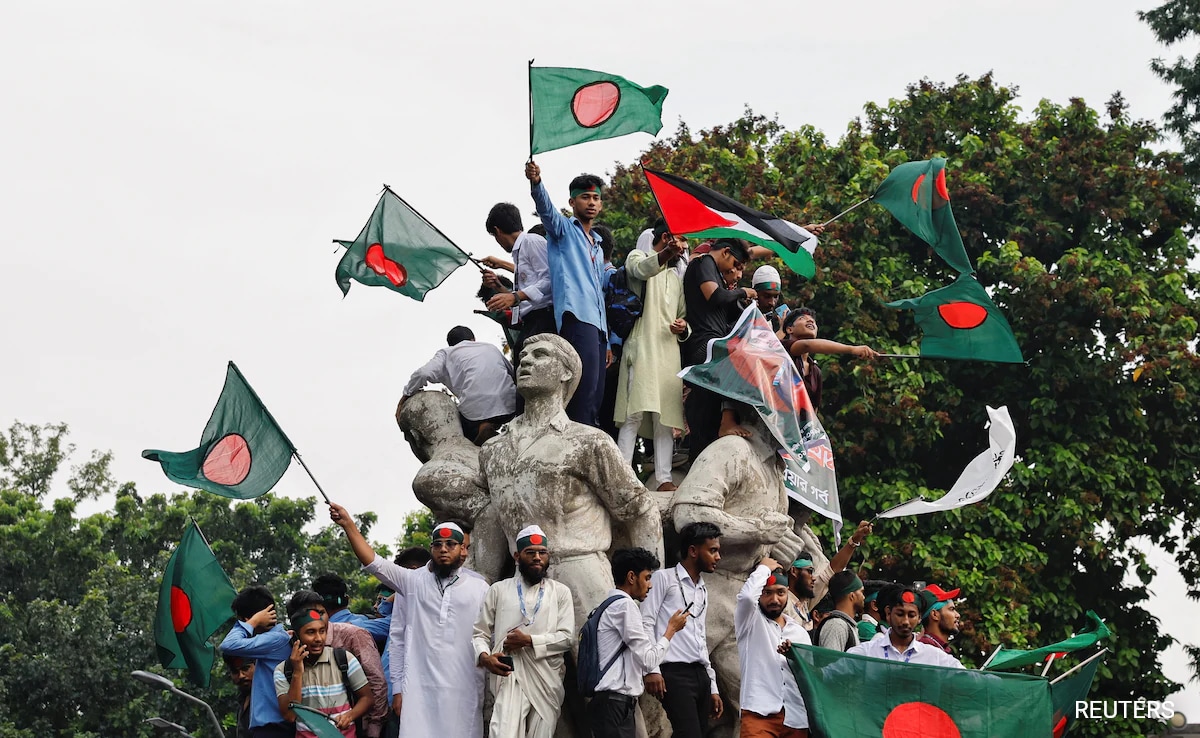
The Economist has chosen Bangladesh as the country of the year. In view of this mouthpiece of the British establishment, the regime change in Bangladesh is a positive development not only for Bangladesh but also for the international community as a whole.
Bangladesh has won this British accolade outcompeting other contenders such as Poland, South Africa, Argentina and Syria. This is odd in itself as one can see no discernible British stake in Bangladesh that is more important than the ouster of Assad from Syria or the importance of Tusk assuming power in Poland in the context of the Ukraine conflict, in which the UK is fully involved.
West’s Hypocrisy
The antipathy of the US and the UK towards Sheikh Hasina is well known. Her ouster has been encouraged on the ground that she had suppressed democracy in Bangladesh. Why should the issue of democracy in Bangladesh have such importance for distant, non-regional countries? Whether Bangladesh is a democracy or not does not impact any decipherable US or UK stake in the country that could be considered vital for their interests.
The hypocrisy in the American and British discourse on democracy is manifest. Both the US and the UK maintain very close ties with countries that are not only not democratic but do not even hold elections—however flawed—or allow political dissent, much less permit the existence of political parties. Many are monarchies or military dictatorships or are ruled by communist parties.
China is not a democracy but the West has flourishing relations with it. The US and the UK have not made democracy an issue in their ties with Vietnam, for example. The Biden government did not invite Singapore to the two Summits for Democracy that it had organised. This did not, however, lead to efforts by the West to make the Singapore polity more democratic.
Bullying Countries
The issue is therefore not one of countries adhering to democracy or Western values for them to be seen as acceptable partners. It is essentially a form of political bullying of weak countries at little cost.
Myanmar has long been targeted by the US with sanctions because of the grip its military junta has retained over the country’s political system. That this has pushed Myanmar increasingly into the arms of China and damaged our strategic interests in that country has been ignored by the US.
In the case of Bangladesh, too, the impact of Sheikh Hasina’s ouster on India’s vital strategic interests in that country has been ignored. Major India-Bangladesh connectivity and development projects were implemented during Sheikh Hasina’s rule, to mutual advantage. A key gain for India was the ouster of insurgent groups operating from Bangladesh soil against India, an issue that the Bangladesh Nationalist Party (BNP) government in Bangladesh was unwilling to address.
With the regime change in Bangladesh, the doors are also being opened for increased Chinese influence. Why should the stakes of the US and the UK in Bangladesh be more important than those of India, its immediate neighbour?
Ignoring India’s Concerns
The British (and the US) do not see the rise of Islamist forces in our region as a danger to India’s security. The British have always politically supported Pakistan on India-Pakistan issues. They have not taken adequate cognisance of Pakistan’s use of terrorism as an instrument of state policy towards India. Despite the increasing radicalisation of Pakistani society, the British have not changed their fundamental sympathies for Pakistan.
The insensitivity of the British to the ISI-linked activities of Khalistani extremists against India on UK soil is part of this syndrome. The British also took a position on the Taliban take-over of Afghanistan that did not take into account India’s concerns. This is true of US policies on the rise of Islamic forces in our region, including facilitating the return of the Taliban to power in Afghanistan.
This would explain why the British and the US are not particularly concerned about the Islamist forces gaining power in Bangladesh. Further afield we have seen how the West is welcoming the takeover of Syria by Islamist elements linked in the past to al Qaeda. A suitably adapted narrative is being promoted to present the new leadership in a new political and sartorial attire.
A Convenient Narrative
In the article lauding the regime change in Bangladesh, The Economist welcomes the overthrow of an autocrat. This convenient narrative disregards the fact that Bangladesh has had long spells of military rule. The BNP under Begum Khaleda Zia was, and is, by no means less autocratic, and the current forces in Bangladesh intend to re-write the country’s secular constitution to make it more Islamic. The Economist recognises that the BNP is “venal”. Where are, therefore, the “non-autocratic” or genuinely democratic forces in Bangladesh that The Economist has in mind?
The Economist refers to “Islamic extremism” as a threat, no doubt believing that flagging it pro-forma will protect the journal from being accused of completely ignoring the danger. The reality of Islamists calling the shots in Bangladesh is being overlooked to suit the narrative building on the change in power there. There is no reference to the Jamaat-e-Islami, which is active on the ground.
The paper calls for holding elections after ensuring that the courts are neutral. That seems comical after the Chief Justice has been hounded out of office and the other judges are being coerced into giving the kind of judgments that the mob wants. It also says the Yunus government must ensure that the opposition has time to organise. Which opposition, when the Awami League will not seemingly be allowed to participate in the elections?
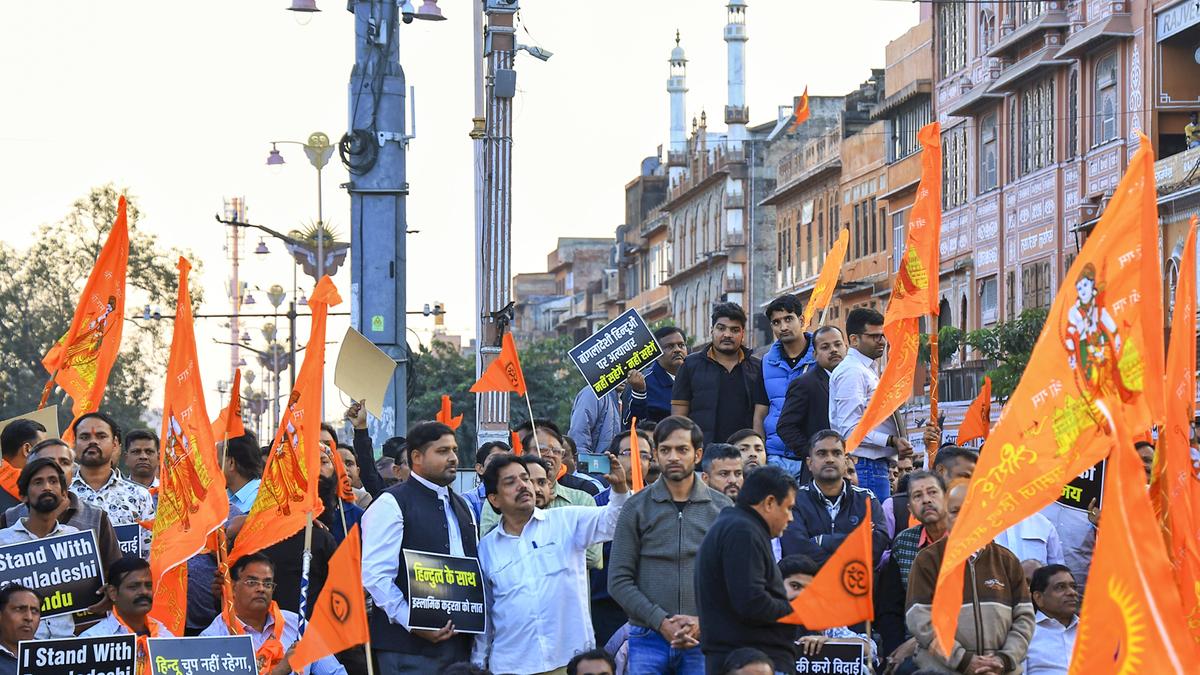
The paper claims, contrary to evidence, that the Yunus government has restored order and stabilised the economy. India has more than once flagged its concerns about the law and order situation on the ground in Bangladesh and the persecution of minorities in the country, especially the Hindu minority. But The Economist conveniently ignores this, which shows the bad journalistic faith of this leftover of British imperialist hubris.
(Kanwal Sibal was Foreign Secretary and Ambassador to Turkey, Egypt, France and Russia, and Deputy Chief Of Mission in Washington.)
Disclaimer: These are the personal opinions of the author