

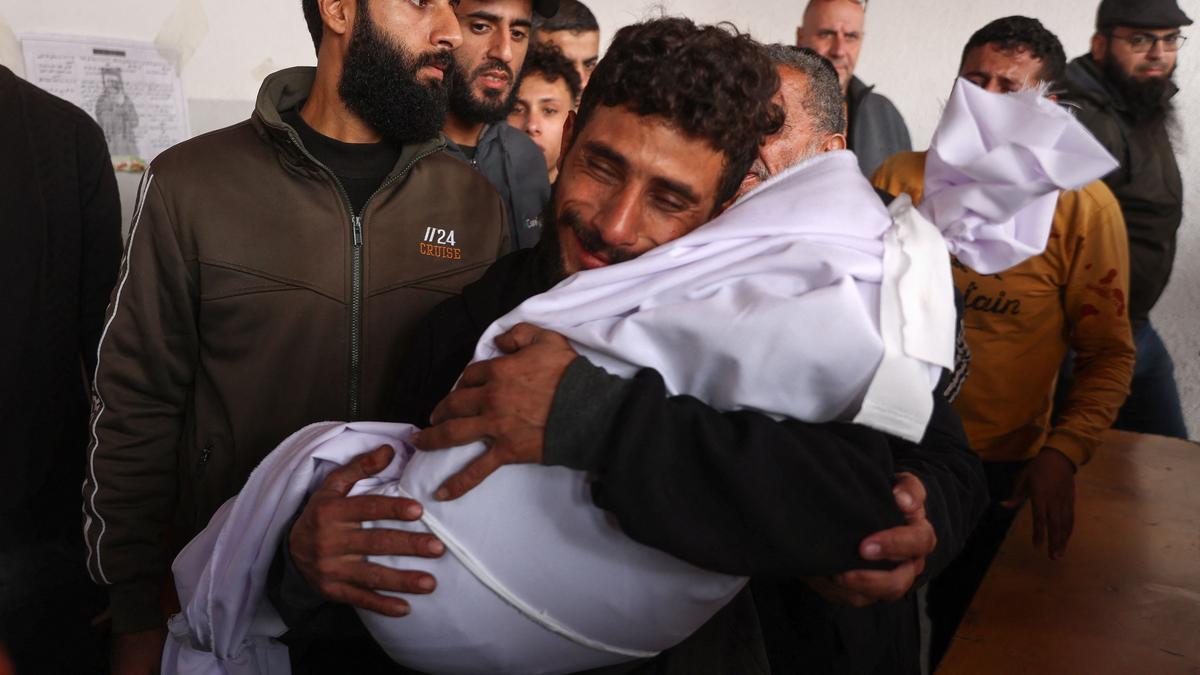
Nearly 400 days since the October 7, 2023 attacks on Israel that led to the Israeli bombardment of Gaza, West Bank, and Lebanon, more than 43,000 have been killed, mostly civilians. Despite calls by the United Nations (UN) for action to address the humanitarian crisis; an International Court of Justice (ICJ) verdict on the risk of genocide being perpetrated in Palestine; and warrants issued by the International Criminal Court (ICC) against Israeli Prime Minister Benjamin Netanyahu, former Israeli Defence Minister Yoav Gallant, and Hamas military leader Mohammed Deif for alleged war crimes, there seems no let-up in the violence. Is Israel’s war in Gaza putting the global order at peril? Navtej Sarna and Trita Parsi discuss the question in a conversation moderated by Suhasini Haidar. Edited excerpts:
When it comes to global institutions, why is the world so polarised? In particular, what explains the policy of the U.S. on enforcing rules on Israel?
 Trita Parsi: Put simply, this is a genocide and we can see it happening live, on our phones. The Lancet estimates the toll to be over 1,86,000 because 43,000 is only the number of bodies that have been counted in hospitals. So, I’m not surprised by the world’s outrage in comparison to what was felt over [Russia’s invasion] of Ukraine. Roughly, 700 children were killed in Ukraine through Russian bombardment over two-and-a-half years. More than 20,000 children have been killed in Gaza in about a year already. The intensity of this exceeds anything we have seen in any modern war.
What is surprising is America’s reaction. The Biden administration, in particular, has violated its own regulations to allow the Israeli government to do exactly what it wants. This has never happened before. The U.S. is shifting away from supporting the same international institutions, regulations, and laws that it played a crucial role in establishing. The first shift was away from international law to what it calls the ‘rules-based international order’. The rules-based order is not centred on law; it is centred on rules, and it is unclear who makes those rules. In reality, it ends up being a coalition or a willing partnership of countries, mostly allies, which is not universally accepted or applicable. This is what we are seeing when it comes to the ICC warrants as well.
Navtej Sarna: The U.S. has a sort of umbilical relationship with Israel. The U.S. has treated Israel as if it is a part of the U.S. which needs to be protected at all costs. Now the protection is for strategic reasons, but also because Israel represents a sort of a moral burden. It is the Jewish homeland, and after the Holocaust, there is a need to protect all Israelis and not let them lose the homeland. In the view of the U.S., Israel is also a democracy, a vulnerable democracy in a very hard neighbourhood, the only democracy in West Asia. While it is unstated so far, Israel is also believed to be a nuclear power, and one that can be a deterrent against another potential nuclear power that could be Iran. Now there are some contradictions: Israel’s democracy comes up against the fact that it has also been an occupying power and it is no longer vulnerable. But that has been overlooked because of the U.S.’s need to protect Israel for the other reasons I mentioned, particularly after the October 7 terror attacks by Hamas.

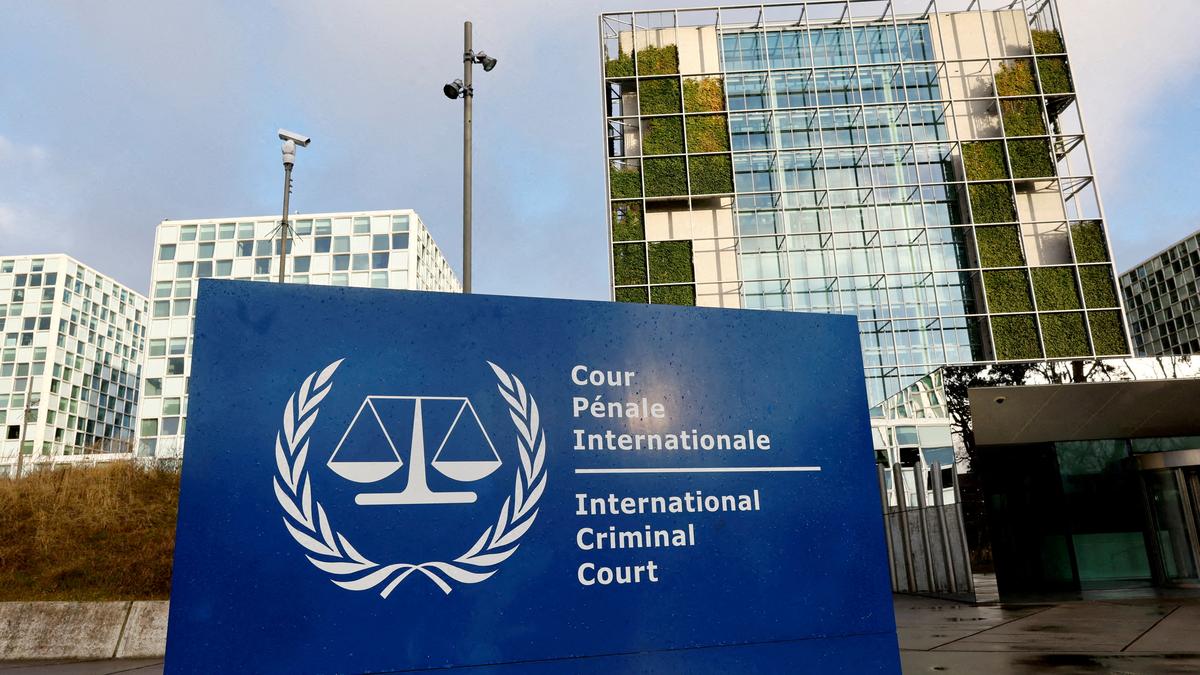
Israel has said the ICC warrant makes no sense because it is not a member state of the ICC, much like how India isn’t, and doesn’t submit to its jurisdiction. Can a warrant still be issued against Prime Minister Netanyahu?
Trita Parsi: Of course it can, because Israel is conducting war crimes in another country’s territory [Palestine]. This was an issue that the ICC had to address before taking up this issue.
Navtej Sarna: More than the ICC warrant, it is necessary to look at what has been done to international humanitarian law on the ground. Countries may react to the warrants one way or the other, but the sad part is that international humanitarian law has been flouted for months in [full] visibility of the world. Therefore, everybody has a responsibility to bear for allowing the [bombardment of Gaza to continue]. The U.S. has simply been putting up a diplomatic performance. If it really wanted to stop this, it could have.
Why didn’t India join the ICC and what is its position on this warrant now?
Navtej Sarna: The ICC has only 124 member states. India participated in the negotiations in the preparatory stages that led up to the setting up of the ICC in 2002. India participated in the negotiations of the Rome Statute. But it did not sign it or ratify it. India negotiates in good faith and when it finds that it can’t agree to some of the terms, it doesn’t sign. It is better than signing and flouting the terms. The reasons for not signing at the time were many. The Indian government felt that the ICC did not give sufficient place for national administrative and judicial institutions to deal with such crimes and it did not recognise the use of nuclear weapons and the use of other weapons of mass destruction as a crime which could be punished. It also did not recognise terrorism as a punishable crime against humanity, which, I think, was probably the breaking point for India, which had been a victim of terrorism for decades. Regarding the present ICC warrants [in the cases of both Russian President Vladimir Putin and Mr. Netanyahu], India has made it clear that it does not have much faith in the ICC.
At the UN Security Council (UNSC), there has been a logjam over votes involving Israel and Russia. Even in cases where the UNSC has passed resolutions, such as Afghanistan and Myanmar, the regimes in power are flouting directions with impunity. Are we reaching a point where the international world order, as is defined by these institutions, is unable to function? What would it take to make states including Israel compliant?
Navtej Sarna: It is clear that UNSC resolutions don’t mean a thing any more. In the case of Israel, the U.S. veto is used almost automatically. Naturally, Russia is going to use its veto for its own purposes, to protect itself, as it has in the past few years. The fact remains that the situation in which the UN was formed has changed from 1945. So even if the UNSC believes it can still deliver, the truth is it cannot. Every country has decided to live on a transactional, immediate short-term policy paradigm. There are no ‘value-based international relations’ today. It is not as if countries did not work in national interest earlier, but the brazenness with which we see ‘realpolitik’ used is at a different level. Until this situation changes — and I don’t see any signs of that — this kind of breakdown of international systems will probably increase.
Trita Parsi: I agree that we are in a very bad situation. However, I don’t think there is a collective desire not to have any rules and laws that will guide state to state conduct at this point. We can point to all of these examples in which clearly the system has not worked, but those are perhaps 5% of the situations. Of the interactions that are taking place in the world, there are many in which laws are being followed.
The UNSC absolutely needs reform. It has become a joke and at some point, it will become irrelevant. Things are going to get worse, but there is going to be a tipping point in which a critical mass of countries will recognise that it is actually in their interest to have a functioning global order and effective institutions that help uphold international conventions and laws.
Do you see Israel being brought to account internationally, or a ceasefire in Gaza any time soon, especially given the upcoming change in U.S. administration?
Trita Parsi: There is a likelihood of a ceasefire because incoming U.S. President Donald Trump will take a tough position on ending the war. While he has shown little regard for global institutions, and sees transactional value in backing Israel, I think he does not want to see the U.S. get dragged into another war in West Asia.
Navtej Sarna: I think Mr. Trump’s main motivation would be to show himself as the ultimate winner who can say he delivered on his campaign promise to stop the wars. But a ceasefire will not mean peace. Mr. Trump’s next step will be to want to go back to the Abraham Accords, which will be more difficult than it was in Trump 1.0 (2017-2021). The landscape has changed considerably for the countries that signed the accords (the UAE, Bahrain, Sudan, Morocco) and those that the U.S. was trying to bring on board (Saudi Arabia). There won’t be a return to peace or negotiations until the heart of the problem is addressed, which is the need for the establishment of a Palestinian state.
Listen to the conversation in The Hindu Parley podcast
Navtej Sarna served as India’s envoy to the United States, Israel and the United Kingdom; Trita Parsi, Executive Vice President of the Quincy Institute in Washington, and author of books on Iran-U.S. relations