




Gautam Adani addressed the 51st India Gem & Jewellery Awards in Jaipur
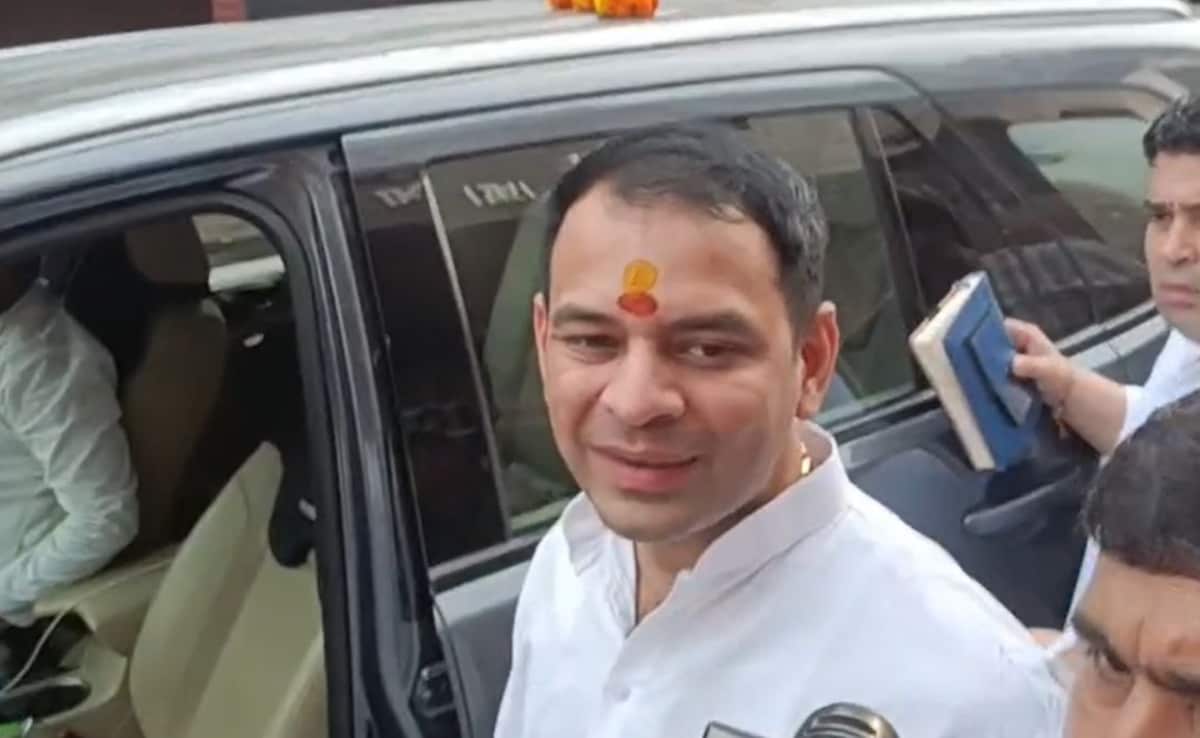
Billionare Gautam Adani today addressed the 51st India Gem & Jewellery Awards in Jaipur. During his speech, Mr Adani responded to the legal matter involving the US Department of Justice. He also spoke about how he made his first commission of Rs 10,000.
Here is his full speech:
“It is an honour to stand before you today at the 51st India Gem & Jewellery Awards. This is a celebration of India’s remarkable heritage in craftsmanship and innovation. My sincere congratulations to all the awardees whose exceptional efforts have carried forward India’s rich legacy in jewellery.
For centuries, India has been recognized as the undisputed leader in the space of gemstones and as the nation of unmatched artisans. Jewellery in our culture is not just ornamental – it is deeply symbolic, a marker of heritage, emotion, and aspiration. Your work has kept this tradition alive and relevant in an ever-changing world.
This industry is a powerhouse, providing employment to over five million Indians – a figure comparable to the workforce of our IT sector. Surat, as the global epicentre of diamond cutting and polishing, employs over a million skilled workers. This industry is not just an economic driver; it is a source of pride for our nation.
However, with great success comes an even greater responsibility: to innovate, expand, and lead courageously in the face of disruption.
My dear friends,
India is the jewel in the global crown of the cut-and-polished diamond market, holding 26.5% of the share, and silver jewellery at 30%. But the recent 14% decline in exports is more than a statistic – it is a wake-up call. It signals a turning point where challenges, both temporary and permanent, demand that we reimagine our approach.
We are at the start of a revolution. Sustainability and technology – two forces reshaping industries worldwide – are now at our doorstep. The rise of lab-grown diamonds, the demand for transparency and ethical practices, shifting consumer priorities, and the digital wave are not just disrupting the status quo; they are creating a new blueprint necessary for success.
This is therefore our moment to lead. The industry must think differently, act urgently, and innovate courageously. Today’s inflection point must be turned into an era of unprecedented opportunity for growth.
My dear friends,
Allow me to narrate a story to set some context. Over a decade ago, during a trip to California, I saw my first lab-grown diamond. The founder had enthusiastically shared his vision, confident this was the start of a revolution in the jewellery industry. And he was right. As we now know, lab-grown diamonds have evolved from a scientific wonder to a market disruptor. Today, they are officially recognized by the US Federal Trade Commission as real diamonds.
These diamonds now cost significantly less than the natural diamonds. Advances in Artificial Intelligence and material science are pushing their quality and precision even further. It’s not far-fetched to imagine a future where we design our own diamonds – specifying every detail, from cut to colour, clarity, and carat weight – making each piece uniquely personal. This is the future we must embrace.
Also, beyond traditional gems, the concept of jewellery itself is shifting. Watches, smartphones, and wearables are becoming the new personal status symbols, redefining luxury. Younger generations, in particular, are preferring technology and experiences over conventional luxury goods.
Another trend reshaping the market is the growing demand for unique, customized pieces, sparking a rise in custom design services. With technologies like 3D printing, CAD software, Virtual Reality, and Augmented Reality, the process of designing, manufacturing, and experiencing jewellery is on the brink of transformation.
These trends force us to rethink what we produce. They challenge us to create deeper emotional and traditional connections in line with changing consumer needs and behaviours.
It is this spirit of transformation that I want to explore today – what it truly means to Break the Status Quo. Only by challenging the status quo can we unlock new opportunities and shape the future.
My dear friends,
Let me start with a personal story about the first time that I broke the status quo. This story holds a very special place in my heart. It laid the foundation of who I was to become. Diamond trading was my entry point into the journey I took to become an entrepreneur.
In the year 1978, at the age of 16, I left my school, left my home in Ahmedabad, and took a one-way ticket to Mumbai. I had no idea what I would do but I was clear that I wanted to be an entrepreneur. And I believed Mumbai was the city of opportunities that would give me this chance.
I got my first opportunity at Mahendra Brothers, where I learned the art of diamond assorting. Even today, I recall the joy of closing my first deal. It was a transaction with a Japanese buyer and I got a commission of 10,000 rupees. That day marked the start of a journey that would shape the way I would live my life as an entrepreneur.
I also learned that trading makes a great teacher. What I learned, as a teenager, was that trading does not come with safety nets. In fact, it is a discipline where you must find the courage to fly without any protective nets. You must learn to take the jump and trust your own wings. In this field, hesitation is the difference between winning and losing. Each decision is a test, not just against the market, but against the limits of your own mind.
Trading also taught me another priceless lesson. Too much of an attachment to outcomes limits your ability to challenge the status quo.
Therefore, my dear friends,
To accept the status quo is to settle for a destiny where you stop questioning, stop dreaming, and stop exploring your own potential. The Adani Group stands where it is today because we are not afraid to challenge ourselves. We continuously redefined our boundaries, refused to accept limits, and were comfortable with the discomfort of change. Our journey has been built on the foundation of grit, and a relentless drive to overcome challenges.
As I said earlier, I got to Mumbai when I was 16. But, in 1981, just as I turned 19, I was called back to Ahmedabad to help with my family’s polymer business. India, at that time, faced a great shortage of raw materials given the intense import controls. I saw, first hand, the struggles that every small-scale industry faced. And then, it was in 1985, under the leadership of Shri Rajiv Gandhi, that India began to take its first steps towards economic liberalization.
I saw an early opportunity in these changes, especially with the relaxation of import policies for industries facing raw material shortages. While I had no prior experience in trading polymers, I still took a calculated risk and established a trading organization focused on imports.
By 1990, my trading venture was performing well, but then India itself faced a critical moment. The massive foreign exchange crisis of 1991 threatened the entire economy, ultimately leading to a wave of economic reforms initiated by Prime Minister Shri PV Narasimha Rao and then Finance Minister Dr Manmohan Singh.
These reforms dismantled the License Raj, opened up the economy to foreign investments, and reduced import tariffs. I saw, in this transformation of the Indian business landscape an opportunity to scale further. In 1991 itself, at the age of 29, I established a global trading house, expanding into polymers, metals, textiles, and agricultural products. In just two years, we became India’s largest global trading house, proving that the combination of speed and scale is a powerful driver of growth.
However, while the import-export business did very well, I had started questioning the status quo. I began realizing that for the next phase of growth I would need to own assets and build something lasting. In other words, I had to challenge everything I knew. Remember, I had no experience in building anything. We had not even laid a single brick in our life.
But opportunities show up for those that seek. And it was in 1995 that a transformative opportunity emerged when the BJP-led Gujarat government announced its port-led industrial development plan under a Public-Private- Partnership mode.
To summarize a long story, we quickly moved to establish Mundra Port. This transition, about 30 years back, was the start of our journey into the domain of infrastructure.
My dear friends,
I tell my team all the time that the future belongs to those who dare to see beyond the present and who recognize that today’s limits are tomorrow’s starting points.
Therefore:
- Be it my leaving home to bet on myself as a young diamond trader,
- or believing that we could build the nation’s largest port against the advice of all experts,
- to laying India’s first private railway to connect Mundra Port
- to being able to establish the world’s largest single-site thermal power generation capacity,
- to building the world’s largest coal import terminal,
- to being the first in India to build a private HVDC line,
- to making India’s largest ever investment in an OECD country,
- to operating India’s largest network of airports,
- to investing in a port in Israel and making a bet on the future of the India – Middle East corridor,
- to the redevelopment of the world’s largest slum
– as we took these journeys going beyond our comfort zone, we discovered other new possibilities.
Had we remained satisfied with the status quo, these new and adjacent opportunities would have never come our way.
Let me now outline a few examples.
In the case of logistics, what started as a port jetty, to import coal in 1998, has gone on to become the country’s largest port business. This business today – spans a network of 15 national and 5 international ports and thereby allowing us to expand into building a network of integrated logistic nodes.
These nodes now are made up of ports, rail, highways, warehouses, inland container depots, fulfilment centres, and trucking in a way no other company has ever achieved in the world. This journey has taken us deep into the Middle East – all the way into the Mediterranean through Israel – and into the heart of Africa. For me, it is no more just about ports. It is now about leveraging India’s geographic location and doing our part to help make our nation become the centre of the logistics world.
Likewise, what started as a single power plant in 2007, has now become not just India’s largest private thermal power generation company but has also allowed us to expand into adjacencies. This expansion has seen us become India’s largest private transmission company, largest private power distribution company, largest mine developer and operator, as well as the only company that successfully took up the challenge of cross-border supply of power to help a neighbouring nation.
Furthermore, it has allowed us to move into the area of renewable energy. Today, we are India’s largest solar panel manufacturing company as well as the world’s largest single-site renewable energy facility, well on our way to generate 30 GW of power, spread over a massive single span of land of more than 500 square kilometres.
Yet another example of challenging the status quo is our move into the airport business. In less than three years, we became the largest airport operator in the country. We then built our adjacencies that made us the largest airport logistics
player with almost 40% of India’s air cargo and have now undertaken the world’s largest slum redevelopment initiative, the Dharavi project.
And, I must add here that, for me, Dharavi is not just about slum redevelopment. It is about restoring dignity, creating a sustainable ecosystem, and changing the status quo for over one million residents.
My dear friends,
Looking back, while we have had our successes, our challenges have been even bigger. However, these challenges have not broken us. Instead, they have defined us. They have made us tougher and give us the unshakeable belief that after every fall, we will rise again, stronger, and more resilient than before.
Let me talk about three examples.
First – In 2010, when we were investing in a coal mine in Australia, our objective was clear: How to make India energy secure – and replace every two tons of poor-quality Indian coal with one ton of high-quality coal from Australia? However, the resistance from NGOs was huge and lasted almost a decade. In fact, it was so intense that we ended up funding the entire project of 10 billion dollars with our own equity. While we now have a world class operating mine in Australia and it could be seen as a great sign of our resilience, the fact is that 100% equity funding took away over 30 billion dollars of debt financing from our green energy projects.
The next example is from January last year, just as we were getting ready to launch our Follow-on Public Offering. We faced a short-selling attack initiated from abroad. This was not a typical financial strike; it was a double hit – targeting our financial stability and pulling us into a political controversy. All of this was further amplified by certain media with vested interests. But even in the face of such adversity, our commitment to our principles remained strong.
After successfully raising 20,000 crore rupees from India’s largest-ever FPO, we made the extraordinary decision to return the proceeds. We then further demonstrated our resilience by raising capital from several international sources and proactively reducing our Debt to EBITDA ratio to below 2.5 times, an unmatched metric in the global infrastructure space.
Moreover, our all-time record financial results in the same year showcased our commitment to operational excellence. Not a single Indian or foreign credit rating agency downgraded us. Finally, the Supreme Court of India’s affirmation of our actions validated our approach.
The third example is very recent. As most of you would have read, less than two weeks back, we faced a set of allegations from the US about compliance practices at Adani Green Energy.
This is not the first time we have faced such challenges. What I can tell you is that every attack makes us stronger and every obstacle becomes a stepping stone for a more resilient Adani Group. The fact is that despite a lot of the vested reporting, no one from the Adani side has been charged with any violation of the FCPA or any conspiracy to obstruct justice. Yet, in today’s world, negativity spreads faster than
facts – and as we work through the legal process, I want to re-confirm our absolute commitment to world class regulatory compliance.
My dear friends,
Over the years, I have come to accept that the roadblocks we face are the price of pioneering. The more bold your dreams, the more the world will scrutinize you. But it is precisely in that scrutiny that you must find the courage to rise, to challenge the status quo, and to build a path where none exists. To pioneer is to embrace the unknown, to break limits, and to believe in your vision even when the world cannot yet see it.
Therefore, as I conclude, let me leave you with three guiding thoughts: First,
Embrace technology and sustainability as the twin pillars of progress. These are not just trends – they are the foundation of our future. Your success will depend entirely on how boldly and at what scale you integrate these forces into your work.
Technology will accelerate possibilities, while sustainability will ensure that your growth is enduring and responsible. Together, they represent the compass for a better tomorrow.
Second,
Empower and uplift the skilled workforce at the heart of our transformation. These craftsmen and artisans are the custodians of India’s rich heritage, carrying forward skills passed down through generations. But for their talents to thrive in the modern world, they need access to new tools, digital platforms, and innovative training.
Imagine an ecosystem where a craftsman from a small town uses digital design software to create, market, and sell globally. This is the blend of tradition and technology we must champion.
And finally,
The future belongs to our youth. The younger generation brings fresh ideas, unshakeable energy, and a willingness to disrupt the old ways of thinking. We must nurture them, and equip them to balance tradition with transformation, culture with innovation, and legacy with sustainability. They are not just participants in the future – they are its architects.
Together, let us create an India where the wisdom of tradition, and the promise of innovation come together to challenge the status quo. And let us move forward with confidence to create a future where India’s gems illuminate the world with their brilliance.
Wish you all the best, Thank you.
Jai Hind”