




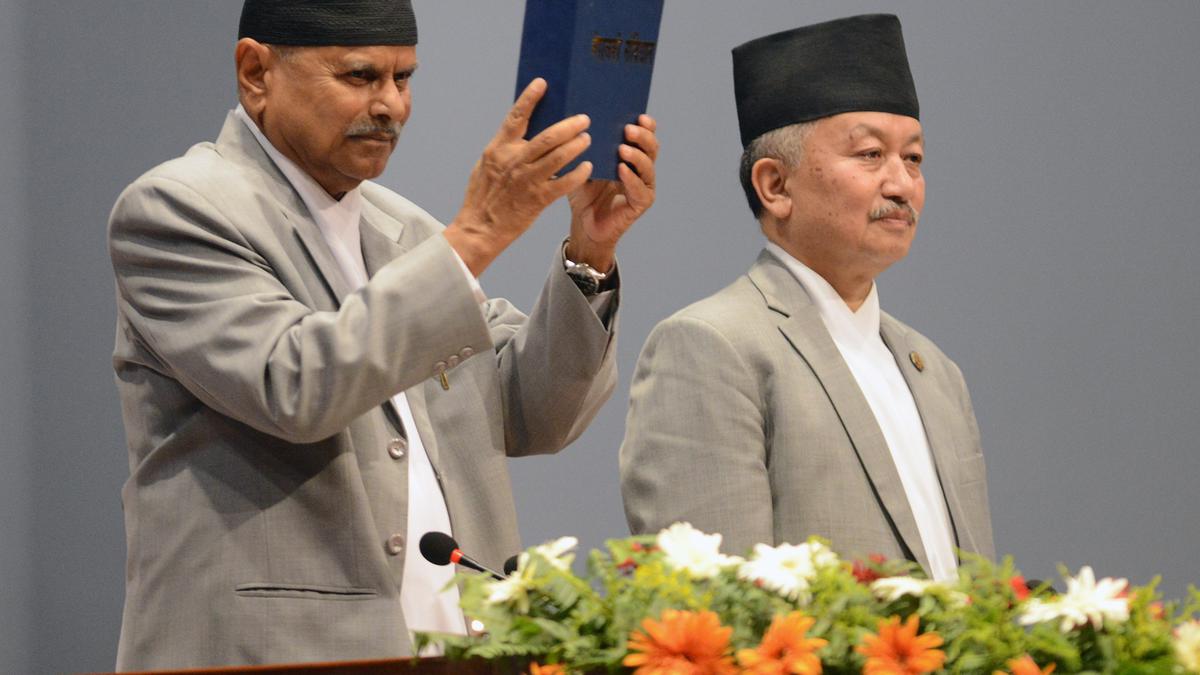
Koshi in the eastern region of Nepal is one of the seven provinces carved out after the country in 2015 adopted a new Constitution. The charter, which came amid strong protests by some sections of society, marked a watershed moment in Nepal’s history, as it entirely restructured the country. Nepal became a secular federal democratic republic, moving away from the constitutional monarchy and unitary form of governance.
The past few months, however, have not been smooth sailing for Koshi province. In recent months, the Supreme Court has had to intervene twice in the government formation process in Koshi, saying constitutional provisions were undermined by the parties while electing the Chief Minister. The dispute continues even today, and in the lack of a stable government, governance has taken a back seat.
Governance is what Nepal’s federalism has failed to deliver to the fullest, even though the new Constitution was said to be the panacea for all political, social and economic ills.
Koshi is just a representative case. Observers say federalism implementation as a whole continues to remain a big challenge.
Dr. Khim Lal Devkota, an expert on federalism and fiscal decentralisation, says as the country adopted federalism, the point of departure was encouraging.
“The first elections in 2017 after the Constitution gave three-tiers of government. The second set of elections in 2022 should have consolidated federalism but that does not seem to have happened,” said Dr. Devkota. “Implementation has been poor for very many reasons. It’s true that concerns have grown if the country can make an entire transition to federalism.”
The federalism debate
The debate whether Nepal needs federalism may have started, albeit in a weak form, about half a century ago, but it got a strong traction only in 2006-07. Protests in the eastern Tarai plains in Madhesh, bordering India, led by Madheshi parties forced Nepal’s major political forces to take federalism into serious consideration.
“The 2007 interim Constitution adopted federalism. But until 2015, the debate focused on boundaries of the provinces rather than on identity of the people and capacity to deliver,” says Tula Narayan Shah, a political analyst. “When the new Constitution was promulgated, restructuring of the state based on identity and capacity was ignored. The federalism dream did materialise, but not in the form it was envisioned.”
According to him, since there was a fault in the design, federalism was bound to hit a roadblock.
“As it became merely a power-sharing tool, people failed to taste the fruit of federalism — self-rule, service delivery and development,” said Mr. Shah.
After the fall of the Rana regime in 1951, Nepal saw a brief period of democracy until 1960 when King Mahendra usurped power in a royal-military coup and imposed the party-less Panchayat system — a unitary form of governance. The 1990 people’s movement restored democracy with constitutional monarchy. The Maoist war from 1996 to 2006 set the tone for abolition of the monarchy, while the 2007 Madhesh protests laid the foundation of federalism.
“In a diverse country like Nepal, moving away from the unitary system of governance and ushering in federalism should have actually meant accommodation of diversity and self-rule,” said Mr. Shah. “And since that has failed to happen, there may be federalism in Nepal, but more on paper and less in practice.”
Roadblocks
The first elections in 2017 in line with the 2015 Constitution installed governments at three layers — federal government in Kathmandu, the capital, provincial governments in seven provinces, and local governments in municipalities.
“But politicians in Kathmandu could not shed their centralised mindset. Kathmandu refused to devolve power,” said Mr. Shah. “Local-level governments were allowed to exercise some powers, but provinces were kept in check. What’s the point of having provinces when they are not even allowed to exercise authority on their own?”
Even eight years after the Constitution, the federal government has yet to formulate several umbrella laws that would facilitate the provinces to function. This has a direct impact on governance and service delivery, say analysts.
Dr. Devkota, who is also a member of the Upper House, describes failure to formulate required laws in the last eight years as tantamount to a crime committed by central level politicians on federalism.
“Unless there are laws, provinces cannot have civil servants and a police force of their own,” he said. “Nor can they mobilise budget and resources.”
Frequent government changes in provinces have been the bane of federalism. The first five years after the 2017 elections that installed governments in each province saw Nepal’s major political parties — the Nepali Congress, Communist Party of Nepal (Unified Marxist-Leninist) and the Communist Party of Nepal (Maoist Centre) — play musical chairs. The stability dream after decades of political transition is still a chimera.
Bimala Rai Poudyal, a PhD in Development Studies from the Institute of Social Studies, the Hague, says the coalition culture prevalent in Kathmandu permeated all the provinces and emerged as a big hindrance to federalism implementation.
“Instability has caused dissatisfaction,” said Dr. Poudyal, who is also a member of the Upper House. “There may not have been results as per expectations, but it would be wrong to say nothing has been achieved.”
Not everything is lost, according to her. “Despite roadblocks, there has been some remarkable progress,” she said. “There has been noteworthy representation of women and the marginalised in decision-making in local and provincial levels.”
Just not the physical division
Federalism in Nepal was envisaged not just for restructuring the state into different provinces. Besides ensuring effective service delivery and development, it meant, in essence, a guarantee of inclusion, creating an equitable society, end of discrimination against those who for decades had suffered at the hands of the unitary state, access of the underprivileged and marginalised to all organs of the state and an opportunity to the local people to govern on their own.
In Madhesh, where the seeds of federalism were sown, discontent runs high. Grievances among Madheshis, an umbrella term used for the people residing in the Madhesh region, stem from the fact that the Constitution was fast-tracked eight years ago ignoring their concerns. Major political parties, which were at the helm when the Constitution was passed, had pledged to amend the constitution, but no serious steps have been taken to that end.
Nityanand Mandal, a local journalist in Janakpur, the capital of Madhesh Province, says local parties that once claimed to be the torchbearers of federalism are so engrossed in power-sharing politics that they have completely ignored the spirit of federalism.
“Service delivery has not improved as desired. Those who were on the lower strata of the society continue to remain where they used to be,” said Mr. Mandal. “The chasm between the haves and have-nots has not been bridged.”
Observers say there is a lack of commitment to the Constitution and the values it espouses — republicanism, secularism and federalism — from the same parties that once championed the cause.
“Actually it has been business as usual. Parties are non-committal, public is nonchalant,” said Mr. Shah. “The federal government does not want to empower provinces.”
He sums Nepal’s current federalism up as a system “without gun, pen and money,” to describe provincial governments’ lack of control over police force, law-making and budget.
The problem is, say observers, federalism appears to have been orphaned by those who once were never tired of claiming to have birthed it.
Dr. Poudyal agrees that the country’s full transition to federalism has been hamstrung by the federal government and central level political parties’ controlling attitude and unwillingness to delegate power to lower level governments.
“There is no denying that federalism implementation has been encumbered by political parties. There are questions about ownership as well,” said Dr. Poudyal. “Federalism hence has been a slow work in progress.”
(Sanjeev Satgainya is an independent journalist based in Kathmandu)