



Skip to content
  • Facebook
  • X
  • Linkedin
  • WhatsApp
  • YouTube
  • Associate Journalism
  • About Us
  • Privacy Policy
  • 033-46046046
  • editor@artifex.news
Artifex.News

Artifex.News

Stay Connected. Stay Informed.

  • Breaking News
  • World
  • Nation
  • Sports
  • Business
  • Science
  • Entertainment
  • Lifestyle
  • Toggle search form
  • Heavy rains set off flash floods in northern Afghanistan, killing at least 47 people
    Heavy rains set off flash floods in northern Afghanistan, killing at least 47 people World
  • Neeraj finishes fourth in his season-opening event in Doha Diamond League
    Neeraj finishes fourth in his season-opening event in Doha Diamond League Sports
  • Ireland’s Asylum-Seeker Influx Shows UK’s Rwanda Plan Has Impact: Rishi Sunak
    Ireland’s Asylum-Seeker Influx Shows UK’s Rwanda Plan Has Impact: Rishi Sunak World
  • Access Denied
    Access Denied Nation
  • Blockbuster On Cards As Mohun Bagan Super Giant Take On NorthEast United In Durand Cup Final
    Blockbuster On Cards As Mohun Bagan Super Giant Take On NorthEast United In Durand Cup Final Sports
  • Won’t allow govt control of Ayodhya Ram temple at any cost, says VHP
    Won’t allow govt control of Ayodhya Ram temple at any cost, says VHP Nation
  • Access Denied Sports
  • AIFF Breaks Silence Over Alleged Physical Assault Of Two Women Footballers
    AIFF Breaks Silence Over Alleged Physical Assault Of Two Women Footballers Sports
Study shows fatal spread of H5N1 virus from ferrets to suckling kits

Study shows fatal spread of H5N1 virus from ferrets to suckling kits

Posted on November 23, 2024 By admin


Viral RNA titers significantly increased in milk over time and remained high in the mammary gland tissue

During 2020, the highly pathogenic avian influenza A(H5N1) virus of clade 2.3.4.4b emerged and rapidly spread across many parts of Africa, Asia, and Europe. In 2021-2022, the 2.3.4.4b clade of H5N1 first spread to North America and then to South America where it caused large-scale mortality of seabirds. Except for causing episodic mortality of pinnipeds and cetaceans in Europe and North America, the virus had not spread to marine mammals. But that changed when the virus spread along the coast of Peru and Chile in 2022-2023 infecting and killing 30,000 sea lions; the virus also spread to dolphins, otters, and other marine mammals.

In Argentina, the virus spread to and killed over 17,000 elephant seals, including almost 97% of the pups. Till the outbreak in different mammals, H5N1 viruses were considered to rarely infect mammals and not likely to spread among mammals.

By the end of March this year, the virus was first reported in cattle in Texas. The first case of a farm worker in the U.S. was reported on April 1.

The patient developed symptoms on March 27, days after the first case in cattle was reported. The patient had a history of exposure to dairy cattle presumed to be infected with the H5N1 virus. As of November 22, 2024, 58 H5N1 cases in people have been reported in the U.S., and the virus has spread to 616 dairy herds across 15 States, with 402 herds in California alone.

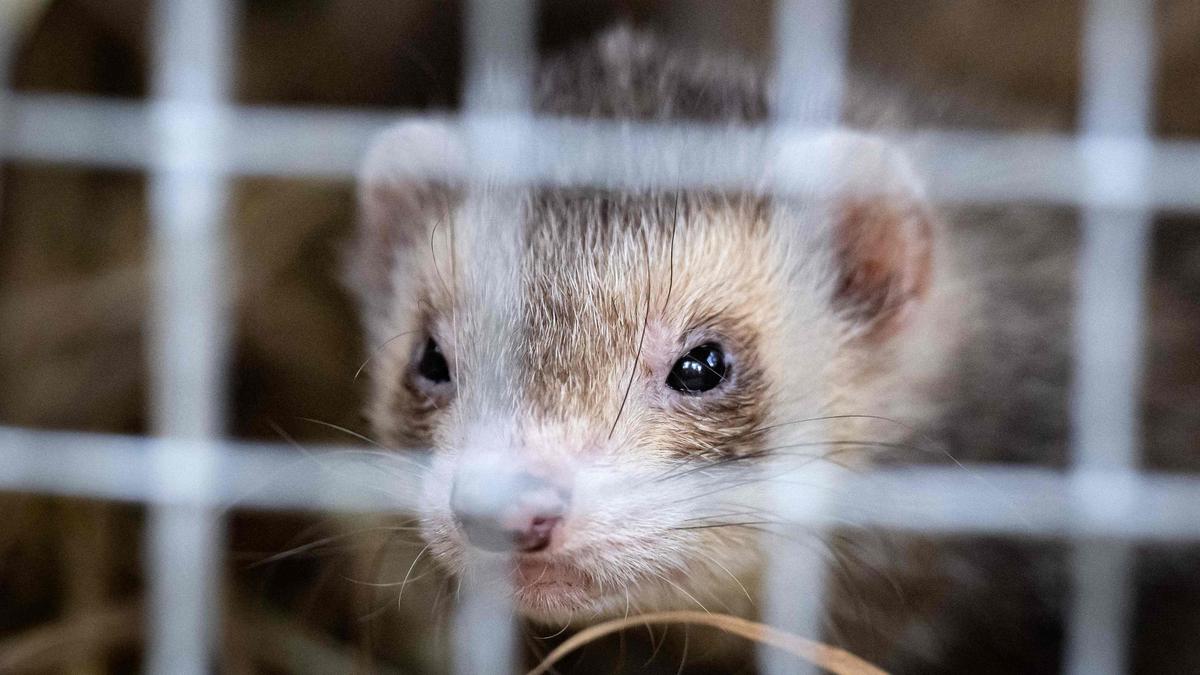
The 2.3.4.4b clade of the H5N1 virus is typically found in the mammary glands of cows, with milk from infected cows containing high levels of viral RNA and infectious virus. The virus infecting the mammary gland raises concerns about milk as a possible interface for virus transmission to offspring through breastfeeding, and even to humans. Since studying H5N1 infection in the mammary gland through controlled studies in cattle is challenging and labour-intensive, researchers turned to ferrets to study the H5N1 virus of 2.3.4.4b clade infection and transmission in the mammary gland via milk. The researchers found that lactating ferrets with mammary gland infection with the H5N1 influenza virus (2.3.4.4b clade) are capable of spreading and causing disease in suckling ferret pups. It also caused 100% fatality in lactating ferrets and ferret pups. The results have been posted on a preprint server; preprints are yet to be peer-reviewed.

In another study published in Nature on October 28, ferrets infected with the H5N1 virus (clade 2.3.4.4b) had severe disease and 100% mortality. The study found the virus spreading efficiently between ferrets in direct contact but failed to spread efficiently between ferrets via respiratory droplets or fomites.

To study H5N1 virus 2.3.4.4b clade infection from lactating ferrets to infants, the researchers of the preprint study inoculated the virus into the mammary glands of lactating ferrets at 2.5 weeks postpartum. The preprint study notes that viral RNA titers significantly increased in milk over time and remained high in the mammary gland tissue. While suckling kits had significantly increased viral RNA in the oral and nasal cavities, the virus in the nasal cavities of lactating ferrets was delayed, with only minimal virus present in the oral cavity. Viral RNA levels in the lungs were low in the lactating ferrets but high in the suckling kits. This demonstrates that H5N1 2.3.4.4b clade infection in lactating ferrets leads to mastitis-related disease and virus spread to suckling pups, resulting in 100% mortality among the pups, the study notes.

They found intramammary H5N1 virus (clade 2.3.4.4b) infection resulted in 100% mortality of kits four days post-inoculation and six days post-inoculation in the case of the lactating ferrets. Milk collected from lactating ferrets showed viral RNA levels increased compared to baseline. “The presence of virus in the mammary gland suggests active viral replication within the gland,” they note.

Significant increase

While there was no difference in viral RNA in the case of the oral cavity of the lactating ferrets, there was a significant increase in viral RNA in the oral cavity of the suckling kits. RNA levels in the pups’ oral cavity peaked at four days post-inoculation, which is consistent with viral transmission in milk, they write. Though the lactating ferrets did not show any viral RNA in the nasal area even on day two post-inoculation, prolonged contact with the suckling kits led to an increase in viral RNA in the lactating ferret.

“Viral kinetics in the oral and nasal cavities suggest that kits developed respiratory infections directly from H5N1-positive milk, leading to respiratory transmission to the mother. These findings indicate that intramammary H5N1 infection causes more severe disease in lactating ferrets and their kits than H1N1,” the researchers write.

Published – November 23, 2024 09:00 pm IST


Source link

Science

Post navigation

Previous Post: IPL Auction: Rishabh Pant Set For Date With History But Arshdeep Singh Won’t Be Far Behind
Next Post: Hearing tests show that minke whales can hear high-frequency sounds

Related Posts

  • The man behind the Mersenne primes
    The man behind the Mersenne primes Science
  • How are noisy celebrations and DJs affecting our hearing?
    How are noisy celebrations and DJs affecting our hearing? Science
  • What is aircraft turbulence and how common is it? | Explainer
    What is aircraft turbulence and how common is it? | Explainer Science
  • ISRO ties up with European Space Agency for Gaganyaan missions
    ISRO ties up with European Space Agency for Gaganyaan missions Science
  • US Open lit by lights designed to cut light pollution
    US Open lit by lights designed to cut light pollution Science
  • Watch: U.K. forecasts ‘Biggest’ El Niño: 2027 could be the hottest year ever recorded
    Watch: U.K. forecasts ‘Biggest’ El Niño: 2027 could be the hottest year ever recorded Science

More Related Articles

Why is there a cold wave over parts of Telangana? | Explained Why is there a cold wave over parts of Telangana? | Explained Science
What a water-wise city would look like – and how India can get there What a water-wise city would look like – and how India can get there Science
Sci-Five | The Hindu Science Quiz: On Antimatter Sci-Five | The Hindu Science Quiz: On Antimatter Science
AI has a large and growing carbon footprint AI has a large and growing carbon footprint Science
How OpenAI’s ChatGPT helped scientists crack a tedious physics problem How OpenAI’s ChatGPT helped scientists crack a tedious physics problem Science
Study maps future glacial lakes Study maps future glacial lakes Science
SiteLock

Archives

  • October 2026
  • September 2026
  • August 2026
  • July 2026
  • June 2026
  • May 2026
  • April 2026
  • March 2026
  • February 2026
  • January 2026
  • December 2025
  • November 2025
  • October 2025
  • September 2025
  • August 2025
  • July 2025
  • June 2025
  • May 2025
  • April 2025
  • March 2025
  • February 2025
  • January 2025
  • December 2024
  • November 2024
  • October 2024
  • September 2024
  • August 2024
  • July 2024
  • June 2024
  • May 2024
  • April 2024
  • March 2024
  • February 2024
  • January 2024
  • December 2023
  • November 2023
  • October 2023
  • September 2023
  • August 2023
  • July 2023
  • June 2023
  • May 2023
  • April 2023
  • March 2023
  • February 2023
  • January 2023
  • December 2022
  • November 2022
  • October 2022
  • September 2022
  • August 2022
  • July 2022
  • June 2022
  • May 2022

Categories

  • Business
  • Nation
  • Science
  • Sports
  • World

Recent Posts

  • Ranji Trophy: Bengal picks up Delhi’s gauntlet to win by nine wickets
  • Stock markets close lower amid elevated crude oil, rising inflation
  • C.Ve. Shanmugam wants AIADMK leadership to consult with functionaries over party’s bypoll loss
  • Activists allege tender for beach pathway for persons with disabilities is incomplete
  • BOXING | Battle between BFI chief and general secretary intensifies

Recent Comments

  1. RobertTes on UP Teacher Who Asked Students To Slap Muslim Classmate
  2. Manuelret on UP Teacher Who Asked Students To Slap Muslim Classmate
  3. RobertTes on UP Teacher Who Asked Students To Slap Muslim Classmate
  4. RobertTes on UP Teacher Who Asked Students To Slap Muslim Classmate
  5. BrentWes on UP Teacher Who Asked Students To Slap Muslim Classmate
  • OpenAI to lease massive new AI data centre in U.S., backed by Nvidia
    OpenAI to lease massive new AI data centre in U.S., backed by Nvidia Business
  • Access Denied World
  • India’s Shreyanka Patil Nominated For ICC Women’s Emerging Cricketer Of The Year 2024
    India’s Shreyanka Patil Nominated For ICC Women’s Emerging Cricketer Of The Year 2024 Sports
  • Pink ball Test: Nathan Lyon, a quintessential Australian hero at Adelaide
    Pink ball Test: Nathan Lyon, a quintessential Australian hero at Adelaide Sports
  • Access Denied Sports
  • Congress vs Congress Over Key Karnataka Seat, 5 Legislators Threaten To Quit
    Congress vs Congress Over Key Karnataka Seat, 5 Legislators Threaten To Quit Nation
  • MRF net profit surges over two-fold to ₹692 crore in Q3
    MRF net profit surges over two-fold to ₹692 crore in Q3 Business
  • Access Denied Business

Editor-in-Chief:
Mohammad Ariff,
MSW, MAJMC, BSW, DTL, CTS, CNM, CCR, CAL, RSL, ASOC.
editor@artifex.news

Associate Editors:
1. Zenellis R. Tuba,
zenelis@artifex.news
2. Haris Daniyel
daniyel@artifex.news

Photograher:
Rohan Das
rohan@artifex.news

Associate Journalists
1. Subrata Paul - AN/2020/01
2. Quamruz Zaman - AN/2021/22
3. Ahmed Sha - AN/2021/035
4. Ajay Kumar Shaw - AN/2021/39
5. Tahqiqul Hoda - AN/2021/21

Artifex.News offers Online Paid Internships to college students from India and Abroad. Interns will get a PRESS CARD and other online offers.
Send your CV (Subjectline: Paid Internship) to internship@artifex.news

Links:
Associate Journalism
About Us
Privacy Policy

News Links:
Breaking News
World
Nation
Sports
Business
Entertainment
Lifestyle

Registered Office:
72/A, Elliot Road, Kolkata - 700016
Tel: 033-22277777, 033-22172217
Email: office@artifex.news

Editorial Office / News Desk:
No. 13, Mezzanine Floor, Esplanade Metro Rail Station,
12 J. L. Nehru Road, Kolkata - 700069.
(Entry from Gate No. 5)
Tel: 033-46011099, 033-46046046
Email: editor@artifex.news

Copyright © 2023 Artifex.News Newsportal designed by Artifex Infotech.