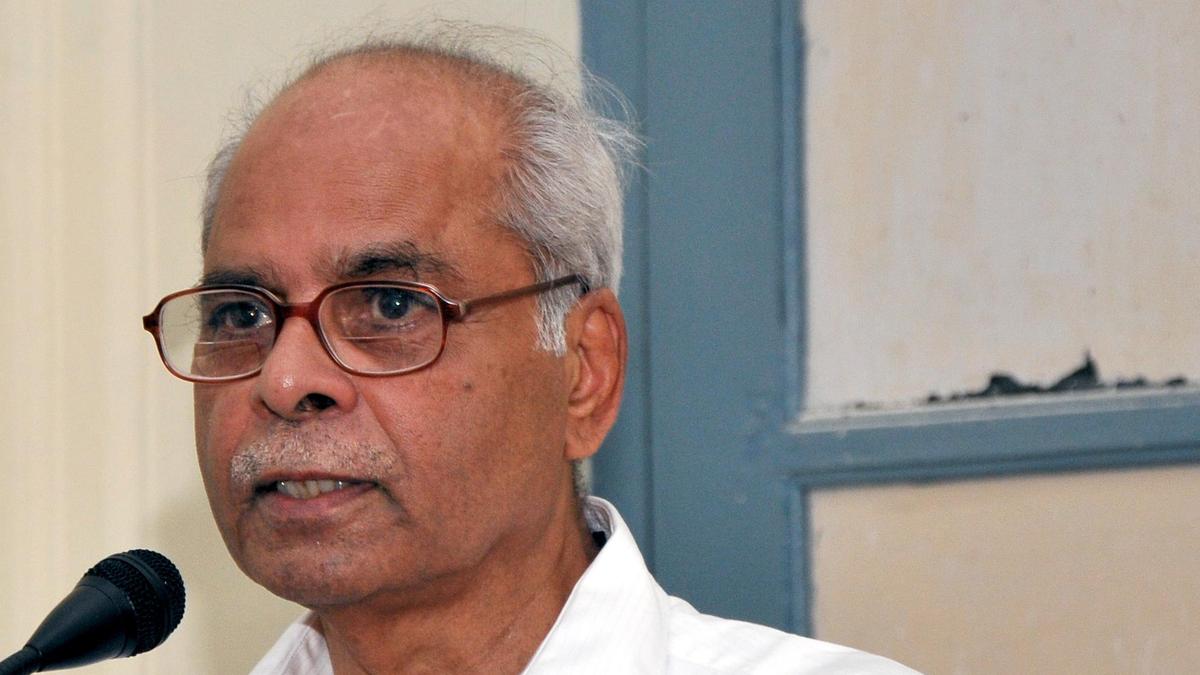




Justice BV Nagarathna delivered a concurrent but separate judgment
New Delhi:
Judges should be mindful of not castigating past judges only because they reached a different outcome while deciding a case, Justice BV Nagarathna said today. The remark was made as the Supreme Court ruled that all privately owned property does not qualify as community resources that the State can take over for the common good.
The landmark verdict was delivered by a nine-judge Constitution bench led by Chief Justice of India DY Chandrachud and comprising Justice Hrishikesh Roy, Justice Nagarathna BV, Justice Sudhanshu Dhulia, Justice JB Pardiwala, Justice Manoj Misra, Justice Rajesh Bindal, Justice SC Sharma and Justice AG Masih. The bench passed the ruling with an 8-1 majority. Three judgments were authored — the Chief Justice wrote one for himself and six colleagues, Justice BV Nagarathna wrote a concurrent but separate judgment and Justice Sudhanshu Dhulia dissented.
One of the past verdicts referred to extensively during today’s judgment was the 1977 ruling in the State of Karnataka vs Ranganath Reddy case. This case addressed the issue of nationalisation of private transport companies and the extent to which the State can intervene in private enterprises. The matter had come up when the then Karnataka government brought a law to nationalise private bus services. A seven-judge bench had then ruled with a 4-3 majority
that all private property did not fall within the ambit of material resources of the community. Justice VR Krishna Iyer, one of the judges in the minority, had contended that both public and private resources fell within the ambit of “material resources of the community” under Article 39(b) of the Constitution.
“We have been guided by the thought that an all-too-large gap between the law and public needs, arising out of narrow notions, must be bridged by broadening the constitutional concepts to suit the changing social consciousness of the emerging Welfare State. Institutional crises and confrontations can be and should be avoided by evolving a progressive interpretation, discarding over-sensitivity to under-valuation when private property is taken for public good,” Justice Iyer had said.
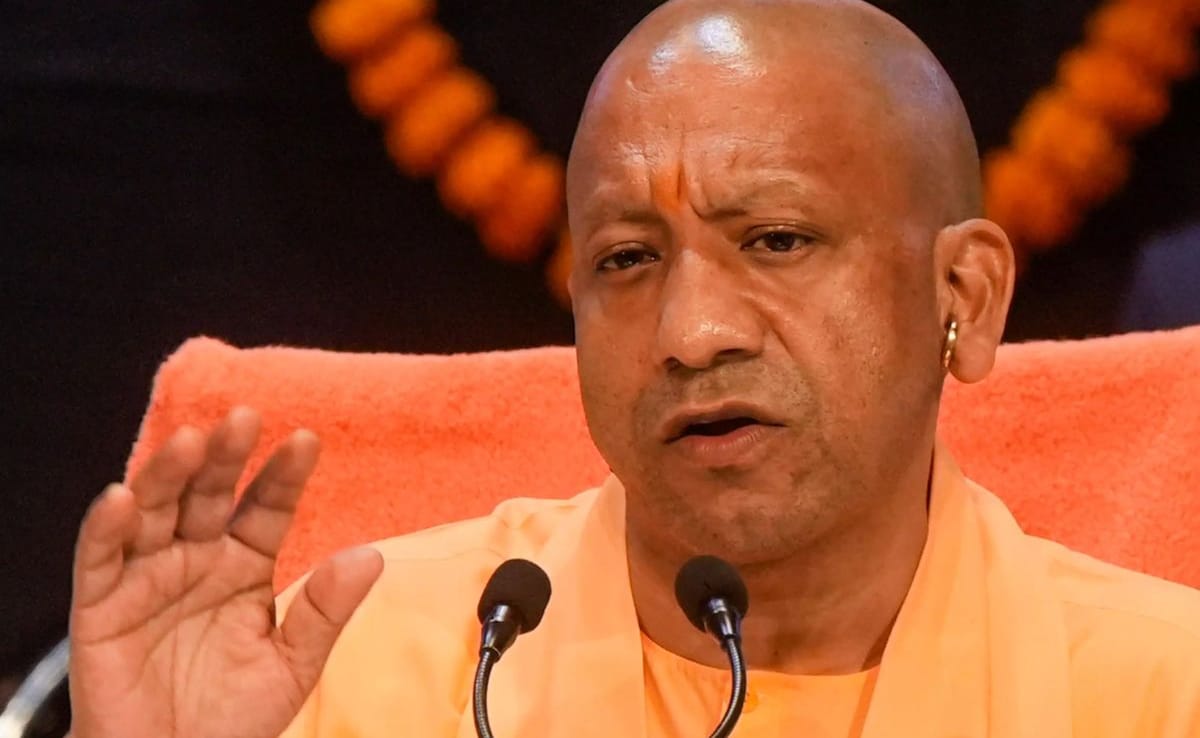
Delivering the judgment today, the Chief Justice said, “Does material resource of a community used in 39B include privately owned resources? Theoretically, the answer is yes, the phrase may include privately owned resources. However, this court is unable to subscribe itself to the minority view of Justice Iyer in Ranganath Reddy. We hold that not every resource owned by an individual can be considered a material resource of a community only because it meets the qualifier of material needs.”
The Chief Justice also pointed out that Justice Iyer referred to Karl Marx in his judgment. “The judgment is rooted in the economic ideology that private property can be used by the state for the welfare of people. The role of this court is not to lay down economic policy but to facilitate to lay down economic democracy,” he said, adding that the country’s economy has shifted from a socialist approach to a liberal economic regime.
“The doctrinal error in the Krishna Iyer approach was, postulating a rigid economic theory, which advocates for greater state control over private resources, as the exclusive basis for constitutional governance,” the Chief Justice said.
In response, Justice Nagarathna said Justice Iyer’s judgment on community resources came against a backdrop of a constitutional and economic structure that gave primacy to the State in a sweeping manner. “Can principles of liberalisation, privatisation and globalisation adopted in India since the year 1991, reforms in the economy and structural changes that have been brought about in these last three decades hold a mirror against the socioeconomic policies that were followed in the decades immediately after India attained independence? As a result, can the judgments of this Court which interpreted the Constitution to be compatible with the policies of the State then be considered to be “a disservice to the broad and flexible spirit of the Constitution” and the authors of the said judgments being critiqued today?” she said.
Justice Nagarathna flagged some of the Chief Justice’s observations on Justice Iyer’s judgment and said they are “unwarranted and unjustified”. “It is a matter of concern as to how the judicial brethren of posterity view the judgments of the brethren of the past, possibly by losing sight of the times in which the latter discharged their duties and the socio-economic policies that were pursued by the State and formed part of the constitutional culture during those times. Merely because of the paradigm shift in the economic policies of the State to globalisation and liberalisation and privatisation, compendiously called the “Reforms of 1991″, which continue to do so till date, cannot result in branding the judges of this Court of the yesteryears ‘as doing a disservice to the Constitution’,” she wrote.
She noted that such observations made by the Supreme Court create a “concavity in the manner of voicing opinions on judgments of the past and their authors by holding them doing a disservice to the Constitution of India and thereby implying that they may not have been true to their oath of office as a Judge of the Supreme Court of India”. Justice Nagarathna, however, agreed with the majority judgment and said a “flexible interpretation” of the Constitution is needed as times change.
Justice Nagarathna said the Indian judiciary has an obligation to meet newer challenges by “choosing only that part of the past wisdom which is apposite for the present without decrying the past judges”. “I say so, lest the judges of posterity ought not to follow the same practice. I say that the institution of the Supreme Court of India is greater than individual judges, who are only a part of it at different stages of history of this great country,” she said.
Justice Dhulia, who delivered a dissenting judgment, too, flagged the Chief Justice’s remark in the majority judgment on Justice Iyer’s ruling. “I must also record here my strong disapproval on the remarks made on the Krishna Iyer Doctrine as it is called. This criticism is harsh, and could have been avoided,” he said.