
Skip to content
  • Facebook
  • X
  • Linkedin
  • WhatsApp
  • Associate Journalism
  • About Us
  • Privacy Policy
  • 033-46046046
  • editor@artifex.news
Artifex.News

Artifex.News

Stay Connected. Stay Informed.

  • Breaking News
  • World
  • Nation
  • Sports
  • Business
  • Science
  • Entertainment
  • Lifestyle
  • Toggle search form
  • “England Can Still Qualify”: Wasim Jaffer Pokes Michael Vaughan, Hilariously Mocks Defending Champions Sports
  • Rabada leads the way as South Africa win first test against Bangladesh Sports
  • Max Verstappen Fastest In Dry Final Practice For Japan GP Sports
  • How Iran, China, Russia Are Targeting US Elections World
  • Karthikeya, Amaan guide India U19 to 7-wkt win against Australia U-19 Sports
  • Israel Strikes Lebanon, Says Thwarted Major Hezbollah Attack World
  • In April Fools Day Prank, Trump Announces He Is Suspending His Campaign World
  • India On South China Sea Tensions Nation

First science result from Aditya-L1 mission is out

Posted on November 3, 2024 By admin


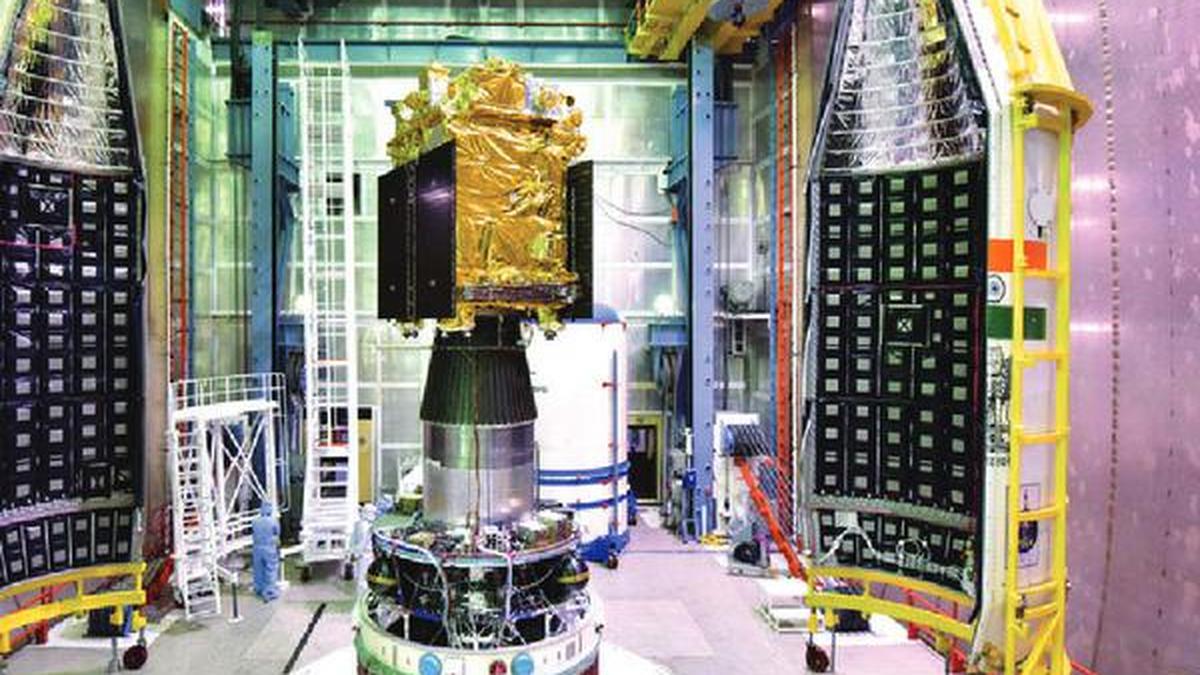
The Aditya-L1 spacecraft is flanked by two halves of the payload fairing of the PSLV C57 mission rocket, before its launch in September 2023.
| Photo Credit: ISRO

The first science result from the Aditya-L1 mission, India’s first scientific mission dedicated to studying the Sun, is out.

Scientists who developed Visible Emission Line Coronagraph (VELC) onboard Aditya-L1 precisely estimated the onset time of a coronal mass ejection that erupted on the Sun on July 16. VELC is the spacecraft’s primary payload.

The Indian Space Research Organisation (ISRO) launched Aditya-L1 on September 2, 2023, from the Satish Dhawan Space Centre in Sriharikota. The spacecraft’s VELC payload was developed by the Indian Institute of Astrophysics (IIAp), Bengaluru.

The Sun is a very active object and often spews vast quantities of plasma in violent eruptions called coronal mass ejections (CMEs).

“These are the most powerful explosions happening in our solar system,” the team of IIAp scientists involved with the VELC’s operations said in a statement shared with The Hindu. “When a CME blows past the earth, it can damage the electronics in satellites in near-earth space and disrupt radio communication networks on the earth.”

The team added that using unique data obtained with the VELC payload, members could precisely estimate the onset time of a CME that erupted from the Sun on July 16.

The results of the study, by R. Ramesh, V. Muthupriyal, Jagdev Singh, K. Sasikumar Raja, P. Savarimuthu, and Priya Gavshinde, are set to be published in a forthcoming edition of the peer-reviewed journal Astrophysical Journal Letters.
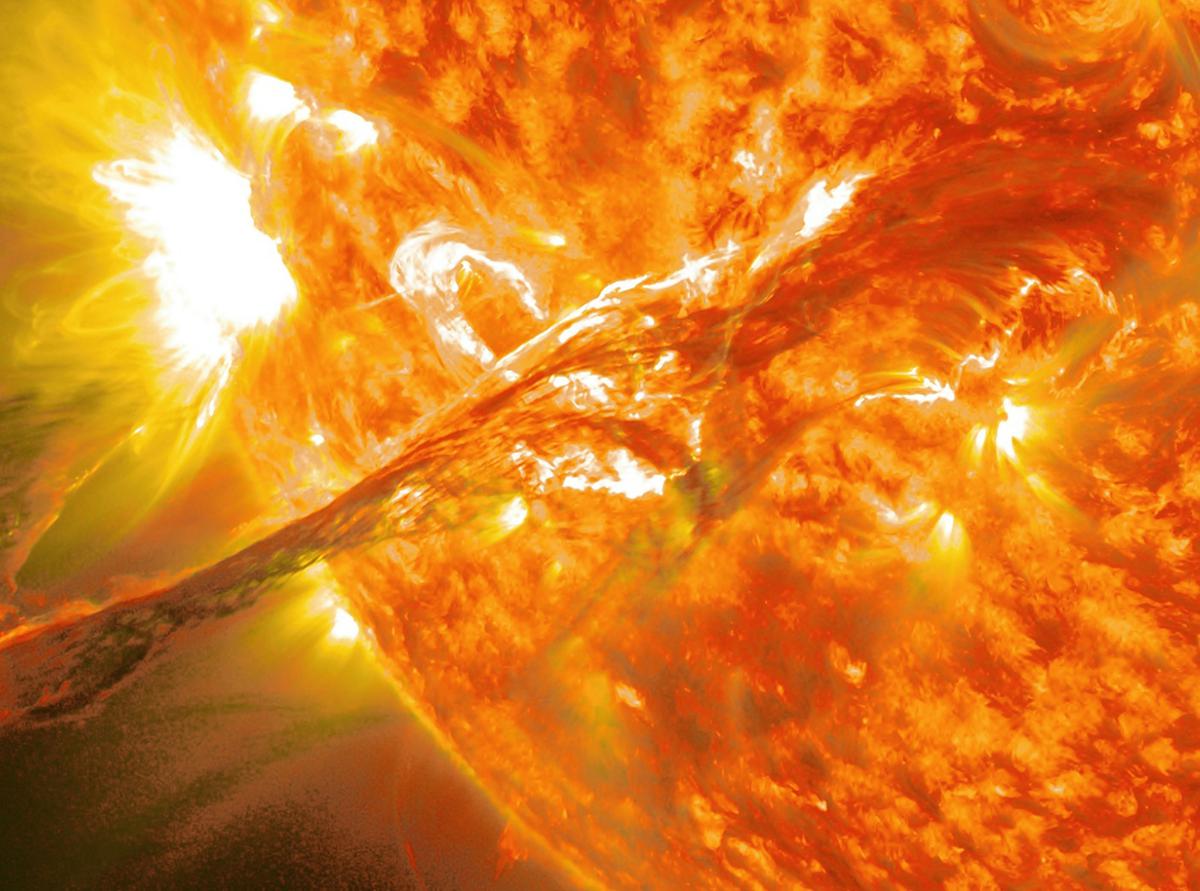
A representative image of a coronal mass ejection on the Sun on August 31, 2012,.

A representative image of a coronal mass ejection on the Sun on August 31, 2012,.
| Photo Credit:
NASA/GSFC/SDO

According to the team’s statement, the study provides valuable insights into similar energetic eruptions on the Sun.

“Observation of the CMEs as they originate on the Sun and understanding their plasma characteristics is one of the major science goals for VELC, and we are happy that the instrument did exactly that,” R. Ramesh, senior professor at IIAp and the principal investigator of the VELC payload, told The Hindu.

Prof. Ramesh added that with the Sun approaching the maximum phase of its current solar cycle (no. 25), CMEs are expected to occur more frequently. So continuously monitoring the Sun with the VELC is expected to provide valuable scientific data.

“The CMEs are usually observed in visible continuum light only when they have propagated well away from the Sun’s surface. However, unique spectroscopic observations with the VELC like in our study, lets us study the CMEs very close to the solar surface itself for the first time,” study coauthor and IIAp project scientist Dr. Muthupriyal said.

According to Jagdev Singh, another coauthor, “Knowing the thermodynamic properties of the CMEs near the Sun are very important to understand their source regions on the Sun and VELC is precisely doing that.”

ISRO placed the Aditya-L1 spacecraft in a halo orbit around the first earth-Sun Lagrange point (or L1) on January 6, a little more than four months after its launch. The spacecraft has a mission life of five years.

Published – November 04, 2024 05:00 am IST


Source link

Science

Post navigation

Previous Post: Why can’t light microscopes see inside cells?
Next Post: Model by Chennai, Pune team predicts birth weight from routine scans

Related Posts

  • Boeing counts down again to its first astronaut launch on a long-delayed test flight for NASA Science
  • The man behind the Mersenne primes Science
  • Madagascar mining rush caused no more deforestation than farming: study Science
  • Two studies conducted by Bengaluru scientists explore how attention and eye movements are linked Science
  • When did an uptick in dental cavities in humans begin? Science
  • New book throws light on the people who helped build India’s first rockets Science

More Related Articles

The Science Quiz | The science of spice and vice versa Science
The chemical treasury in garlic Science
India’s first solar observatory mission Aditya-L1 to be launched at 11.50 a.m. on September 2, 2023 Science
How oil companies put the responsibility for climate change on consumers Science
Microplastics finally found in human brains, but that’s not the full picture Science
Why is it colder at higher altitudes? Science
SiteLock

Archives

  • November 2024
  • October 2024
  • September 2024
  • August 2024
  • July 2024
  • June 2024
  • May 2024
  • April 2024
  • March 2024
  • February 2024
  • January 2024
  • December 2023
  • November 2023
  • October 2023
  • September 2023
  • August 2023
  • July 2023
  • June 2023
  • May 2023
  • April 2023
  • March 2023
  • February 2023
  • January 2023
  • December 2022
  • November 2022
  • October 2022
  • September 2022
  • August 2022
  • July 2022
  • June 2022
  • May 2022

Categories

  • Business
  • Nation
  • Science
  • Sports
  • World

Recent Posts

  • Don’t judge Kohli on current form, Australia series could change it all: Ricky Ponting
  • Axiom-4, Shubhanshu Shukla, Axiom-4: Indian Astronaut Will Pilot Mission To International Space Station: Axiom Space
  • Coordination Gap With Colleague Caused Railway Employees’ Death, Says Probe
  • Palak, Aakash win silver in World University shooting
  • In A First Since Taliban Rule, Afghanistan Says To Attend UN Climate Talks

Recent Comments

  1. dfb{{98991*97996}}xca on UP Teacher Who Asked Students To Slap Muslim Classmate
  2. "dfbzzzzzzzzbbbccccdddeeexca".replace("z","o") on UP Teacher Who Asked Students To Slap Muslim Classmate
  3. 1}}"}}'}}1%>"%>'%> on UP Teacher Who Asked Students To Slap Muslim Classmate
  4. bfg6520<s1﹥s2ʺs3ʹhjl6520 on UP Teacher Who Asked Students To Slap Muslim Classmate
  5. pHqghUme9356321 on UP Teacher Who Asked Students To Slap Muslim Classmate
  • Mumbai Man Loses Rs 6.72 Lakh After Leaving Wallet Unattended At Cricket Ground Nation
  • "Should Find The Real Story…": Gavaskar Slams Asia Cup 2023 Venue Fiasco Sports
  • When Akshata Murty “Gatecrashed”, Stole The Thunder At Rishi Sunak’s Stage World
  • Internet Approves India’s Cricket World Cup Jersey, That Comes With A Twist. Watch Sports
  • “Let India Have A Bad Game…”: Bangladesh Cricketer’s Bold Remark On Gautam Gambhir’s ‘Real Character’ Sports
  • Viral Video: IndiGo Crew Member Ties Rakhi On Flight, To Her Brother Nation
  • IPL 2024 Play-off Scenarios: SRH vs GT IPL Game Washed Out. What Happens To CSK, RCB Playoff Chances? Sports
  • ‘Exhausted’ Gazans After 1 Year Of War World

Editor-in-Chief:
Mohammad Ariff,
MSW, MAJMC, BSW, DTL, CTS, CNM, CCR, CAL, RSL, ASOC.
editor@artifex.news

Associate Editors:
1. Zenellis R. Tuba,
zenelis@artifex.news
2. Haris Daniyel
daniyel@artifex.news

Photograher:
Rohan Das
rohan@artifex.news

Artifex.News offers Online Paid Internships to college students from India and Abroad. Interns will get a PRESS CARD and other online offers.
Send your CV (Subjectline: Paid Internship) to internship@artifex.news

Links:
Associate Journalism
About Us
Privacy Policy

News Links:
Breaking News
World
Nation
Sports
Business
Entertainment
Lifestyle

Registered Office:
72/A, Elliot Road, Kolkata - 700016
Tel: 033-22277777, 033-22172217
Email: office@artifex.news

Editorial Office / News Desk:
No. 13, Mezzanine Floor, Esplanade Metro Rail Station,
12 J. L. Nehru Road, Kolkata - 700069.
(Entry from Gate No. 5)
Tel: 033-46011099, 033-46046046
Email: editor@artifex.news

Copyright © 2023 Artifex.News Newsportal designed by Artifex Infotech.