

Skip to content
  • Facebook
  • X
  • Linkedin
  • WhatsApp
  • Associate Journalism
  • About Us
  • Privacy Policy
  • 033-46046046
  • editor@artifex.news
Artifex.News

Artifex.News

Stay Connected. Stay Informed.

  • Breaking News
  • World
  • Nation
  • Sports
  • Business
  • Science
  • Entertainment
  • Lifestyle
  • Toggle search form
  • The problem of moving attention away from services Business
  • PV Sindhu Sails Into Quarterfinals; Kidambi Srikanth, Kiran George Exit From Arctic Open Sports
  • Strategy Firm Working With Rajasthan Congress Sues Newspaper For Rs 100 Crore Nation
  • Who Is KP Ramasamy? College Dropout, Son Of Farmer On Forbes Richest List Nation
  • U.K.’s Labour sets out plans for government World
  • Union Minister Over Jibe For PM Nation
  • Borussia Dortmund Dream Of Shocking Real Madrid In Champions League Final Sports
  • Nun spurs debate in Lebanon after urging students to ‘pray’ for Hezbollah World

Have household savings reduced?  – The Hindu

Posted on October 1, 2023 By admin


For representative purposes.
| Photo Credit: Getty Images

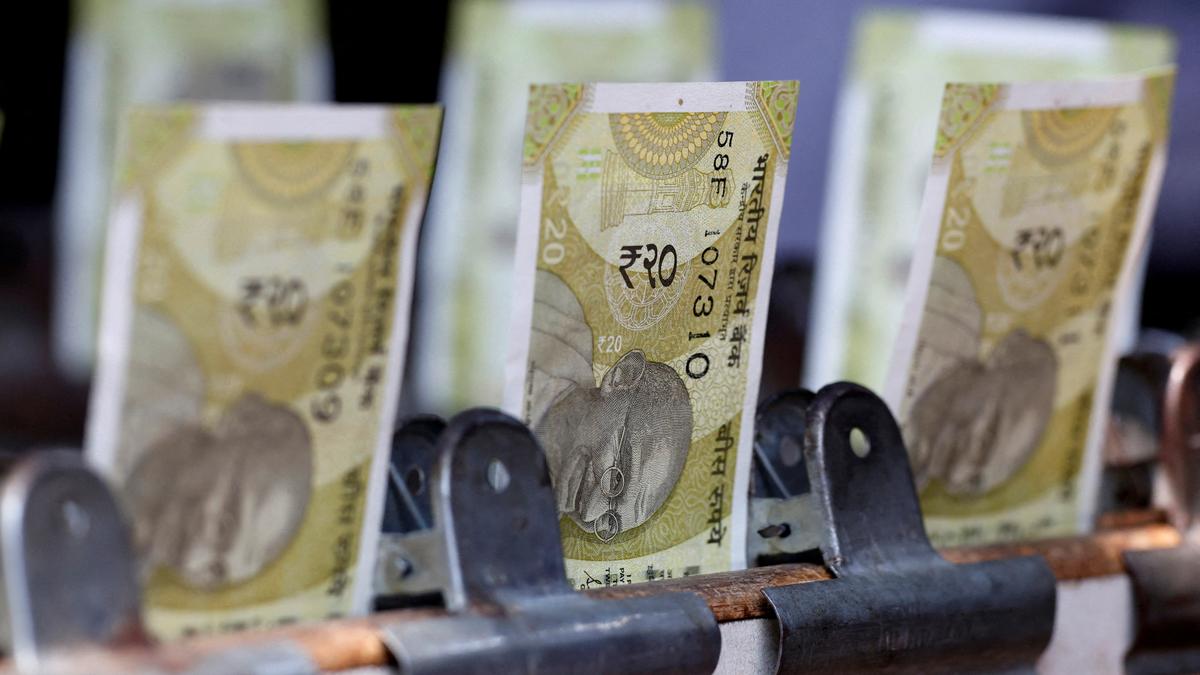
The release of the Reserve Bank of India’s (RBI) Monthly Bulletin in September revealed that households’ net financial savings had fallen to 5.1% from 11.5% in 2020-21. Financial liabilities of households rose faster than their assets, with many writers highlighting this trend as an indication of rising indebtedness and increasing distress. The government, however, countered these claims. The Finance Ministry explained that while household financial savings may be reducing, it did not imply total savings were falling, since households took advantage of low interest rates after the pandemic to invest in assets such as vehicles, education and homes. These are two contrasting narratives, one of pessimism and distress, the other of optimism. What does data tell us about the state of the economy?

The optimistic claim

There is evidence to support the government’s narrative of a shift from financial to physical assets. Post-COVID, there has been an increase in household construction. Between 2020-21 and 2021-22, the construction sector was the fastest growing sector, growing at nearly 15% (when measured in 2011-12 prices), and 10% between 2021-22 and 2022-23. Only the trade, hotels, transport and communications sector grew faster in the latter period. Housing loans from Scheduled Commercial Banks (SCBs) grew at double-digit rates in all years between 2018-19 and 2022-23, with loans from housing finance companies growing almost 17 times between 2019-20 and 2022-23.

Liabilities in other non-financial assets have also increased. Education and vehicle loans from SCBs increased significantly between 2021-22 and 2022-23, growing at 17% and around 25% respectively. This has led to significant changes in the composition of household savings. The share of physical assets — excluding gold and silver — is almost 60% of households’ total net savings, with the share of financial savings reducing from 39.6% in 2017-18 to 38.77% in 2021-22. That is, by taking advantage of the low interest rates set by the RBI in the wake of the pandemic, households may have increased their liabilities not to fuel consumption, but to purchase non-financial assets such as houses.

The pessimistic claim

Other evidence points to a slightly different picture. The fall in household net financial savings was driven largely by a rise in liabilities. Gross financial assets declined marginally as a share of GDP between 2021-22 and 2022-23 from 11.1% to 10.9%. Gross liabilities, remaining steady at roughly 3.8% of GDP between 2019-20 and 2021-22, increased to 5.8% of GDP in 2022-23. This rise in liabilities would not imply households have reduced savings if increasing loans financed the construction and purchase of homes. However, there is evidence to the contrary. While loans for housing, education and vehicles have no doubt increased, other components of personal loans have risen even faster. The share of housing loans in total non-food personal loans from SCBs — including priority sector lending — has fallen from 51.08% in 2018-19 to 47.4% in 2022-23. The share of education loans has fallen from 3.32% to 2.37%, while vehicle loans have remained constant at around 12%.

In contrast, outstanding credit card loans increased from 3.8% to 4.7% over this period, with loans against gold jewellery rising from 1.07% to 2.16%, and the category of “Other Personal Loans” — which excludes loans for purchasing consumer durables — showing the largest rise from 24% to 27.42%. While one cannot say what these loans are being used for, these categories of loans do not necessarily indicate that they are being used solely for asset creation. Households may be taking on credit card debt and taking loans against jewellery to finance consumption. The biggest contributor to the large rise in financial liabilities between 2021-22 and 2022-23 has been loans from non-banking institutions, which grew by almost ten times in just the last year, contributing to 32.1% of the total rise in financial liabilities over this period.

The road ahead

An examination of the data reveals that even though housing loans increased, other forms of loans which might possibly be used for consumption increased even faster. But does this imply distress? It is difficult to say from just one year’s data, for we do not know if this is a trend or a one-time event. One could say that households are borrowing to maintain consumption in the face of income loss after COVID and high inflation. On the other hand, it could also be that pent-up demand during the pandemic is being realised in the form of debt-financed consumption, with households optimistic about future repayment.

However, even if the optimistic narrative is true, there are grounds for concern. The U.S. Federal Reserve’s commitment to maintaining higher interest rates to combat inflation would have a knock-on effect on interest rates around the world. Rising interest rates in India would cause significant stresses for households to meet increasing liabilities. If households have invested in real estate, rising interest rates would curtail their consumption spending and reduce aggregate demand in the economy. If, however, the narrative of distress borrowing is true, households would be subjected to further stress if interest rates rise. Policy must be observant of the myriad pitfalls facing the Indian economy.

Rahul Menon is Associate Professor, Jindal School of Government and Public Policy, O.P. Jindal Global University



Source link

Business Tags:household savings, household savings consumption fuels debt, household savings decrease more physical assets, household savings India RBI report, household savings inflation pandemic, household savings pandemic recovery, household savings rbi bulletin, household savings reduce

Post navigation

Previous Post: Telangana Minister Responds To PM Modi’s “Family-Run Party” Swipe At KCR
Next Post: S Jaishankar Concludes US Visit, Shares Highlights From The Trip

Related Posts

  • Windfall profit tax on crude oil cut; levy on diesel, ATF exports hiked Business
  • Vedanta wins arbitration against government in $1.1-billion cost disallowance case Business
  • Hyundai seeks expansion, higher valuation with India IPO Business
  • Budget 2023 | 19.6% hike in sum to Ministry of AYUSH; allocation to Ayurveda institute doubles Business
  • Adani Ports to buy back another $195 million of bonds Business
  • Markets climb in early trade; extend rally for second day running Business

More Related Articles

Sam Bankman-Fried sentenced to 25 years for multi-billion dollar FTX fraud Business
Insights From 14th Global Investment Immigration Summit Business
GDP growth to be higher than RBI’s estimate of 8% for June quarter, say Economists Business
Sugar production at 20 lakh tonnes this season: ISMA Business
India produces 97% of its total mobile phone demand locally: ICEA Business
Nandan Nilekani, Nikhil Kamath On Forbes Asia Heroes Of Philanthropy List Business
SiteLock

Archives

  • July 2024
  • June 2024
  • May 2024
  • April 2024
  • March 2024
  • February 2024
  • January 2024
  • December 2023
  • November 2023
  • October 2023
  • September 2023
  • August 2023
  • July 2023
  • June 2023
  • May 2023
  • April 2023
  • March 2023
  • February 2023
  • January 2023
  • December 2022
  • November 2022
  • October 2022
  • September 2022
  • August 2022
  • July 2022
  • June 2022
  • May 2022

Categories

  • Business
  • Nation
  • Science
  • Sports
  • World

Recent Posts

  • North Korean balloons, GPS interference raise safety risks for South’s airlines
  • Adani Group Named Principal Sponsor For Team India At Pair Olympics
  • Jacqueline Fernandez Summoned Again In Money Laundering Case
  • India’s relationship with Russia gives it ability to urge Russian President Putin to end war in Ukraine: White House
  • Gautam Gambhir Informs BCCI, Wants Ex RCB Star R Vinay Kumar As Team India Bowling Coach: Report

Recent Comments

  1. ywdVpqHiNZCtUDcl on UP Teacher Who Asked Students To Slap Muslim Classmate
  2. bRstIalYyjkCUJqm on UP Teacher Who Asked Students To Slap Muslim Classmate
  3. GkJwRWEAbS on UP Teacher Who Asked Students To Slap Muslim Classmate
  4. xreDavBVnbGqQA on UP Teacher Who Asked Students To Slap Muslim Classmate
  5. aANVRzfUdmyb on UP Teacher Who Asked Students To Slap Muslim Classmate
  • ‘Kerala Unit Against Online Child Sex Abuse Can Be Global Model’: US Official Nation
  • SC grants telcos’ interest waiver on tax dues on licence fees Business
  • Man Dies After Falling Off A Hot Air Balloon In Australia’s Melbourne World
  • Elon Musk’s X Introduces “Community Notes” Feature In India Nation
  • Gautam Gambhir’s One-Line Message For Virat Kohli’s RCB After Thrilling Loss vs KKR Sports
  • India to convey its plans to build a new research station in Antarctica at ATCM Science
  • Sanjiv Goenka Has Lengthy Chat With Rohit Sharma After MI, LSG’s Last IPL 2024 Game. Speculation On Sports
  • Monty Panesar’s Political Stint Over In One Week Sports

Editor-in-Chief:
Mohammad Ariff,
MSW, MAJMC, BSW, DTL, CTS, CNM, CCR, CAL, RSL, ASOC.
editor@artifex.news

Associate Editors:
1. Zenellis R. Tuba,
zenelis@artifex.news
2. Haris Daniyel
daniyel@artifex.news

Photograher:
Rohan Das
rohan@artifex.news

Artifex.News offers Online Paid Internships to college students from India and Abroad. Interns will get a PRESS CARD and other online offers.
Send your CV (Subjectline: Paid Internship) to internship@artifex.news

Links:
Associate Journalism
About Us
Privacy Policy

News Links:
Breaking News
World
Nation
Sports
Business
Entertainment
Lifestyle

Registered Office:
72/A, Elliot Road, Kolkata - 700016
Tel: 033-22277777, 033-22172217
Email: office@artifex.news

Editorial Office / News Desk:
No. 13, Mezzanine Floor, Esplanade Metro Rail Station,
12 J. L. Nehru Road, Kolkata - 700069.
(Entry from Gate No. 5)
Tel: 033-46011099, 033-46046046
Email: editor@artifex.news

Copyright © 2023 Artifex.News Newsportal designed by Artifex Infotech.