

Skip to content
  • Facebook
  • X
  • Linkedin
  • WhatsApp
  • YouTube
  • Associate Journalism
  • About Us
  • Privacy Policy
  • 033-46046046
  • editor@artifex.news
Artifex.News

Artifex.News

Stay Connected. Stay Informed.

  • Breaking News
  • World
  • Nation
  • Sports
  • Business
  • Science
  • Entertainment
  • Lifestyle
  • Toggle search form
  • US Open 2024: Yuki Bhambri And Rohan Bopanna Win With Respective Partners, N Sriram Balaji Exits
    US Open 2024: Yuki Bhambri And Rohan Bopanna Win With Respective Partners, N Sriram Balaji Exits Sports
  • One Who Got Gold Is Also My Son
    One Who Got Gold Is Also My Son Nation
  • Access Denied
    Access Denied Nation
  • Access Denied World
  • “We Will Remember This Day”: Harmanpreet Kaur After India’s Women’s Asia Cup Final Loss
    “We Will Remember This Day”: Harmanpreet Kaur After India’s Women’s Asia Cup Final Loss Sports
  • “Haven’t Seen Him Since 2017”: Prithvi Shaw’s Ex-Coach On What Went Wrong With U19 World Cup-Winner
    “Haven’t Seen Him Since 2017”: Prithvi Shaw’s Ex-Coach On What Went Wrong With U19 World Cup-Winner Sports
  • India accounts for 40% of all digital payments in the world: RBI governor
    India accounts for 40% of all digital payments in the world: RBI governor Business
  • Access Denied
    Access Denied Nation
The rise of AI-generated synthetic medical images: a new frontier or potential pitfall?

The rise of AI-generated synthetic medical images: a new frontier or potential pitfall?

Posted on October 10, 2024 By admin


In a world where even experts are sometimes puzzled by our economic systems, only a tiny fraction of economists truly understand the mechanics that govern them. Imagine what would happen if these experts were replaced by artificial intelligence (AI). Would we still trust our monetary systems? This thought experiment becomes particularly relevant while considering the rapid rise of synthetic medical images in healthcare.

What are synthetic medical images?

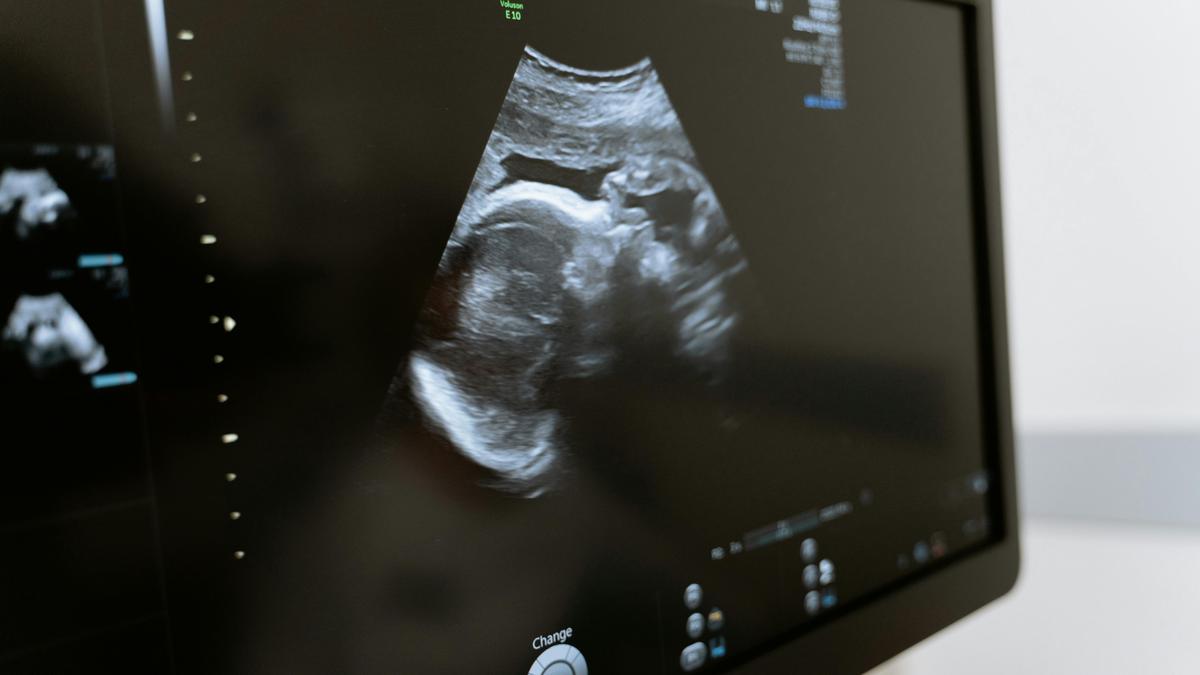
At its core, a synthetic medical image is generated by AI or computer algorithms without being captured by traditional imaging devices such as MRI, CT scans, or X-rays. These images are entirely constructed using mathematical models or AI techniques like generative adversarial networks (GANs), diffusion models, and autoencoders.

Synthetic images are like the concept of “this person does not exist” images, where the AI creates images of people who do not actually exist in the real world. In the medical field, synthetic medical images are created in a similar way, where the AI generates entirely new medical scans or radiological images that mimic real ones but are not derived from any actual patient data.

In healthcare, the demand for high-quality, annotated medical images far exceeds supply. Real-world medical images, such as those from MRI, CT scans, or X-rays, are expensive and time-consuming to collect. Additionally, privacy concerns around patient data limit the sharing of these images across medical institutions and research labs. Synthetic medical images can bridge this gap by providing an ethical, scalable, and cost-effective solution.

How are these images created? A variational autoencoder (VAE) takes an image, compresses it into a simpler form called the latent space, and then tries to recreate the original image from that compressed version. The process continuously improves the image by minimising the difference between the real image and the recreated version.

GANs involve a generator that creates synthetic images from random data and a discriminator that determines whether the image is real or synthetic. Both improve through competition—the generator tries to make its images more realistic, while the discriminator gets better at spotting fakes.

Diffusion models begin with a bunch of random noise and gradually transform it into a realistic image, using a step-by-step process that slowly shapes the noise into something that resembles the images it was trained on. These methods generate synthetic images in various fields, including healthcare and research.

Advantages of synthetic medical images

One significant advantage of synthetic medical images is their ability to facilitate intra- and inter-modality translation. Intramodality translation refers to generating synthetic images within the same type of imaging modality, such as improving or reconstructing MRI scans based on other MRI data. Inter-modality translation, on the other hand, involves generating synthetic images by translating between different types of imaging modalities, such as creating CT scans from MRI data. This ability to move across and within modalities is invaluable in cases where certain scans are unavailable or incomplete. Synthetic images can fill these gaps by creating accurate representations from other types of data.

Privacy protection is another significant advantage. Since synthetic images are generated without patient data, they circumvent privacy concerns, making it easier for researchers and healthcare providers to share and collaborate on AI development without the risk of violating patient confidentiality. Synthetic medical images also address the time and cost of collecting real medical data.

Challenges ahead

Synthetic data algorithms have the potential for malicious applications, including introducing deepfakes into hospital systems. Deepfakes may impersonate individual patients, introducing clinical findings that do not exist, which could lead to incorrect diagnoses or treatments. Worse yet, they could be exploited to submit fraudulent claims to health insurers, creating a pathway for financial exploitation.

Synthetic images might lack the complexity and nuances of real-world medical data. For instance, while a synthetic brain MRI might look accurate, it may not capture the subtle variations in tissue density or lesion patterns found in real-world cases. The AI model’s performance may worsen over time due to the absence of rich, real-world variability.

What if, over time, our AI systems, trained on synthetic medical data, begin to rely more on fabricated images than on real-world cases? This is where the issue of truth erosion comes into play. As synthetic medical images become more prevalent, the distinction between what is real and what is generated may blur, making it harder for medical professionals to trust AI diagnoses based solely on synthetic data.

Suppose AI systems are trained exclusively on synthetic medical images, generating diagnoses that don’t align with real-world cases. Over time, this could lead to an entire diagnostic model based on artificial realities rather than true patient data.

Collaborative solutions and caution

One effective way to mitigate these risks and improve the quality of synthetic medical images is through close collaboration between clinicians (such as radiologists) and AI engineers. When developing AI models, clinicians can provide critical insights from real-world medical practice, helping AI engineers understand the complexities and nuances often missing from synthetic data. Their collaboration can lead to AI models that score better in evaluation metrics, resulting in real-life clinical utility.

While synthetic medical images hold the potential for improving healthcare, their widespread use comes with risks. Just as we wouldn’t leave the decision of printing physical currency entirely to an AI system, we should be cautious about relying too heavily on synthetic medical images to shape our understanding of human health. Reality is stranger than fiction. Synthetic images won’t be able to generate those strange realities. They pose significant regulatory and ethical challenges. Human oversight remains critical to ensuring that AI-generated content serves the best interests of patients and healthcare providers.

The balance between innovation and truth is delicate, and only time will tell whether synthetic images will enhance or distort our understanding of health. We must proceed with optimism and caution, ensuring that the benefits of synthetic images are realised without compromising the integrity of real-world healthcare.

(Dr. C. Aravinda is an academic and a public health physician. aravindaaiimsjr10@hotmail.com)

Published – October 10, 2024 11:34 pm IST


Source link

Science Tags:AI for imaging, AI in healthcare, CT scan, synthetic MRI, what are synthetic medical images

Post navigation

Previous Post: People Of Unrecognised Villages Can’t Receive Government Benefits: Manipur
Next Post: Petition Says Oscar-Nominated Film Revealed Minor Rape Survivor’s Identity, Court Seeks Reply

Related Posts

  • The Hindu Daily Quiz, April 8 2024 | On Superconductors
    The Hindu Daily Quiz, April 8 2024 | On Superconductors Science
  • Echolocation: What goes around comes around
    Echolocation: What goes around comes around Science
  • Science quiz: on palaeoclimatology – The Hindu
    Science quiz: on palaeoclimatology – The Hindu Science
  • Ecologists urge scientists and policymakers to study imminent ‘Super’ El Niño to prepare for the future
    Ecologists urge scientists and policymakers to study imminent ‘Super’ El Niño to prepare for the future Science
  • ‘Historic day’: Artemis astronauts break space distance record
    ‘Historic day’: Artemis astronauts break space distance record Science
  • Artemis II, the international space race, and what is at stake for the U.S.
    Artemis II, the international space race, and what is at stake for the U.S. Science

More Related Articles

The Science Quiz | SI-derived units The Science Quiz | SI-derived units Science
Healthocide: war against healthcare – The Hindu Healthocide: war against healthcare – The Hindu Science
Indonesia’s low-cost watch on antimicrobial resistance Indonesia’s low-cost watch on antimicrobial resistance Science
Will the baby be a boy or a girl? SRY gene claims to have the answer Will the baby be a boy or a girl? SRY gene claims to have the answer Science
 Global project ‘paints’ evidence of air pollution in India  Global project ‘paints’ evidence of air pollution in India Science
Rush to return humans to the moon could threaten opportunities for astronomy Rush to return humans to the moon could threaten opportunities for astronomy Science
SiteLock

Archives

  • October 2026
  • September 2026
  • August 2026
  • July 2026
  • June 2026
  • May 2026
  • April 2026
  • March 2026
  • February 2026
  • January 2026
  • December 2025
  • November 2025
  • October 2025
  • September 2025
  • August 2025
  • July 2025
  • June 2025
  • May 2025
  • April 2025
  • March 2025
  • February 2025
  • January 2025
  • December 2024
  • November 2024
  • October 2024
  • September 2024
  • August 2024
  • July 2024
  • June 2024
  • May 2024
  • April 2024
  • March 2024
  • February 2024
  • January 2024
  • December 2023
  • November 2023
  • October 2023
  • September 2023
  • August 2023
  • July 2023
  • June 2023
  • May 2023
  • April 2023
  • March 2023
  • February 2023
  • January 2023
  • December 2022
  • November 2022
  • October 2022
  • September 2022
  • August 2022
  • July 2022
  • June 2022
  • May 2022

Categories

  • Business
  • Nation
  • Science
  • Sports
  • World

Recent Posts

  • Women stage silent demonstration at Kathipara against police action on anti-CEC protesters in Delhi
  • DGCA bans specific power banks on flights
  • Saudi Supreme Court sets aside Sri Lankan migrant worker’s death penalty
  • Nedumbassery accident: CPI(M) stages protest march to police station over ‘indifference’ in handling of case
  • Why CJI Surya Kant said ‘no’ to Rahul Gandhi’s request to meet | Explained

Recent Comments

  1. RobertTes on UP Teacher Who Asked Students To Slap Muslim Classmate
  2. Manuelret on UP Teacher Who Asked Students To Slap Muslim Classmate
  3. RobertTes on UP Teacher Who Asked Students To Slap Muslim Classmate
  4. RobertTes on UP Teacher Who Asked Students To Slap Muslim Classmate
  5. BrentWes on UP Teacher Who Asked Students To Slap Muslim Classmate
  • Man Who Allegedly Threatened To Kill PM Modi Arrested From Rajasthan
    Man Who Allegedly Threatened To Kill PM Modi Arrested From Rajasthan Nation
  • Indo-U.S. ties must be more ambitious, vie for frictionless trade relationship: Ambassador Garcetti
    Indo-U.S. ties must be more ambitious, vie for frictionless trade relationship: Ambassador Garcetti Business
  • Woman farmer breaks down as over 100 trees felled for power tower in Kallakurichi
    Woman farmer breaks down as over 100 trees felled for power tower in Kallakurichi Nation
  • Taiwanese rocket startup may be early test of Japan’s space hub plans
    Taiwanese rocket startup may be early test of Japan’s space hub plans World
  • Man Strangles Business Partner In Delhi, Then Kills Self
    Man Strangles Business Partner In Delhi, Then Kills Self Nation
  • Israel Asks US To Reschedule Scrapped Meeting On Rafah Offensive Plans
    Israel Asks US To Reschedule Scrapped Meeting On Rafah Offensive Plans World
  • 7.0 earthquake off Northern California prompts brief tsunami warning
    7.0 earthquake off Northern California prompts brief tsunami warning World
  • Explained | How have recent weather events affected wheat crop?
    Explained | How have recent weather events affected wheat crop? Business

Editor-in-Chief:
Mohammad Ariff,
MSW, MAJMC, BSW, DTL, CTS, CNM, CCR, CAL, RSL, ASOC.
editor@artifex.news

Associate Editors:
1. Zenellis R. Tuba,
zenelis@artifex.news
2. Haris Daniyel
daniyel@artifex.news

Photograher:
Rohan Das
rohan@artifex.news

Associate Journalists
1. Subrata Paul - AN/2020/01
2. Quamruz Zaman - AN/2021/22
3. Ahmed Sha - AN/2021/035
4. Ajay Kumar Shaw - AN/2021/39
5. Tahqiqul Hoda - AN/2021/21

Artifex.News offers Online Paid Internships to college students from India and Abroad. Interns will get a PRESS CARD and other online offers.
Send your CV (Subjectline: Paid Internship) to internship@artifex.news

Links:
Associate Journalism
About Us
Privacy Policy

News Links:
Breaking News
World
Nation
Sports
Business
Entertainment
Lifestyle

Registered Office:
72/A, Elliot Road, Kolkata - 700016
Tel: 033-22277777, 033-22172217
Email: office@artifex.news

Editorial Office / News Desk:
No. 13, Mezzanine Floor, Esplanade Metro Rail Station,
12 J. L. Nehru Road, Kolkata - 700069.
(Entry from Gate No. 5)
Tel: 033-46011099, 033-46046046
Email: editor@artifex.news

Copyright © 2023 Artifex.News Newsportal designed by Artifex Infotech.