



The story so far: Fulfilling a long-standing demand of government unions, the Centre on Saturday (August 24, 2024), unveiled a new ‘Unified Pension Scheme’ (UPS) assuring government employees half their last drawn salary as a lifelong monthly benefit.
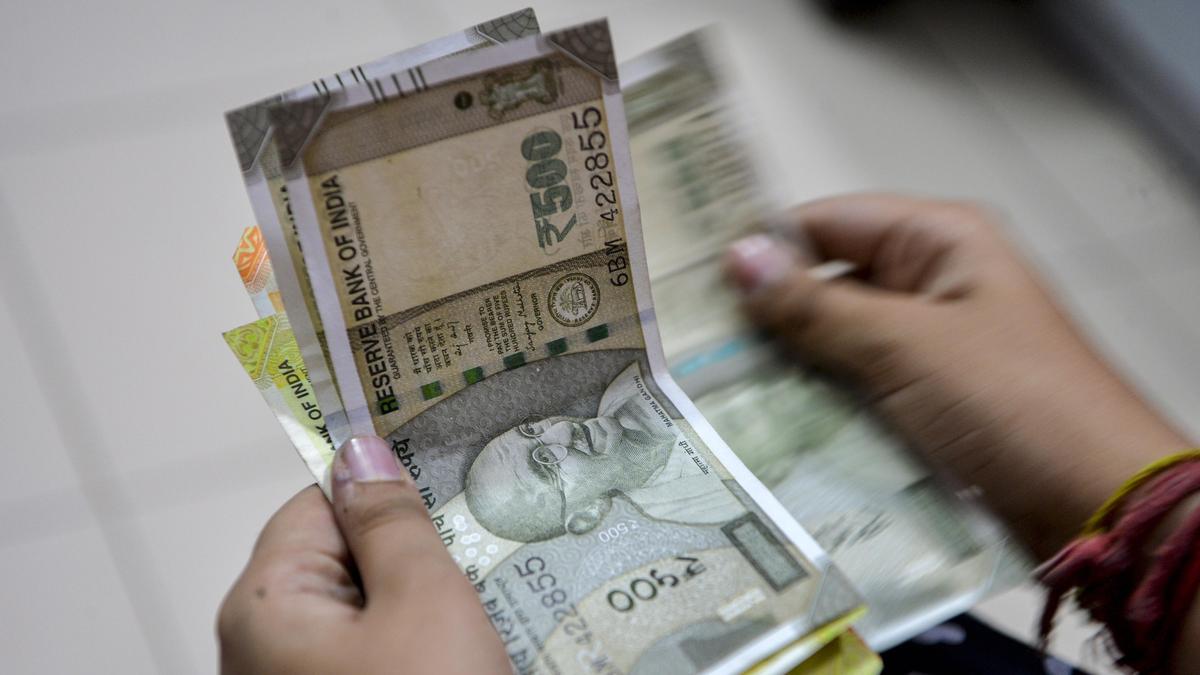
The UPS, which has been approved by the Union Cabinet, has several other features benefiting pensioners, such as a periodic dearness relief hike in line with inflation and minimum pension of ₹10,000 a month for pensioners with at least 10 years of government service, to name a few.
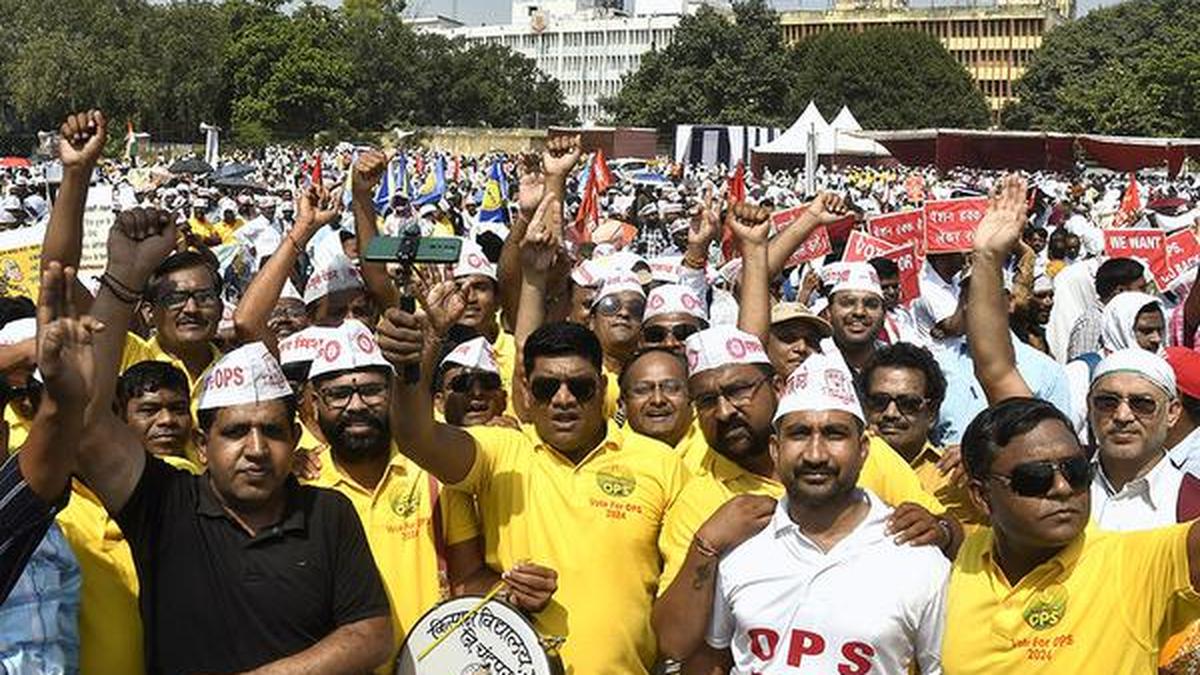
The announcement has evoked mixed responses from trade unions across the political spectrum. The Bharatiya Mazdoor Sangh (BMS), which is affiliated to the Rashtriya Swayamsevak Singh (RSS) has welcomed the move but has sought more clarity on certain features of the UPS. However, trade unions like the Hindu Mazdoor Sangh, CITU and AITUC, which are affiliated to the Opposition, claimed that the UPS was meant to hoodwink employees.
Editorial | Middle path: On the Unified Pension Scheme
Most parties including the Congress have noted that the implementation of the UPS would be akin to reverting back to the Old Pension Scheme (OPS), implemented originally during the colonial reign. The move is also a surprising rollback by the NDA government as it was the original NDA – the Atal Bihari Vajpayee government – which had scrapped the OPS to establish the new pension scheme (NPS).
Here’s a comparative look at all three schemes.
Old Pension Scheme (OPS)
Under the Pensions Act, 1871, the British established the system of offering pensions to government employees, empowering the Central and State governments to enact rules for disbursal of money. Based on a ‘Defined Benefit’ concept, this pension scheme assured the retiree of 50% of the last drawn basic salary as his pension. The scheme also introduced a ‘Dearness Allowance’ (DA), which was calculated as a percentage of the pensioner’s salary to cushion the effect of rising cost of living and was hiked by the government whenever necessary.
The scheme also offered employees the option to park a portion of their income under the General Provident Fund, which would then be repaid with interest when they retired. The gratuity was capped at ₹20 lakhs and pension was passed on to the family once the retiree passed away.
However, this pension was ‘unfunded’, i.e. there was no corpus (like the Contingency Fund of India) from which the pension was drawn. Hence, employees had no deductions from their salaries for contributing to a pension fund. The government made budgetary allocations to pay pensions under a ‘pay-as-you-go’ system i.e. funds were drawn from the government’s income, such as tax collected from citizens.
As of December 2023, Rajasthan, Chhattisgarh, Jharkhand, Punjab and Himachal Pradesh — all ruled by Opposition parties — have switched to the OPS for their State government employees. However, Punjab still continues to pay staff and government contribution to the New Pension Scheme.
New Pension Scheme (NPS)
Burdened with an ever-increasing pension liability, the Centre scrapped the OPS, replacing it with the New Pension Scheme (NPS) on January 14, 2004. Based on a ‘Defined Contribution’ concept, the NPS had a two-tiered system. Employees who joined service after the rollout of the scheme did not have the option to join the OPS and were allotted a unique Permanent Pension Account Number (PPAN) on joining.
Under the first tier, the government employee had to make a mandatory contribution of 10% of his basic pay and DA and the government would make an equal matching contribution in a pension account. Under the second,optional tier, employees could make their own contribution under a separate account whose withdrawal was at the employees’ discretion.

At the time of retirement (60 years of age), the government employee has to mandatorily invest 40% of the pension received to purchase an annuity which will provide pension for the lifetime of the employees and his dependents. If an employee retires before time, the mandatory purchase of an annuity rises to 80% of the pension amount. This annuity ensures a regular income-stream for retirees.
The NPS instituted the independent Pension Fund Regulatory and Development and Authority (PFRDA) to regulate and develop the pension market. Fund managers such as SBI Pension Fund, UTI Retirement Solution, and LIC Pension Fund were in charge of investing the funds in several financial instruments such as government securities, debt instruments, equity, and asset-backed trusts.
All Central government employees, except members of the Armed Forces, who joined service on or after January 1, 2004, were covered under the NPS. Employees who joined prior to that date had the option of staying with the OPS. Under the OPS, employees could nominate up to three individuals and allocate the share of pension amount to be received.
Unlike the OPS, the NPS has an employee and employer contribution towards a pension fund which builds the individual’s wealth payable at the time of retirement via annuity and lumpsum withdrawals. Voluntary investment in the National Pension scheme by any individual, who is already covered by mandatory schemes like the Employee Provident Fund Organisation (EPFO), is tax-deductible with a maximum limit of ₹1.5 lakh. Also, the 60% lumpsum which can be withdrawn upon retirement is tax-free. All States except Tamil Nadu and West Bengal have implemented NPS.
Unified Pension Scheme (UPS)
The newly-rolled out UPS is similar to the OPS in most material particulars. Retirees are assured of 50% of the basic pay drawn in the last year (following at least 25 years of service). For lesser service (up to ten years), the percentage is reduced proportionately, but the minimum has been fixed to ₹10,000. 60% of the pension drawn by the employee prior to his/her death will be awarded as a family pension. All of the above pensions are assured with inflation indexation. The scheme also assures 10% of the monthly pension amount (pay plus DA) as on date of retirement for every completed six months of service.

While most features of UPS are similar to that of OPS, the new scheme is not unfunded. Similar to NPS, employees will chip in 10% of their salary and the government will contribute 18.5% of the salary. The threshold level of employees will remain frozen at 10% but the government’s contribution will be adjusted higher or lower based on periodic actuarial assessments. UPS will have a retrospective effect, i.e., those who joined after January 1, 2004 and retired under the NPS will now be eligible for UPS.
What are the reactions to UPS?
Ahead of the rollout of the UPS, Prime Minister Narendra Modi met the staff side of the Joint Consultative Mechanism (JCM), which acts as a bridge between Central government employees and the Centre. While the meeting was cordial, the JCM is divided in its opinion post-announcement.
JCM secretary Shiv Gopal Mishra told The Hindu that the UPS was a welcome move, but All India Defence Employees Federation general secretary C. Srikumar said that employees would not accept any formulation of pension where contribution is mandatory.
Similarly, the BMS has sought clarification on the ratio of lump-sum payment on exit, revision of pension by future Pay Commissions, tax benefits, and increase in pension on completion of 80, 85, 90, 95 and 100 years. On the other hand, the Left Unions have blamed the Centre of only furthering its investment of the pension funds of ₹10,53,850 crore of a total of 99,77,165 employees under the NPS in the share market.
The Opposition too has mixed reviews for the new scheme. While Mr. Kharge has credited the Opposition for the Centre’s ‘U-turn’, the All India Professional Congress has welcomed the scheme claiming that “UPS = NPS + Min guarantee. This is prudent & welcome.” On the other hand, Congress’ Pawan Khera has claimed that UPS “appears to be an attack on Dalits, Adivasis and Backward Classes”. Opposition-ruled States like Telangana, Tamil Nadu, Rajasthan too are wary and are ‘studying’ the scheme before deciding on its implementation.
Under the UPS, 23 lakh Central employees will receive hiked pension benefits and if State governments sign on (it is optional), the number of beneficiaries will increase to 90 lakhs. Union Minister Ashwini Vaishnaw has stated that the Centre’s increase in pension contribution will be an additional burden of ₹6,250 crore per year on the exchequer. The decision seems to be targetted at increasing goodwill for upcoming State elections in Delhi, Bihar, Jharkhand, Haryana, Maharashtra and Jammu-Kashmir, where the BJP faces a formidable Opposition.