


Skip to content
  • Facebook
  • X
  • Linkedin
  • WhatsApp
  • Associate Journalism
  • About Us
  • Privacy Policy
  • 033-46046046
  • editor@artifex.news
Artifex.News

Artifex.News

Stay Connected. Stay Informed.

  • Breaking News
  • World
  • Nation
  • Sports
  • Business
  • Science
  • Entertainment
  • Lifestyle
  • Toggle search form
  • World Athletics Championships 2023 Was A “Big Challenge”: Neeraj Chopra Tells NDTV Sports
  • “Not A Single Person Is Happy In Bengal But Have Faith In PM Modi”: BJP’s Dilip Ghosh Nation
  • Family Grapples With ‘Unbearable Pain’ After US Woman Killed By Alligator World
  • Congress’ Organisational Reshuffle Ahead Of 4 Assembly Polls In Jammu And Kashmir, Jharkhand, Maharashtra, Haryana Nation
  • India’s Fiscal Prudence A “Role Model” For World,” Says PM Modi Nation
  • 15-Year-Old Babar Azam Fan Acts As Pakistan’s 12th Man In Team’s ODI World Cup Opener Sports
  • MS Dhoni Says People Should Not Remember Him As A ‘Good Cricketer’ But As… Sports
  • Netflix’s Indian Content Clocks Over A Billion Views. What’s Most Watched World

Viruses Can Work Against Antibiotic-Resistant Bacteria, New Research Shows

Posted on August 26, 2024 By admin


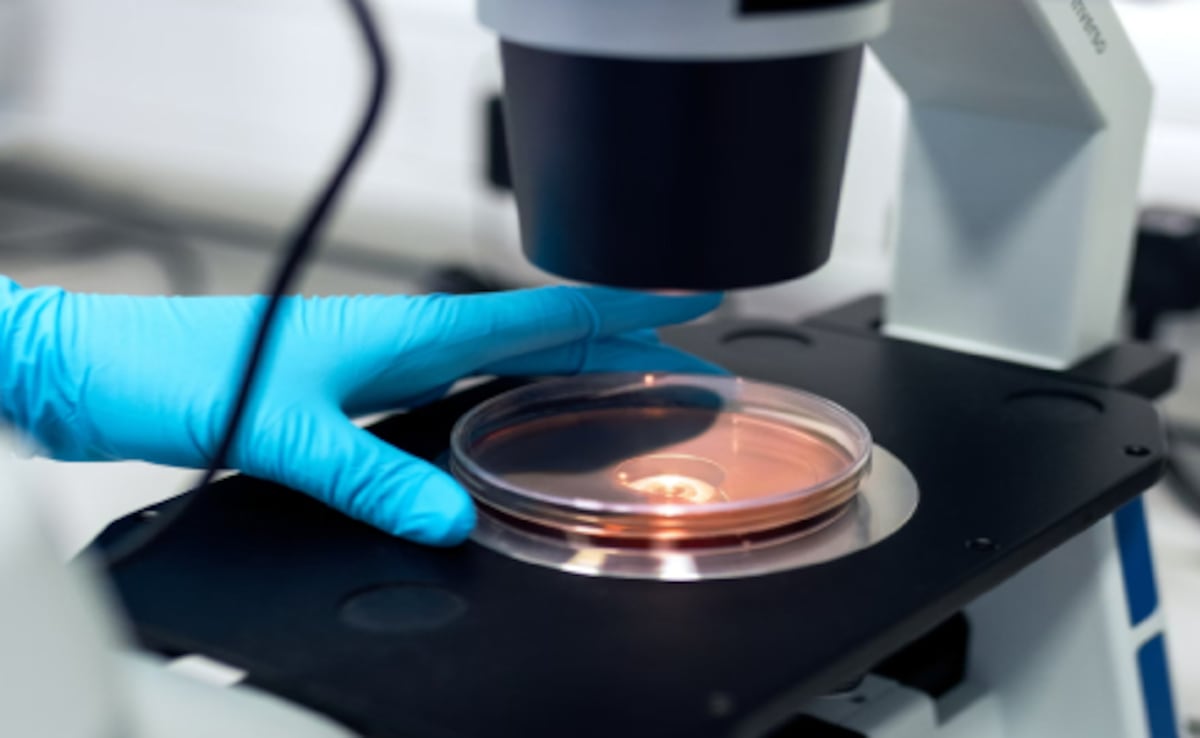
The new research focused on a particular protein used by bacteriophages (representational).

As the globe faces a rise in antibiotic-resistant bacteria – making traditional antibiotics ineffective – specific viruses could offer a solution.

Viruses called bacteriophages, or phages, target bacteria but can’t infect humans or other higher organisms. Phages inject their DNA into the bacterial cell, multiply to large numbers using the resources of the host, and then burst out to infect more bacteria in the vicinity.

Essentially, they are a naturally occurring, self-replicating and specific antibiotic. Discovered more than 100 years ago, their use against bacteria was largely sidelined in favour of antibiotics.

Our new research looked at one particular protein used by phages to bypass the natural defences of bacteria. We found this protein has an essential control function by binding to DNA and RNA.

This increased understanding is an important step towards using phages against bacterial pathogens in human health or agriculture.

Bacterial defence systems

There are hurdles to using phages to target bacteria. Much like our bodies have immune mechanisms to fight off viruses, bacteria have also evolved defences against phage infections.

One such defence is “clustered regularly interspaced short palindromic repeats”, or CRISPR, now better known for its applications in medicine and biotechnology. CRISPR systems in general act as “molecular scissors” by cutting DNA into pieces, be it in a lab-based setting or, in nature, inside a bacterium to destroy a phage.

Imagine wanting to use a phage against an antibiotic-resistant bacterial infection. The only thing standing in the way of that phage killing the bacteria and eradicating the infection might be the bacterium’s CRISPR defence which renders the phages useless as an antimicrobial.

That’s where knowing as much as possible about phage counter-defences becomes important. We are investigating so-called anti-CRISPRs: proteins or other molecules that phages use to inhibit CRISPR.

A bacterium that has CRISPR might be able to stop a phage from infecting. But if the phage has the right anti-CRISPR, it can neutralise this defence and kill the bacterium regardless.

The importance of anti-CRISPRs

Our recent research focused on how an anti-CRISPR response is controlled.

When faced with a powerful CRISPR defence, phages want to automatically produce large amounts of anti-CRISPR to increase the chance of inhibiting CRISPR immunity. But excessive production of anti-CRISPR prevents the replication of the phage and is ultimately toxic. This is why control is important.  

To achieve this control, phages have another protein in their toolbox: an anti-CRISPR-associated (or Aca) protein that frequently occurs alongside the anti-CRISPRs themselves.

Aca proteins act as regulators of the phage’s counter-defence. They make sure the initial burst of anti-CRISPR production that inactivates CRISPR is then rapidly dampened to low levels. That way, the phage can allocate energy to where it is most needed: its replication and, eventually, release from the cell.

We found this regulation occurs at multiple levels. For any protein to be produced, the gene sequence in the DNA first needs to be transcribed into a messenger–RNA. This is then decoded, or translated, into a protein.

Many regulatory proteins function by inhibiting the first step (transcription into messenger-RNA), some others inhibit the second (translation into protein). Either way, the regulator often acts as a “road block” of sorts, binding to DNA or RNA.

Intriguingly and unexpectedly, the Aca protein we investigated does both – even though its structure would suggest it is merely a transcriptional regulator (a protein that regulates the conversion of DNA to RNA), very similar to ones that have been investigated for decades.

We also examined why this extra-tight control at two levels is necessary. Again, it seems to be all about the dosage of the anti-CRISPRs, especially as the phage replicates its DNA in the bacterial cell. This replication will invariably lead to the production of messenger-RNAs even in the presence of transcriptional control.

Therefore, it appears additional regulation is required to reign in anti-CRISPR production. This comes back to the toxicity of excessive production of this counter-defence protein, to the harm done when there’s “too much of a good thing”.

Fine-tuned control

What does this research mean in the grand scheme of things? We now know a lot more about how anti-CRISPR deployment occurs. It requires fine-tuned control to enable the phage to be successful in its battle against the host bacterium.

This is important out in nature, but also when it comes to using phages as alternative antimicrobials.

Knowing every detail about something as obscure-sounding as anti-CRISPR-associated proteins might make all the difference between the phage succeeding or succumbing —and between life or death, not just for the phage, but also for a person infected with antibiotic-resistant bacteria.The Conversation

Nils Birkholz, Postdoctoral Fellow in Molecular Microbiology, University of Otago
This article is republished from The Conversation under a Creative Commons license. Read the original article.

(Except for the headline, this story has not been edited by NDTV staff and is published from a syndicated feed.)




Source link

World Tags:antibiotic, Bacteriophages, Virus

Post navigation

Previous Post: “Whose Throat Should They Grab?”: Ignored Pakistan Star’s Rant On Defeat Against Bangladesh
Next Post: Telegram CEO Pavel Durov arrest: Elon Musk, Edward Snowden, Lex Fridman criticise France’s treatment of tech billionaire

Related Posts

  • Biden And Trump Face Off In Early Debate, With Age, Ability In Focus World
  • UK Court Delays Decision On Julian Assange’s Extradition To US World
  • Dissecting Pakistan’s cypher saga  – The Hindu World
  • Former South Africa Speaker of parliament arrested on bribery allegations, released on bail World
  • What Happens If An Iranian President Dies In Office? World
  • China accuses Quad of stirring up conflicts, ‘inciting’ confrontation World

More Related Articles

Former Bangladesh PM Sheikh Hasina demands probe into July ‘killings and vandalism’ World
Rape and sexual violence in Sudan’s ongoing conflict may amount to war crimes, a new UN report says World
Bangladesh crisis: Educational institutions reopen after a month of closure World
North Korea fires cruise missiles into the sea after U.S.-South Korean military drills end World
Some Russians Go Against Putin To Help Ukrainians World
Donald Trump Warns Of “Bloodbath” If He’s Not Elected World
SiteLock

Archives

  • August 2024
  • July 2024
  • June 2024
  • May 2024
  • April 2024
  • March 2024
  • February 2024
  • January 2024
  • December 2023
  • November 2023
  • October 2023
  • September 2023
  • August 2023
  • July 2023
  • June 2023
  • May 2023
  • April 2023
  • March 2023
  • February 2023
  • January 2023
  • December 2022
  • November 2022
  • October 2022
  • September 2022
  • August 2022
  • July 2022
  • June 2022
  • May 2022

Categories

  • Business
  • Nation
  • Science
  • Sports
  • World

Recent Posts

  • BJP’s Bangla Bandh Today After Police Use Tear Gas, Water Canon On Protesters Demanding Mamata Banerjee’s Resignation
  • Donald Trump Faces Revised Charges In Election Subversion, Calls It Witch Hunt
  • Scrapping unemployment dole sparks protests, unrest in Rajasthan
  • NASA’s Perseverance rover on Mars begins steep climb to rim of a crater
  • Feds file new indictment in Donald Trump Jan. 6 case, keeping charges intact but narrowing allegations

Recent Comments

  1. TpeEoPQa on UP Teacher Who Asked Students To Slap Muslim Classmate
  2. xULDsgPuBe on UP Teacher Who Asked Students To Slap Muslim Classmate
  3. KyJtkhneiLmcq on UP Teacher Who Asked Students To Slap Muslim Classmate
  4. mOyehudovB on UP Teacher Who Asked Students To Slap Muslim Classmate
  5. GFBvgSrWPcsp on UP Teacher Who Asked Students To Slap Muslim Classmate
  • Rupee rises 8 paise to 83.37 against U.S. dollar in early trade Business
  • Jennifer Aniston Slams Donald Trump’s Running Mate JD Vance Over Childless Cat Ladies Remark World
  • US Supreme Court Keeps Block On Rules Protecting Transgender Students World
  • Never Know When Maharaaj Ji Will Become Chief Minister: Varun Gandhi Nation
  • “Current World Order Is WWII Winners’ Club, Needs Reform”: Lankan Minister Nation
  • Kamala Harris smashes fundraising record with $81 million haul in just 24 hours World
  • Brij Bhushan After Delhi Court Frames Charges Nation
  • Last Few Weeks Have Been Nothing Short Of A Dream: Suryakumar Yadav Sports

Editor-in-Chief:
Mohammad Ariff,
MSW, MAJMC, BSW, DTL, CTS, CNM, CCR, CAL, RSL, ASOC.
editor@artifex.news

Associate Editors:
1. Zenellis R. Tuba,
zenelis@artifex.news
2. Haris Daniyel
daniyel@artifex.news

Photograher:
Rohan Das
rohan@artifex.news

Artifex.News offers Online Paid Internships to college students from India and Abroad. Interns will get a PRESS CARD and other online offers.
Send your CV (Subjectline: Paid Internship) to internship@artifex.news

Links:
Associate Journalism
About Us
Privacy Policy

News Links:
Breaking News
World
Nation
Sports
Business
Entertainment
Lifestyle

Registered Office:
72/A, Elliot Road, Kolkata - 700016
Tel: 033-22277777, 033-22172217
Email: office@artifex.news

Editorial Office / News Desk:
No. 13, Mezzanine Floor, Esplanade Metro Rail Station,
12 J. L. Nehru Road, Kolkata - 700069.
(Entry from Gate No. 5)
Tel: 033-46011099, 033-46046046
Email: editor@artifex.news

Copyright © 2023 Artifex.News Newsportal designed by Artifex Infotech.