




Skip to content
  • Facebook
  • X
  • Linkedin
  • WhatsApp
  • Associate Journalism
  • About Us
  • Privacy Policy
  • 033-46046046
  • editor@artifex.news
Artifex.News

Artifex.News

Stay Connected. Stay Informed.

  • Breaking News
  • World
  • Nation
  • Sports
  • Business
  • Science
  • Entertainment
  • Lifestyle
  • Toggle search form
  • Shubhankar Sharma, Several Indian-Origin Players To Vie For 152nd Open At Royal Troon Sports
  • Centre scraps angel tax on foreign investments Business
  • Three killed, including suspected gunman, in Minneapolis shooting, police say World
  • Massive leak shows Chinese firm hacked foreign govts, activists: analysts World
  • RBI Governor Shaktikanta Das rules out review of action against Paytm Payments Bank Business
  • Kamal Nath Is Congress Chief Ministerial Face In Madhya Pradesh, Says Randeep Surjewala Nation
  • India extends operation of imported coal-based power plants until October 15 Business
  • Neeraj Chopra Reveals Paris Diamond League Wasn’t Part Of His Competition Calendar Sports

Human DNA will have to be edited if humans are to settle on other planets

Posted on July 27, 2024 By admin


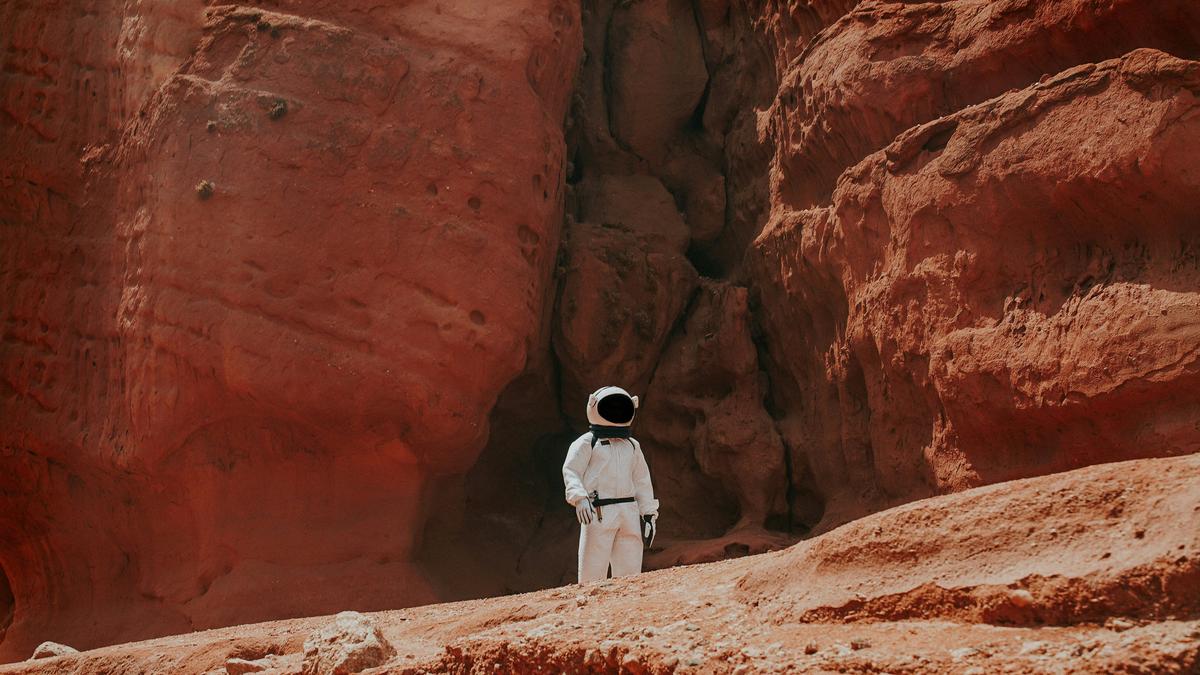
The potential applications of gene editing for allowing us to travel further are almost limitless. Representative image.
| Photo Credit: Nicolas Lobos/Unsplash

When considering human settlements on the Moon, Mars and further afield, much attention is given to the travel times, food and radiation risk. We’ll undoubtedly face a harsh environment in deep space and some thinkers have been pointing to genome editing as a way to ensure that humans can tolerate the severe conditions as they venture further into the solar system.

In January, I was fortunate to attend a much-anticipated debate between astronomer royal Martin Rees and Mars exploration advocate Dr Robert Zubrin. The event at the British Interplanetary Society took on the topic of whether the exploration of Mars should be human or robotic.

In a recent book called ‘The End of Astronauts’, Rees and co-author Donald Goldsmith outline the benefits of exploration of the solar system using robotic spacecraft and vehicles, without the expense and risk of sending humans along for the ride. Dr Zubrin supports human exploration. Where there was some agreement was over Rees’s advocacy of using gene editing technology to enable humans to overcome the immense challenges of becoming an interplanetary species.

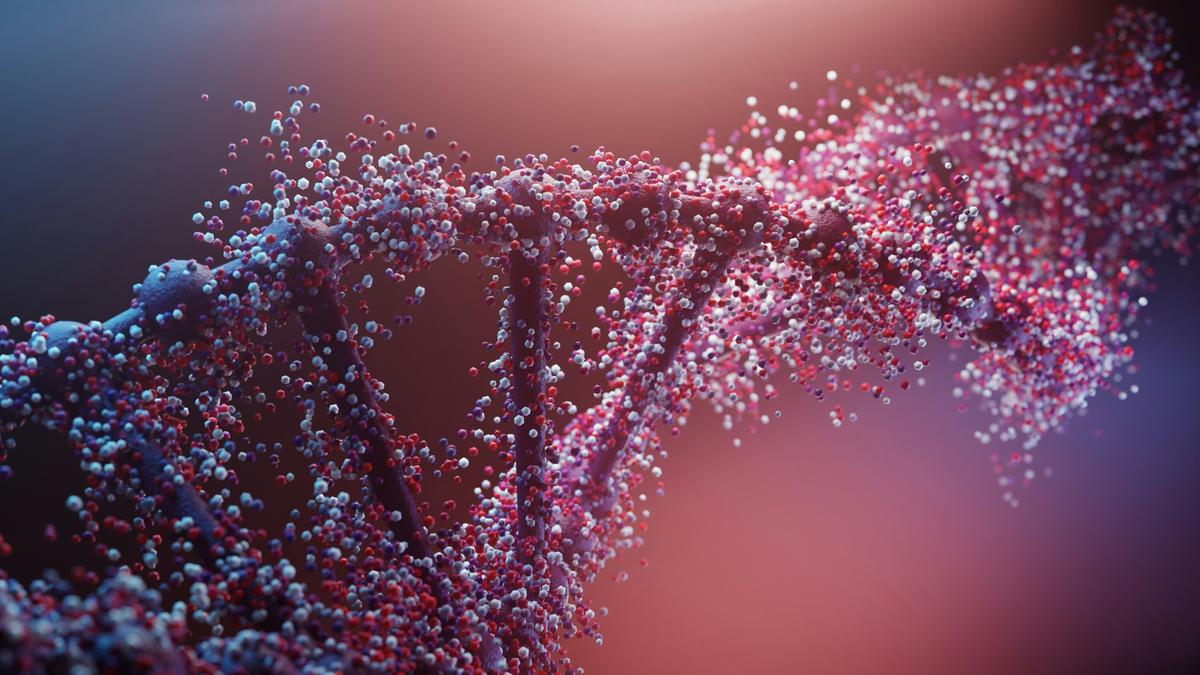
Our genome is all the DNA present in our cells. Since 2011, we have been able to easily and accurately edit genomes. First came a molecular tool called Crispr-Cas9, which today can be used in a high school lab for very little cost and has even been used on the International Space Station. Then came techniques called base and prime editing, through which miniscule changes can be made in the genome of any living organism.

The potential applications of gene editing for allowing us to travel further are almost limitless. One of the most problematic hazards astronauts will encounter in deep space is a higher dosage of radiation, which can cause havoc with many processes in the body and increase the longer-term risk of cancer.

Perhaps, using genome editing, we could insert genes into humans from plants and bacteria that are able to clean up radiation in the event of radioactive waste spills and nuclear fallout. It sounds like science fiction, but eminent thinkers such as Rees believe this is key to our advancement across the solar system.

Identifying and then inserting genes into humans that slow down aging and counter cellular breakdown could also help. We could also engineer crops that resist the effects of exposure to radioactivity as crews will need to grow their own food. We could also personalise medicine to an astronaut’s needs based on their particular genetic makeup.

Imagine a future where the human genome is so well understood it has become pliable under this new, personalised medicine.

Genes for extremes

Tardigrades are microscopic animals sometimes referred to as “water bears”. Experiments have shown that these tiny creatures can tolerate extreme temperatures, pressures, high radiation and starvation. They can even tolerate the vacuum of space.

Geneticists are eager to understand their genomes and a paper published in Nature sought to uncover the key genes and proteins that give the miniature creatures this extraordinary stress tolerance. If we could insert some of the genes involved into crops, could we make them tolerant to the highest levels of radiation and environmental stress? It’s worth exploring.

Even more intriguing is whether inserting tardigrade genes into our own genome could make us more resilient to the harsh conditions in space. Scientists have already shown that human cells in the lab developed increased tolerance to X-ray radiation when tardigrade genes were inserted into them.

Transferring genes from tardigrades is just one speculative example of how we might be able engineer humans and crops to be more suited to space travel.

We’ll need much more research if scientists are ever to get to this stage. However, in the past, several governments have been keen to enforce tight restrictions on how genome editing is used, as well as on other technologies for inserting genes from one species into another.

Germany and Canada are among the most cautious, but elsewhere restrictions seem to be relaxing.

In November 2018, the Chinese scientist He Jiankui announced that he had created the first gene edited babies. He had introduced a gene into the unborn twins that confers resistance to HIV infection.

The scientist was subsequently jailed. But he has since been released and allowed to carry out research again.

In the new space race, certain countries may go to lengths with genome editing that other nations, especially in the west where restrictions are already tight, may not. Whoever wins would reap enormous scientific and economic benefits.

If Rees and the other futurists are right, this field has the potential to advance our expansion into the cosmos. But society will need to agree to it.

It’s likely there will be opposition, because of the deep-seated fears of altering the human species forever. And with base and prime editing now having advanced the precision of targeted gene editing, it’s clear that the technology is moving faster than the conversation.

One country or another is likely to take the leap where others pull back from the brink. Only then will we find out just how viable these ideas really are. Until then, we can only speculate with curiosity, and perhaps excitement too.

Sam McKee is associate tutor and a PhD candidate in the philosophy of science, Manchester Metropolitan University. This article is republished from The Conversation.

The Conversation


Source link

Science Tags:colonizing Mars, human colonies mars, human colonies moon, human DNA editing, tardigrade genes

Post navigation

Previous Post: As Gautam Gambhir Begins India Coach Job, Sanjay Manjrekar’s Blunt Reminder Of His Role
Next Post: Nirmala Sitaraman settles scores with States that have not voted for the BJP: M.K. Stalin

Related Posts

  • A dramatic volcano eruption changed lives in Fiji 2,500 years ago. 100 generations have kept the story alive Science
  • Proud of our DRDO scientists: PM Modi on first flight test of Agni-5 missile Science
  • Scientists move forward with plans for giant new atom-smasher to begin operating by 2040 Science
  • Daily Quiz | On World Bee Day – May 20, 2024 Science
  • Does prenatal Zika infection have long-term immune consequences in children? Science
  • Ergosphere: Making a rotating black hole work Science

More Related Articles

March is tenth straight month to be hottest on record, scientists say Science
Egypt is racing to eliminate hepatitis C Science
In a doughnut in Japan, unlocking the power of the Sun Science
Science This Week | CSIR announces Bhatnagar prize winners, NASA names chief of UFO research and more Science
For Udaipur’s Holi, Rajasthan’s semal trees are going up in flames Science
Ancient landscape cut by rivers found deep under Antarctic ice Science
SiteLock

Archives

  • July 2024
  • June 2024
  • May 2024
  • April 2024
  • March 2024
  • February 2024
  • January 2024
  • December 2023
  • November 2023
  • October 2023
  • September 2023
  • August 2023
  • July 2023
  • June 2023
  • May 2023
  • April 2023
  • March 2023
  • February 2023
  • January 2023
  • December 2022
  • November 2022
  • October 2022
  • September 2022
  • August 2022
  • July 2022
  • June 2022
  • May 2022

Categories

  • Business
  • Nation
  • Science
  • Sports
  • World

Recent Posts

  • Suryakumar Yadav Opens Up On Bond With Gautam Gambhir, Says “Even Though I Wasn’t…”
  • Nirmala Sitaraman settles scores with States that have not voted for the BJP: M.K. Stalin
  • Human DNA will have to be edited if humans are to settle on other planets
  • As Gautam Gambhir Begins India Coach Job, Sanjay Manjrekar’s Blunt Reminder Of His Role
  • This 6-Tonne Spacecraft Will Flyby Earth, Then Slingshot To Jupiter

Recent Comments

  1. KyJtkhneiLmcq on UP Teacher Who Asked Students To Slap Muslim Classmate
  2. mOyehudovB on UP Teacher Who Asked Students To Slap Muslim Classmate
  3. GFBvgSrWPcsp on UP Teacher Who Asked Students To Slap Muslim Classmate
  4. ywdVpqHiNZCtUDcl on UP Teacher Who Asked Students To Slap Muslim Classmate
  5. bRstIalYyjkCUJqm on UP Teacher Who Asked Students To Slap Muslim Classmate
  • Israel orders evacuation of 1.1 million people from northern Gaza, says U.N. World
  • Pakistan caretaker PM Anwarul Haq Kakar calls inflated electricity bills “non-issue” World
  • India To Play Champions Trophy In Pakistan? Report Reveals PCB’s Suggestion To ICC Sports
  • India Eye Goals In Sunil Chhetri’s 150th International Appearance Sports
  • Sania Mirza Tennis Academy Launches, ‘Step One To Be A Champ’ Tennis Camp Sports
  • Govt okays ₹3,760 cr for up to 40% viability gap funding for 4,000 MWh battery energy storage system Business
  • Punjabi Singer Jasmine Sandlas Gets Death Threats Hours Ahead Of Her Delhi Concert Nation
  • India’s Ex-F1 Driver Karun Chandhok Survives ‘Scary Moment’ As Car Catches Fire During Race. Watch Sports

Editor-in-Chief:
Mohammad Ariff,
MSW, MAJMC, BSW, DTL, CTS, CNM, CCR, CAL, RSL, ASOC.
editor@artifex.news

Associate Editors:
1. Zenellis R. Tuba,
zenelis@artifex.news
2. Haris Daniyel
daniyel@artifex.news

Photograher:
Rohan Das
rohan@artifex.news

Artifex.News offers Online Paid Internships to college students from India and Abroad. Interns will get a PRESS CARD and other online offers.
Send your CV (Subjectline: Paid Internship) to internship@artifex.news

Links:
Associate Journalism
About Us
Privacy Policy

News Links:
Breaking News
World
Nation
Sports
Business
Entertainment
Lifestyle

Registered Office:
72/A, Elliot Road, Kolkata - 700016
Tel: 033-22277777, 033-22172217
Email: office@artifex.news

Editorial Office / News Desk:
No. 13, Mezzanine Floor, Esplanade Metro Rail Station,
12 J. L. Nehru Road, Kolkata - 700069.
(Entry from Gate No. 5)
Tel: 033-46011099, 033-46046046
Email: editor@artifex.news

Copyright © 2023 Artifex.News Newsportal designed by Artifex Infotech.