


Skip to content
  • Facebook
  • X
  • Linkedin
  • WhatsApp
  • YouTube
  • Associate Journalism
  • About Us
  • Privacy Policy
  • 033-46046046
  • editor@artifex.news
Artifex.News

Artifex.News

Stay Connected. Stay Informed.

  • Breaking News
  • World
  • Nation
  • Sports
  • Business
  • Science
  • Entertainment
  • Lifestyle
  • Toggle search form
  • Did an ancient Vaigai flood contribute to Keezhadi’s abandonment?
    Did an ancient Vaigai flood contribute to Keezhadi’s abandonment? Science
  • Access Denied
    Access Denied Nation
  • Access Denied
    Access Denied Nation
  • Access Denied
    Access Denied Nation
  • Bangladesh Allows Shakib Al Hasan, Ousted MP Cricketer From Sheikh Hasina’s Party, To Play Tests In Pakistan
    Bangladesh Allows Shakib Al Hasan, Ousted MP Cricketer From Sheikh Hasina’s Party, To Play Tests In Pakistan Sports
  • NALSAR Student Bar says provisions cited by BCI do not authorise restrictions on enrolment of entire batch
    NALSAR Student Bar says provisions cited by BCI do not authorise restrictions on enrolment of entire batch Nation
  • ODI World Cup: David Warner Overtakes Virat Kohli For Massive Feat
    ODI World Cup: David Warner Overtakes Virat Kohli For Massive Feat Sports
  • Cricket World Cup 2023: England Near Elimination After 8-Wicket Loss To Sri Lanka
    Cricket World Cup 2023: England Near Elimination After 8-Wicket Loss To Sri Lanka Sports
ISRO has a problem: too many rockets, too few satellites to launch | Analysis

ISRO has a problem: too many rockets, too few satellites to launch | Analysis

Posted on July 13, 2024 By admin


In June, S. Somanath, Chairman of the Indian Space Research Organisation (ISRO) and Secretary of the Department of Space, said ISRO’s launch vehicle capability was three-times the demand. Many experts in the spaceflight sector and beyond interpreted this to mean the space launch market was grim. Mr. Somanath also suggested strong demand was needed for launch vehicles from the domestic Indian market.

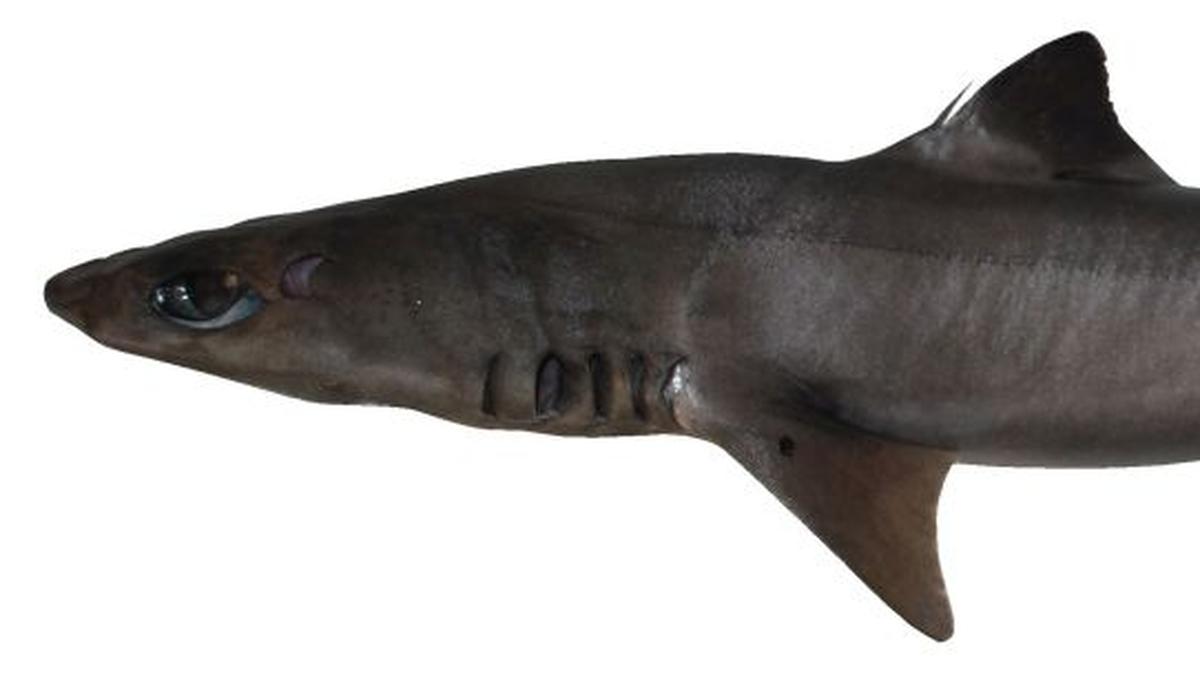
India currently has four launch vehicles: the Small Satellite Launch Vehicle (SSLV), the Polar Satellite Launch Vehicle (PSLV), the Geosynchronous Satellite Launch Vehicle (GSLV), and the Launch Vehicle Mark-III (LVM-3). These rockets can launch satellites weighing up to four tonnes to the geosynchronous orbit. India also relies on foreign launch vehicles, like Europe’s Ariane V and SpaceX’s Falcon 9, when a satellite weighs more than four tonnes.

At present, the country operates a fleet of satellites with applications in communications, remote sensing, positioning, navigation and timing (PNT), meteorology, disaster management, space-based internet, scientific missions, and experimental missions. It also needs launch vehicles for space missions like Chandrayaan 3 and Aditya L1.

All this makes it look like there are more applications and satellites than there are launch vehicles — which is the opposite of what Somanath mentioned. Where then is the issue?

Supply-driven to demand-driven model

The Indian space programme used to follow a supply-driven model: ISRO would build and launch satellites and then look for customers who needed the services provided by the satellites. When the Indian government reformed the space sector in 2019-2020, it changed this to a demand-driven model. Here, a satellite needs to be built and launched only if there is already demand for it. This may have led to the situation Mr. Somanath mentioned.

There is now a chicken and egg problem. The customer of the services provided by the satellite needs to be educated about the need for the service. The customer will then create a demand for a service that will need a satellite to be launched. This will provide the demand Mr. Somanath is asking for.

Consider the example of the internet. There needs to be a demand for space-based internet in a country already filled with affordable fibre and mobile-based internet services, so a company will launch a constellation of satellites into orbit to provide that service.

The question arises: Who will educate the customer, ISRO or the industry?

Without such educated customers, demand at the scale ISRO expects will not be created. The customers here are not only consumers of space-based internet. These are other companies, government institutions, defence enterprises, and ordinary people including farmers, bankers, etc. So the ‘amount’ of education required is very great.

The other area from which demand is likely to arise is human spaceflight. This includes human-rated launch vehicles that carry humans and supplies into orbit and to destinations like an orbiting space station or the moon. There could in future be demand for space tourism as well.

Launch capability limitations

India’s launch vehicles are also not powerful enough to undertake certain missions like Chandrayaan 4. China used its Long March 5 launch vehicle to launch its Chang’e 4 and Chang’e 5 missions in a single launch. India’s LVM-3 has less than one-third of Long March 5’s capability (28% to be more precise) and will need two LVM-3 launches to launch all the components of Chandrayaan 4.

ISRO will be upgrading the LVM-3 with a semi-cryogenic engine to boost its payload capacity to six tonnes to the geostationary transfer orbit (GTO). The organisation will also need a new launch vehicle — already dubbed the Next Generation Launch Vehicle (NGLV), a.k.a. Project Soorya — to carry 10 tonnes to GTO. But it has only submitted a funding proposal thus far for this project. Other variants of this launch vehicle are expected to raise this vehicle’s lift capacity.

India will also need one more successful flight of the SSLV to be confident about its ability to launch smaller satellites. Smaller satellites are usually experimental and university-built. More success in this domain will encourage space companies to build larger satellites, eventually leading to a demand for launch vehicles.

Launch vehicle economics

All these launch vehicles will need satellites to launch. The heavier vehicles can fulfil some national goals like lunar exploration and a space station while ISRO can use the smaller satellites for technology and capability demonstration. However, the latter will constitute only a small number of launches.

Satellites have a defined mission life. As they get old, they will need to be replaced with newer satellites. This will also create a demand for launch vehicles. However, mission operators like their satellites to live longer and have been improving their lifetimes with software and hardware upgrades. This complicates estimates of the number and frequency of launch vehicles that will be needed.

Launch vehicles are improving as well. In a single launch, the PSLV can deliver multiple satellites in multiple orbits. Rocket stages are becoming reusable, which reduces the cost of building the rocket and increases profitability. ISRO has been building its Reusable Launch Vehicle and vertical landing technologies to make reusable landing stages. It is also making an effort to replace toxic fuels for rocket engines with green alternatives.

Launch vehicle perspectives

Mr. Somanath himself provided a solution for the problem he highlighted. He suggested we need an ecosystem that creates demand for various services, leading to a demand for data, leading to more sources of data (like satellites), culminating in a demand for launch vehicles. The richer the ecosystem, the greater the demand.

The Indian government wants the private sector to create demand among customers and to build and launch satellites. It wants them to look for services to offer customers in India and abroad. It also wants revenue by providing launch services of its own. Finally, the government wants to upskill workers and give them jobs.

However, private companies don’t want the government to be in the launch business. Instead, they want the government to be their customer and to provide rule of law and reliable regulations.

This is because private players desire a reliable source of revenue, which the Indian government can be over a long period of time. There is thus talk of the government being an ‘anchor customer’ helping companies in their early days.

The roadmap here is for the government to exit the launch vehicle business at some point, leaving the companies with sufficient demand for launch vehicles. This is similar to the situation in the U.S., where arms of the U.S. government award contracts to SpaceX, Blue Origin, etc. to execute launches with their payloads.

Thus, the Indian government will absorb the cost of the transition from supply-driven to demand-driven building of satellites and launch vehicles. But it isn’t yet educating its own Ministries and creating some of the anchor demand for satellites and launch vehicles.

Pradeep Mohandas is a technical writer and space enthusiast in Pune.


Source link

Science Tags:Chandrayaan-4, Geosynchronous satellite launch vehicle, IN-SPACe, Indian Space Research Organisation, ISRO Lunar polar explorer, ISRO reusable launch vehicle, Polar Satellite Launch Vehicle, Small Satellite Launch Vehicle

Post navigation

Previous Post: Threat from North Korea and China greater than ever: Japan
Next Post: Long road ahead for Turkiye, Syria as Erdogan shows signs of rapprochement

Related Posts

  • ZSI scientist discover new species of dogfish shark Squalus hima from India
    ZSI scientist discover new species of dogfish shark Squalus hima from India Science
  • More solar storms brewing after last week’s aurorae as Sun ‘wakes up’
    More solar storms brewing after last week’s aurorae as Sun ‘wakes up’ Science
  • Musk’s SpaceX testing breakthrough tech in risky spacewalk
    Musk’s SpaceX testing breakthrough tech in risky spacewalk Science
  • Hydropower project on Chenab gets clearance
    Hydropower project on Chenab gets clearance Science
  • Science Snapshots: May 17, 2026
    Science Snapshots: May 17, 2026 Science
  • What do countries and companies want in global plastic treaty talks? | Explained
    What do countries and companies want in global plastic treaty talks? | Explained Science

More Related Articles

Quiz | Easy like Sunday morning: Space and beyond Quiz | Easy like Sunday morning: Space and beyond Science
Does a specific bacteria subtype drive colorectal cancer progression? Does a specific bacteria subtype drive colorectal cancer progression? Science
Why do octopuses have a ‘mating arm’? Why do octopuses have a ‘mating arm’? Science
Scientists develop mathematical model to optimise elite athletes’ performance Scientists develop mathematical model to optimise elite athletes’ performance Science
The Science Quiz | Promethium bound… The Science Quiz | Promethium bound… Science
Record temperatures in the Great Barrier Reef seen in the last decade Record temperatures in the Great Barrier Reef seen in the last decade Science
SiteLock

Archives

  • October 2026
  • September 2026
  • August 2026
  • July 2026
  • June 2026
  • May 2026
  • April 2026
  • March 2026
  • February 2026
  • January 2026
  • December 2025
  • November 2025
  • October 2025
  • September 2025
  • August 2025
  • July 2025
  • June 2025
  • May 2025
  • April 2025
  • March 2025
  • February 2025
  • January 2025
  • December 2024
  • November 2024
  • October 2024
  • September 2024
  • August 2024
  • July 2024
  • June 2024
  • May 2024
  • April 2024
  • March 2024
  • February 2024
  • January 2024
  • December 2023
  • November 2023
  • October 2023
  • September 2023
  • August 2023
  • July 2023
  • June 2023
  • May 2023
  • April 2023
  • March 2023
  • February 2023
  • January 2023
  • December 2022
  • November 2022
  • October 2022
  • September 2022
  • August 2022
  • July 2022
  • June 2022
  • May 2022

Categories

  • Business
  • Nation
  • Science
  • Sports
  • World

Recent Posts

  • Ranji Trophy: Lower order’s lack of application cost us: Sai Kishore
  • Boat that capsized in Bihar had a hole and was overloaded, say police
  • Delhi journalist who accused ACP of sexual harassment slapped with SC/ST Act over ‘casteist remarks’
  • Three Indians killed in Germany building fire: reports
  • Govt. to roll out National Electricity Data Sharing framework in October: Power Secretary

Recent Comments

  1. RobertTes on UP Teacher Who Asked Students To Slap Muslim Classmate
  2. WilliamNek on UP Teacher Who Asked Students To Slap Muslim Classmate
  3. RobertTes on UP Teacher Who Asked Students To Slap Muslim Classmate
  4. Manuelret on UP Teacher Who Asked Students To Slap Muslim Classmate
  5. RobertTes on UP Teacher Who Asked Students To Slap Muslim Classmate
  • Gambhir backs Rishabh Pant as India’s first-choice wicketkeeper at World Cup
    Gambhir backs Rishabh Pant as India’s first-choice wicketkeeper at World Cup Sports
  • Isack Hadjar To Make F1 Debut For Red Bull Feeder Team In 2025
    Isack Hadjar To Make F1 Debut For Red Bull Feeder Team In 2025 Sports
  • Access Denied
    Access Denied Nation
  • Revolutionary Or Deceptive? China’s Robotic Fish Raise Eyebrows
    Revolutionary Or Deceptive? China’s Robotic Fish Raise Eyebrows World
  • U.S. Appeals court lets Trump send troops to Portland
    U.S. Appeals court lets Trump send troops to Portland World
  • Naveen Patnaik lambasts BJP government for changing Indian Hockey jersey colour from blue to saffron
    Naveen Patnaik lambasts BJP government for changing Indian Hockey jersey colour from blue to saffron Nation
  • Rupee falls 10 paise to settle at 83.48 against U.S. dollar
    Rupee falls 10 paise to settle at 83.48 against U.S. dollar Business
  • What are countries doing to get nationals out of Lebanon?
    What are countries doing to get nationals out of Lebanon? World

Editor-in-Chief:
Mohammad Ariff,
MSW, MAJMC, BSW, DTL, CTS, CNM, CCR, CAL, RSL, ASOC.
editor@artifex.news

Associate Editors:
1. Zenellis R. Tuba,
zenelis@artifex.news
2. Haris Daniyel
daniyel@artifex.news

Photograher:
Rohan Das
rohan@artifex.news

Associate Journalists
1. Subrata Paul - AN/2020/01
2. Quamruz Zaman - AN/2021/22
3. Ahmed Sha - AN/2021/035
4. Ajay Kumar Shaw - AN/2021/39
5. Tahqiqul Hoda - AN/2021/21

Artifex.News offers Online Paid Internships to college students from India and Abroad. Interns will get a PRESS CARD and other online offers.
Send your CV (Subjectline: Paid Internship) to internship@artifex.news

Links:
Associate Journalism
About Us
Privacy Policy

News Links:
Breaking News
World
Nation
Sports
Business
Entertainment
Lifestyle

Registered Office:
72/A, Elliot Road, Kolkata - 700016
Tel: 033-22277777, 033-22172217
Email: office@artifex.news

Editorial Office / News Desk:
No. 13, Mezzanine Floor, Esplanade Metro Rail Station,
12 J. L. Nehru Road, Kolkata - 700069.
(Entry from Gate No. 5)
Tel: 033-46011099, 033-46046046
Email: editor@artifex.news

Copyright © 2023 Artifex.News Newsportal designed by Artifex Infotech.