
Skip to content
  • Facebook
  • X
  • Linkedin
  • WhatsApp
  • Associate Journalism
  • About Us
  • Privacy Policy
  • 033-46046046
  • editor@artifex.news
Artifex.News

Artifex.News

Stay Connected. Stay Informed.

  • Breaking News
  • World
  • Nation
  • Sports
  • Business
  • Science
  • Entertainment
  • Lifestyle
  • Toggle search form
  • Suicide Rate 2.6 Times Higher Among Indian Men Compared To Women: Study Nation
  • Juventus Midfielder Paul Pogba Provisionally Suspended For Doping Sports
  • ICC World Cup 2023: Australia’s Glenn Maxwell falls off golf cart, to miss England clash Sports
  • Hamas Holding 155 Hostages: Israel Army World
  • PM Modi Lauds High Voter Turnout In Srinagar Nation
  • Virat Kohli’s Celebration After 32-Ball-50 Says It All Amid Strike Rate Chatter Sports
  • In Sahara saga, small investors find a new hope Business
  • U.K. lawmaker returns to work as ‘the bionic MP’ World

On reducing tariffs for smartphone components | Explained

Posted on July 10, 2024 By admin


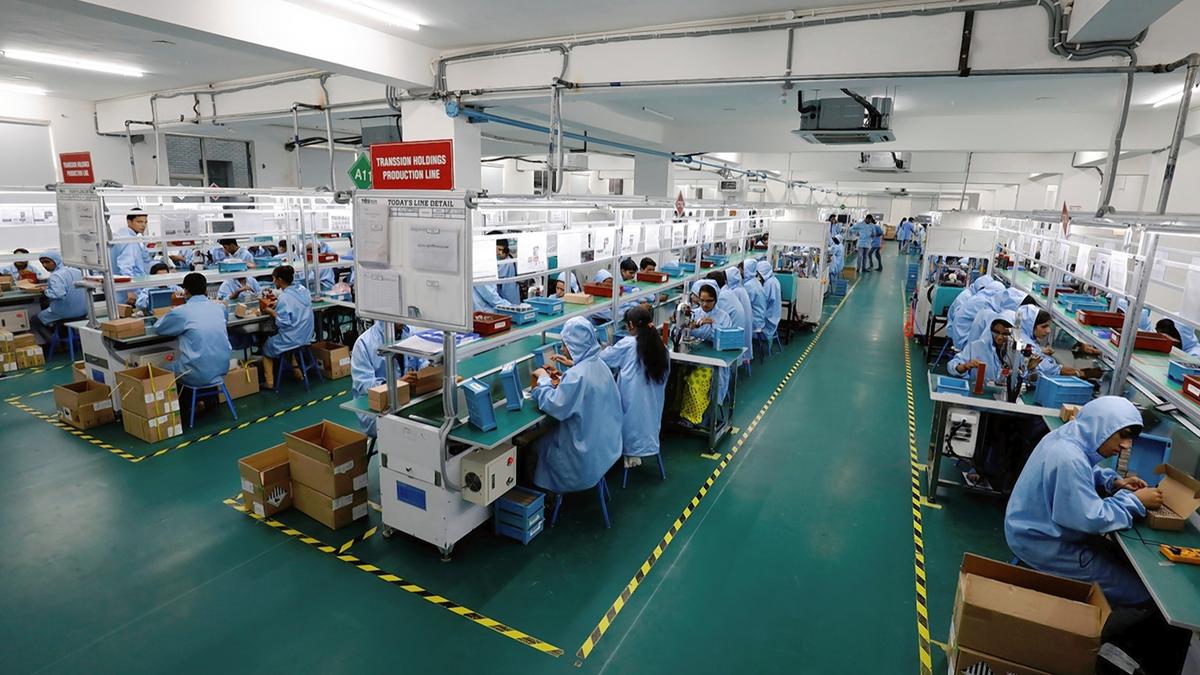
Employees work at the assembly line inside TMB’s mobile phone battery manufacturing plant in Noida, in 2018.
| Photo Credit: REUTERS

The story so far: The Indian Cellular and Electronics Association (ICEA), an industry body representing mobile and other electronics assembly and manufacturing units, has called for a reduction of tariffs on certain components for smartphones. The demand appears, at first blush, to be at odds with the goal of the government — and domestic players — to expand the domestic industrial base for components. However, the ICEA, whose members have included Apple and Foxconn, has argued that it opposes tariff cuts for components that are widely manufactured in India, such as open cells and LED light parts.

Why impose tariff cuts?

Reducing input costs for smartphone assembly units is the obvious reason for these demands. However, a principal justification makers cite for reduced tariffs on components is the saturation of the domestic market: nearly every phone made in India is assembled domestically, and the surplus is exported. By units, smartphones were the fifth largest classifiable commodity exported in the financial year 2022–23, compared to 2015–16, when the rank was 178. The implication goes, now that domestic demand is fulfilled, the need for high component tariffs has dimmed.

The second justification, the industry cites, is the nature of the specific components that it is seeking duty cuts for: Printed Circuit Boards (PCBs) and sub-assemblies, which are highly complex, and miniaturised inputs for smartphones, are not close to being made in India, increasing costs for local assembly operations. Domestic manufacturing of these components’ could take around eight years, Pankaj Mohindroo, ICEA’s president estimated.

In addition, the ICEA said in a report last year, “the overall aggregate demand necessary for domestic investment in some inputs is much larger than the demand created by the prevailing production level.” This effectively means that current tariff levels on PCBs (20%) and other inputs are not resulting in increased domestic production of these components; rather, they are increasing the costs of assembly, as the components have to be assembled anyway.

The tariffs are also leading to a strange consequence: domestic component makers are jacking up prices they quote to assembly units to a “just noticeable difference” below the net cost of an imported component. Cutting tariffs would force domestic component makers to cut their prices and relieve operating expense pressure for assembly units.

What about foreign competitors?

The industry is casting these proposed changes as a “competitive re-alignment” to keep up with other main electronics manufacturing giants in China, Vietnam, Thailand and Mexico. Vietnam’s “bonded zones,” which have special exemptions on duties, allow assembly and manufacturing units based there to enjoy much lower tariffs on component imports. “If Indian companies such as Micromax and Lava want their phone to be competitive in the global market, they should not think of import substitution when selecting parts and components,” ICEA argues. “They should use the best available technologies to make their phones, regardless of the fact the technologies are made in India or not.”

“When China started to assemble smartphones 15 years ago, Chinese firms’ only contribution was labour intensive assembly, accounting for about 3.6% of the total manufacturing value addition,” the ICEA report says. “But, today, Chinese firms have captured about 25 per cent of the manufacturing value added by providing battery, camera filter, glass back-cover, stainless frame, printed circuit board assembly, and other parts, which are technology intensive and offer higher value added than pure assembly service,” the ICEA points out. “[T]here is a need to scale up production of smartphones. At this stage this can only be done by increasing exports. To increase exports, smartphones have to be competitive vis a vis China and Vietnam. This would require reducing tariffs and most importantly maintaining a stability in the tariff regime.”

Smartphone assembly units have been buoyed by the production linked incentive scheme for mobile manufacturing, which subsidises phones which are domestically assembled.
Source link

Business Tags:Indian Cellular and Electronics Association, On reducing tariffs for smartphone components, reducing tariffs for smartphone components, smartphone components tariffs, tariffs for smartphone components

Post navigation

Previous Post: Rahul Dravid Reduces His T20 World Cup Bonus By Rs. 2.5 Crore, Wants Equal Reward: Report
Next Post: Russian court orders arrest of Yulia Navalnaya, widow of Alexei Navalny

Related Posts

  • Rupee rises 4 paise to 82.87 against U.S. dollar in early trade Business
  • Budget 2023 | PAN to be used as common identifier for digital systems Business
  • CDSCO issues sampling guidelines to ensuring quality and efficacy of drugs, cosmetics Business
  • Tyre makers facing severe crunch in domestic natural rubber availability: ATMA Business
  • SBI raises ₹10,000 crore through infrastructure bond issuance  Business
  • Rupee recovers to settle 6 paise higher at 83.55 against dollar Business

More Related Articles

GST Council lifts tax blockages for rupee trade  Business
Sensex, Nifty end flat after hitting record high levels Business
Berkshire ‘built to last’: Warren Buffett assures investors Business
Zoho Corp rolls out modern PoS solution for retail stores Business
Amit Shah asks cooperative banks to focus on extending more long-term financing to agri sector Business
Reserve Bank of India opens sub-office in Arunachal Pradesh’s Itanagar Business
SiteLock

Archives

  • July 2024
  • June 2024
  • May 2024
  • April 2024
  • March 2024
  • February 2024
  • January 2024
  • December 2023
  • November 2023
  • October 2023
  • September 2023
  • August 2023
  • July 2023
  • June 2023
  • May 2023
  • April 2023
  • March 2023
  • February 2023
  • January 2023
  • December 2022
  • November 2022
  • October 2022
  • September 2022
  • August 2022
  • July 2022
  • June 2022
  • May 2022

Categories

  • Business
  • Nation
  • Science
  • Sports
  • World

Recent Posts

  • Rupee trades flat at 83.53 against U.S. dollar in early trade
  • India abstains on UNGA resolution against Russian offensive in Ukraine
  • Markets Today: Sensex climbs 226 points in early deals on buying in IT stocks after TCS earnings
  • Puja Khedkar Audi Has 21 Pending Traffic Fines, Police Issues Notice
  • Ex President Of Jammu and Kashmir High Court Bar Association Arrested Under Public Safety Act

Recent Comments

  1. ywdVpqHiNZCtUDcl on UP Teacher Who Asked Students To Slap Muslim Classmate
  2. bRstIalYyjkCUJqm on UP Teacher Who Asked Students To Slap Muslim Classmate
  3. GkJwRWEAbS on UP Teacher Who Asked Students To Slap Muslim Classmate
  4. xreDavBVnbGqQA on UP Teacher Who Asked Students To Slap Muslim Classmate
  5. aANVRzfUdmyb on UP Teacher Who Asked Students To Slap Muslim Classmate
  • Mumbai Start-Up Founder Strikes Gold With Nvidia Backing Nation
  • Colonial-Era IPC Out, New Criminal Laws Take Effect Today: 10 Points Nation
  • Assange granted temporary reprieve from extradition to U.S. World
  • India Says Open To Consider Specific Info On Khalistani Terrorist Murder Nation
  • Amid War, Israeli Anti-Government Protesters March On Benjamin Netanyahu’s Home World
  • ISRO Fights Over 100 Cyber-Attacks Daily: S Somanath Nation
  • Sunita Williams-piloted Boeing Starliner test flight postponed over Atlas rocket glitch World
  • New Rail-Port Corridor Different From China’s Belt And Road? Minister Explains Nation

Editor-in-Chief:
Mohammad Ariff,
MSW, MAJMC, BSW, DTL, CTS, CNM, CCR, CAL, RSL, ASOC.
editor@artifex.news

Associate Editors:
1. Zenellis R. Tuba,
zenelis@artifex.news
2. Haris Daniyel
daniyel@artifex.news

Photograher:
Rohan Das
rohan@artifex.news

Artifex.News offers Online Paid Internships to college students from India and Abroad. Interns will get a PRESS CARD and other online offers.
Send your CV (Subjectline: Paid Internship) to internship@artifex.news

Links:
Associate Journalism
About Us
Privacy Policy

News Links:
Breaking News
World
Nation
Sports
Business
Entertainment
Lifestyle

Registered Office:
72/A, Elliot Road, Kolkata - 700016
Tel: 033-22277777, 033-22172217
Email: office@artifex.news

Editorial Office / News Desk:
No. 13, Mezzanine Floor, Esplanade Metro Rail Station,
12 J. L. Nehru Road, Kolkata - 700069.
(Entry from Gate No. 5)
Tel: 033-46011099, 033-46046046
Email: editor@artifex.news

Copyright © 2023 Artifex.News Newsportal designed by Artifex Infotech.