





Skip to content
  • Facebook
  • X
  • Linkedin
  • WhatsApp
  • Associate Journalism
  • About Us
  • Privacy Policy
  • 033-46046046
  • editor@artifex.news
Artifex.News

Artifex.News

Stay Connected. Stay Informed.

  • Breaking News
  • World
  • Nation
  • Sports
  • Business
  • Science
  • Entertainment
  • Lifestyle
  • Toggle search form
  • Court Grants Bail To Man Accused In Kanhaiya Kumar Assault Case Nation
  • Sensex, Nifty hit record high levels on impressive GDP data, foreign fund inflows Business
  • Virat Kohli Re-Writes Record Books With Stunning Will Jacks Partnership Against GT Sports
  • Sri Lanka top court hears rights petition against Indian fishermen World
  • PM Modi To Cast Vote At This Ahmedabad School Tomorrow Nation
  • As the summer sun cranks up the temperature, it increases the risk of heatstroke. It’s not just about feeling uncomfortable; it’s about staying safe. Heatstroke can sneak up on anyone, but it poses a particular threat to kids and parents hustling through their summer adventures. Science
  • Venture capitalists back ‘steroid Olympics’ where drug-testing is legal Science
  • 2 Minor Sisters, Alone At Home, Found With Throats Slit In UP Nation

Understanding insect societies with Bengaluru-based Raghavendra Gadagkar

Posted on June 25, 2024 By admin


Within the intricate world of insects, particularly ants, bees and wasps, we witness some of the most complex and highly organised societies in nature. These creatures live in sophisticated colonies that sometimes mirror and often surpass the social structures of other species. “Of these, honeybees are the most renowned, not only for their intricate social behaviour but also for their significant practical importance to humans,” said Raghavendra Gadagkar, a Bengaluru-based ecologist, while discussing insect societies with an audience at the Science Gallery in Bengaluru recently.

Way before humans extracted sugar from cane or beetroot, honey was our primary sweetener. “Honey bees gather nectar from various colonies, making the concept of ‘pure honey’ a misnomer. When collected from a single colony, the honey might carry a distinct flavor, such as orange or a floral note.”

“Natural honey is resistant to fungal growth, courtesy the meticulous care bees provide within the hive. Once outside, it loses this property.”

Bengaluru-based ecologist Raghavendra Gadagkar 
| Photo Credit:
Special Arrangement

Winged wonders

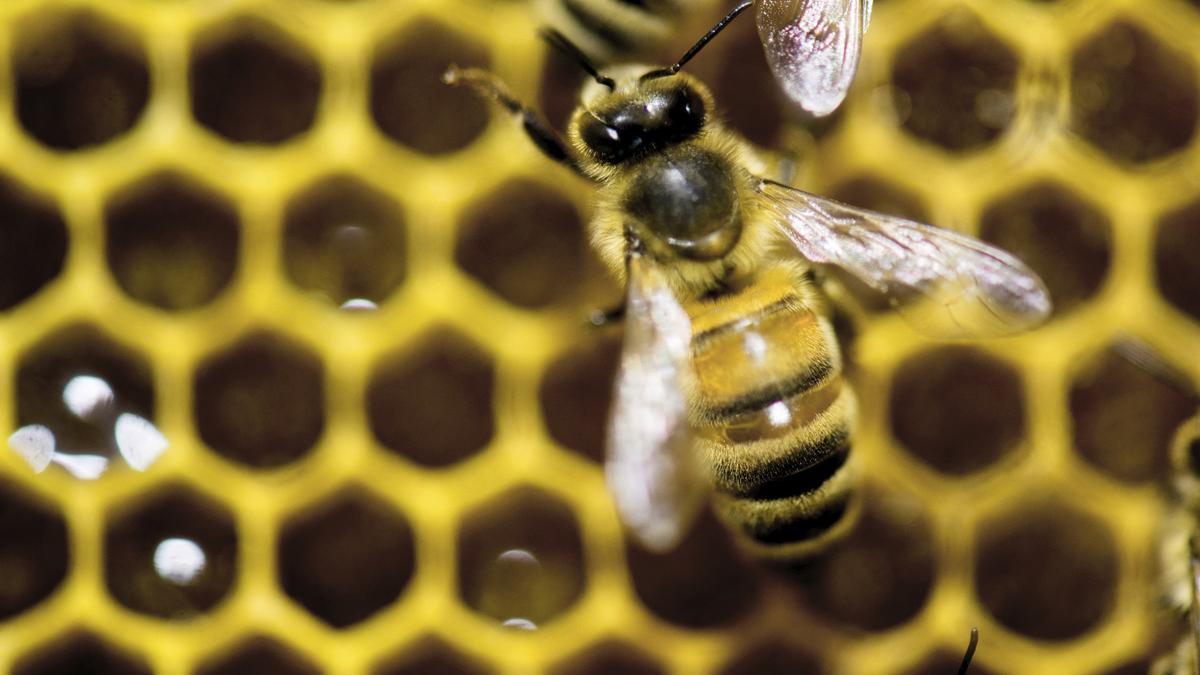
Globally, there are 10 to 15 honeybee species, with four prominent major types — three are native to India, while the fourth is European. Interestingly, bees were not native to America or Australia; they were introduced by European settlers.

A honeybee colony, housing between 10,000 and 60,000 bees, operates with a clear division of labour. The queen bee, the sole egg layer, is the colony’s heart. A few male drones focus on mating, while worker bees perform various tasks. The queen bee has attendants which feed, clean, and care for her, ensuring she can focus on laying thousands of eggs. This care system helps maintain colony cohesion.

Unlike bees, ant colonies often include specialised castes that differ significantly in size and function. This division of labour is evident in species like the Malaysian ant, which shows a vast size difference between workers and soldiers.

“The soldier is about 500 times the size of the worker,” said Raghavendra. Ants also demonstrate sophisticated behaviours, such as seed collection and colony defence, and have been subject of extensive study due to their decentralised organisation and efficiency. Their ability to perform specific tasks based on environmental cues and colony needs has inspired fields like computer science, particularly in optimisation algorithms.
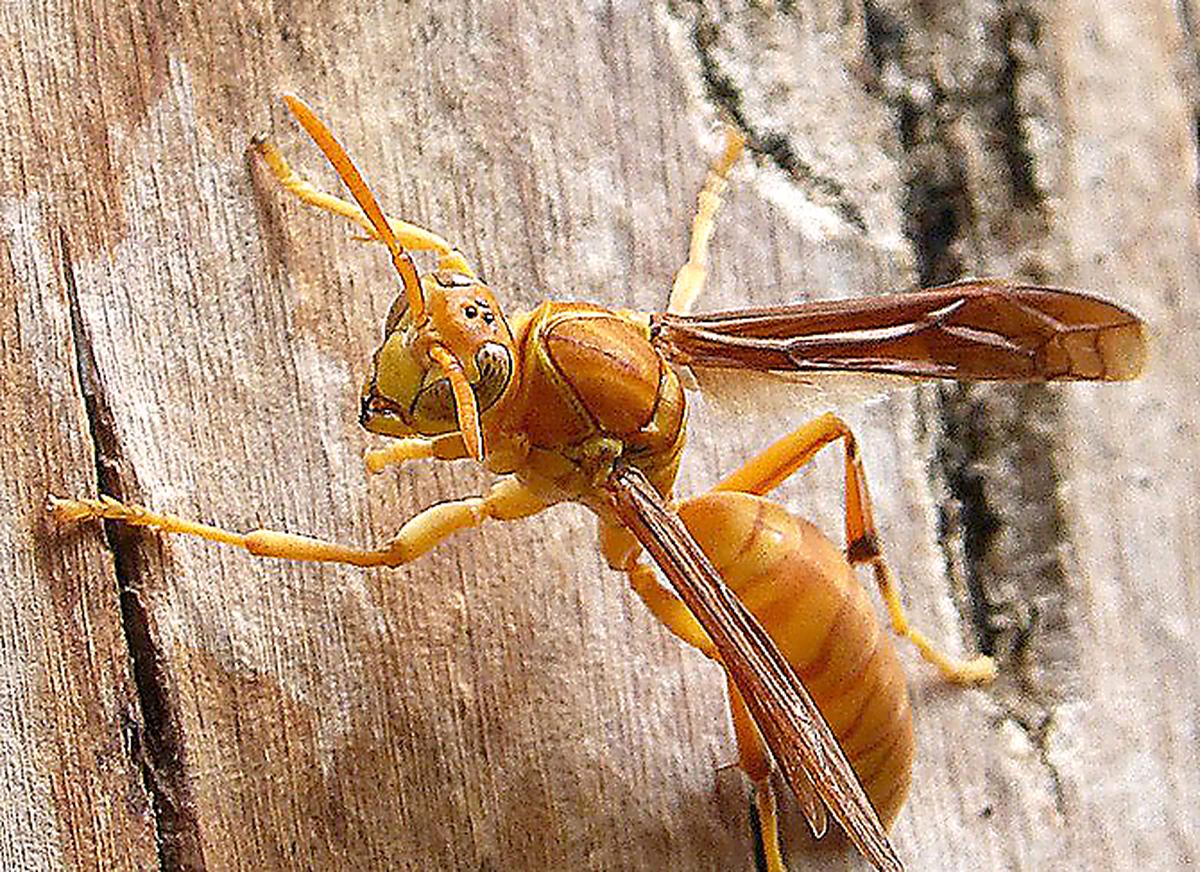
Yellow Paper Wasps

Yellow Paper Wasps
| Photo Credit:
wikimedia commons/Azim Khan Ronnie, gail hampshire

Wasps, though less socially organised than bees or ants, are fascinating architects. Paper wasps build intricate nests from chewed plant fibres mixed with saliva, ranging from open structures to concealed multi-story complexes. Hornets, a type of social wasp, construct large, enclosed nests and are known for their aggressive defence tactics.

Raghavendra explained how their research focused on social insects, particularly wasps. They employed a variety of techniques to observe these insects in their natural habitats, as well as in controlled laboratory settings. “You don’t have to go to the forest. They come and build their nest in your house, in your garden. They come to be rather active here,” he said.

Bee-roles

One of the most compelling findings from their research is the rapid response of workers to the queen’s absence. A noticeable shift in behaviour occurs within just half an hour of removing the queen. An individual worker steps up, showing heightened aggression and activity, essentially assuming a leadership role in the queen’s absence. 
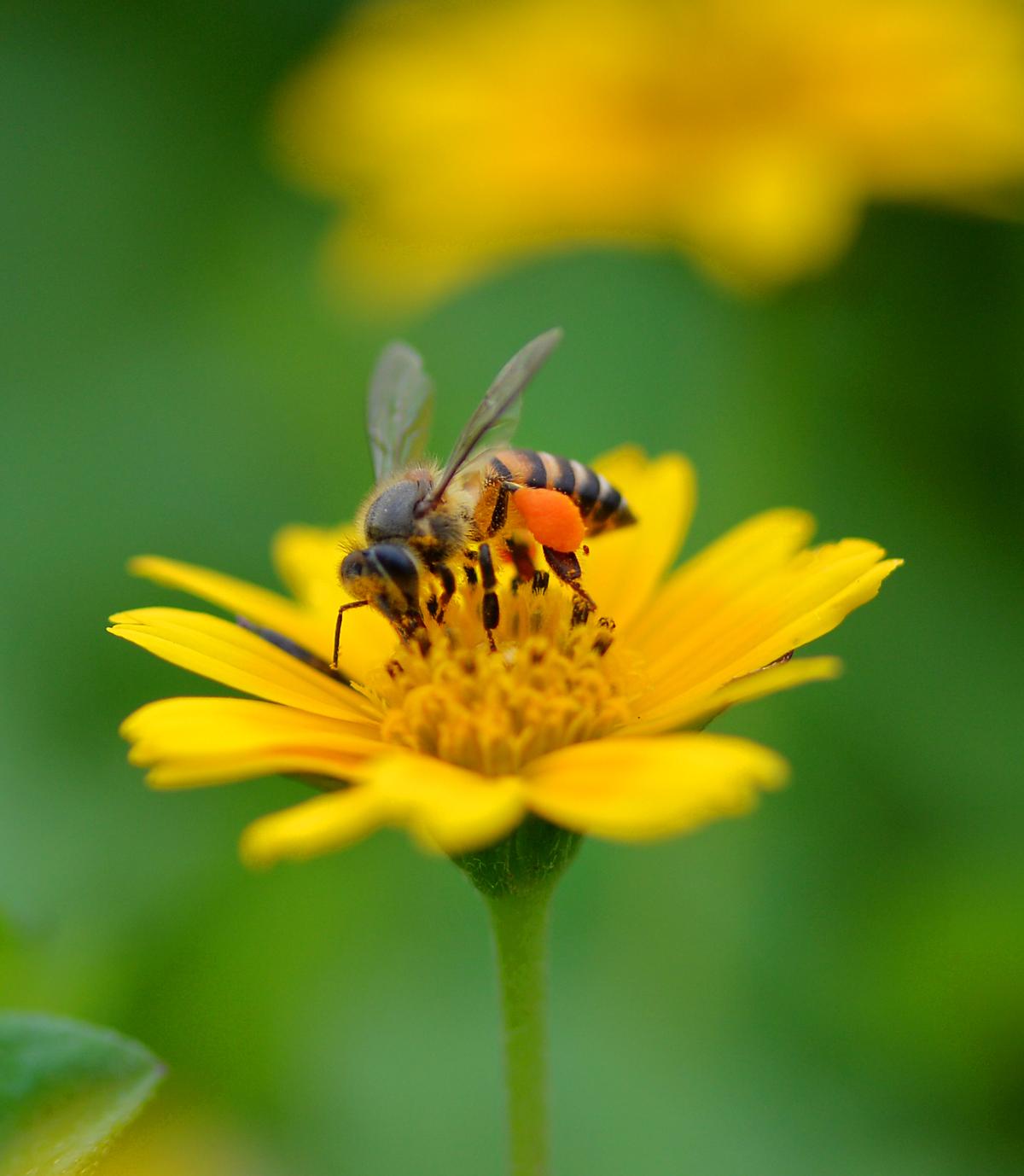
VISAKHAPATNAM, ANDHRA PRADESH, 11/07/2018: A honey bee feasting on a flower at Tenneti Park in Visakhapatnam on July 11, 2018. Flowers in full bloom following monsoon rains provide perfect setting for bees.   
Photo : K.R. Deepak

VISAKHAPATNAM, ANDHRA PRADESH, 11/07/2018: A honey bee feasting on a flower at Tenneti Park in Visakhapatnam on July 11, 2018. Flowers in full bloom following monsoon rains provide perfect setting for bees.
Photo : K.R. Deepak
| Photo Credit:
DEEPAK KR

Dividing the colony, researchers observed heightened activity in the first worker to become hyperactive, assuming a leadership role. This indicated a complex, layered structure where multiple individuals were prepared for leadership, influenced by situational factors. Dissatisfaction within a colony could lead to the establishment of a new nest. Researchers observed both the solitary and group migrations, with new queens selected through democratic processes. 

Research on social insects has far-reaching applications, from improving telecommunications and robotics to enhancing artificial intelligence. By understanding how insects communicate, organise, and perform tasks efficiently, scientists develop better algorithms and systems. These studies also offer insights into natural selection and evolutionary biology, with altruistic behaviours such as the bees’ self-sacrifice providing profound examples of evolution shaping complex social behaviours.
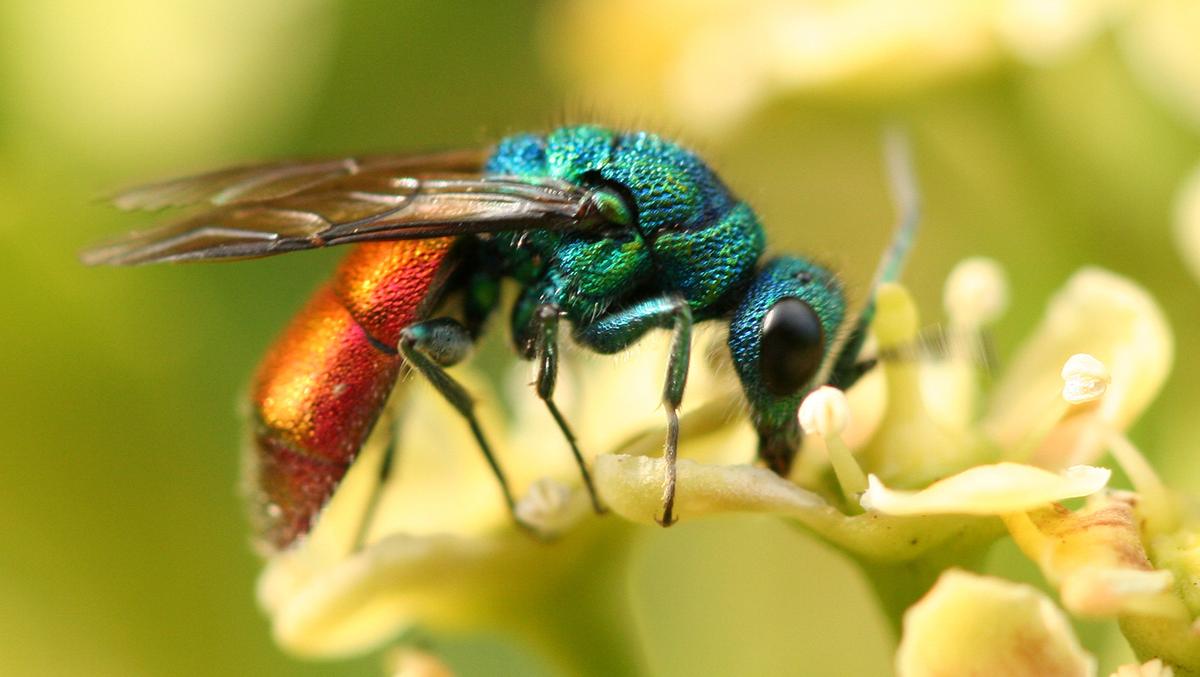
The intricate societies of honeybees, ants and wasps showcase the wonders of natural evolution and adaptation. Their sophisticated communication methods and specialised roles within colonies fascinate and inspire advancements in science and technology. Each discovery in this dynamic field leads to new questions, perpetuating the cycle of discovery and enhancing our understanding of the natural world. 

Bees in India

There are three bee varieties in India — the Asian Dwarf Honey Bee is small in size, building tiny, open nests on tree branches; Apis Cerana (also known as the Beekeeper’s Bee) nests in cavities. They are often kept in wooden boxes by beekeepers. The Giant Honeybee is larger and more aggressive and builds substantial open nests.
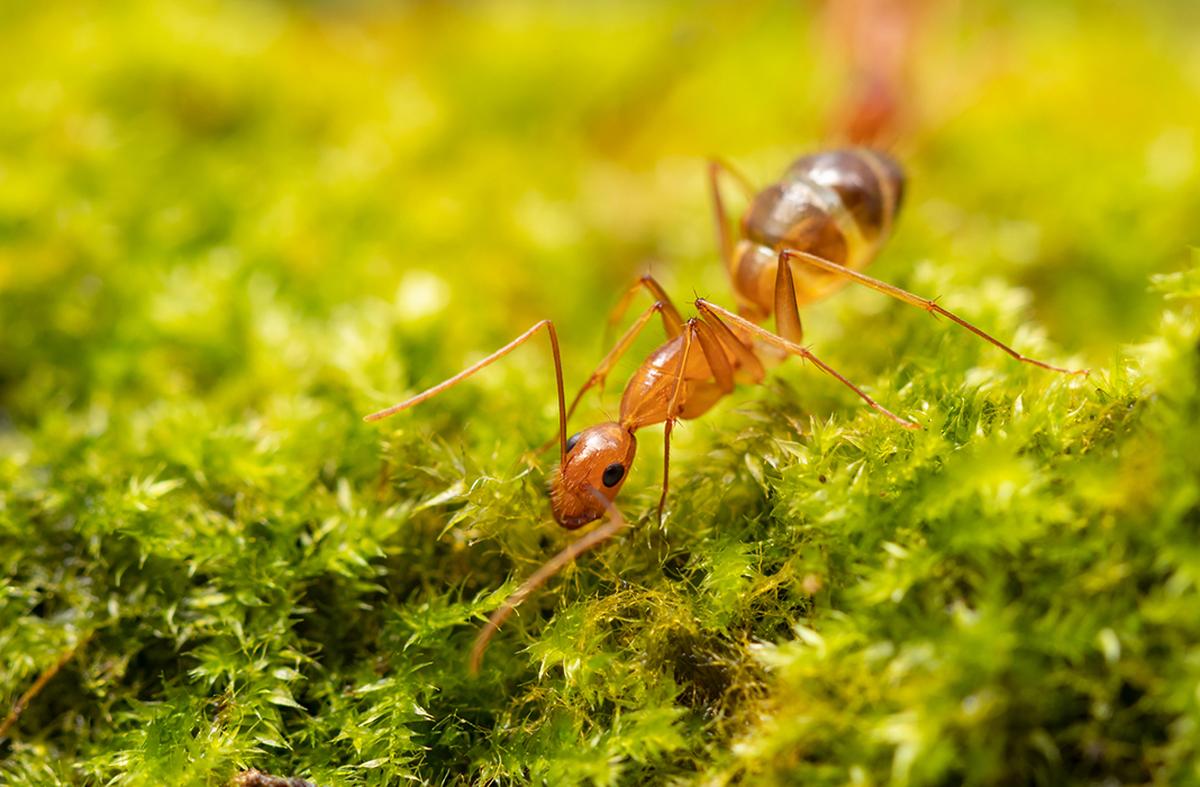
Anoplolepis gracilipes or yellow crazy ants, on moss

Anoplolepis gracilipes or yellow crazy ants, on moss



Source link

Science Tags:ecologist Raghavendra Gadagkar, importance of insect societies, insect societies, insect societies Debasmita Chowdhury, insect societies Raghavendra Gadagkar, insect societies The Hindu MetroPlus, Raghavendra Gadagkar, understanding insect societies, working of insect societies

Post navigation

Previous Post: WikiLeaks founder Julian Assange stops in Bangkok on his way to a U.S. court in Northern Mariana Islands
Next Post: 52 Drug Samples, Including That Of Paracetamol, Fail Quality Test

Related Posts

  • How the deadliest virus in human history paved the way for new cures Science
  • Biologists in slow and steady race to help North America’s largest and rarest tortoise species Science
  • Kerala researchers batting for better understanding of the flying mammal Science
  • Three new fish species spotted using tools in the Laccadive Sea Science
  • See first images of human brain scanned by world’s most powerful MRI Science
  • Most pink diamonds were birthed by a disintegrating supercontinent. Where can we find more? Science

More Related Articles

Could the key to how good we are at maths be hidden in our brains? Science
Team including Indian scientists designs potent antidote to cobra, krait venom toxins Science
India reports far fewer people with orphan diseases Science
Musk’s xAI is raising $6 billion from Sequoia and others Science
Lab-grown human ‘embryo’ created without eggs or sperm Science
Daily Quiz | On World Bee Day – May 20, 2024 Science
SiteLock

Archives

  • July 2024
  • June 2024
  • May 2024
  • April 2024
  • March 2024
  • February 2024
  • January 2024
  • December 2023
  • November 2023
  • October 2023
  • September 2023
  • August 2023
  • July 2023
  • June 2023
  • May 2023
  • April 2023
  • March 2023
  • February 2023
  • January 2023
  • December 2022
  • November 2022
  • October 2022
  • September 2022
  • August 2022
  • July 2022
  • June 2022
  • May 2022

Categories

  • Business
  • Nation
  • Science
  • Sports
  • World

Recent Posts

  • Catholic Church To Pay $76 Million To Hundreds Of Sex Abuse Victims In Canada
  • “Public Booed Me”: Hardik Pandya Opens Up To PM Narendra Modi On His Poor Treatment By Fans
  • Surrogate Mothers Also Have Right To Avail Maternity Leave: High Court
  • Israeli strikes kill six in Gaza, including kids and U.N. worker, as truce talks show signs of progress
  • AIADMK, BJP, PMK condole the murder of BSP leader Armstrong

Recent Comments

  1. GkJwRWEAbS on UP Teacher Who Asked Students To Slap Muslim Classmate
  2. xreDavBVnbGqQA on UP Teacher Who Asked Students To Slap Muslim Classmate
  3. aANVRzfUdmyb on UP Teacher Who Asked Students To Slap Muslim Classmate
  4. YQCyszVBmIP on UP Teacher Who Asked Students To Slap Muslim Classmate
  5. aiXothgwe on UP Teacher Who Asked Students To Slap Muslim Classmate
  • ICC World Cup 2023: Australia’s Glenn Maxwell falls off golf cart, to miss England clash Sports
  • Low Pressure System Over Bay Of Bengal Intensifies Into Cyclonic Storm Nation
  • ICC Breaks Silence Over Terror Threat To India vs Pakistan T20 World Cup Game Sports
  • Former England spinner Derek Underwood passes away Sports
  • Nawaz Sharif will return to Pakistan from Dubai on October 21: report World
  • Baltimore bridge collapse | Cargo ship Dali had power blackouts hours before leaving port World
  • Lalu Yadav’s Dig At Former Ally Nation
  • After Ankara bombing, Turkiye hits back in Iraq and at home World

Editor-in-Chief:
Mohammad Ariff,
MSW, MAJMC, BSW, DTL, CTS, CNM, CCR, CAL, RSL, ASOC.
editor@artifex.news

Associate Editors:
1. Zenellis R. Tuba,
zenelis@artifex.news
2. Haris Daniyel
daniyel@artifex.news

Photograher:
Rohan Das
rohan@artifex.news

Artifex.News offers Online Paid Internships to college students from India and Abroad. Interns will get a PRESS CARD and other online offers.
Send your CV (Subjectline: Paid Internship) to internship@artifex.news

Links:
Associate Journalism
About Us
Privacy Policy

News Links:
Breaking News
World
Nation
Sports
Business
Entertainment
Lifestyle

Registered Office:
72/A, Elliot Road, Kolkata - 700016
Tel: 033-22277777, 033-22172217
Email: office@artifex.news

Editorial Office / News Desk:
No. 13, Mezzanine Floor, Esplanade Metro Rail Station,
12 J. L. Nehru Road, Kolkata - 700069.
(Entry from Gate No. 5)
Tel: 033-46011099, 033-46046046
Email: editor@artifex.news

Copyright © 2023 Artifex.News Newsportal designed by Artifex Infotech.