
Skip to content
  • Facebook
  • X
  • Linkedin
  • WhatsApp
  • Associate Journalism
  • About Us
  • Privacy Policy
  • 033-46046046
  • editor@artifex.news
Artifex.News

Artifex.News

Stay Connected. Stay Informed.

  • Breaking News
  • World
  • Nation
  • Sports
  • Business
  • Science
  • Entertainment
  • Lifestyle
  • Toggle search form
  • Watch: Keir Starmer: ‘We will govern as a changed Labour party’ World
  • NDTV’s Team Of T20 World Cup 2024: Rohit Sharma Leads, 4 Other Indians Also Make The Cut Sports
  • Iran’s supreme leader presides over funeral for president and others killed in helicopter crash World
  • Facebook and Instagram face fresh scrutiny under the European Union’s strict digital regulations World
  • Gurugram Woman Strangled To Death By Husband: Cops Nation
  • Assets Seized In Singapore’s Money Laundering Case Swell To $1.76 Billion World
  • Russian missiles slam into a Ukraine city and kill 11 people as the war approaches a critical stage World
  • Haley wins Super Tuesday election in Vermont despite losing elsewhere to Trump World

Why have private investments dropped? | Explained

Posted on April 18, 2024 By admin


For representative purposes
| Photo Credit: Getty Images

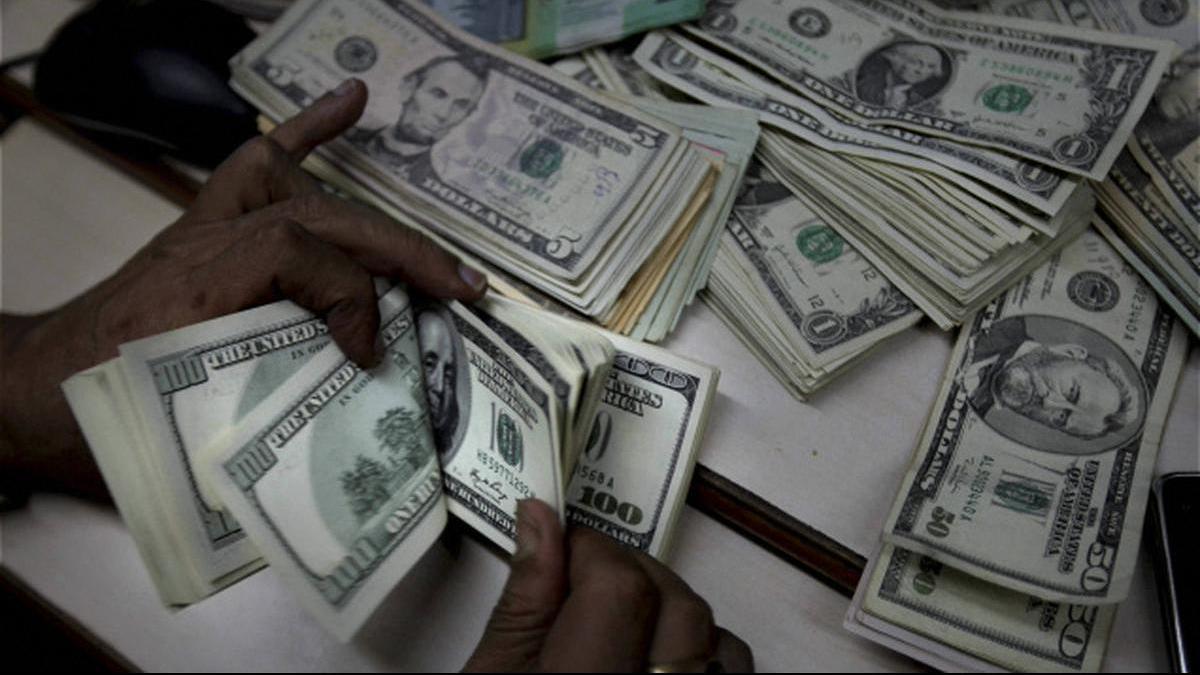
The story so far: The failure of private investment, as measured by private Gross Fixed Capital Formation (GFCF) as a percentage of gross domestic product (GDP) at current prices, to pick up pace has been one of the major issues plaguing the Indian economy. Private investment witnessed a steady decline since 2011-12 and the government has been hoping that large Indian corporations would step in and ramp up investment. In fact, in 2019, the Centre slashed corporate taxes from 30% to 22% hoping that the move would encourage private investment.

What is GFCF and why does it matter?

GFCF refers to the growth in the size of fixed capital in an economy. Fixed capital refers to things such as buildings and machinery, for instance, which require investment to be created. So private GFCF can serve as a rough indicator of how much the private sector in an economy is willing to invest. Overall GFCF also includes capital formation as a result of investment by the government.

GFCF matters because fixed capital, by helping workers produce a greater amount of goods and services each year, helps to boost economic growth and improve living standards. In other words, fixed capital is what largely determines the overall output of an economy and hence what consumers can actually purchase in the market. Developed economies such as the U.S. possess more fixed capital per capita than developing economies such as India.

What is the trend seen in private investment in India?

In India, private investment began to pick up significantly mostly after the economic reforms of the late-1980s and the early-1990s that improved private sector confidence. From independence to economic liberalisation, private investment largely remained either slightly below or above 10% of the GDP. Public investment as a percentage of GDP, on the other hand, steadily rose over the decades from less than 3% of GDP in 1950-51 to overtake private investment as a percentage of GDP in the early 1980s. It, however, began to drop post-liberalisation with private investment taking on the leading role in fixed capital formation.

The growth in private investment lasted until the global financial crisis of 2007-08. It rose from around 10% of GDP in the 1980s to around 27% in 2007-08. From 2011-12 onwards, however, private investment began to drop and hit a low of 19.6% of the GDP in 2020-21.

Why has private investment fallen?

Many economists in India have blamed low private consumption expenditure as the primary reason behind the failure of private investment to pick up over the last decade, and particularly since the onset of the pandemic. Their reasoning is that strong consumption spending is required to give businesses the confidence that there will be sufficient demand for their output once they decide to invest in building fixed capital. Hence these economists have advised that the government should put more money into the hands of the people to boost consumption expenditure, and thus help kick start private investment.

Historically, however, an increase in private consumption has not led to a rise in private investment in India. In fact, a drop in consumption spending has boosted private investment rather than dampening it. Private final consumption expenditure dropped steadily from nearly 90% of GDP in 1950-51 to hit a low of 54.7% of GDP in 2010-11, which was a year prior to when private investment hit a peak and began its long decline. And since 2011-12, private consumption has risen while private investment has witnessed a worrying fall as a percentage of GDP. The inverse relationship between consumption and investment is likely because the money that is allocated towards savings and investment, either by the government or by private businesses, comes at the cost of lower consumption expenditure.

Other economists believe that structural problems may likely be the core reason behind the significant fall in private investment as a percentage of GDP over the last decade or so. They have cited unfavourable government policy and policy uncertainty as major issues affecting private investment. The rise in private investment in the 1990s and the 2000s correlated with the economic reforms programme started in 1991. The drop in private investment, on the other hand, correlated with the slowdown in the pace of reforms in the last two decades under both the UPA (second term) and NDA governments. Further, policy uncertainty can discourage private investment as investors expect stability to carry out risky long-term projects.

What about low private investment?

The biggest cost of low private investment would be slower economic growth as a larger fixed capital base is crucial to boost economic output. The push by the government to increase government investment is also seen as a negative by some who believe that it crowds out private investment.

Others, however, think that government investment compensates for the lack of private investment. It should be noted, however, that private investors are considered to be better allocators of capital than public officials, helping avoid wasteful spending. Further, taxes imposed to raise money for public spending can be a significant drag on the economy.



Source link

Business Tags:GFCF India, Gross Fixed Capital Formation, private equity, private investment in india 2024, private investments

Post navigation

Previous Post: NSE to launch derivatives on Nifty Next 50 index from April 24
Next Post: India’s FY24 pulses imports hit 6-year high as red lentil purchases jump

Related Posts

  • Venugopal Kasturi elected Chairman of Kasturi and Sons Ltd. Business
  • Reliance AGM 2023: Reliance Jio 5G On Monitor To Defend Complete Nation Through December: Mukesh Ambani Business
  • Why India should worry about its ageing population Business
  • Air India to launch premium economy class on select domestic routes from July Business
  • ‘Indian IT firms set for “washout” year, focus now on 2025’ Business
  • Piyush Goyal confident of rate cut by Reserve Bank in coming months Business

More Related Articles

Interim Budget 2024 | Govt to come out with White Paper on mismanagement of economy prior to 2014, says Sitharaman Business
What’s in store for the economy in second half? | Explained Business
Monetary policy ought to remain actively disinflationary: RBI governor Shaktikanta Das Business
Benchmark Equity Indices Fall in Early Trade on August 9 | BSE Sensex, NSE Nifty, FIIs Outflows Business
Markets decline in early trade on profit taking after record-breaking rally Business
RBI raises WMA limits of States/UTs by 28% to ₹60,118 crore Business
SiteLock

Archives

  • July 2024
  • June 2024
  • May 2024
  • April 2024
  • March 2024
  • February 2024
  • January 2024
  • December 2023
  • November 2023
  • October 2023
  • September 2023
  • August 2023
  • July 2023
  • June 2023
  • May 2023
  • April 2023
  • March 2023
  • February 2023
  • January 2023
  • December 2022
  • November 2022
  • October 2022
  • September 2022
  • August 2022
  • July 2022
  • June 2022
  • May 2022

Categories

  • Business
  • Nation
  • Science
  • Sports
  • World

Recent Posts

  • Two killed, 10 injured as heavy rain lashes Kathmandu, other parts of Nepal
  • Riyan Parag Receives Debut India Cap From His Father In Emotional Ceremony – Watch
  • Why Are Sanju Samson And Yashasvi Jaiswal Not Playing In India’s First T20I vs Zimbabwe?
  • Light Tanks Zorawar, Developed In 2 Years, Unveiled. Will Be Deployed Against China
  • New UK PM Keir Starmer To Scrap Rwanda Plan

Recent Comments

  1. GkJwRWEAbS on UP Teacher Who Asked Students To Slap Muslim Classmate
  2. xreDavBVnbGqQA on UP Teacher Who Asked Students To Slap Muslim Classmate
  3. aANVRzfUdmyb on UP Teacher Who Asked Students To Slap Muslim Classmate
  4. YQCyszVBmIP on UP Teacher Who Asked Students To Slap Muslim Classmate
  5. aiXothgwe on UP Teacher Who Asked Students To Slap Muslim Classmate
  • “Chirag Paswan Never Bothered To Seek My Blessings”: Uncle Pashupati Paras Nation
  • High Court Mandates Notification Via WhatsApp, Email For Organ Transplant Documentation Nation
  • Anushka Sharma, Sachin Tendulkar Arrive In Ahmedabad Ahead Of India vs Pakistan World Cup Clash. Watch Sports
  • Cricket World Cup 2023: Approaching Milestones At The Marquee ICC Event Sports
  • Markets snap record-breaking rally as profit-booking hammers banking, finance stocks Business
  • Is placental oxygen level linked to foetal brain development? Science
  • Sajad Lone asks security agencies to relook current policy of ‘macro-level punishment’ Nation
  • Markets extend gains on fag-end buying; Infosys, L&T shine Business

Editor-in-Chief:
Mohammad Ariff,
MSW, MAJMC, BSW, DTL, CTS, CNM, CCR, CAL, RSL, ASOC.
editor@artifex.news

Associate Editors:
1. Zenellis R. Tuba,
zenelis@artifex.news
2. Haris Daniyel
daniyel@artifex.news

Photograher:
Rohan Das
rohan@artifex.news

Artifex.News offers Online Paid Internships to college students from India and Abroad. Interns will get a PRESS CARD and other online offers.
Send your CV (Subjectline: Paid Internship) to internship@artifex.news

Links:
Associate Journalism
About Us
Privacy Policy

News Links:
Breaking News
World
Nation
Sports
Business
Entertainment
Lifestyle

Registered Office:
72/A, Elliot Road, Kolkata - 700016
Tel: 033-22277777, 033-22172217
Email: office@artifex.news

Editorial Office / News Desk:
No. 13, Mezzanine Floor, Esplanade Metro Rail Station,
12 J. L. Nehru Road, Kolkata - 700069.
(Entry from Gate No. 5)
Tel: 033-46011099, 033-46046046
Email: editor@artifex.news

Copyright © 2023 Artifex.News Newsportal designed by Artifex Infotech.