


Skip to content
  • Facebook
  • X
  • Linkedin
  • WhatsApp
  • YouTube
  • Associate Journalism
  • About Us
  • Privacy Policy
  • 033-46046046
  • editor@artifex.news
Artifex.News

Artifex.News

Stay Connected. Stay Informed.

  • Breaking News
  • World
  • Nation
  • Sports
  • Business
  • Science
  • Entertainment
  • Lifestyle
  • Toggle search form
  • China says ‘resolutely opposes’ U.S.-Taiwan trade deal
    China says ‘resolutely opposes’ U.S.-Taiwan trade deal World
  • Access Denied Sports
  • Timeline Of How Relations Soured
    Timeline Of How Relations Soured Nation
  • Trump Nominates Indian-American Harmeet Dhillon For Top Civil Rights Post
    Trump Nominates Indian-American Harmeet Dhillon For Top Civil Rights Post World
  • “Wasn’t Selected Because…”: Rinku Singh Breaks Silence On Duleep Trophy Snub
    “Wasn’t Selected Because…”: Rinku Singh Breaks Silence On Duleep Trophy Snub Sports
  • Pakistan Navy test fires surface-to-air missile in North Arabian Sea
    Pakistan Navy test fires surface-to-air missile in North Arabian Sea World
  • Retail inflation rises to 5.08% in July
    Retail inflation rises to 5.08% in July Business
  • Access Denied World
Somatic genetic variants: A genomic revolution hiding inside our cells

Somatic genetic variants: A genomic revolution hiding inside our cells

Posted on August 27, 2023 By admin


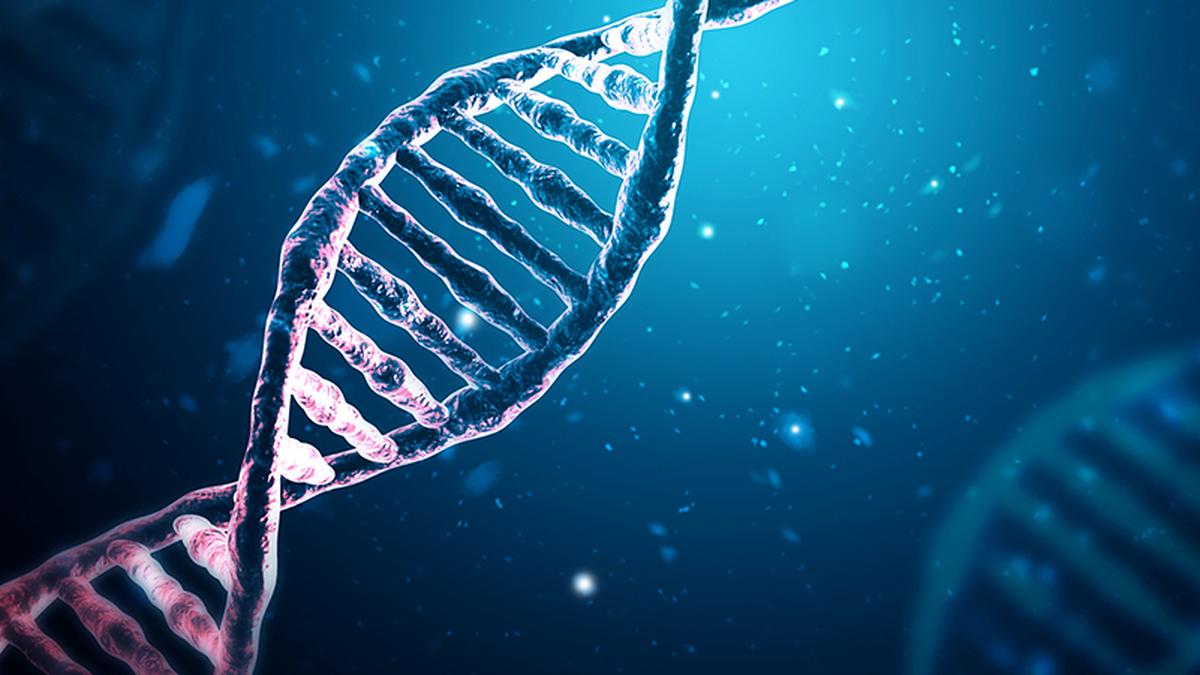
An abstract illustration. We can now sequence thousands of cells from a tissue at the same time, opening big windows into the functional diversity of cells in the human body.
| Photo Credit: Shubham Dhage/Unsplash

The human genome has 23 pairs of chromosomes, one inherited from each of our parents. The genome is the blueprint of our genetic makeup. The ovum and the sperm carry these blueprints from our parents. After fertilisation, the combined single cell, with the 23 chromosomes, starts to divide, copying the genetic material over and over to nearly a trillion cells – which make up the human body.

As the cells divide, the DNA is copied with extremely high accuracy thanks to proteins that proofread and correct errors in the DNA. But despite this mechanism, various studies have estimated that there is still an error rate of 0.64-0.78 mutations per billion base pairs per division. But this rate is also minuscule given the large size of the human genome.

‘Copy-paste’ mistakes

The number and effect of these errors vary significantly, depending on the stage of development or the point in the life-cycle at which they occur. An error that occurs in the DNA after birth but during development is called a somatic genetic mutation. Their occurrence is driven by the repeated ‘copy-pasting’ of the genome – which means there will be more somatic genetic mutations the older an individual is and the higher the turnover of the tissue. Turnover is the replacement of old cells with new ones.

Sometimes, a somatic genetic mutation can render a cell fitter than others, which lead to the formation of tumours. So these mutations are called driver mutations.

Given these details, we should think of the human body as a mosaic of cells rather than as a clone of a single cell. In their genomic composition, these cells are similar to each other, but still different enough thanks to a handful of genetic variants. While most of these variants may not have a function, a small number will if they lie in parts of the genome responsible for encoding proteins or regulating them.

Knowledge explosion

Somatic genetic variants are important for a number of normal physiological processes. For example, the immune cells in our body, which produce antibodies, undergo an enormous amount of somatic changes to create diverse proteins. These proteins recognise and bind to specific pathogens, forming a ‘library’ of cells, each with a specific protein. During an infection, the body selects cells from this library, depending on which can bind to a pathogen better, and uses them to make antibodies.

Scientists have known of somatic variants and their role in diseases for many years now, but there has been an explosion in the amount of data and knowledge only recently. This was due to our ability to sequence the genetic material in individual cells. Specifically, using advanced microfluidics and high-throughput sequencers, we can now sequence tens of thousands of cells from a tissue at the same time, opening big windows into the genes in and the functional diversity of cells in the human body.

Cancer’s signatures

Somatic genetic variants play an important role in the development of cancers. We now know that somatic changes can cause a cancer to develop and that cancers can accelerate the development of somatic changes. So they can help with early detection, diagnosis, and prognosis.

Early detection and diagnosis of cancers rely on the fact that certain genetic variations and patterns – called mutational signatures – of genetic variations are characteristic of specific cancers. There are technologies to detect DNA from tumour cells that has ‘escaped’ the cells into blood or fluids, to spot a cancer early. Similarly, certain variations in a cancer could be used as a signature of the disease’s progress and/or to track how a tumour has responded to some course of therapy.

Under-recognised cause

The other major application for somatic changes is in the development of genetic diseases. Many genetic conditions arise from somatic genetic variants. Obviously, these conditions are not inherited from either parent but are due to new genetic variations that have arisen during development. So the severity and distribution of the disease depends on how early or late during development the corresponding mutation occurred.

In fact, somatic genetic variants are an under-recognised cause of many immune disorders that are the result of mutations in a single gene, including primary immunodeficiency disorders. In some instances, somatic changes can be beneficial in a genetic disease – by changing a deleterious change to a normal one, a phenomenon known as revertant mosaicism. For example, around 10% of cases of Wiskott-Aldrich syndrome, a rare genetic immunodeficiency, have been found to have revertant mosaicism, as a result alleviating the severity of the disease in many individuals.

SMaHT Network

The U.S. National Institutes of Health recently launched a programme focused on understanding the breadth of somatic mosaicism and the biological and clinical significance of such somatic events in humans. Called the ‘Somatic Mosaicism across Human Tissues’ (SMaHT) Network, it aims to catalyse our study of the field by discovering somatic variants, developing tools and resources with which to study them, and improving our ability to analyse, interpret, and organise them in different biological and clinical contexts.

In effect, SMaHT should be able to deliver novel biological insights using a data-centric approach. The U.S. government has for now invested $140 million in a SMaHT-led effort to characterise somatic variants in 10-15 tissues from 150 post-mortem samples obtained from deceased individuals.

As we plumb more intricate depths of the cells that we are made of, and their wondrous diversity, we also take strides on the road to usher in innovative approaches to understand and manage the diseases that assail us. The ability to scrutinise our genes at the level of single cells also empowers us to reshape our understanding of the fundamental aspects of evolution.

The authors are senior consultants at the Vishwanath Cancer Care Foundation. All views and opinions are personal.

Source link

Science Tags:cancer biology, driver mutations, high-throughput sequencing, somatic genetic variants, tissue turnover, Wiskott-Aldrich syndrome

Post navigation

Previous Post: Kuber Group Director Gets A Call From Cops After Rolls-Royce Crash Kills 2
Next Post: Security Tightened In Nuh Ahead Of Hindu Outfit’s Rally Tomorrow

Related Posts

  • Why don’t ants get hurt when they fall down?
    Why don’t ants get hurt when they fall down? Science
  • What life feels like when earth’s temperatures soar to record highs
    What life feels like when earth’s temperatures soar to record highs Science
  • The Science Quiz | Remembering a star that was briefly the brightest…
    The Science Quiz | Remembering a star that was briefly the brightest… Science
  • Longer-lasting ozone holes over Antarctica expose seal pups and penguin chicks to much more UV
    Longer-lasting ozone holes over Antarctica expose seal pups and penguin chicks to much more UV Science
  • Do songbirds socialise during migration?
    Do songbirds socialise during migration? Science
  • If 23andMe goes bust, what happens to its DNA database?
    If 23andMe goes bust, what happens to its DNA database? Science

More Related Articles

What is Point Nemo, the most isolated place on Earth? What is Point Nemo, the most isolated place on Earth? Science
Did an ancient Vaigai flood contribute to Keezhadi’s abandonment? Did an ancient Vaigai flood contribute to Keezhadi’s abandonment? Science
Science Quiz on chemistries of the surface and the bulk Science Quiz on chemistries of the surface and the bulk Science
How big fossil-fuel-producing countries export emissions abroad | Explained How big fossil-fuel-producing countries export emissions abroad | Explained Science
ISRO successfully carries out vacuum ignition trial of cryogenic engine ISRO successfully carries out vacuum ignition trial of cryogenic engine Science
Inside a scientific experiment that transformed skin cells into embryo-forming eggs Inside a scientific experiment that transformed skin cells into embryo-forming eggs Science
SiteLock

Archives

  • October 2026
  • September 2026
  • August 2026
  • July 2026
  • June 2026
  • May 2026
  • April 2026
  • March 2026
  • February 2026
  • January 2026
  • December 2025
  • November 2025
  • October 2025
  • September 2025
  • August 2025
  • July 2025
  • June 2025
  • May 2025
  • April 2025
  • March 2025
  • February 2025
  • January 2025
  • December 2024
  • November 2024
  • October 2024
  • September 2024
  • August 2024
  • July 2024
  • June 2024
  • May 2024
  • April 2024
  • March 2024
  • February 2024
  • January 2024
  • December 2023
  • November 2023
  • October 2023
  • September 2023
  • August 2023
  • July 2023
  • June 2023
  • May 2023
  • April 2023
  • March 2023
  • February 2023
  • January 2023
  • December 2022
  • November 2022
  • October 2022
  • September 2022
  • August 2022
  • July 2022
  • June 2022
  • May 2022

Categories

  • Business
  • Nation
  • Science
  • Sports
  • World

Recent Posts

  • HC grants bail to accused in Kavin caste killing case
  • UN says wants Lebanon stability as end of peacekeepers’ mandate looms
  • Rahul, Revanth rise to the occasion again, thwart Karnataka’s victory push
  • State government reclaims 281 hectares of unused land from BHEL, plans industrial park
  • Israeli settlers set fire to mosque in occupied West Bank

Recent Comments

  1. WalterBoumn on UP Teacher Who Asked Students To Slap Muslim Classmate
  2. HermanTwito on UP Teacher Who Asked Students To Slap Muslim Classmate
  3. JamesWhazy on UP Teacher Who Asked Students To Slap Muslim Classmate
  4. JamesWhazy on UP Teacher Who Asked Students To Slap Muslim Classmate
  5. ShawnFeach on UP Teacher Who Asked Students To Slap Muslim Classmate
  • Nepal flash flood: T.N. pilgrims stranded in Nepal; officials coordinating steps to rescue them
    Nepal flash flood: T.N. pilgrims stranded in Nepal; officials coordinating steps to rescue them Nation
  • Access Denied
    Access Denied Nation
  • Access Denied
    Access Denied Nation
  • Access Denied
    Access Denied Nation
  • Studying Bangladesh’s plea for Sheikh Hasina’s extradition: India
    Studying Bangladesh’s plea for Sheikh Hasina’s extradition: India World
  • Novak Djokovic Shrugs Off Troubles In Winning Start At French Open
    Novak Djokovic Shrugs Off Troubles In Winning Start At French Open Sports
  • Inter Milan Beat Empoli To Close In On Serie A Title
    Inter Milan Beat Empoli To Close In On Serie A Title Sports
  • Vigilant civic society partnered with courts to drive progress in gender justice: CJI
    Vigilant civic society partnered with courts to drive progress in gender justice: CJI Nation

Editor-in-Chief:
Mohammad Ariff,
MSW, MAJMC, BSW, DTL, CTS, CNM, CCR, CAL, RSL, ASOC.
editor@artifex.news

Associate Editors:
1. Zenellis R. Tuba,
zenelis@artifex.news
2. Haris Daniyel
daniyel@artifex.news

Photograher:
Rohan Das
rohan@artifex.news

Associate Journalists
1. Subrata Paul - AN/2020/01
2. Quamruz Zaman - AN/2021/22
3. Ahmed Sha - AN/2021/035
4. Ajay Kumar Shaw - AN/2021/39
5. Tahqiqul Hoda - AN/2021/21

Artifex.News offers Online Paid Internships to college students from India and Abroad. Interns will get a PRESS CARD and other online offers.
Send your CV (Subjectline: Paid Internship) to internship@artifex.news

Links:
Associate Journalism
About Us
Privacy Policy

News Links:
Breaking News
World
Nation
Sports
Business
Entertainment
Lifestyle

Registered Office:
72/A, Elliot Road, Kolkata - 700016
Tel: 033-22277777, 033-22172217
Email: office@artifex.news

Editorial Office / News Desk:
No. 13, Mezzanine Floor, Esplanade Metro Rail Station,
12 J. L. Nehru Road, Kolkata - 700069.
(Entry from Gate No. 5)
Tel: 033-46011099, 033-46046046
Email: editor@artifex.news

Copyright © 2023 Artifex.News Newsportal designed by Artifex Infotech.