




The story so far: The dramatic rescue of dozens of Rohingya refugees from the Indian Ocean last week after a wooden boat with nearly 150 on board capsized off the Indonesian coast has once again drawn attention to the plight of the refugees who are increasingly embarking on dangerous sea journeys to seek a better life.
On March 21, an Indonesian search and rescue team saved 69 people at sea, about 20 km off the western coast of Aceh province, hours after their foundering boat capsized following a long journey from Bangladesh, alongside another vessel that had come to their aid. Visuals showed exhausted men, women and children soaked from overnight rain struggling for space on the overturned boat’s rusty hull as rescuers pulled them to safety.
With around 75 Rohingya rescued and the remaining feared drowned, the incident is a reflection of the growing desperation that is driving the refugees to flee Myanmar and overcrowded relief camps in Bangladesh for safer Southeast Asian countries. As per the United Nations High Commissioner for Refugees (UNHCR), over 4,500 Rohingya refugees set off on dangerous journeys across the Bay of Bengal and the Andaman Sea last year. Of these, 569 people lost their lives or went missing, marking the highest death toll since 2014.
Who are the Rohingya refugees?
The Rohingya are a Muslim minority ethnic group with their roots in the Arakan kingdom in Myanmar, formerly known as Burma. Describing the etymological origins of the term Rohingya, the Council on Foreign Relations notes thatRohang derives from the word ‘Arakan’ in the Rohingya dialect and ga or gya means from.
The Rohingya claim to have lived in Myanmar’s Rakhine State for generations, but successive governments in the country have disputed their ties, labelling them illegal immigrants from Bangladesh. The Rohingya are culturally and religiously distinct from the majority Buddhist population in Myanmar, and speak a Bengali dialect which is different from the common Burmese language. Myanmar has refused to recognise them as an ethnic group, denying them citizenship since 1982, thus making them the world’s largest stateless population, devoid of fundamental rights and security.
According to Myanmar’s 1982 citizenship law, members of the Rohingya community, along with other ethnic minorities, can only attain citizenship if they prove their ancestors resided in Myanmar before 1823. Otherwise, even if one of their parents is a Myanmar citizen, they are deemed to be “resident foreigners” or “associate citizens.”
Why have Rohingyas fled their homeland?
After decades of discrimination, violence and persecution at the hands of security forces, the Rohingya began fleeing Myanmar in significant numbers first in 2012, following a military crackdown triggered by the rape and murder of a Rakhine woman in a Rohingya-dominated area which flared tensions between the Rohingya and Rakhine’s Buddhist community. Since then, escalating tensions in the region have often erupted into violence, leading hundreds of thousands to abandon their home and seek refuge in the neighbouring countries of Bangladesh, Thailand, Indonesia, Malaysia and India.
Their largest exodus began in August 2017 when a massive wave of violence broke out in Rakhine, driving more than 7.5 lakh people to seek sanctuary in Bangladesh to escape the brutality of security forces. Entire villages were razed, families were torn apart or killed, and severe human rights violations like mass rape were reported. The United Nations described the 2017 violence as “ethnic cleansing” and the humanitarian situation as “catastrophic.”
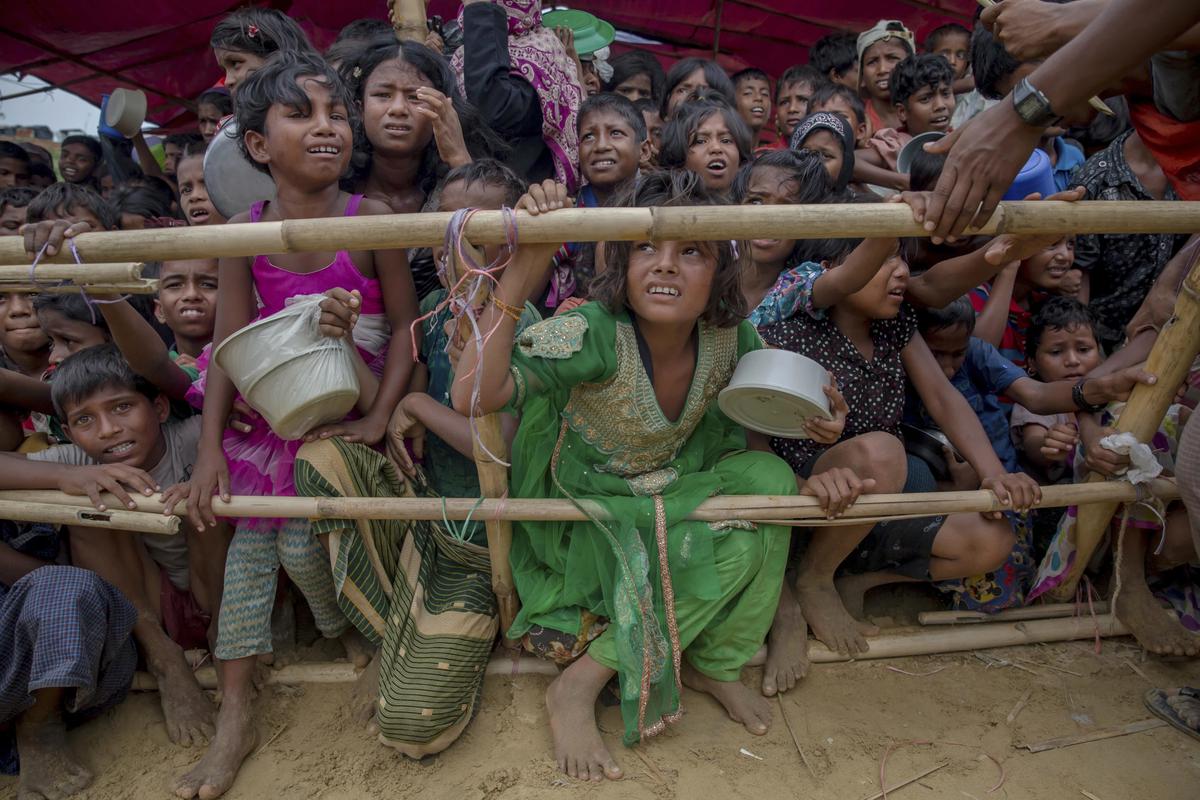
File photo: Rohingya children who crossed over from Myanmar to Bangladesh wait to receive food handouts at a refugee camp in Bangladesh, 2017.
| Photo Credit:
AP
A 2018 UN fact-finding commission claimed the Myanmar government had “genocidal” intent against the Rohingya. Its head said the commission had found clear patterns of abuse by the military, including systematic targeting of civilians, committing sexual violence, promoting discriminatory rhetoric against minorities, and creating a climate of impunity for security forces.
Also Read | What is India’s policy on the Rohingya?
Why sea journeys?
While over one million Rohingya have fled Myanmar since the 1990s, around six lakh remain in the country, mostly in camps for internally displaced people where their movements and livelihoods are restricted. An estimated 9,60,000 Rohingya, meanwhile, reside in refugee camps in Bangladesh. Most live near the Myanmar border in Cox’s Bazar, which has grown over the years to house some of the world’s largest and most densely populated refugee camps. These overcrowded camps lack basic human necessities, forcing Rohingya to live in harsh conditions. There is a shortage of food, access to water is inadequate, sanitation facilities are missing, healthcare is insufficient, and children reportedly grow up without formal education.
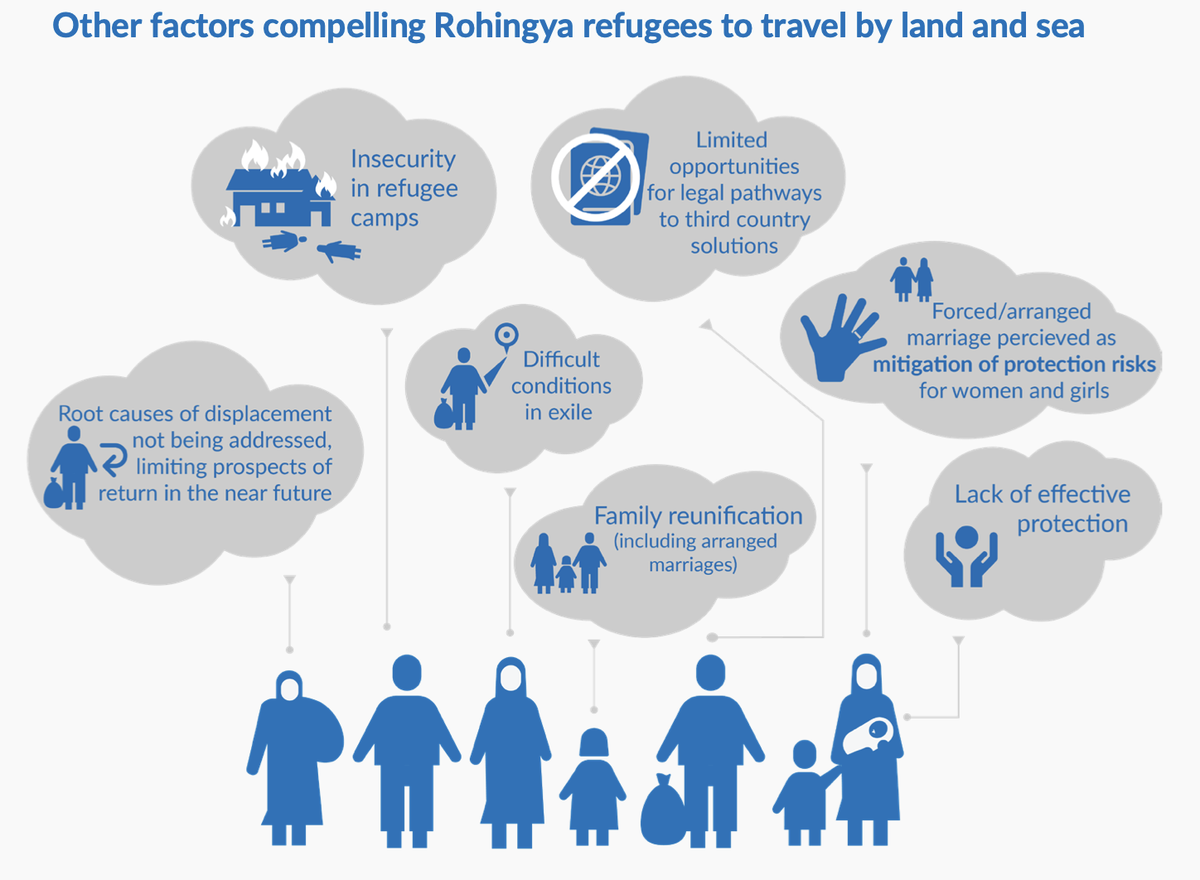
The camps are highly susceptible to weather-related disasters like storms, rains, flooding and highly exposed to fires and outbreaks of diseases due to insanitary conditions. Security conditions also have deteriorated over the years due to gang violence and an increase in arson attacks in camps. Over 60 Rohingya were killed in Bangladeshi camp clashes in 2023.
With the option of returning to Myanmar virtually impossible, and worsening conditions in relief camps in Bangladesh, an increasing number of Rohingya have been undertaking dangerous and often deadly journeys across the Bay of Bengal and the Andaman Sea to the Muslim-majority nations of Indonesia and Malaysia. However, human traffickers exploit their desperation, charging exorbitant amounts to ferry them on rickety boats from Bangladesh to Indonesia. The treacherous voyages with inadequate space few basic supplies take weeks, sometimes even months. Horrifying accounts of abuse during the journey, including violence against women, have been recorded.
Some Rohingya remain stranded at sea for weeks because countries are reluctant to accept refugees, citing stress on their land and resources. Others are detained along the route on illegal immigration charges, enduring lengthy incarceration without the due process of law.
Many do not survive the journey.
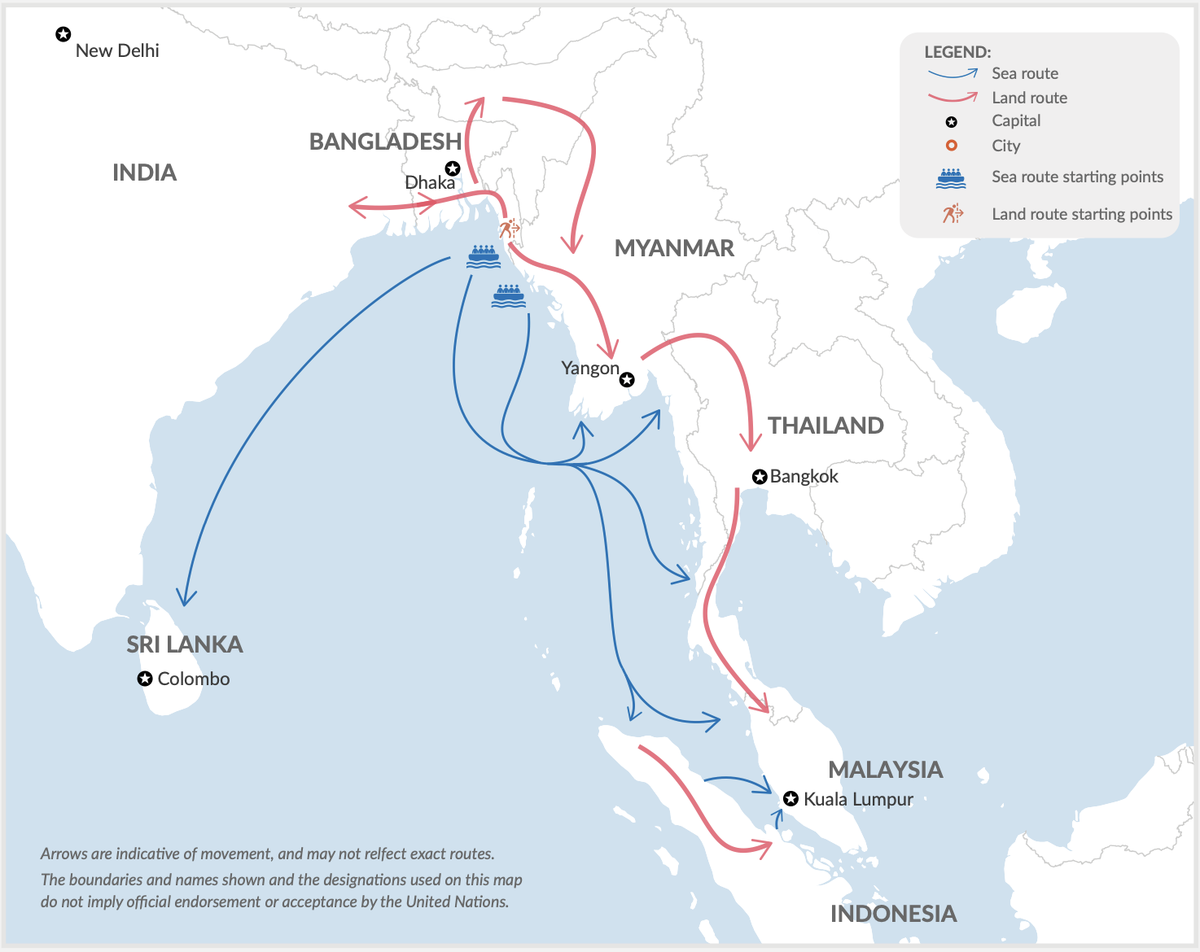
Land and sea journey routes taken by Rohingya refugees in 2022-2023
What about the rising death toll?
The UN estimates that one in eight Rohingya who take the sea route dies or disappears in the attempt, making the Andaman Sea and Bay of Bengal among the deadliest stretches of water in the world. Last year, the number of people embarking on sea journeys increased by 21%. Around 70% of the total refugees included women and children.
The UNHCR reported a 63% increase in deaths or disappearances last year compared to 2022. At least 569 Rohingya died or went missing on their sea journey, including 200 in a single incident in November. In contrast, there was a 170% drop in land movements. The UNHCR reported seven tragic accidents at sea, resulting in 250 confirmed deaths and 319 persons missing in 2023, along with widespread reports of physical abuse and gender-based violence among survivors.

Ethnic Rohingya disembark from their boat upon landing in Ulee Madon, on the north coast of Sumatra, Indonesia, on Nov. 16, 2023.
| Photo Credit:
AP
The report also highlighted the significant spike in the number of Rohingya arriving in Indonesia via sea in recent years. This number increased by 1,261% between 2021 and 2023. While 64% of the refugee boats docked in Indonesia last year, compared to 22% in 2022, only one boat carrying 83 individuals reached Malaysia, according to UNHCR data. Indonesia is not a signatory to the 1951 Convention Relating to the Status of Refugees, but has international obligations to comply with the principle of non-refoulement.
“Alarmed” by the statistics, the UN refugee agency has called on regional coastal authorities to take timely action to prevent tragedies, saying, “Saving lives and rescuing those in distress at sea is a humanitarian imperative and a longstanding duty under international maritime law.” However, Rohingya deaths at sea persist till date.