
Skip to content
  • Facebook
  • X
  • Linkedin
  • WhatsApp
  • Associate Journalism
  • About Us
  • Privacy Policy
  • 033-46046046
  • editor@artifex.news
Artifex.News

Artifex.News

Stay Connected. Stay Informed.

  • Breaking News
  • World
  • Nation
  • Sports
  • Business
  • Science
  • Entertainment
  • Lifestyle
  • Toggle search form
  • KL Rahul Ruled Out Of 5th Test Against England, Jasprit Bumrah To Rejoin Team In Dharamsala Sports
  • Brazil’s Bolsonaro Calls For Mass Protest Amid Allegations He Attempted Coup World
  • R Ashwin Turns Down Kuldeep Yadav’s Selfless Request, Veteran Star’s Gesture Wins Hearts. Watch Sports
  • RLD Vice President Shahid Siddiqui Quits Party After BJP Tie-Up Nation
  • Changes In IPL 2024 Dates: KKR’s Home Game To Be Rescheduled For This Reason Sports
  • How much salt should you take every day? Science
  • India’s January services PMI hits 6-month high amid strongest upturn in new business since mid-2023 Business
  • India’s 2024 economic growth projection revised upwards by U.N. to nearly 7% Business

Turtles, Mice, Scorpions May Become More Common In Major US Cities: Study

Posted on March 28, 2024 By admin


The prevalence of turtles, scorpions and mice is broadly expected to increase.

Peregrine falcons perched atop towering skyscrapers. Coyotes caught on camera playing in someone’s backyard. The pale green wings of a cabbage white butterfly perched on a flower blossom. Urban areas are awash in wildlife that faces growing pressures due to climate change, according to a study published today in PLOS ONE. The research, which looked at climate impacts on everything from mammals to insects in 60 of the most populous cities across the US and Canada, found that a warming world is moving many animals out of their historical geographic ranges and into new ones.

“Within a few years, the animals that you feed at your bird feeder might look very different,” said Alessandro Filazzola, the study’s lead author, who completed the research while he was a postdoctoral fellow at the University of Toronto Mississauga’s Centre for Urban Environments.

Filazzola and his team leveraged data from the Global Biodiversity Information Facility, which pulls data from community science apps like iNaturalist and eBird, to estimate roughly how many species are currently present in urban areas. They then paired that information with United Nations climate projections known as shared socioeconomic pathways, or SSPs. The researchers looked at what happened to wildlife under three different scenarios, from moderate warming of 1.4C over pre-industrial levels by 2100 – in line with the Paris Climate Agreement – to a mid-range warming of 3.6C to the most extreme possible warming of 4.4C with continued development of fossil fuels. So far the planet has warmed by 1.3C over pre-industrial levels.

“We saw that a lot of cities are seeing large changes,” said Filazzola. “Many species are moving in and many species are moving out.”

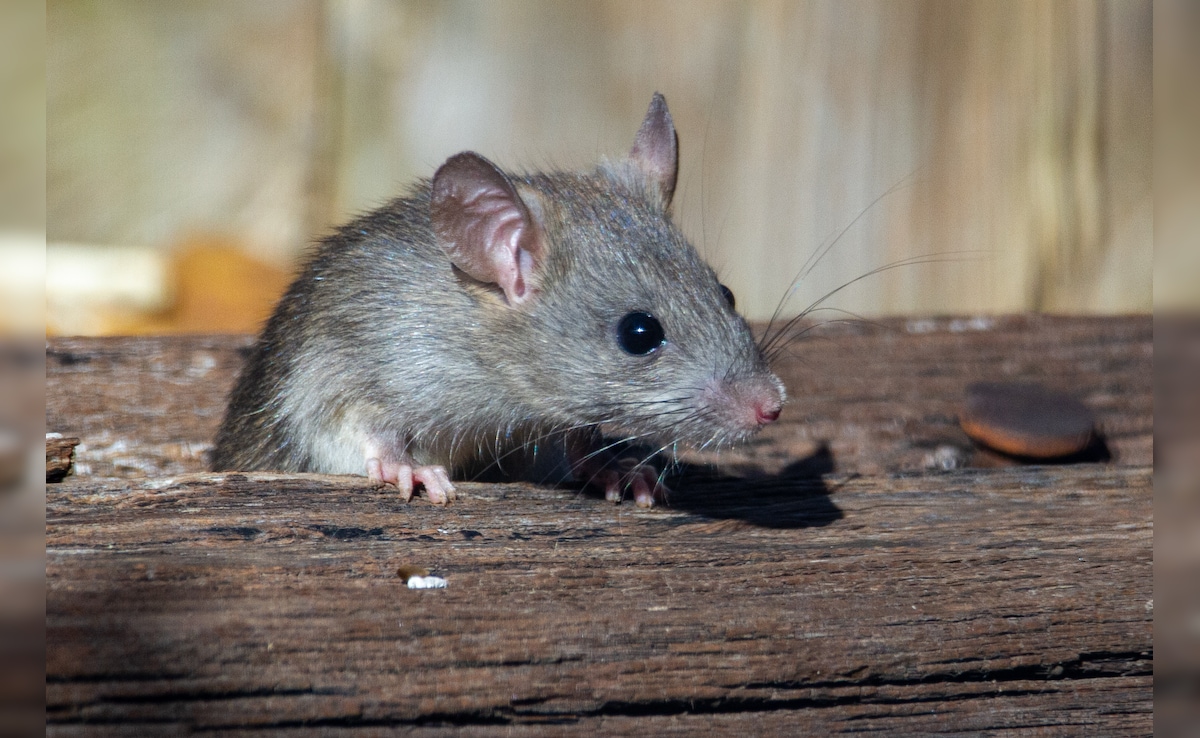
Among the broad trends identified in the study: Most vertebrates, including loons, canids (which includes coyotes) and amphibians will become less common across the cities studied. So too will the seemingly ubiquitous earthworm, though only one species of earthworm showed up in the data. The prevalence of turtles, scorpions and (in an exception to the vertebrates decline) mice, meanwhile, is broadly expected to increase.

Add image caption here

“Ecologists are already very aware that species ranges are shifting with a changing climate, so it’s not surprising that this is also happening to a significant extent in cities,” said Carly Ziter, an assistant professor of biology at Concordia University, who was not involved in the study. “But it’s not something that I’ve seen as much attention paid to.”

Even under the lowest warming scenario, researchers found that the cities studied can expect at least 50 new species to move in and 40 to move out, though the turnover isn’t evenly distributed. Toronto, for example, is expected to lose between 40 and 195 of its estimated 888 species, but could gain between 159 and 360 new species by 2100 (where higher rates of warming are associated with both increased species loss and gains). Quebec City and Omaha, Nebraska are also among the cities predicted to have the largest increase in new species while experiencing the least amount of loss. In contrast, places like Atlanta, San Antonio and Austin are expected to lose more species than they gain.

It’s not just wildlife in jeopardy: Atlanta, for example, is on track to lose 13.5% of tree species by the end of this century, the study notes.

The cities with the lowest levels of expected species turnover are in the arid Southwest and include Las Vegas as well as Mesa and Tucson in Arizona. While climate change will likely make those places even drier, researchers suspect those ecosystems are already resilient to the encroaching changes.

Filazzola cautions that his study is a model study and, as such, has limitations. While the researchers only looked at climate as a factor, other factors such as species interaction are not captured by the model and could impact outcomes. But he hopes that the findings will encourage other researchers to follow this line of inquiry.

Species turnover isn’t just an important indicator of climate impacts, Filazzola notes: As animals move from their ecological niche, they can create nuisances for humans. Already, Southern Californians have to deal with a growing mosquito problem as Aedes mosquitoes, a species with a strong preference for biting humans, have moved into the region over the past decade.

Cities are also the site of frequent human-wildlife interactions, including both conflicts and delight. “With this great urban shift, many people will need to re-learn how to interact with the wildlife around them,” Ziter said. “Particular species can also have immense cultural or relational value for people. Even for urban dwellers who might see themselves as separate from nature, I think many people would feel less connected to where they live if familiar species were to disappear from the landscape.”

(Except for the headline, this story has not been edited by NDTV staff and is published from a syndicated feed.)

Waiting for response to load…



Source link

World Tags:mice, species in cities, Turtles

Post navigation

Previous Post: US Speaks Again On Arvind Kejriwal, Mentions Frozen Congress Accounts
Next Post: Turtles, Mice, Scorpions May Become More Common In Major US Cities: Study

Related Posts

  • Macron aims to thwart French far right in election runoff World
  • New York flooded by heavy rains, subway partly paralysed World
  • Rishi Sunak says first migrant flight from U.K. to Rwanda will leave in 10-12 weeks World
  • Ramaswamy’s campaign asks Republican committee to allow only top 4 candidates to 3rd primary debate World
  • US NSA Jake Sullivan in India; NSA Ajit Doval holds wide-ranging talks with his American counterpart Sullivan World
  • Explained | What explains the flaring eastern Congo conflict? World

More Related Articles

World Economic Forum Founder Klaus Schwab To Step Back From Executive Role World
Guyana President Schools BBC Reporter World
When Hamas Let Off 90-Year-Old Argentine Woman World
Israel Woman Rachel Edri Tricked Hamas Fighters Cookies Coffee Joe Biden Meets Hugs Her World
South Korea’s President Yoon Suk Yeol Admits “Shortcomings” In Rare Press Conference World
20 Diamond Mine Staff Killed After Bus Collides With Lorry In South Africa World
SiteLock

Archives

  • July 2024
  • June 2024
  • May 2024
  • April 2024
  • March 2024
  • February 2024
  • January 2024
  • December 2023
  • November 2023
  • October 2023
  • September 2023
  • August 2023
  • July 2023
  • June 2023
  • May 2023
  • April 2023
  • March 2023
  • February 2023
  • January 2023
  • December 2022
  • November 2022
  • October 2022
  • September 2022
  • August 2022
  • July 2022
  • June 2022
  • May 2022

Categories

  • Business
  • Nation
  • Science
  • Sports
  • World

Recent Posts

  • Ex-India Selector Names Hardik Pandya’s Biggest Competitor For T20I Captaincy
  • Widow Of Soldier Who Died In Siachen Fire Accepts Kirti Chakra
  • Cheetah ‘Gamini’, Her 5 Cubs Enjoy Rain At Kuno National Park
  • BJP MLA Calls For Closure Of Madrasas In Madhya Pradesh, Congress Opposes
  • Amid NEET Row, Close Watch On Another Medical Exam Being Held Today

Recent Comments

  1. GkJwRWEAbS on UP Teacher Who Asked Students To Slap Muslim Classmate
  2. xreDavBVnbGqQA on UP Teacher Who Asked Students To Slap Muslim Classmate
  3. aANVRzfUdmyb on UP Teacher Who Asked Students To Slap Muslim Classmate
  4. YQCyszVBmIP on UP Teacher Who Asked Students To Slap Muslim Classmate
  5. aiXothgwe on UP Teacher Who Asked Students To Slap Muslim Classmate
  • PM Slams Sam Pitroda’s Comment Nation
  • 'Looking Forward To Face Australia': Harmanpreet Ahead Of Women's T20 WC Sports
  • Attacks by Sudanese paramilitary forces in Darfur raise possibility of ‘genocide’ against non-Arab ethnic communities: Human Rights Watch World
  • At least 5 dead in Texas after severe weather sweeps across Texas and Oklahoma, authorities say World
  • ‘Respected’ Manchester City Now Belong Among European Heavyweights, Says Pep Guardiola Sports
  • Disagreements among Haiti leaders hamper govt. transition World
  • IPL 2024 Playoffs Scenario: RCB Might Not Qualify Even If They Beat CSK. Here’s How Sports
  • Sci-Five | The Hindu Science Quiz: On Astronomical Instruments Science

Editor-in-Chief:
Mohammad Ariff,
MSW, MAJMC, BSW, DTL, CTS, CNM, CCR, CAL, RSL, ASOC.
editor@artifex.news

Associate Editors:
1. Zenellis R. Tuba,
zenelis@artifex.news
2. Haris Daniyel
daniyel@artifex.news

Photograher:
Rohan Das
rohan@artifex.news

Artifex.News offers Online Paid Internships to college students from India and Abroad. Interns will get a PRESS CARD and other online offers.
Send your CV (Subjectline: Paid Internship) to internship@artifex.news

Links:
Associate Journalism
About Us
Privacy Policy

News Links:
Breaking News
World
Nation
Sports
Business
Entertainment
Lifestyle

Registered Office:
72/A, Elliot Road, Kolkata - 700016
Tel: 033-22277777, 033-22172217
Email: office@artifex.news

Editorial Office / News Desk:
No. 13, Mezzanine Floor, Esplanade Metro Rail Station,
12 J. L. Nehru Road, Kolkata - 700069.
(Entry from Gate No. 5)
Tel: 033-46011099, 033-46046046
Email: editor@artifex.news

Copyright © 2023 Artifex.News Newsportal designed by Artifex Infotech.