

Skip to content
  • Facebook
  • X
  • Linkedin
  • WhatsApp
  • Associate Journalism
  • About Us
  • Privacy Policy
  • 033-46046046
  • editor@artifex.news
Artifex.News

Artifex.News

Stay Connected. Stay Informed.

  • Breaking News
  • World
  • Nation
  • Sports
  • Business
  • Science
  • Entertainment
  • Lifestyle
  • Toggle search form
  • Sabotage suspected in ‘damage’ to a pier of Block 7 of Medigadda barrage Nation
  • Deepak Bhoria Goes Down Fighting On Opening Day Of 1st World Olympic Boxing Qualifier Sports
  • Yashasvi Jaiswal And Dhruv Jurel Make Big Leaps In ICC Test Rankings Sports
  • Teen Dies By Suicide By Jumping Into River From Bridge In UP Nation
  • “Awaiting Update”: Mumbai Indians Head Coach Provides Big Injury Update On Suryakumar Yadav Sports
  • The Competition Regulator’s latest addition to the ‘whisteblower’ mechanism to trace cartels | Explained Business
  • Pakistan No. 1 ODI Team Now, But India Can Displace Them Before This Week Ends. Here’s How Sports
  • Yashasvi Jaiswal has got very good chance of breaking my records: Brian Lara Sports

Turtles, Mice, Scorpions May Become More Common In Major US Cities: Study

Posted on March 28, 2024 By admin


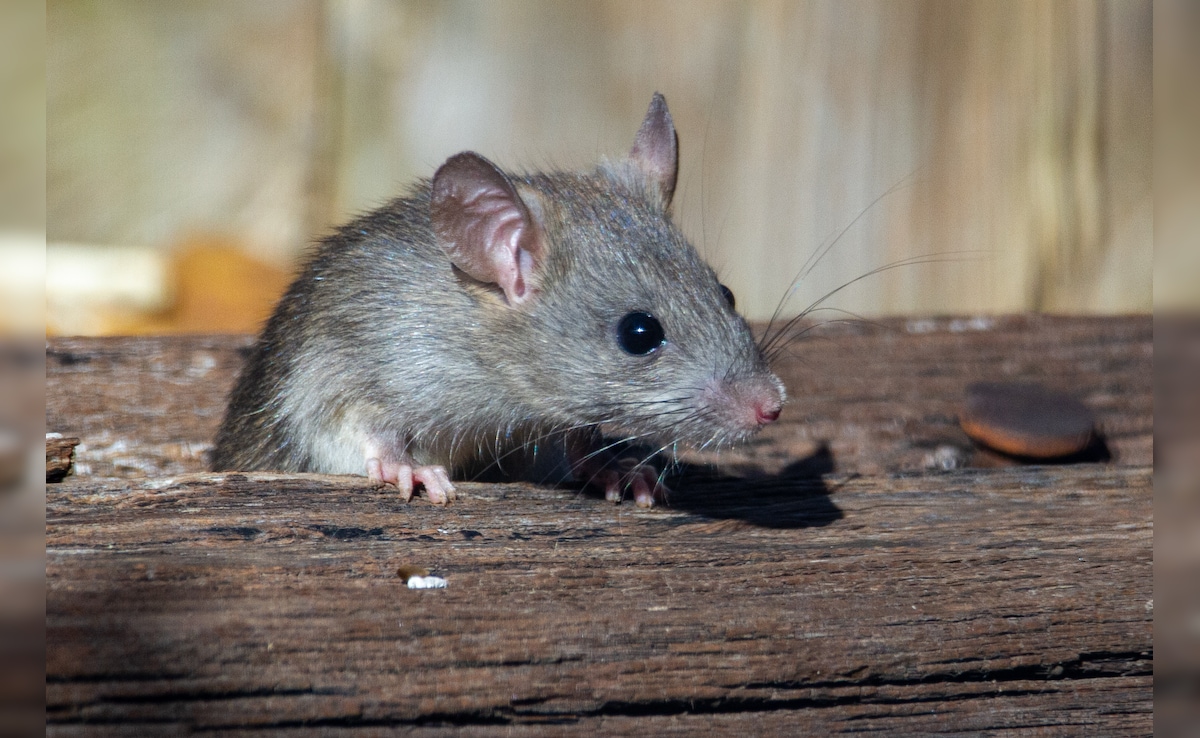
The prevalence of turtles, scorpions and mice is broadly expected to increase.

Peregrine falcons perched atop towering skyscrapers. Coyotes caught on camera playing in someone’s backyard. The pale green wings of a cabbage white butterfly perched on a flower blossom. Urban areas are awash in wildlife that faces growing pressures due to climate change, according to a study published today in PLOS ONE. The research, which looked at climate impacts on everything from mammals to insects in 60 of the most populous cities across the US and Canada, found that a warming world is moving many animals out of their historical geographic ranges and into new ones.

“Within a few years, the animals that you feed at your bird feeder might look very different,” said Alessandro Filazzola, the study’s lead author, who completed the research while he was a postdoctoral fellow at the University of Toronto Mississauga’s Centre for Urban Environments.

Filazzola and his team leveraged data from the Global Biodiversity Information Facility, which pulls data from community science apps like iNaturalist and eBird, to estimate roughly how many species are currently present in urban areas. They then paired that information with United Nations climate projections known as shared socioeconomic pathways, or SSPs. The researchers looked at what happened to wildlife under three different scenarios, from moderate warming of 1.4C over pre-industrial levels by 2100 – in line with the Paris Climate Agreement – to a mid-range warming of 3.6C to the most extreme possible warming of 4.4C with continued development of fossil fuels. So far the planet has warmed by 1.3C over pre-industrial levels.

“We saw that a lot of cities are seeing large changes,” said Filazzola. “Many species are moving in and many species are moving out.”

Among the broad trends identified in the study: Most vertebrates, including loons, canids (which includes coyotes) and amphibians will become less common across the cities studied. So too will the seemingly ubiquitous earthworm, though only one species of earthworm showed up in the data. The prevalence of turtles, scorpions and (in an exception to the vertebrates decline) mice, meanwhile, is broadly expected to increase.

Add image caption here

“Ecologists are already very aware that species ranges are shifting with a changing climate, so it’s not surprising that this is also happening to a significant extent in cities,” said Carly Ziter, an assistant professor of biology at Concordia University, who was not involved in the study. “But it’s not something that I’ve seen as much attention paid to.”

Even under the lowest warming scenario, researchers found that the cities studied can expect at least 50 new species to move in and 40 to move out, though the turnover isn’t evenly distributed. Toronto, for example, is expected to lose between 40 and 195 of its estimated 888 species, but could gain between 159 and 360 new species by 2100 (where higher rates of warming are associated with both increased species loss and gains). Quebec City and Omaha, Nebraska are also among the cities predicted to have the largest increase in new species while experiencing the least amount of loss. In contrast, places like Atlanta, San Antonio and Austin are expected to lose more species than they gain.

It’s not just wildlife in jeopardy: Atlanta, for example, is on track to lose 13.5% of tree species by the end of this century, the study notes.

The cities with the lowest levels of expected species turnover are in the arid Southwest and include Las Vegas as well as Mesa and Tucson in Arizona. While climate change will likely make those places even drier, researchers suspect those ecosystems are already resilient to the encroaching changes.

Filazzola cautions that his study is a model study and, as such, has limitations. While the researchers only looked at climate as a factor, other factors such as species interaction are not captured by the model and could impact outcomes. But he hopes that the findings will encourage other researchers to follow this line of inquiry.

Species turnover isn’t just an important indicator of climate impacts, Filazzola notes: As animals move from their ecological niche, they can create nuisances for humans. Already, Southern Californians have to deal with a growing mosquito problem as Aedes mosquitoes, a species with a strong preference for biting humans, have moved into the region over the past decade.

Cities are also the site of frequent human-wildlife interactions, including both conflicts and delight. “With this great urban shift, many people will need to re-learn how to interact with the wildlife around them,” Ziter said. “Particular species can also have immense cultural or relational value for people. Even for urban dwellers who might see themselves as separate from nature, I think many people would feel less connected to where they live if familiar species were to disappear from the landscape.”

(Except for the headline, this story has not been edited by NDTV staff and is published from a syndicated feed.)

Waiting for response to load…



Source link

World Tags:mice, species in cities, Turtles

Post navigation

Previous Post: Turtles, Mice, Scorpions May Become More Common In Major US Cities: Study
Next Post: DMK MP A Ganeshamurthi Dies In Hospital After Suspected Suicide Attempt

Related Posts

  • Former Thai PM Thaksin Shinawatra Indicted On Royal Insult Charges World
  • Woman Who Killed 3 Daughters Jailed For 18 Years In New Zealand World
  • Steve Ballmer Is Now Richer Than Bill Gates, A First For Microsoft Employees World
  • Libyan city Derna counts toll of huge flood; 10,000 missing World
  • Pakistan PM Sharif says 1998 nuclear tests ensured ‘credible minimum deterrence’ World
  • Joe Biden’s Xenophobia Remark Sparks Controversy: What The Word Means World

More Related Articles

Teen Sets Fire To Wrong Home For Revenge Over Stolen iPhone, Now Faces 60 Years In Jail World
With roots in India, Yoga unites people with its values of balance, mindfulness, peace: UN chief Antonio Guterres World
China’s Wang meets Indonesia’s Jokowi, president-elect Prabowo World
Putin reappoints Mishustin as Russia’s Prime Minister World
Full Ceasefire In Gaza ‘Only Benefits Hamas,’ Says White House World
Sri Lanka receives bomb disposal equipment through Chinese military grant World
SiteLock

Archives

  • July 2024
  • June 2024
  • May 2024
  • April 2024
  • March 2024
  • February 2024
  • January 2024
  • December 2023
  • November 2023
  • October 2023
  • September 2023
  • August 2023
  • July 2023
  • June 2023
  • May 2023
  • April 2023
  • March 2023
  • February 2023
  • January 2023
  • December 2022
  • November 2022
  • October 2022
  • September 2022
  • August 2022
  • July 2022
  • June 2022
  • May 2022

Categories

  • Business
  • Nation
  • Science
  • Sports
  • World

Recent Posts

  • RBI allows resident Indians to open Foreign Currency Accounts in IFSC, Gujarat
  • Chaos swirled up by Biden’s debate stumble causes cracks in White House
  • Post Gautam Gambhir’s Appointment, Rohit Shama’s Wife Ritika Pays Ultimate Tribute To Rahul Dravid
  • Apple Warns iPhone Users In India Of Pegasus-Like “Mercenary Spyware Attack”
  • Peace talks in South Sudan face collapse over new law

Recent Comments

  1. ywdVpqHiNZCtUDcl on UP Teacher Who Asked Students To Slap Muslim Classmate
  2. bRstIalYyjkCUJqm on UP Teacher Who Asked Students To Slap Muslim Classmate
  3. GkJwRWEAbS on UP Teacher Who Asked Students To Slap Muslim Classmate
  4. xreDavBVnbGqQA on UP Teacher Who Asked Students To Slap Muslim Classmate
  5. aANVRzfUdmyb on UP Teacher Who Asked Students To Slap Muslim Classmate
  • Israeli Driver Enters Palestine Territory, His Car Is Set On Fire World
  • West Indies Pacer, Infamous For ‘Notebook’ Feud With Virat Kohli, Reacts To Tanzim Hasan Sakib Send-off Sports
  • Case Against Man For Harassing Jain Monks Uttarakhand After Video Goes Viral Nation
  • Andhra Minister’s Wife To Cop For Making Her Wait Nation
  • Priyanka Chaturvedi Hits Out At Amit Shah Over Women’s Quota Bill Remarks Nation
  • “Mohammed Shami Is Underrated Because He Is Not Jasprit Bumrah”: Ex-England Star Sports
  • Eknath Shinde Tells Cops After Pune Bar Viral Video Nation
  • Russia Evacuates 5,000 Children From Border Region After Kyiv Attacks World

Editor-in-Chief:
Mohammad Ariff,
MSW, MAJMC, BSW, DTL, CTS, CNM, CCR, CAL, RSL, ASOC.
editor@artifex.news

Associate Editors:
1. Zenellis R. Tuba,
zenelis@artifex.news
2. Haris Daniyel
daniyel@artifex.news

Photograher:
Rohan Das
rohan@artifex.news

Artifex.News offers Online Paid Internships to college students from India and Abroad. Interns will get a PRESS CARD and other online offers.
Send your CV (Subjectline: Paid Internship) to internship@artifex.news

Links:
Associate Journalism
About Us
Privacy Policy

News Links:
Breaking News
World
Nation
Sports
Business
Entertainment
Lifestyle

Registered Office:
72/A, Elliot Road, Kolkata - 700016
Tel: 033-22277777, 033-22172217
Email: office@artifex.news

Editorial Office / News Desk:
No. 13, Mezzanine Floor, Esplanade Metro Rail Station,
12 J. L. Nehru Road, Kolkata - 700069.
(Entry from Gate No. 5)
Tel: 033-46011099, 033-46046046
Email: editor@artifex.news

Copyright © 2023 Artifex.News Newsportal designed by Artifex Infotech.