






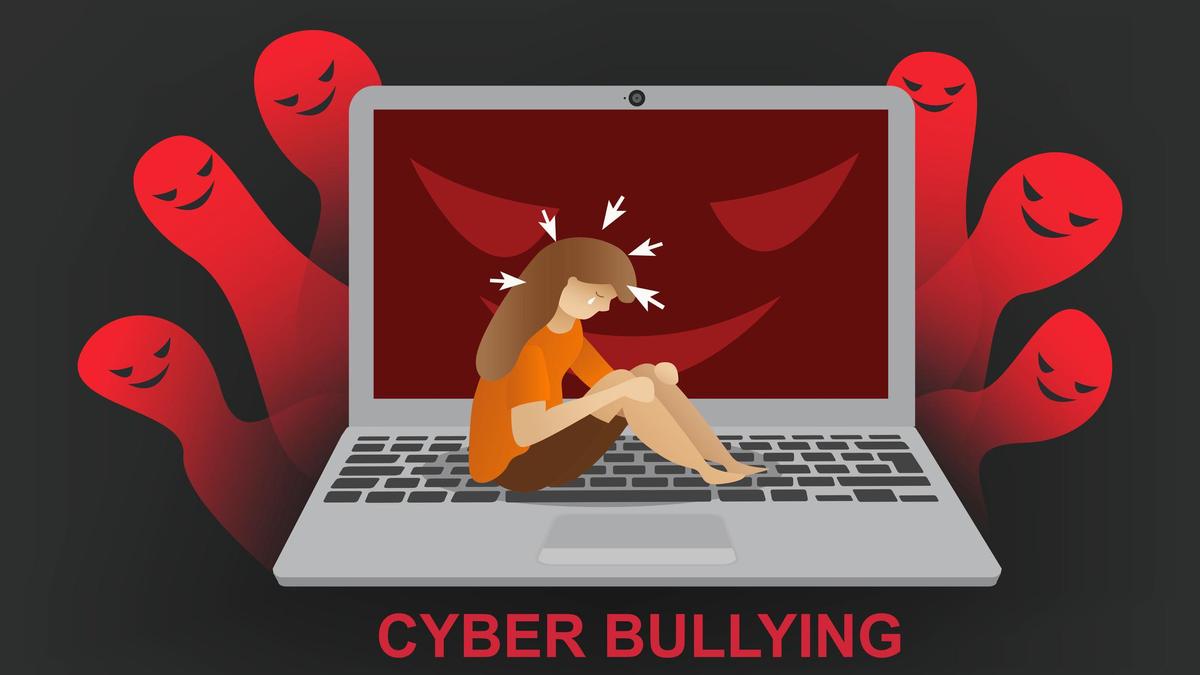
Revenge, anger and personal vendetta are increasingly driving cyberstalking and technology-facilitated sexual offences, with Delhi Police investigators reporting at least a doubling of such cases over the past year. From former partners threatening to circulate intimate photographs to anonymous accounts using morphed images and artificial intelligence-generated deepfakes to target women, investigators are witnessing a shift towards more persistent and complex forms of online abuse.
The scale of the problem is also reflected in data from the National Cybercrime Reporting Portal (NCRP), which recorded a 118.4% increase in online crimes against women, from 22,188 cases in 2020 to 48,475 in 2024 over four broad categories of offences — online child sexual abuse and exploitation, gang rape and sexual abuse-related online content, sexually explicit acts and sexually obscene material. Delhi police officials said that cases of cyber stalking, technology-driven revenge crimes has at least doubled over the past year.
In a case involving a 17-year-old girl in Delhi, her digitally manipulated sexual images were found on several adult websites and intermediary file-hosting services. The girl’s 38-year-old aunt, a medical professional, approached the helpline after finding sexually explicit content bearing her niece’s facial features online.
Available timestamps suggested that the material had been online for some time before it was discovered, making it difficult to establish when it was first uploaded and identify those responsible. Following takedown requests through multiple channels, including the NCRP, 28 links were removed from hosting platforms within two weeks. The content was also digitally fingerprinted to reduce the possibility of it being uploaded again, though search thumbnails and indexed traces continued to surface.
In another case in Delhi, a woman was targeted by her son’s schoolmate, a Class 11 student, who used artificial intelligence to create morphed images and deepfakes of her. The content was uploaded on pornographic websites along with the woman’s phone number, a Delhi Police official said.

The accused was traced through his Instagram account, where he had also shared the content. The phone number was subsequently traced through the material circulated online, the official said.
In another case, a 23-year-old woman from Mumbai was threatened by her Delhi-based former partner after their two-and-a-half-year relationship ended. He threatened to circulate intimate photographs taken during their relationship unless she resumed contact with him.
Over the following months, the photographs were sent to members of her family and professional contacts. Her employment contract was not renewed. After a cybercrime complaint was closed without visible action, she attempted to end her life, but her family intervened.

A Zero FIR was registered in Mumbai in March 2025 and transferred to Delhi, where the accused was based. He later travelled to Mumbai and threw firecrackers through a window into the woman’s living room, where her siblings were sleeping. He was arrested the same day and remains in custody.
Meri Trustline, a helpline run by the Mumbai-based RATI Foundation for people facing online abuse and cyberbullying, has documented a growing volume of harmful content requiring intervention. According to data shared with The Hindu, between August 2024 and July 2025, it received 626 calls, of which 130 cases required active intervention. Across these cases, it recorded 253 categorised instances of online harm and reported 1,137 harmful links and accounts to social media platforms and other intermediaries, a 112% increase from 537 in the previous reporting period. Of these, 981 were taken down.
Women accounted for 68% of the 130 victim-survivors, while men made up 26%; the remaining 6% did not disclose their gender. Delhi accounted for 12 cases (9.2%), making it the third-largest location in the helpline’s caseload after Maharashtra (24.6%) and West Bengal (12.3%). Uttar Pradesh accounted for seven cases, Haryana four, Rajasthan three, Punjab two, Chandigarh two and Himachal Pradesh one.

From personal vendetta to networked abuse
The report found that 91 of the 130 perpetrators (70%) were unknown to the victim-survivors, while 39 (30%) were known to them. Of the known perpetrators, 36 were reported to be men. These cases often involved people who had prior access to private images or communications, with abuse linked to relationship breakdowns, betrayal of trust and attempts to retain control after separation.
In contrast, cases involving unknown perpetrators were more commonly associated with sextortion, blackmail, impersonation and online threats. Such perpetrators often operated through anonymous or rapidly created accounts, sometimes using multiple profiles to resume contact after being blocked or reported.
In several cases, a person known to the victim-survivor was responsible for the initial leak, after which others reposted, repackaged or aggregated the imagery to attract engagement, expand follower bases or generate revenue. This chain of circulation made it harder to identify everyone involved and contain the abuse.

Denigration and attempts to damage a person’s reputation accounted for the largest category among the 253 instances of harm, with 42 instances (16.6%). Other forms included erotic posing (23, 9.1%), harassment through sexually explicit content (13, 5.1%), penetrative sexual content (12, 4.7%), solo sexual activity imagery and digitally manipulated imagery, including deepfakes (10 each, 4%), non-penetrative sexual content (eight, 3.2%) and partial nudity (five, 2%). Threat-based abuse was also prominent, with 21 instances involving threats of online consequences or violence (8.3%), 17 of sextortion or blackmail (6.7%) and 10 involving threats of on-ground violence (4%). Impersonation accounted for 15 instances (5.9%) and doxxing or outing for 14 (5.5%).
“Technology and the methods of abuse may change, but defamation or damaging a person’s reputation remains the primary motive in cases of online abuse,” said Siddharth Pillai, co-founder of RATI Foundation. Since its inception in 2022, the helpline has handled around 500 cases.
It also recorded child sexual abuse and exploitation material (CSAEM) in 13 of the 130 cases (10%).
Technology makes abuse easier to create and harder to contain
The increasing accessibility of image-editing and artificial intelligence tools has further complicated investigations. “Techniques that once required specialised skills can now be carried out through widely available applications, allowing perpetrators to create manipulated images, synthetic audio and fabricated videos with little technical expertise,” a Delhi Police official said.
The Trustline report identifies abusive audio in short-form videos as another emerging form of harassment. Ordinary photographs and videos of women are paired with sexually suggestive voiceovers, misogynistic commentary or fabricated audio to damage their reputations. Reuse of audio taken from private calls or leaked intimate videos, which is edited into music loops or meme-style clips has also emerged. Such material can be difficult to detect as moderation systems that prioritise visual detection or keyword-based reporting may fail to recognise the violation.
Investigators and support organisations said removing individual posts often failed to end the abuse. Material can resurface through new accounts, edited versions and less-regulated websites, while platforms differ in how quickly they respond to takedown requests.
Legal experts said that while existing laws provide avenues for action against online harassment and image-based sexual abuse, India does not yet have specific provisions dealing with offences involving AI-generated content. Depending on the nature of the offence, action can be taken under the Bharatiya Nyaya Sanhita, 2023, and the Information Technology Act, 2000, while cases involving children may also attract the Protection of Children from Sexual Offences (POCSO) Act. Provisions dealing with criminal intimidation, defamation, sexual harassment and the electronic transmission of obscene or sexually explicit material may also apply, they said.
Stigma, uncertainty over jurisdiction, procedural delays and concerns about further exposure are some of the factors that can discourage survivors from pursuing formal complaints. A Delhi Police official investigating such cases said complaints were often filed on National Cybercrime Reporting Portal (NCRP) anonymously, with complainants primarily seeking the removal of offending content rather than registration of an FIR.
“They are curious to know who the accused is, but in most cases they do not seek registration of an FIR. An enquiry is conducted, and their immediate priority is to get the content taken down,” the official said.