




The dramatic results of the U.S. midterms will probably have less impact on India-U.S. bilateral relations than on geopolitics and, as a result, India’s “operating environment” in the world. The elections are likely to hand Democrats a sizable majority in the House of Representatives and a comfortable edge in the Senate, which means U.S. President Donald Trump will face restraints on both domestic and foreign policy. Here are five areas where this will matter most to India.
Iran war
In interviews given after the results began to come in, Mr. Trump said he stood by his decision to attack Iran in February 2026, but acknowledged that Iran was “part” of the reason for Republican losses. It isn’t clear whether this means he will give talks with Iran a greater chance and look for an early exit from the war, but New Delhi will watch closely.
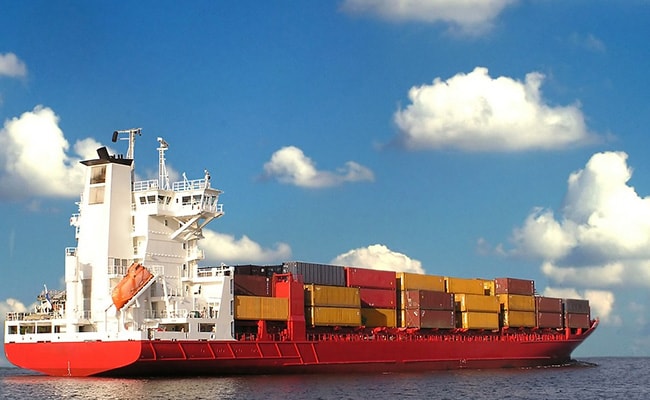
Since the U.S.-Israel strikes on Iran began, at least 24 Indians have been killed, including 15 seafarers who died in attacks by the U.S. and Iran on vessels in the Strait of Hormuz and the Gulf of Oman.
The 10-million-strong Indian diaspora in the Gulf region, which sends home about $50 billion in remittances each year, has been worried not only about its safety but also about job security, given the economic losses many countries have suffered from Iran’s retaliatory strikes.

The Hormuz blockade since March 2026 has had a choking effect on India’s energy and fertiliser imports and goods trade, and any cessation of hostilities would come not a day too soon for India.
“Both an escalatory, costly and unnecessary war as well as inflationary tariffs have been negatively assessed by voters,” said Navtej Sarna, a former Indian Ambassador to the U.S. and Israel, who said it was still early to see what “specific aspects” of foreign policy would be affected by the results.
“Yet any developments that constrain Mr. Trump’s aggression and adventurism and bring in some balance, stability and predictability can only be good for the world and for our bilateral relationship,” he added.

Future U.S. policy on the Russian war in Ukraine
The results could have a mixed, or even negative, effect on India’s ties with Russia and its import of Russian oil. Mr. Trump’s decision on October 16, 2026, to waive all tariffs on countries importing Russian oil under the Lindsey Graham sanctions Act (SRIA) has given India a temporary reprieve.
However, the SRIA had widespread bipartisan support, and New Delhi will need to work both sides of the aisle if it wants the Act, passed in September 2026 and calling for tariffs of up to 100% on Russian oil imports, to remain waived.
Ministry of External Affairs officials have said India will not bow to unilateral U.S. sanctions in this case. However, compared with July 2026, when India imported about 51% of its oil needs from Russia, the figure dropped to 44% in August and 33% in September, as the SRIA was debated and passed.
Tariffs and India-U.S. FTA negotiations
Apart from the Iran war, another area where India would benefit from constraints on Mr. Trump’s “adventurism” is tariffs and the Free Trade Agreement (FTA) negotiations with the U.S.
The talks, launched in February 2025, and an agreement reached between Mr. Trump and Prime Minister Narendra Modi in February 2026, have see-sawed over the past 20 months. In recent weeks, U.S. Trade Representative Jamieson Greer said a deal was not “imminent”, while Finance Minister Nirmala Sitharaman said talks had “plateaued”.
Despite positive comments from U.S. Secretary of State Marco Rubio, who travelled to Mumbai last month and met top Indian industry leaders, there is some doubt about whether the FTA can be ready in time for Mr. Modi’s visit to North America and Europe in mid-December 2026, when he will attend the G-20 summit in Florida and is expected to sign FTAs with Canada and the European Union.
“The general climate after the midterms is marginally favourable for the conclusion of the deal, which is already done to a great extent,” former diplomat Mohan Kumar told The Hindu. “On balance, I see a strong chance of the deal being done by the time or when the PM is in Miami for the G-20 meeting,” he predicted, citing rising inflation and mishandling of the economy as election issues.
In a post, Mr. Kumar, Director-General of the Motwani Jadeja Institute for American Studies at the O.P. Jindal Global University, wrote that China, the EU, NATO and India did not figure in the midterm polls. “To the extent foreign countries figured, it was Israel, Iran and the war in Ukraine,” he wrote, adding that this was because of the effect the wars had on the cost of living.
“In many ways, the voter discontent in these elections was mainly due to President Trump not keeping his promises on the cost of living and the [promise that America would not] get involved in unnecessary wars. One can expect ties with India to follow the same trajectory of incremental improvement that we saw in the last few months. Tariffs may no longer pose the kind of threat they once did and frankly even H1B was not very high on the voter’s list of priorities,” he concluded.
India also hopes that domestic American opposition to Mr. Trump’s “Liberation Day” tariffs, which disrupted the global economy last year, will keep any further unilateral moves by the administration in check.
Immigration and rising hostility to Indians
The rise of Democratic governors, senators and Congress members from immigrant families in these elections could mean a reduction in the anti-immigrant rhetoric that has worried Indians and persons of Indian origin (PIOs) in the U.S. over the past few years. The results will be popular with a majority of Indian-Americans, who polled 62-63% for Democrats in a pre-midterm survey.
However, it is unlikely to change the administration’s tough stance on curbing visas, restricting the naturalisation of professionals and deporting undocumented migrants, as these have widespread support. The election of four Indian-origin representatives to Congress is significant, although Republican contender Vivek Ramaswamy lost in Ohio.
For New Delhi, the results have a mixed impact, as some of the lawmakers who won, such as Pramila Jayapal and Ro Khanna, have in the past been critical of the Modi government over human rights, its handling of protests, and minorities.
China, the Quad and the Indo-Pacific strategy
Finally, India will watch closely whether the Republican loss will affect Mr. Trump’s Indo-Pacific policy, U.S. ties with China, and his interest in the Quad grouping.
These will be tested soon, as Mr. Trump is expected to travel for the ASEAN summits in Manila, Philippines, from November 16 to 18, 2026, and the APEC summit in Shenzhen, China, on November 19, 2026. Mr. Modi will travel to Manila, and a Quad summit is being planned along with the Prime Ministers of Australia and Japan, officials confirmed.
Mr. Rubio hosted a Quad Foreign Ministers’ meeting with External Affairs Minister S. Jaishankar on the sidelines of the G-20 meeting. A joint press statement by the Foreign Ministers of the U.S., India, Australia and Japan said they “look forward to the convening of the Quad Leaders’ Summit, the next Quad Foreign Ministers’ Meeting, and continuing engagements that advance peace, stability, and prosperity in the Indo-Pacific and beyond.” They discussed joint initiatives on maritime security, trade and resilient supply chains, critical minerals, and the use of artificial intelligence, which the U.S. calls “super intelligence”.


