



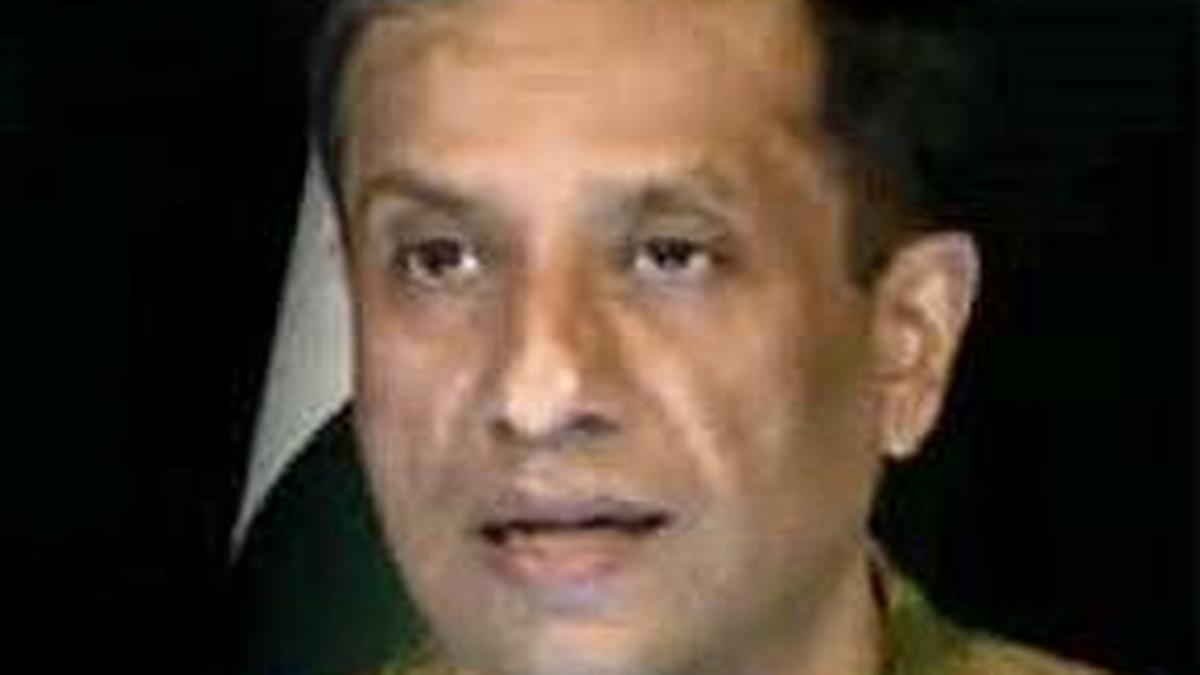
Senior Pakistan Army general Ahmed Sharif Chaudhry. File
| Photo Credit: Special arrangement
A senior Pakistan Army general has said that his country was providing “whatever support is needed” to protect Saudi Arabia’s sovereignty, territorial integrity and holy sites, amid escalating attacks by Yemen’s Houthis on the Gulf country.
Also read | Pakistan says ‘substantial’ forces, resources already in Saudi Arabia under defence deal
Pakistan military’s spokesperson Lt. Gen. Ahmed Sharif Chaudhry said that Saudi Arabia’s sovereignty, territorial integrity, and the security of the Two Holy Mosques are “paramount” and “non-negotiable” for Pakistan.
“So whatever support is needed to do that is being provided and will be provided,” Lt. Gen. Chaudhry said in an interview with a digital Arabic-language newspaper, Independent Arabia, on Sunday (October 18, 2026), without disclosing the nature or extent of the assistance.

Pakistan, Saudi Arabia and Turkiye signed a joint defence agreement in August under which an attack against one of the countries will be treated as an attack against all of them.
Mr. Chaudhry said Pakistan’s reaction to the Houthi attacks was one of “anger”, stressing that there could be no “ifs and buts” over the security of Saudi Arabia and the holy sites.
On questions of whether Pakistan’s support to the Gulf Kingdom would remain strictly defensive if the attacks continued, he said all three members of the alliance were clear that it had “no offensive intent” and was “purely defensive”.
Citing Article 51 of the UN Charter, he said the collective deterrence mechanism sent a clear message that any direct or indirect attack against one of the three countries would invite a collective response.
“If that deterrence doesn’t work, then that deterrence has to be re-established by all means that are available to the three countries,” the military spokesperson said.
On whether Islamabad had issued any warning to Iran, which supports the Houthis, Mr. Chaudhry said Pakistan was engaging with all parties, including the Islamic Republic, to exercise restraint and reduce tensions.
“All interactions and all conversations with the parties are based on dialling down the escalation,” he said.
Mr. Chaudhry said expanding the conflict to the Houthis or other areas would not help resolve the crisis and would only benefit those interested in creating instability in the region.
At the same time, he said Pakistan was sending “very strong signals” that collective deterrence was already in play and would take all necessary steps to safeguard Saudi Arabia’s security.
On reports suggesting that the alliance was aimed at deterring Iran or Israel, Mr. Chaudhry said the pact was not “country-specific” and had no offensive intent.
He said the alliance was intended to ensure peace, stability and security in the region, adding that any actor threatening those objectives would come within the ambit of its collective deterrence mechanism.
Mr. Chaudhry also said Saudi Arabia had established a multinational maritime defence coalition amid threats to navigation in the Bab el-Mandeb Strait and the Strait of Hormuz, with a Pakistani naval officer serving as its deputy commander.
Calling for unity among Muslim countries, he said there was no benefit in further escalating regional conflicts and stressed the need for a negotiated settlement.
“If we are unable to come to a negotiated outcome and we turn into a military conflict, then this instrument of collective deterrence of the Makkah alliance will definitely come into play, as it is coming into play,” he said.
On the possibility of expanding the alliance, Chaudhry said its doors remained open to countries that supported the principle of collective deterrence and shared its objectives of regional security and stability.
Asked about reports of Egypt and Syria showing interest in joining, he said any decision would rest with the political, strategic and military leadership of the three member countries.
Published – October 19, 2026 10:05 pm IST