


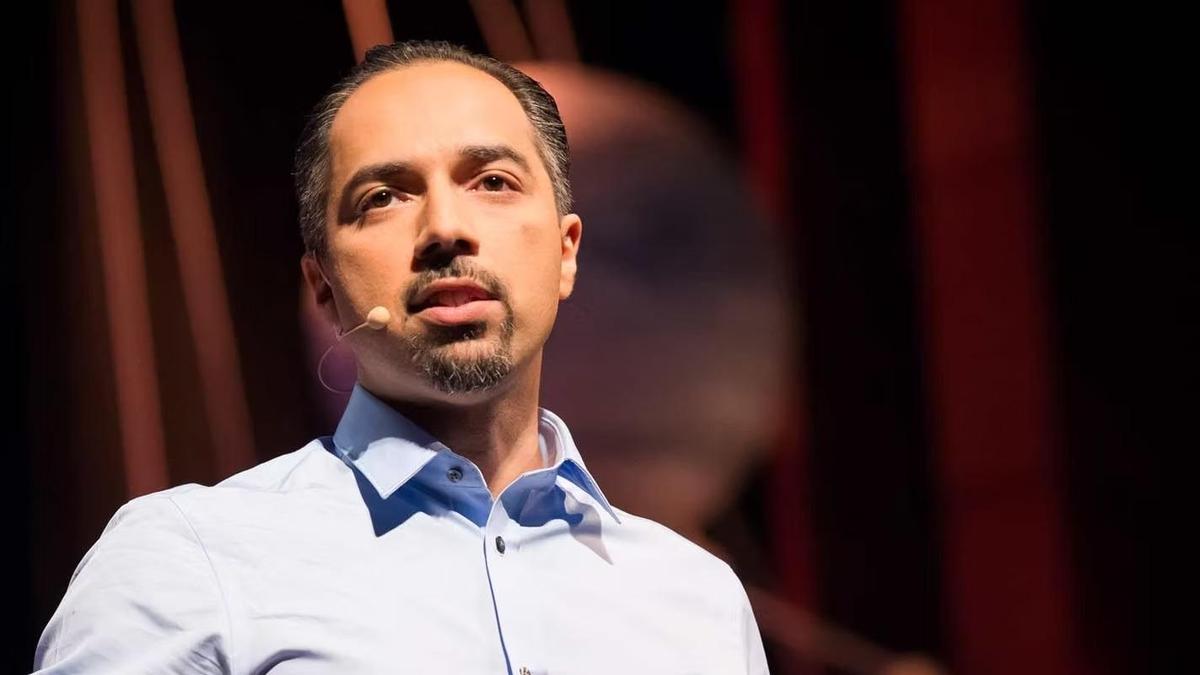
In U.S. President Donald Trump’s mind, he has tried a limited war, diplomacy and economic coercion against Iran but has still failed to achieve his objectives. What he hasn’t tried is an all-out war against Iran, which he might consider once the midterm elections are over, says Trita Parsi, executive vice-president of the Washington-based Quincy Institute. Speaking on The Hindu’sThe View from India podcast, Mr. Parsi said Iran wants a new, uncontested order in the Persian Gulf and appears prepared to fight a long battle. Edited excerpts:
Let’s start with Yemen, where the conflict is rapidly escalating. Do you think Saudi Arabia walked into a trap set by the Houthis?

No, I think the Saudis set a trap for themselves. They did not think this conflict was going to go this far. Their military prowess is highly questionable. We see that their ability to defend their airports is failing. It’s also important to note that both Iran’s missile capabilities and the Houthis’ missile capabilities appear to have grown significantly. The Iranians’ learning curve in this war has been very steep. And we see that the U.S. side is attesting to the fact that the Iranians are capable not only of shooting better missiles but also of shooting them more effectively. The Houthis also have very advanced scientists who have apparently taken some of the Iranian missiles and improved them. There’s a two-way learning corridor between the Iranians and the Houthis now. The Houthis have themselves made improvements that the Iranians are now benefiting from. And this is all taking the Saudis by surprise. The Saudis are in a very, very bad situation.
 Saudi Arabia has powerful allies, including the U.S. It also has a trilateral pact with Pakistan and Türkiye. But none of them seem to be interested in joining the war. On the other side, Israeli media report that the Israelis are keen to join the war, but MBS is resisting…
So, first of all, when it comes to Turkiyeand Pakistan, it’s important to note that the whole thing was struck at a moment when very few of them expected the war with the Houthis to lead to where we are right now. And I think there’s a huge reluctance on both the Turkish and Pakistani sides to get meaningfully involved. Because at the end of the day, the Houthis have a very, very strong base of support throughout the Muslim world, precisely because they have been the only Arab force that has fought back against Israel during the genocide [in Gaza]. If you suddenly have Turkiyeinvolved in a direct fight with the Houthis, who have been fighting Israel at a time when Israel is itching to have a fight with Turkiye, it just creates a hell of a mess. And public opinion-wise, I think it will be very, very challenging.
And then you have the Israeli factor in terms of wanting to come in on Saudi Arabia’s side in this war, which, according to the Haaretz story, has been resisted by MBS, recognising what a devastating blow that would be to Saudi Arabia’s standing in the Muslim world. It’s bad enough that they’re fighting the Houthis. If they’re fighting the Houthis alongside Bibi Netanyahu and the Israelis, who are still knee-deep in the blood of a genocide that they are still conducting, it really serves the narrative of Iran and the axis of resistance.
Does the war between Saudi Arabia and the Houthis strengthen Iran’s hand in the larger conflict?
It has. But I think it’s important to note that it’s not stable. This [the Saudi-Houthi escalation] is putting more pressure on the oil markets. The strike against the East-West pipeline [of Saudi Arabia] showed that a lot of these ideas of building pipelines that circumvent the Strait of Hormuz are far-fetched. So, in that sense, it is showing Iran’s escalatory options, to the extent that we assume that this was coordinated between Iran and the Houthis. But I don’t think that the relationship is such that the Iranians decide what is done and the Houthis follow. The Houthis are very independent.
Here’s where this is also a problem for the Iranians. This escalation now risks taking matters in a direction in which the escalation becomes uncontrollable. Prior to this, the escalation between the U.S. and Iran was highly problematic, but on both sides, it was quite calibrated, quite calculated. The Houthi-Saudi escalation may not be able to be calibrated. You can also see a situation in which the U.S. and Iran may come to some sort of an agreement and want de-escalation.
And in the MoU that was signed before, the first paragraph stated that there would be a region-wide ceasefire. Back then, the reference was to Lebanon. Lebanon was very clearly included because there was no war between the Saudis and the Houthis at the time. Now there is. Does the regional ceasefire still include all of the region? Does it include Yemen and the Houthis? If so, under what circumstances will the Houthis agree to a ceasefire? Their demand is for the blockade to be lifted. The blockade is rooted in a UN Security Council resolution. Does this mean that now you need to have a new resolution in the Council lifting that blockade in order to get a ceasefire? I’m not saying that these things end up becoming requirements. I’m saying that they are potential requirements because this is now a much more complicated conflict and a much more complicated regional ceasefire than it was before.
You have argued recently that an escalation between the U.S. and Iran is very likely. Can you explain it?
Trump is looking for a way to turn this war into an ultimate success. In his mind, he has tried diplomacy, and it didn’t lead to the type of success that he wanted. It only led to more costs. He has tried a blockade. He knows ultimately the regime is not going to fall because of that. And they’re looking for regime change. And he has also tried, in his mind, this limited war in which he strikes but doesn’t go after the infrastructure because of the fear of Iranian counter-escalation.
But in his mind, then, there’s only one option left that he has not tried, and that is massive escalation, an all-out war that accepts Iran’s counter-escalation but assumes that, once you’re past the midterms, you don’t have to care that much about it. He doesn’t have a political future beyond 2028, or shouldn’t have. And as a result, let’s go all out in order to make the final chapter of this episode such a success that it rewrites the whole history of the story altogether. I think it’s insane. I don’t see any basis for why it would work. But it is something I think Trump is looking for because of his desperation.
Iran is also facing grave economic challenges, which have been compounded by Trump’s blockade. Do you foresee Iran’s internal challenges leading to a crack in the Islamic Republic?
The Iranians are facing economic challenges. There’s no doubt about that. And the prospects for those challenges to become deeper are also there. However, the narrative in the U.S. is highly exaggerated and, frankly, disconnected from reality. It is true that more oil is getting through [the Strait of Hormuz]. However, that’s one out of many variables. The price of oil is not coming down. Other products are not getting out. Moreover, the sustainability of this so-called opening of the strait is highly questionable because the U.S. is spending a tremendous amount of resources on sorties and ship escorts. It’s simply not sustainable for the U.S. to keep the strait open at this level, which is still not the full level. On top of that, you now have increasingly credible reports, and I’ve heard it directly from the Iranian side, that they are charging fees to many of the ships that do get through.
The way it’s working is at times a little bit complicated, but the bottom line is that they’re getting perhaps up to 20% of the value of the cargo in fees, which is generating a huge revenue stream for them. On top of that, they’re also saying that they’re already exporting between half a million and a million barrels of oil a day through different means, whether that is by blending it with Iraqi or other oil. What I can tell you is that I’m just not seeing the panic in Iran among the officials that would be necessary to reflect the narrative about Iran’s economic state and prospects that you get in the U.S. And let me make the last point. We simply still do not have a single convincing case of an entire government structure or regime falling as a result of economic sanctions. In Venezuela, the United States went in militarily. In Cuba, after 70 years of sanctions and an embargo, the situation is 100 times worse than it is in Iran, and the U.S. is still now considering going in militarily.
What’s Iran’s theory of victory?
I think they do have a sense of strategic victory. But they have not succeeded in translating military victories, or the denial of a U.S. victory, into a new, uncontested order in the region. A deal on the nuclear issue that saw all sanctions lifted, an acceptance of Iran in the region and recognition that it needs to be included in the region’s security architecture. An arrangement in the Strait of Hormuz that, one way or another, would have given both Oman and Iran management control over it, with the details, including fees and how they would be worked out, yet to be resolved. If all of that had happened, undoubtedly you would be able to draw the conclusion that the Iranians had turned those tactical military achievements into a strategic victory. We don’t even have a process at this point that one could say the Iranians are making progress on, because we’re still in that war. And the likelihood of such a comprehensive deal looks much lower now than it did before. But that does not mean that they don’t have a sense of that strategic victory.
So, if the likelihood of Iran reaching a comprehensive agreement is very low, do you think Iran is ready to continue to fight through the rest of the Trump presidency? Does Iran have the resources and resolve to do this?
It appears to me that they do, because the assessment earlier on was that they wouldn’t even have the resources to be able to do this for a couple of months. And again, it seems like the internal resilience and workarounds that the Iranians have found have already paid some dividends. But it will undoubtedly be very tough for them. It will be very tough for their population. The cutting of flights is having an impact on imports of medicine. So this will create a lot of internal difficulties. But that’s different from saying, oh, they cannot withstand it or that they will be forced to give up.
But I do think that there’s also a problem in the Iranian calculation here if the belief is, let’s not make a deal with the Trump administration. Then you’re kind of assuming that the next President may strike a deal with you. And I would be very sceptical of that because I don’t think that the next President will make a deal with Iran that will be seen as some sort of American defeat in his or her first term. In fact, the pattern that we have seen is that if the U.S. can reduce the intensity of the war to make it a low-intensity war that goes on for a very long time, that is preferable because that is politically less costly than the political cost of making a deal in which the U.S., one way or another, is essentially accepting some variation of defeat. And I don’t think the next President of the United States will do so.
How do you look at the challenges the Persian Gulf monarchies are facing?
I think, of the many different trends we’re seeing, and this war is not over, so we don’t know exactly what the final situation in the region will be, the trends are, of course: A, the U.S.’s security umbrella is in tatters and is not going to be rebuilt or regain credibility. The Iranians are much stronger than what was believed. They could withstand an attack by two nuclear powers, with much of NATO directly or indirectly involved, as well as the superpower of the world, and they survived it and, in fact, turned it into a victory. The Israelis cannot fight a war without the U.S. And even when they do, after 12 days, they have to vie for a ceasefire because they don’t have enough interceptors. So their idea of being a military hegemon is very limited to their immediate surroundings, but not on a regional scale.
And, of course, ultimately, the Arab states are in a tremendously weak position, extremely vulnerable. They have plenty of money and resources, but they don’t have any protection, and they actually have to think through their security situation in a very, very profound way. And as problematic and unattractive as it may be for them right now, it appears to me that they have no choice but to make some sort of a deal with Iran in which they actually try to integrate themselves more with Iran economically as a security measure in order to increase the buffer against the war and decrease the likelihood of a return to war.
Published – October 15, 2026 01:30 pm IST