




Most people view macroeconomics as a result of the mechanical tweaking of some variables to alter other variables. For example, if aggregate consumer demand is down, there is immediately a call for lower interest rates and higher government doles. Similarly, when demand outstrips supply, then the call is the opposite: raise interest rates and cut back on handouts.
There was also a long-held belief that unemployment and inflation had an inverse relationship — as shown in the famous Phillips Curve — and that income and consumption moved in tandem. If governments could tweak one, the belief was that this would result in changes in the other.
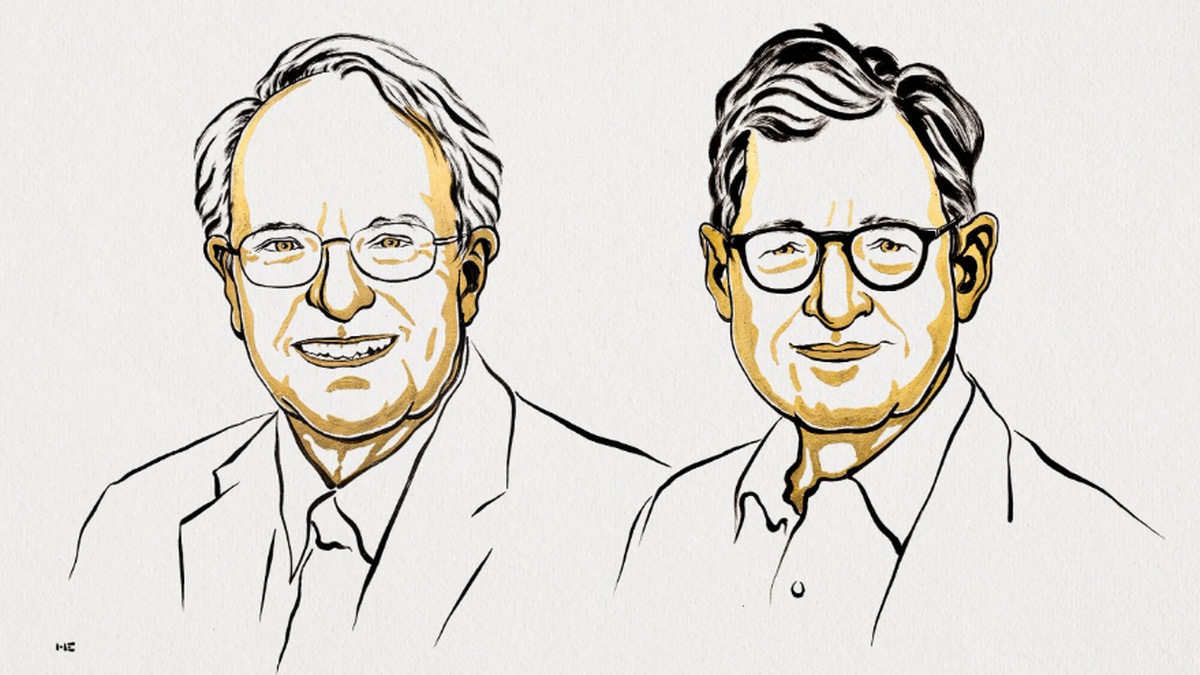
It was this that Robert E. Hall and Michael Woodford turned on its head, for which they were awarded the 2026 Sveriges Riksbank Prize in Economic Sciences in Memory of Alfred Nobel, commonly called the Economics Nobel.
The need for new thought
The economic thinking that the ‘invisible hand’ of the government should step in to stabilise the economy was born out of the landmark work of that titan of economic theory, John Maynard Keynes, and was put to great use in the aftermath of the Great Depression in the U.S. in the 1930s.
This stabilisation policy remained popular for several decades until it was upended by the oil shock the U.S. economy faced in the 1970s. During this crisis, the relationship between several macroeconomic variables broke down. That is, inflation rose at an accelerated pace even though unemployment was high, and the link between income and consumption looked like it was no longer holding.
What this meant was that conventional stabilisation policy no longer worked — government stimulus came at the wrong time, which had long-term detrimental effects on growth and inflation.

Economists such as Robert E. Lucas, the 1995 Economics Nobel Prize winner, then got to work to show that the dry mechanisms of simply working with macroeconomic variables were not the way. Inflation at the macro level was the result of pricing decisions by thousands of individual companies, and total private consumption was the result of actions taken by lakhs of individual households.
The ‘human’ element to macroeconomics
However, while it was increasingly accepted that households make consumption choices not only on the basis of their current situation but also on the basis of their future expectations, the difficulty arose in trying to quantify the effect of these future expectations.
Enter Robert E. Hall. Born in 1943 in Palo Alto, California, Mr. Hall graduated from UC Berkeley in 1964 and earned his PhD from MIT. Even as a graduate student, he was already working on the issue of how government policy affects business behavior, research that eventually led to a seminal 1967 paper ‘Tax Policy and Investment Behavior’.

He went on to serve on the economics faculty of UC Berkeley from 1967 to 1970 before moving to MIT and then to Stanford University, where he still works as the Robert and Carole McNeil Joint Hoover Senior Fellow and Professor of Economics.
Mr. Hall’s greatest contribution, and for which he was awarded the Nobel Prize, however, had to do with the households not companies.
The central idea of his research, later put down in a landmark paper in 1978, was that if the consumption decisions of households is governed by their expectations of future income and other such factors, then their current consumption is also an accurate indicator of their future expectations. That is, if a household is optimistic about the future, it will consume more than if it were pessimistic.

A related observation was that households will also only ever change their consumption patterns if their assessment of the future changes. In turn, their assessment of the future changes when they obtain new and relevant information. Further, since new information cannot be predicted by definition, changes in consumption also cannot be predicted.
Now, here is the key for policymakers. If the rule is that changes in consumption cannot be predicted because they are based on unpredictable new information, then situations where it can be predicted must be because households are breaking this rule.

This breaking of the rules usually takes place when a household is living paycheck to paycheck, or hand-to-mouth. They cannot borrow and have no savings, and so they spend only exactly what they earn. That is, their consumption is entirely predictable.
Using this finding, and the empirical work done by Mr. Hall, policymakers could now measure in exact terms the percentage of the population that was living hand-to-mouth.
This insight, that some households are forward-looking while others cannot be, has become an important element of the macroeconomic models used by central banks and governments around the world.
The other major contribution of Mr. Hall’s work was bringing in a ‘human’ element to macroeconomics, providing policymakers a map of sorts to how individuals react to both fear and confidence about the future.
Why companies behave the way they do
Mr Hall’s work addressed the demand side, giving macroeconomics microeconomic underpinnings. The supply side theory was a result of the work done by Michael Woodford.
Mr. Woodford was born in 1955 in Massachusetts and he went on to complete his undergraduate studies at the University of Chicago, earn a Juris Doctor from Yale Law School, and complete his PhD in Economics from MIT.

Not only did Mr Woodford build on Mr Hall’s demand side contributions, but he also brought about a decisive change in how inflation was viewed. That is, in a series of papers starting in the 1990s, he showed that inflation is based on the behaviour of individual companies that set prices, knowing that it would be too difficult to change these prices every time demand or input costs change.
Firms are not only future-looking in their behaviour, but their prices also tend to be ‘sticky’ — they don’t change quickly.
Now, the follow-up of this for policymakers was that, since businesses look to the future, their expectations about future interest rates are very important to manage inflation. As a result, it becomes of prime importance for central bank policies to be credible and transparent.
That is why the RBI Governor, while announcing interest rate decisions, put them in the context of the global and Indian economies, and gives the rationale and outlook in detail. This policy of transparency is followed by all major central banks around the world and has its foundations in Mr. Woodford’s work.
Other aspects of Mr. Woodford’s work also provided policymakers more effective tools to deal with supply shocks than they had during the 1970s, such as using monetary policy to do the job rather than fiscal policy.
Mr. Woodford combined all of this with Mr. Hall’s demand side theory and created a complete framework, which he published in a 2003 monograph titled Making Things Happen: A Theory of Causal Explanation. This monograph laid the groundwork for understanding business cycles, what causes them, how they play out, their impact on stabilisation policy, and the importance of policy transparency.

In essence, the two economists provided the theoretical and empirical underpinnings to a basic but powerful idea for policymakers: the economy is made out of the people in it.