Skip to content
  • Facebook
  • X
  • Linkedin
  • WhatsApp
  • Associate Journalism
  • About Us
  • Privacy Policy
  • 033-46046046
  • editor@artifex.news
Artifex.News

Artifex.News

Stay Connected. Stay Informed.

  • Breaking News
  • World
  • Nation
  • Sports
  • Business
  • Science
  • Entertainment
  • Lifestyle
  • Toggle search form
  • Sachin Tendulkar gets standing ovation at Wimbledon Centre Court – Watch Sports
  • Allahabad High Court Upholds District Judge’s Dismissal Nation
  • Sweden Becomes NATO’s 32nd Member After Two-Year Wait World
  • Starving Gazans scramble for aid drops to scrounge a can of food World
  • S Jaishankar On How India Non Alliance Culture Balances Its Relations With Russia, US World
  • Terrorist Killed In Encounter With Security Forces In J&K’s Kulgam Nation
  • Industry body seeks release of ‘pending’ subsidies by Tea Board Business
  • “No Pakistan-India Rivalry…”: Arshad Nadeem Next Neeraj Chopra Pipped Him For Global Championships Gold Sports

Australia’s iron ore miners face falling Chinese demand

Posted on March 20, 2024 By admin


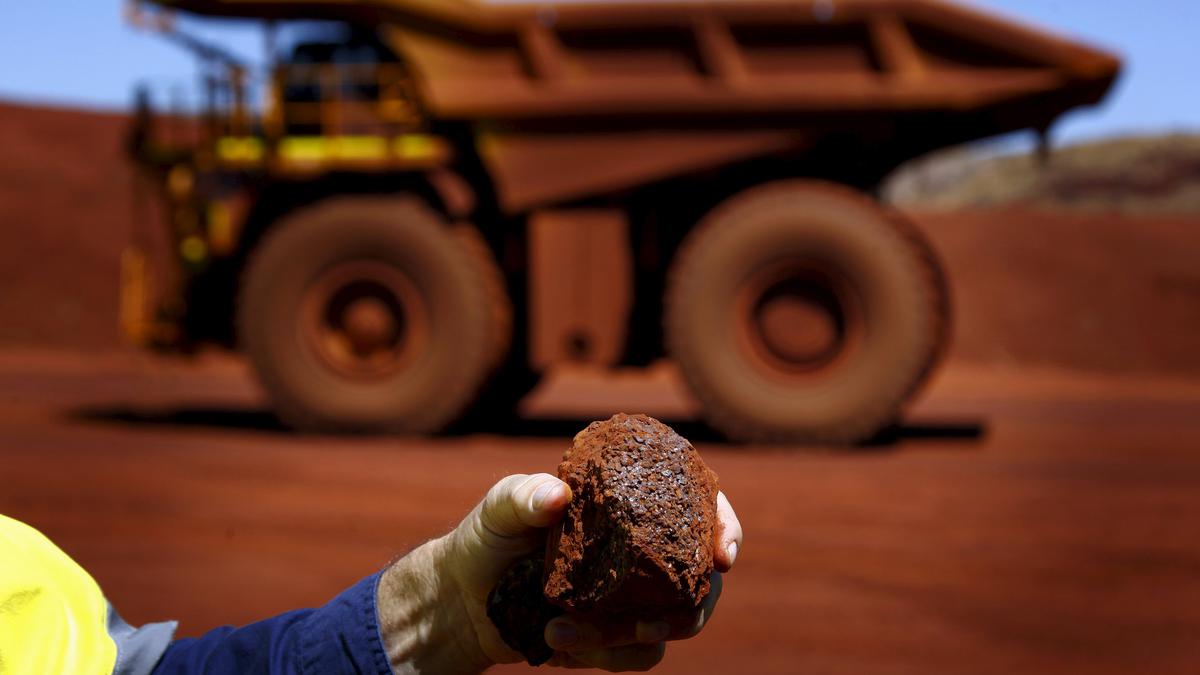
Australia’s vast iron ore mining sector is facing stark choices as its biggest customer China has likely hit a peak in its steel production and global pressures mount to decarbonise one the world’s most polluting industries.

The scale of these challenges are massive, but not insurmountable, and there are an array of options that Australia’s iron ore miners can pursue.

The trick is choosing a path that maximises profits, and minimises costs, while ensuring the industry continues to prosper.

Australia is the world’s largest exporter of iron ore, the key raw material used to make steel, and it shipped about 930 million metric tons in 2023, which at current prices would be worth about $93 billion.

Australia is also the world’s largest exporter of metallurgical coal, used to make steel, ranks second in thermal coal and in liquefied natural gas, while also being the biggest exporter of lithium and largest net exporter of gold.

But the exports of all these commodities together barely exceed the value of iron ore shipments, underscoring the outsized role of the ore, which is mainly produced in the state of Western Australia.

More than 80% of iron ore exports are to China, which buys 70% of the global seaborne volumes and produces about half of the world’s total steel.

Putting these numbers together gives a picture of a dominant producer and a dominant buyer in the iron ore market.

China’s rise since the late 90s allowed Australia’s iron ore miners to massively ramp up output, reap economies of scale and become hugely profitable.

But the nature of both China’s demand and the process of making steel are likely to change soon, threatening the current model whereby Australia produces vast quantities of iron ore that is turned into steel in blast furnaces and basic oxygen furnaces, processes that require the use of coking coal.

China’s steel output has flattened in the past five years to around 1 billion ton per annum, and most analysts presenting at this week’s Global Iron Ore and Steel Outlook Conference in Perth predicted that production will gradually decline in the next few years.

This is partly because China’s infrastructure and housing construction will ease, but also because China will increasingly use scrap steel in electric arc furnaces to produce new steel products.

While Australia’s iron ore miners may be able to offset the loss of some of China’s demand by selling to newer steel producers in Southeast Asia, it’s likely that the overall market for iron ore will soon decline.

It’s also likely to change in composition, with higher grades of iron ore preferred as these can be more easily used as a feedstock along with scrap in electric arc furnaces.

Higher grades of iron ore can also easily be upgraded into direct reduction iron (DRI), which in turn can be turned into steel without using coal.

Making steel using DRI produced with green hydrogen and renewable energy is one way the industry is thinking of reducing carbon emissions.

Even using natural gas to make DRI can reduce emissions by up to 75%.

The problem is DRI is tricky to export given it can be volatile, so it tends to be made at the same location as the steel furnaces.

So, if Australia’s iron ore miners wish to move up the steel value chain, they would must find ways to produce DRI and turn it into steel in Australia, using renewable energy.

Another path is upgrading the iron ore into hot briquetted iron (HBI), which is an upgraded form of DRI, whereby the DRI is converted into a compact form using heat.

HBI can be shipped, and can be used in either an electric arc furnace or a basic oxygen unit.

Should Australia’s iron ore miners move to upgrade their product, they will need significant investment, and there is no certainty that the upgraded products will deliver sufficiently higher margins.

For example, if an iron ore miner agreed with its customers in China, Japan and South Korea to supply HBI instead of iron ore fines, this would require significant investment in a clean energy system.

The iron ore miners have been successful in running complex operations at low costs, but setting up a wind/solar power plants, a green hydrogen electrolyser and possibly battery storage as well would be a totally different challenge.

There is also the possibility of exporting iron ore to a third country for processing into HBI, with Gulf countries such as Saudi Arabia a potential destination.

These countries have large quantities of natural gas which could be used to turn iron ore into HBI in a process that would still be more environmentally friendly than using coking coal.

The HBI could then be shipped from the Middle East to customers in Asia.

However, there are several other factors that would come into play, such as steel nationalism.

Many countries see steel as a key commodity and want to retain their own industries. It’s unlikely Japan would want to buy green steel from Australia, but it might be prepared to buy HBI and keep the final process of making steel inside its borders.

The problem for Australia’s iron ore sector is that it has a plethora of options in adjusting to decarbonisation and peak steel in China.

But all involve risks and costs, and this is trouble for an industry that has spent the last decade de-risking itself and concentrating on improving shareholder returns.

Source link

Business Tags:australia, australia iron ore miners, China, decarbonisation

Post navigation

Previous Post: CCI dismisses pleas of Indian app cos against Google’s new Play Store billing policy
Next Post: AIADMK Seals Seat-Sharing Deal With Allies For Lok Sabha Elections

Related Posts

  • Govt. hikes sugarcane FRP by ₹10/quintal to ₹315/quintal for 2023-24 season Business
  • Watch | Highlights of interim budget 2024 Business
  • Export bans and stocking limits: are they working? | Data Business
  • Markets fall on unabated foreign fund outflows; HDFC Bank, Reliance also drag Business
  • Pulses a worry even as kharif grain output may rise 1.5-4% Business
  • Centre estimates dip in onion, potato production this year Business

More Related Articles

Paytm nears record low, market value down about $2.5 billion since RBI crackdown Business
India’s FY24 pulses imports hit 6-year high as red lentil purchases jump Business
Budget 2023 | Push to achieve net zero emissions: P.B. Balaji Business
Rupee falls 3 paise to close at 83.45 against U.S. dollar Business
Financial Intelligence Unit imposes ₹18.82 crore penalty on crypto exchange Binance for violating anti-money-laundering regulations Business
Government rebuffs Moody’s Aadhaar views; says a billion Indians trust it Business
SiteLock

Archives

  • July 2024
  • June 2024
  • May 2024
  • April 2024
  • March 2024
  • February 2024
  • January 2024
  • December 2023
  • November 2023
  • October 2023
  • September 2023
  • August 2023
  • July 2023
  • June 2023
  • May 2023
  • April 2023
  • March 2023
  • February 2023
  • January 2023
  • December 2022
  • November 2022
  • October 2022
  • September 2022
  • August 2022
  • July 2022
  • June 2022
  • May 2022

Categories

  • Business
  • Nation
  • Science
  • Sports
  • World

Recent Posts

  • India’s Tradition Is Hindus, Muslims Living, Working Together: Amartya Sen
  • Reborn James Rodriguez Holds Key To Colombia’s Copa America Final Hopes
  • “Top Stuff From Our Young Guns”: Jay Shah Praises Shubman Gill And Co For Winning Zimbabwe T20I Series
  • 14-Year-Old Killed In Leopard Attack In UP’s Bahraich
  • Aim Is To Make Mumbai A “Global Fintech Capital”: PM Modi

Recent Comments

  1. ywdVpqHiNZCtUDcl on UP Teacher Who Asked Students To Slap Muslim Classmate
  2. bRstIalYyjkCUJqm on UP Teacher Who Asked Students To Slap Muslim Classmate
  3. GkJwRWEAbS on UP Teacher Who Asked Students To Slap Muslim Classmate
  4. xreDavBVnbGqQA on UP Teacher Who Asked Students To Slap Muslim Classmate
  5. aANVRzfUdmyb on UP Teacher Who Asked Students To Slap Muslim Classmate
  • 2012 series against England was turning point of my career: Ashwin Sports
  • 52-Year-Old Climber Dies After 1,000 Feet Fall From Alaska Mountain World
  • More solar storms brewing after last week’s aurorae as Sun ‘wakes up’ Science
  • NEET Leak, Hazaribagh, Paper Leak, Oasis School, CBI: NEET-UG Paper Leak Had Genesis In Hazaribagh, Zeroing-In On School: CBI Officials Nation
  • “Yuvraj Singh Was Very Happy When I Got Out For Duck”: Abhishek Sharma, After Maiden T20I Hundred Sports
  • Afghanistan vs Sri Lanka, Live Score Updates, Asia Cup 2023: Sri Lanka Skipper Dasun Shanaka Wins Toss, Opts To Bat vs Afghanistan Sports
  • Indians Forced To Fight Russia's War Put Out Video: 'Get Us Out Of Here' World
  • India vs Pakistan live score over Match 12 ODI 1 5 updates Sports

Editor-in-Chief:
Mohammad Ariff,
MSW, MAJMC, BSW, DTL, CTS, CNM, CCR, CAL, RSL, ASOC.
editor@artifex.news

Associate Editors:
1. Zenellis R. Tuba,
zenelis@artifex.news
2. Haris Daniyel
daniyel@artifex.news

Photograher:
Rohan Das
rohan@artifex.news

Artifex.News offers Online Paid Internships to college students from India and Abroad. Interns will get a PRESS CARD and other online offers.
Send your CV (Subjectline: Paid Internship) to internship@artifex.news

Links:
Associate Journalism
About Us
Privacy Policy

News Links:
Breaking News
World
Nation
Sports
Business
Entertainment
Lifestyle

Registered Office:
72/A, Elliot Road, Kolkata - 700016
Tel: 033-22277777, 033-22172217
Email: office@artifex.news

Editorial Office / News Desk:
No. 13, Mezzanine Floor, Esplanade Metro Rail Station,
12 J. L. Nehru Road, Kolkata - 700069.
(Entry from Gate No. 5)
Tel: 033-46011099, 033-46046046
Email: editor@artifex.news

Copyright © 2023 Artifex.News Newsportal designed by Artifex Infotech.