
Skip to content
  • Facebook
  • X
  • Linkedin
  • WhatsApp
  • YouTube
  • Associate Journalism
  • About Us
  • Privacy Policy
  • 033-46046046
  • editor@artifex.news
Artifex.News

Artifex.News

Stay Connected. Stay Informed.

  • Breaking News
  • World
  • Nation
  • Sports
  • Business
  • Science
  • Entertainment
  • Lifestyle
  • Toggle search form
  • Access Denied Sports
  • Former RCOM Executive Held By ED For Role In Massive Bank Loan Fraud Business
  • India Aims To Send Astronaut To Moon By 2040, Own Space Station By 2035
    India Aims To Send Astronaut To Moon By 2040, Own Space Station By 2035 Nation
  • “Dara Hua Captain”: Babar Azam Slammed By Pakistan Greats After Loss Against India
    “Dara Hua Captain”: Babar Azam Slammed By Pakistan Greats After Loss Against India Sports
  • Uganda confirms three new Ebola cases, bringing total to five
    Uganda confirms three new Ebola cases, bringing total to five World
  • Biden says Assad’s fall in Syria is a ’fundamental act of justice,’ but ’a moment of risk’
    Biden says Assad’s fall in Syria is a ’fundamental act of justice,’ but ’a moment of risk’ World
  • Access Denied
    Access Denied Nation
  • “Decisions Didn’t Go Our Way”: Virgil Van Dijk On Referee’s Penalty Call After Euro 2024 Semi-Final Loss
    “Decisions Didn’t Go Our Way”: Virgil Van Dijk On Referee’s Penalty Call After Euro 2024 Semi-Final Loss Sports
Brain mapping of students and teachers uncovers when learning happens best

Brain mapping of students and teachers uncovers when learning happens best

Posted on September 27, 2026 By admin


To help us retain the information about the Second World War, Rani Miss, our History teacher, divided the class into three groups. A few students were the Axis powers, another set was the Allied powers, and the rest were bodies like the League of Nations and the UN. A History class that could have been just about remembering the dates and names of people turned into a journey. As we took on the roles of Hitler, Mussolini, Churchill, and Stalin, the textbook became part of our lives, and information stayed well beyond the class tests. The debates that took place also made us understand the distance between the leaders waging wars and the human cost.

(Sign up for THEdge, The Hindu’s weekly education newsletter.)

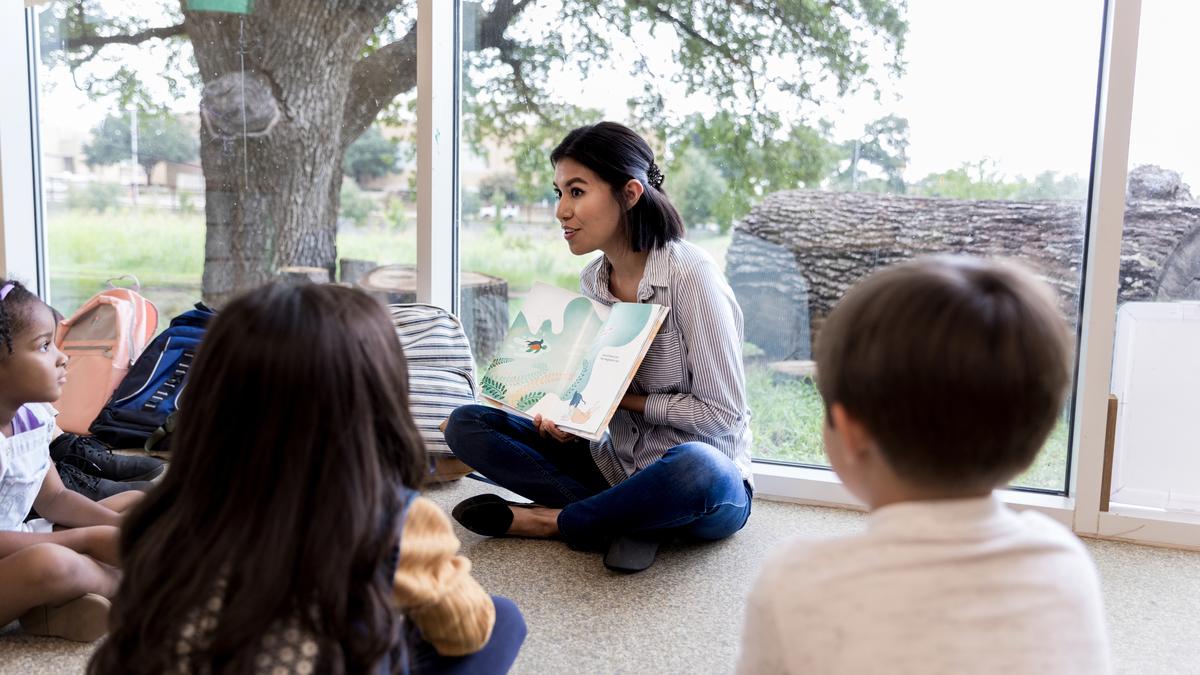
This is a teaching technique known as scaffolding, which is a kind of storytelling where the listener is also a character. Unlike passive storytelling, scaffolding helps students engage more with the information presented, thus improving retention and comprehension.

In a 2026 study published in Nature, titled ‘Enhanced word learning and neural synchrony during children’s storytelling ’, scientists found that learning outcomes in school-going children significantly improved through social experiences like storytelling and scaffolding. And during these teaching processes, the brain wave patterns in teachers and their students were in sync or aligned with each other – a situation scientists call neural synchrony.

Join THEdge LinkedIn group

Scientists say that when neural synchrony occurs between teachers and students during a session, it is an indication that students are comprehending and engaging.

In the study, researchers tested passive storytelling, where the child is the listener, and scaffolding, where the child is a character in the story. They used functional near-infrared spectroscopy (fNIRS), a brain imaging method, to record neural activity in the frontal lobes, the temporal lobes, and the parietal lobes of the child and the instructor.

Regions of the brain engaged

Through neuroimaging, it was found that during a scaffolding session, synchrony occurred mainly between the child’s left prefrontal cortex, which controls language, decision-making, planning, attention, and retention; and the teacher’s right hemisphere which is tied to spatial awareness, empathy, and nonverbal communication.

In passive story-listening, synchrony predominantly engaged the child’s right premotor cortex, which is associated with planning and organising movements and actions. “The premotor cortex is known for its part in perceiving and predicting others’ actions within goal-directed contexts, which is essential for social learning,” the authors said in the study. Here, the child was primarily in the receptive role.

“This is extremely important from a learning outcome point of view. Simply put, children learn better when there is active engagement from the teacher, which probably tunes several other networks beyond language comprehension, namely attention, arousal, emotion, saliency, and flexible decision-making,” Arpan Banerjee, a scientist and professor at the National Brain Research Centre, told The Hindu (he was not involved in the study). He added that engagement of brain regions involved in social communication is also a key player in improving learning outcomes and gets more optimally involved in an in-person setting.

The study found that children were able to pick up new words significantly better in the scaffolding session, as it involved spontaneous dialogue and the left prefrontal cortex was more actively engaged. Several studies have found that children’s vocabulary improves in social learning environments, with storytelling an effective medium of instruction. The sessions have to be instructor-led, with the child given space for responding and answering. “These findings may point to the relation between neural synchrony and the active engagement of both instructor and learner, as they collaboratively build a shared understanding,” the authors wrote in the study.

Remote setting not as effective

However, when the child attended a remote storytelling session online, they were found to be less engaged. The scaffolding effect also disappeared. This is significant as remote classes have become a common phenomenon following the COVID-19 pandemic. Several studies have shown that for active learning, face-to-face interaction plays a vital role in comprehension and mutual understanding between the educator and the child.

For educators, it is also essential to test whether children understood the concepts taught in class. The study found that both passive storytelling and scaffolding had an equal impact on test scores. It also showed that neural synchrony does not automatically translate to better outcomes in tests. “The ideal way to test the students would be via an active approach; for example, give them real-life situations where they can project themselves and answer questions akin to solving puzzles,” Dr. Banerjee said.

The manner of instruction also has a major impact on the child’s comprehension. A recent study conducted by researchers from the University of Iowa found that combining gestures with speech through scaffolding helps improve neural synchrony and learning. The study found that it does not matter how much time is spent on a particular topic, but the nature of the interaction is what matters for effective learning. The researchers saw that when parents used gestures, blood flow rose in the problem-solving areas of the child’s brain and the adult’s perception region, which senses when someone understands you.

The relationship a student shares with the teacher also influences the learning outcome. A study published in the Journal of Cognitive Neuroscience, conducted among high school students,found that students who reported higher social closeness had more neural synchrony during lectures than other students. In terms of retention, the social closeness the student had with a teacher had more influence on the learning outcome than neural synchrony. This helps in predicting students’ performance and shaping course outlines.

When facts and figures are presented in an isolated manner, it is difficult for children to retain and comprehend the information. Presenting the matter through creative methods like storytelling and scaffolding becomes important to ensure that learning occurs in the classroom. Dr. Banerjee also said it is important to test how such techniques can be applied for children who are within the neurodiversity spectrum. “For example, designing a scaffolding paradigm from brain activations that enhances the learning outcomes in kids or young adults who fall under the spectrum will help to understand how these techniques can work for everyone,” he said.

Published – September 28, 2026 08:30 am IST



Source link

Science

Post navigation

Previous Post: Bank unions defer three-day nationwide strike after ‘understandings reached’ with IBA
Next Post: Opposition refuses to be part of the all-party delegation to Centre over drought relief

Related Posts

  • Scientists warn Centre against accepting ‘compromise formula’ at plant treaty meet in Peru
    Scientists warn Centre against accepting ‘compromise formula’ at plant treaty meet in Peru Science
  • When the honey became green, blue and red!
    When the honey became green, blue and red! Science
  • Science Snapshots: July 5, 2026
    Science Snapshots: July 5, 2026 Science
  • Indian researchers develop AI-based platform to identify age-defying molecules rapidly
    Indian researchers develop AI-based platform to identify age-defying molecules rapidly Science
  • Printing towards progress: How the printing press changed society
    Printing towards progress: How the printing press changed society Science
  • No brain, no problem: Tiny jellyfish can learn from experience
    No brain, no problem: Tiny jellyfish can learn from experience Science

More Related Articles

Revisiting India’s entry onto the nuclear stage Revisiting India’s entry onto the nuclear stage Science
Why are some stars blue, some white, some red? Why are some stars blue, some white, some red? Science
Watch | Somnath S. on ‘Transformative Leadership in ISRO’ Watch | Somnath S. on ‘Transformative Leadership in ISRO’ Science
Nobel Prize in Physiology or Medicine 2024: What is the research that won the prize? | Explained  Science
European Space Agency to provide support to Aditya-L1 mission European Space Agency to provide support to Aditya-L1 mission Science
Chandrayaan-3 | ISRO releases images of the far side area of the moon Chandrayaan-3 | ISRO releases images of the far side area of the moon Science
SiteLock

Archives

  • September 2026
  • August 2026
  • July 2026
  • June 2026
  • May 2026
  • April 2026
  • March 2026
  • February 2026
  • January 2026
  • December 2025
  • November 2025
  • October 2025
  • September 2025
  • August 2025
  • July 2025
  • June 2025
  • May 2025
  • April 2025
  • March 2025
  • February 2025
  • January 2025
  • December 2024
  • November 2024
  • October 2024
  • September 2024
  • August 2024
  • July 2024
  • June 2024
  • May 2024
  • April 2024
  • March 2024
  • February 2024
  • January 2024
  • December 2023
  • November 2023
  • October 2023
  • September 2023
  • August 2023
  • July 2023
  • June 2023
  • May 2023
  • April 2023
  • March 2023
  • February 2023
  • January 2023
  • December 2022
  • November 2022
  • October 2022
  • September 2022
  • August 2022
  • July 2022
  • June 2022
  • May 2022

Categories

  • Business
  • Nation
  • Science
  • Sports
  • World

Recent Posts

  • Israeli PM hails Indian pilot wounded in diverted flydubai flight
  • Health Department cautions candidates applying for nursing posts
  • Japan forms first national intelligence agency, eyes its own CIA
  • Khadi Santha to be held in city
  • For TN vice-captain Andre, pressure is a privilege

Recent Comments

  1. Stephancyday on UP Teacher Who Asked Students To Slap Muslim Classmate
  2. Robertreush on UP Teacher Who Asked Students To Slap Muslim Classmate
  3. WillieSmete on UP Teacher Who Asked Students To Slap Muslim Classmate
  4. DavidHix on UP Teacher Who Asked Students To Slap Muslim Classmate
  5. Stephancyday on UP Teacher Who Asked Students To Slap Muslim Classmate
  • Rupee settles 5 paise lower at 83.73 against U.S. dollar
    Rupee settles 5 paise lower at 83.73 against U.S. dollar Business
  • Fuel crisis LIVE: PM Modi, Sri Lankan President hold discussions on ‘energy cooperation’
    Fuel crisis LIVE: PM Modi, Sri Lankan President hold discussions on ‘energy cooperation’ World
  • IPL 2024: Records Virat Kohli Can Break During Royal Challengers Bengaluru vs Chennai Super Kings Clash
    IPL 2024: Records Virat Kohli Can Break During Royal Challengers Bengaluru vs Chennai Super Kings Clash Sports
  • Atishi Urges Haryana To Release Water Into Yamuna River
    Atishi Urges Haryana To Release Water Into Yamuna River Nation
  • Access Denied
    Access Denied Nation
  • Maharashtra Assembly Elections, Maha Vikas Aghadi Seat Sharing, Mahayuti Alliance: “All Nominations Done, Ready To Fight Today”: Congress On Maharashtra Poll
    Maharashtra Assembly Elections, Maha Vikas Aghadi Seat Sharing, Mahayuti Alliance: “All Nominations Done, Ready To Fight Today”: Congress On Maharashtra Poll Nation
  • Access Denied World
  • Modi in Norway LIVE: PM Modi to meet leaders at the Nordic-India Summit
    Modi in Norway LIVE: PM Modi to meet leaders at the Nordic-India Summit World

Editor-in-Chief:
Mohammad Ariff,
MSW, MAJMC, BSW, DTL, CTS, CNM, CCR, CAL, RSL, ASOC.
editor@artifex.news

Associate Editors:
1. Zenellis R. Tuba,
zenelis@artifex.news
2. Haris Daniyel
daniyel@artifex.news

Photograher:
Rohan Das
rohan@artifex.news

Artifex.News offers Online Paid Internships to college students from India and Abroad. Interns will get a PRESS CARD and other online offers.
Send your CV (Subjectline: Paid Internship) to internship@artifex.news

Links:
Associate Journalism
About Us
Privacy Policy

News Links:
Breaking News
World
Nation
Sports
Business
Entertainment
Lifestyle

Registered Office:
72/A, Elliot Road, Kolkata - 700016
Tel: 033-22277777, 033-22172217
Email: office@artifex.news

Editorial Office / News Desk:
No. 13, Mezzanine Floor, Esplanade Metro Rail Station,
12 J. L. Nehru Road, Kolkata - 700069.
(Entry from Gate No. 5)
Tel: 033-46011099, 033-46046046
Email: editor@artifex.news

Copyright © 2023 Artifex.News Newsportal designed by Artifex Infotech.