
Skip to content
  • Facebook
  • X
  • Linkedin
  • WhatsApp
  • YouTube
  • Associate Journalism
  • About Us
  • Privacy Policy
  • 033-46046046
  • editor@artifex.news
Artifex.News

Artifex.News

Stay Connected. Stay Informed.

  • Breaking News
  • World
  • Nation
  • Sports
  • Business
  • Science
  • Entertainment
  • Lifestyle
  • Toggle search form
  • Russia Won’t Probe Wagner Chief’s Death Under International Rules: Report
    Russia Won’t Probe Wagner Chief’s Death Under International Rules: Report World
  • Iraq, U.S. sign 48 agreements during PM’s visit
    Iraq, U.S. sign 48 agreements during PM’s visit World
  • India’s Full Schedule At Paris Olympics 2024: Date, Events And More
    India’s Full Schedule At Paris Olympics 2024: Date, Events And More Sports
  • Pakistan to ‘seriously examine’ restarting trade with India: Foreign Minister
    Pakistan to ‘seriously examine’ restarting trade with India: Foreign Minister Business
  • U.S. recognition of tea as a healthy beverage hailed
    U.S. recognition of tea as a healthy beverage hailed Business
  • Venezuela’s Maduro thanks supporters in first online post from U.S. prison
    Venezuela’s Maduro thanks supporters in first online post from U.S. prison World
  • Access Denied Sports
  • At least 100 passengers missing after boat capsizes in northern Nigeria
    At least 100 passengers missing after boat capsizes in northern Nigeria World
How the science Nikolai Vavilov built changed how we save crops

How the science Nikolai Vavilov built changed how we save crops

Posted on September 26, 2026 By admin


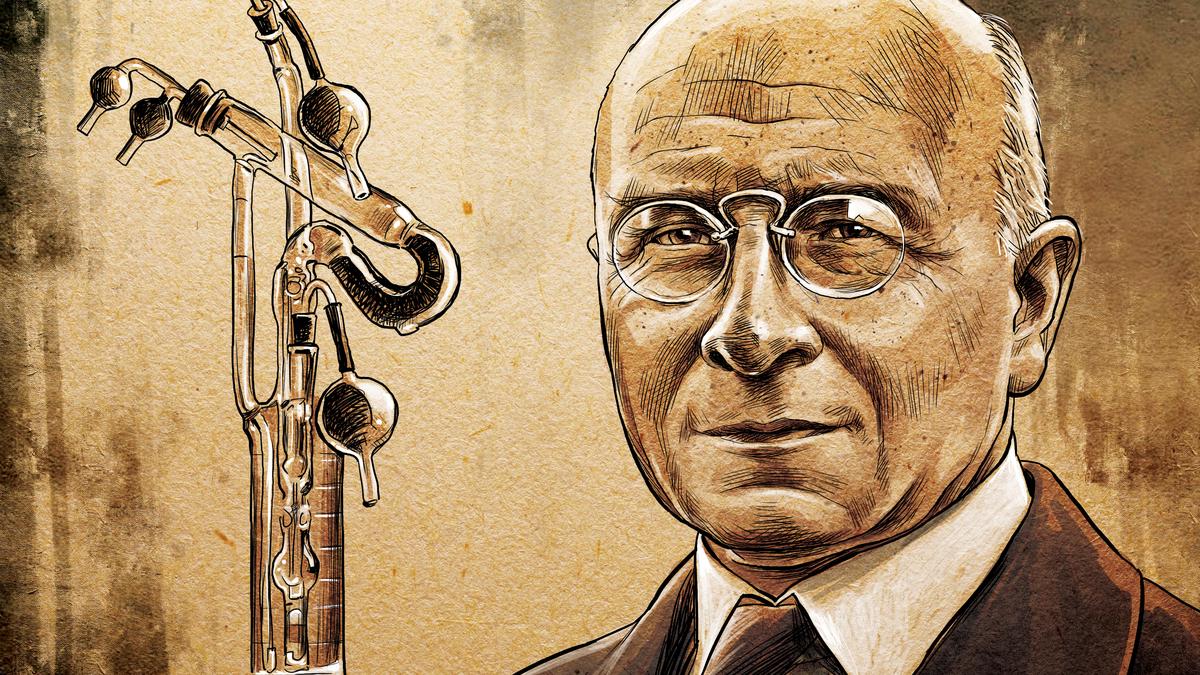
Nicolai Ivanovich Vavilov (1887-1943) was a remarkable agricultural scientist in the former USSR. His name is familiar to some as an ‘Indiana Jones’ who roamed around the world collecting crops and seeds, as someone who established the first global seed bank, as a martyr who died in prison despite his extraordinary accomplishments, and as the person who inspired so many scientists to sacrifice their everything to save a priceless seed bank during the Second World War.

Such a list, however, does not capture his intellectual contributions, which were fundamental to the utilitarian development of the seed bank.

Centres of origin

One of Vavilov’s major contributions was his paper titled ‘Studies on the origin of cultivated plants’, published in 1926. Even today, one century later, it continues to be the foundation for the study and use of crops and livestock. In fact, this work has been critical to preserving plant genetic resources and to protect the rights of farmers who had initially developed crop diversity. It is also central to the United Nations Convention on Biological Diversity and related discussions.

Humans use the plants they find where they live. But If they see something new and it does not grow nearby, they have also been known to go to extremes to get it. A familiar example is pepper, which ancient Rome traded for gold. We know about pepper because there are records that tell us the history of its spread. But what about in pre-historic times, say 6,000 years ago? We can find out from archaeological remains, which tell us about the prehistory of different peoples and cultures. We can also find out using good-old-fashioned taxonomy.

Vavilov found that most of our crops came from just eight regions of the world, which he was also the first to demarcate, and called the ‘centres of origin’. The foods on our plate today may thus have come from very different places.

Vavilov found that most of our crops came from just eight regions of the world, which he was also the first to demarcate, and called the ‘centres of origin’. The foods on our plate today may thus have come from very different places.
| Photo Credit:
Redwoodseed (CC BY)

This was what Vavilov did, combined with the (then) new methods of genetics and evolutionary biology. Just like Charles Darwin and Alfred Russell Wallace, Vavilov travelled around the world, in his case looking for crop varieties.

He observed that varieties and their closest wild relatives tended to be confined to a geographic region. This is what we expect under evolution: every species originates at a particular time and place, and undergoes changes as it spreads to other regions. Vavilov went further than others, like Alphonse de Candolle, and examined not just one or two crops but an array, as well as the prehistoric cultural conditions in which they were modified.

Vavilov thus found that most of our crops came from just eight regions of the world, which he was also the first to demarcate, and called the ‘centres of origin’. The foods on our plate today may thus have come from very different places.

Seed bank

Time is as important as geography. We know that the potato originated in Peru and spread to other parts of South America. We know from historical records that it had been transported to the rest of the world, including India, in the post-Columbian period. So if you went back to the times of the Cholas in the ninth and tenth centuries, you would not have been able to savour potato chips.

For thousands of years, human beings selected crops for the features they wanted. These needs varied according to factors such as the climate, soils, landscape, and cultural history. Vavilov explored and collected seeds of a large number — some 2.5 lakh — of crop varieties and species. The seeds were maintained in a facility that he built into a global seed bank in 1921 in Leningrad (now St. Petersburg).

A view of the Institute of Plant Industry, where Vavilov created the world’s first seed back, at St. Isaac’s Square in St. Petersburg.

A view of the Institute of Plant Industry, where Vavilov created the world’s first seed back, at St. Isaac’s Square in St. Petersburg.
| Photo Credit:
Sergey Galchenkov (SS BY-SA)

He and his associates also conducted careful, methodical studies in a large number of  field stations located in different climatic and geographical regions of the former Soviet Union. It was a large-scale experiment that allowed the scientists to analyse crop variations in diverse conditions at the field level. These efforts speeded up the rate at which varieties with suitable features could be identified for introduction or breeding in different regions.

A giant himself

Vavilov stood on the shoulders of giants — botanists, geneticists and breeders who preceded him. The scientist Eduard Regel had already put Russia on the forefront of applied botany. Regel also recognised Vavilov’s talents and placed him in positions that allowed Vavilov to interact with leading scientists across the world.

His concept of the centres of origins of crops also holds, broadly. Modern approaches, especially molecular biology, have suggested that the centre of diversity may not always be the centre of origin of a crop, as initially conceived. Thus, centres of diversity continue to be important in discussions on biodiversity and bioresources. 

Undoubtedly, Vavilov was a giant himself, and deserves to be more widely recognised and remembered today.

R. Geeta is retired professor, Delhi University.

Published – September 27, 2026 08:15 am IST


Source link

Science

Post navigation

Previous Post: IDSFFK 2026: ‘Viraamam’ by Malavika VN dwells on the world of film projectionists
Next Post: Elysium, Mahogany and Noraiah catch the eye

Related Posts

  • What is planetary protection? – The Hindu
    What is planetary protection? – The Hindu Science
  • Risky geoengineering should be banned, climate group says
    Risky geoengineering should be banned, climate group says Science
  • Do domestic chicks have innate ability to recognise faces?
    Do domestic chicks have innate ability to recognise faces? Science
  • Meghalaya yields new burrowing reed snake
    Meghalaya yields new burrowing reed snake Science
  • Can the tongue taste only sweet, salty, sour, bitter and umami?
    Can the tongue taste only sweet, salty, sour, bitter and umami? Science
  • The Science Quiz | The Skylab ‘incident’
    The Science Quiz | The Skylab ‘incident’ Science

More Related Articles

Bizarre’ bird-like dinosaur has scientists enthralled  Bizarre’ bird-like dinosaur has scientists enthralled  Science
Alexis Carrel’s Nobel-winning work in vascular repair and transplantation Alexis Carrel’s Nobel-winning work in vascular repair and transplantation Science
NASA just shut down a planetary defence mission that tracks asteroids. Now what? NASA just shut down a planetary defence mission that tracks asteroids. Now what? Science
Science Snapshots: May 31, 2026 Science Snapshots: May 31, 2026 Science
Could this asteroid be a piece of the moon? A Chinese spacecraft is about to find out Could this asteroid be a piece of the moon? A Chinese spacecraft is about to find out Science
Rare caracals spotted in Thar Desert near India-Pakistan border Rare caracals spotted in Thar Desert near India-Pakistan border Science
SiteLock

Archives

  • September 2026
  • August 2026
  • July 2026
  • June 2026
  • May 2026
  • April 2026
  • March 2026
  • February 2026
  • January 2026
  • December 2025
  • November 2025
  • October 2025
  • September 2025
  • August 2025
  • July 2025
  • June 2025
  • May 2025
  • April 2025
  • March 2025
  • February 2025
  • January 2025
  • December 2024
  • November 2024
  • October 2024
  • September 2024
  • August 2024
  • July 2024
  • June 2024
  • May 2024
  • April 2024
  • March 2024
  • February 2024
  • January 2024
  • December 2023
  • November 2023
  • October 2023
  • September 2023
  • August 2023
  • July 2023
  • June 2023
  • May 2023
  • April 2023
  • March 2023
  • February 2023
  • January 2023
  • December 2022
  • November 2022
  • October 2022
  • September 2022
  • August 2022
  • July 2022
  • June 2022
  • May 2022

Categories

  • Business
  • Nation
  • Science
  • Sports
  • World

Recent Posts

  • Namakkal Corporation launches campaign for plastic-free city
  • India wins silver in Open section; women claim bronze
  • French Consul General visits Mar Ivanios College
  • Three drug peddlers held, MDMA worth ₹24 lakh seized
  • MRF Indian National Racing Challenge: Ishaan notches up maiden win of the season

Recent Comments

  1. Robertlig on UP Teacher Who Asked Students To Slap Muslim Classmate
  2. Jameswrota on UP Teacher Who Asked Students To Slap Muslim Classmate
  3. Robertlig on UP Teacher Who Asked Students To Slap Muslim Classmate
  4. Thomastoubs on UP Teacher Who Asked Students To Slap Muslim Classmate
  5. Robertlig on UP Teacher Who Asked Students To Slap Muslim Classmate
  • Access Denied Sports
  • FIFA increasing financial distribution to all 48 World Cup teams by 15%
    FIFA increasing financial distribution to all 48 World Cup teams by 15% Sports
  • Cummins Breaks Silence On Head-Siraj Row, Gives Massive 'Big Boy' Verdict
    Cummins Breaks Silence On Head-Siraj Row, Gives Massive 'Big Boy' Verdict Sports
  • Furious Alexander Zverev Loses Cool, Smashes Racquet Repeatedly During Australian Open 2025 Final
    Furious Alexander Zverev Loses Cool, Smashes Racquet Repeatedly During Australian Open 2025 Final Sports
  • Rishabh Pant’s Subdued First Innings Was Surprising: Andrew Mcdonald
    Rishabh Pant’s Subdued First Innings Was Surprising: Andrew Mcdonald Sports
  • David Warner Nearly Injures Himself After Bat Breaks In Bizarre Incident – Video
    David Warner Nearly Injures Himself After Bat Breaks In Bizarre Incident – Video Sports
  • Lok Sabha speaker Om Birla to lead Indian delegation at Inter-Parliamentary Union Assembly in Geneva
    Lok Sabha speaker Om Birla to lead Indian delegation at Inter-Parliamentary Union Assembly in Geneva World
  • PM’s Infiltrator Jab At Hemant Soren’s Party, Congress In Jharkhand Rally
    PM’s Infiltrator Jab At Hemant Soren’s Party, Congress In Jharkhand Rally Nation

Editor-in-Chief:
Mohammad Ariff,
MSW, MAJMC, BSW, DTL, CTS, CNM, CCR, CAL, RSL, ASOC.
editor@artifex.news

Associate Editors:
1. Zenellis R. Tuba,
zenelis@artifex.news
2. Haris Daniyel
daniyel@artifex.news

Photograher:
Rohan Das
rohan@artifex.news

Artifex.News offers Online Paid Internships to college students from India and Abroad. Interns will get a PRESS CARD and other online offers.
Send your CV (Subjectline: Paid Internship) to internship@artifex.news

Links:
Associate Journalism
About Us
Privacy Policy

News Links:
Breaking News
World
Nation
Sports
Business
Entertainment
Lifestyle

Registered Office:
72/A, Elliot Road, Kolkata - 700016
Tel: 033-22277777, 033-22172217
Email: office@artifex.news

Editorial Office / News Desk:
No. 13, Mezzanine Floor, Esplanade Metro Rail Station,
12 J. L. Nehru Road, Kolkata - 700069.
(Entry from Gate No. 5)
Tel: 033-46011099, 033-46046046
Email: editor@artifex.news

Copyright © 2023 Artifex.News Newsportal designed by Artifex Infotech.