




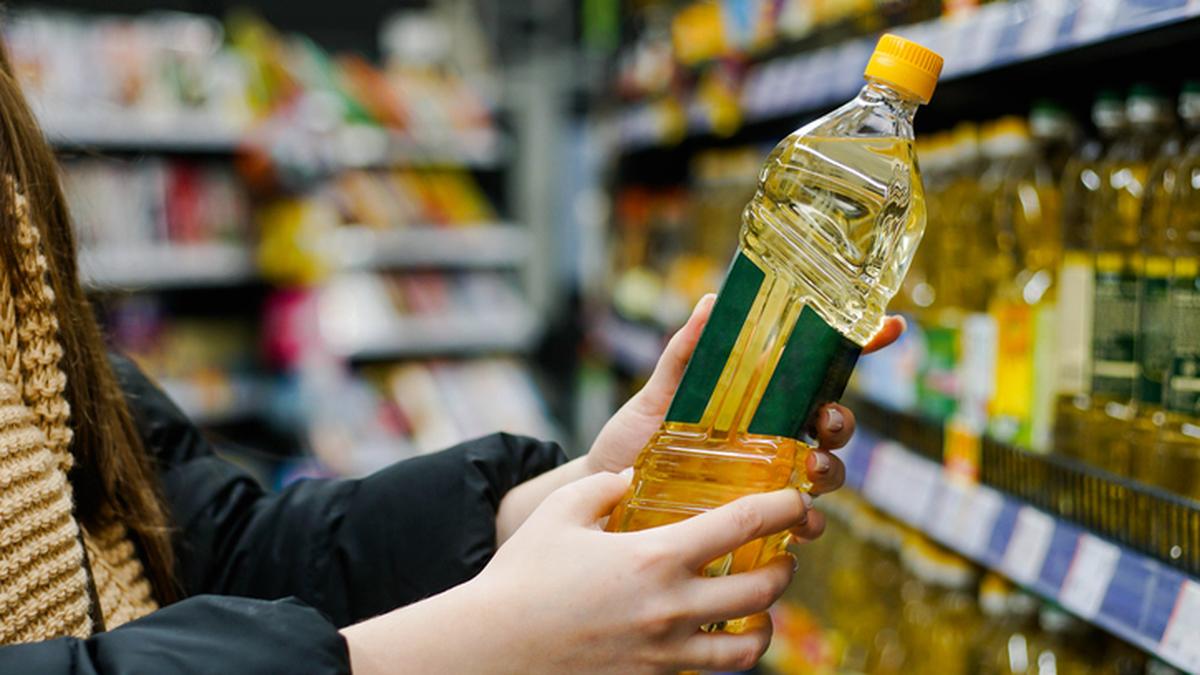
Union Government announced on September 24 through a press release issued by the Consumer Affairs Department that the Basic Customs Duty (BCD) on major imported crude edible oils, including the palm oil will be reduced.
| Photo Credit: Getty Images/iStockphotos
The Story So Far: Ahead of the upcoming festival season, where the demand for edible oil is likely to increase, the Union Government announced on September 24 through a press release issued by the Consumer Affairs Department that the Basic Customs Duty (BCD) on major imported crude edible oils, including the palm oil will be reduced. A day ago, on September 23, the Union Finance Ministry issued a Gazette Notification amending another notification issued on October 24, 2025 with details of the BCD on major edible oils. According to the Government, the decision will help to moderate domestic edible oil prices, provide relief to consumers and to mitigate “inflationary pressures” arising from the “sharp increase in international edible oil prices”.

International Situation
According to the United Nation’s Food and Agriculture Organisation’s food price index, published on September 4, the vegetable oil price index averaged 196.9 points in August, up 1.1 points (0.6%) from July, marking its “third consecutive monthly increase and reaching its highest level since June 2022”. The FAO said the rise reflected higher world palm and soy oil prices, which more than offset lower quotations for sunflower and rapeseed oils. “International palm oil prices continued to increase, driven by robust global import demand and concerns over the potential impact of El Niño-related weather conditions on production prospects in Southeast Asia.
Soyoil prices of South American origin remained firm, supported by strong export demand, while quotations in the United States of America declined moderately amid uncertainty surrounding biofuel policies and their implications for domestic feedstock demand. Meanwhile, international sunflower and rapeseed oil prices dropped slightly, reflecting subdued import demand and expectations of ample supplies of both oils in the 2026/27 season,” the report said.
The Changes
The new BCD will be effective from September 24. The BCD on crude soybean oil will be 5% now, from 10% at present. From 32.5% at present, the BCD for peanut oil and olive oil will be 27.5%. For crude palm oil, which has a 10% BCD, importers will now have to pay 5% BCD. For refined palm oil, the BCD was reduced from 32.5% to 27.5%. Crude sunflower oil which carried 10% BCD on it, will not have any BCD on it from now on. For sunflower oil edible grade too, the BCD has been reduced from 32.5% to 22.5%. “The Government has simultaneously reduced the applicable BCD on the respective refined edible oils while maintaining an import duty differential of 19.25% between crude and refined edible oils,” the Government said in the release.

Reasons given by Govt.
According to the Government, the duty rationalisation takes into account the increase in international edible oil prices and the consequent rise in domestic landed costs and retail prices. It reasoned that the import duties constitute an important component of the landed cost of imported edible oils and, therefore, have a bearing on domestic market prices. The Centre expects that the reduction in BCD on crude edible oils will lower their landed cost and facilitate transmission of the benefit through the domestic supply chain. “The measure is intended to provide relief to consumers while contributing to the broader objective of containing food-price and overall inflationary pressures,” it said.
What does Industry say
The Indian Vegetable Oil Producers’ Association (IVPA), the body of edible oil industry, said the decision comes at an important juncture, particularly with the festive season approaching. IVPA president Sudhakar Desai said in a statement that lower import duties should improve the landed costs of imported edible oils which can provide some reduction in consumer prices. “For the edible-oil sector, the immediate priority is to ensure adequate availability across the country during the upcoming festival months, with higher household demand as well as increased requirements from the sweets, snacks, food-service and hotel, restaurants and cafes/ catering segments,” he said. He hoped that greater flexibility to import sunflower oil and soybean oil will shift away demand from palm oil which is expected to be relatively expensive due to implementation ‘B50 bio fuel mandates’ by Indonesia, one of the largest palm oil producer, and cut down of the acreage expansion in palm oil producing countries such as Indonesia and Malaysia.
Farmers on attack on their livelihood
Edible oilseeds farmers view the step as an attack on their livelihood. They also fear that this decision is a prelude to the proposed signing of a trade deal with United States, which is the largest producer of soybean. Senior leader of All India Kisan Sabha Badal Saroj, who works among edible oilseeds farmers, said the decision works against the Government’s claim that they are for self sufficiency in edible oil production. “What would the Government tell the farmers who have been asked to grow palms, sunflower, groundnuts and soybean to achieve this [atmanirbharta] in edible oil production?” Mr. Saroj asked. He added that the decision was to allow free-flow of soybean oil from the United States and alleged that the Union Government took the decision to please multinational corporate companies in the edible oil industry.
Published – September 26, 2026 09:42 am IST