


Skip to content
  • Facebook
  • X
  • Linkedin
  • WhatsApp
  • YouTube
  • Associate Journalism
  • About Us
  • Privacy Policy
  • 033-46046046
  • editor@artifex.news
Artifex.News

Artifex.News

Stay Connected. Stay Informed.

  • Breaking News
  • World
  • Nation
  • Sports
  • Business
  • Science
  • Entertainment
  • Lifestyle
  • Toggle search form
  • Davis Cup: Nagal falters as Korea end India’s historic Final 8 hopes with 3-1 win
    Davis Cup: Nagal falters as Korea end India’s historic Final 8 hopes with 3-1 win Sports
  • Access Denied
    Access Denied Nation
  • Gatekeeper dies while trying to save man from being hit by train
    Gatekeeper dies while trying to save man from being hit by train Nation
  • Chennai is our home, where we can live with dignity and freedom, says Jaya
    Chennai is our home, where we can live with dignity and freedom, says Jaya Nation
  • Access Denied Sports
  • Leader of the Opposition in Kerala Pinarayi Vijayan targets Prime Minister Narendra Modi over NEET irregularities; hits out at Centre for police crackdown on student protests in New Delhi
    Leader of the Opposition in Kerala Pinarayi Vijayan targets Prime Minister Narendra Modi over NEET irregularities; hits out at Centre for police crackdown on student protests in New Delhi Nation
  • First Time In History: Virat Kohli Achieves Monumental Feat During India’s T20 World Cup Match
    First Time In History: Virat Kohli Achieves Monumental Feat During India’s T20 World Cup Match Sports
  • Access Denied World
Missing measure in India’s magnet mission

Missing measure in India’s magnet mission

Posted on September 20, 2026 By admin


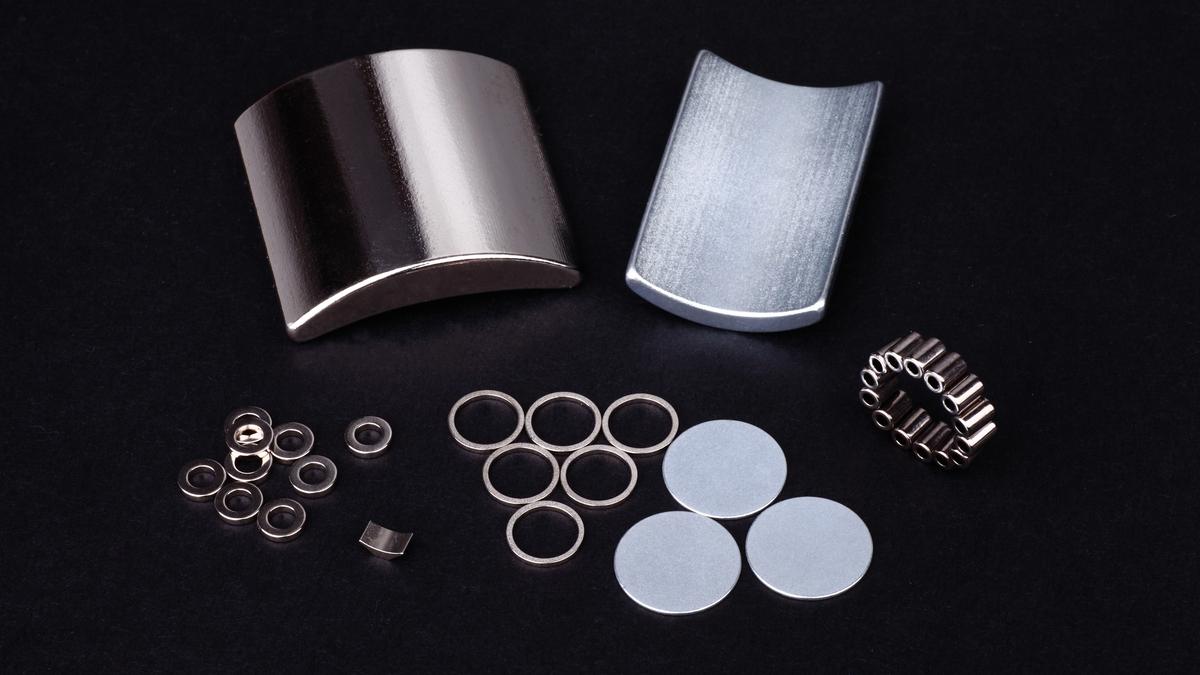
Neodymium-Iron-Boron (NdFeB) magnets have become the backbone of energy transition and advanced manufacturing. Representative file image.
| Photo Credit: Getty Images/iStockphoto

Most Indians know the parable of several blind men trying to describe an elephant. One touches its trunk and believes it is a snake. Another feels its leg and insists it is a pillar. None is entirely wrong, yet none sees the whole animal.

India’s strategy for advancing its cutting-edge technologies, aimed at becoming a global manufacturing leader, carries the risk of making a similar mistake. From EV motors and semiconductor fabrication facilities to precision manufacturing machineries, at the heart of each lies an unassuming component: the high-performance permanent magnet. They serve as the silent operating system of industrial acceleration.

Magnets are not all the same. Ferrite, Alnico and Samarium-Cobalt magnets continue to serve important industrial applications. Yet Neodymium-Iron-Boron (NdFeB) magnets have become the backbone of energy transition and advanced manufacturing because no other commercially available permanent magnet combines comparable magnetic strength with such a high power-to-weight ratio. Recognising its importance, India has begun strengthening its critical minerals and rare earth element strategy through initiatives such as the National Critical Mineral Mission, overseas mineral acquisitions, expanded geological exploration, and PLI schemes.

However, China’s tight export controls on rare-earth magnets and materials in April 2025 not only revealed the deep-seated vulnerabilities in global industrial value chains, but also the limits of our understanding. For India, the primary vulnerability does not stem from a shortage of critical minerals; rather, it lies in the absence of a comprehensive framework to pinpoint where strategic technological dependence is cultivated, accumulated and propagated throughout the permanent magnet value chain.

The journey of a magnet

Consider a simple example. India’s Annual Survey of Industries estimates the domestic permanent magnet market at around ₹750 crore. Yet international trade statistics indicate import values several times larger than that entire reported market. The gap may reflect differences in statistical coverage, industrial classification or supply-chain accounting. Whatever the explanation, policymakers face a troubling reality: they cannot confidently explain where all these magnets enter the economy or how they move through it. In other words, parts of India’s permanent magnet economy appear to exist without being fully visible in statistics.

Also read: Reliance, Vedanta, Adani join India’s drive to cut China rare earth dependence

Unlike other products, permanent magnets pass through a long technological journey. Geological exploration leads to mining. Mining feeds mineral processing. Processing enables chemical separation. Separation produces oxides, which are refined into metals, transformed into alloys, engineered into magnetic materials, and finally manufactured into finished magnets. Each stage demands different scientific knowledge, industrial capability and technological maturity. This is why discussions on critical minerals frequently miss the real point. The strategic question is not simply whether India possesses rare-earth resources or whether imports from China can be reduced. The real policy challenge is understanding what happens in between.

Although India has developed capabilities across several stages of permanent magnet manufacturing, the country still lacks a systematic way of identifying where those capabilities are globally competitive, where critical gaps persist, and how dependence accumulates across production stages. India’s statistical system provides only a partial picture of what is mined, imported, and manufactured.

One way to bridge this gap is through an Integrated Techno-Economic Mapping (ITEM) framework, which presently is a missing piece in India’s industrial policy toolkit. Such a framework brings together information on engineering and economic measurement to show how a permanent magnet is built, from minerals in the ground to the finished products that power advanced manufacturing. More importantly, it would identify where industrial capability should be built, where technological partnerships become essential, and where domestic investment would yield the greatest strategic return. A country may secure mineral resources yet remain dependent if it lacks processing and manufacturing capabilities.

Bridging this measurement gap is not an academic exercise; it is an industrial imperative.

Suvajit Banerjee is a Fellow at the National Council of Applied Economic Research (NCAER), New Delhi, in the research vertical of Computable General Equilibrium Modelling and Policy Analysis. Sovini Mondal is a Research Analyst at the NCAER in the research vertical of Computable General Equilibrium Modelling and Policy Analysis. Sanjib Pohit is a professor and Thematic Lead at the NCAER in the research vertical of Computable General Equilibrium Modelling and policy analysis. Views are personal.

Published – September 21, 2026 01:00 am IST


Source link

Business Tags:india

Post navigation

Previous Post: Dengue cases in Tamil Nadu decline for third consecutive year as per government data
Next Post: Chandni Chowk’s Town Hall to be developed as ‘Global Heritage Centre’: CM

Related Posts

  • H&M probes Myanmar factory abuses as pressure intensifies
    H&M probes Myanmar factory abuses as pressure intensifies Business
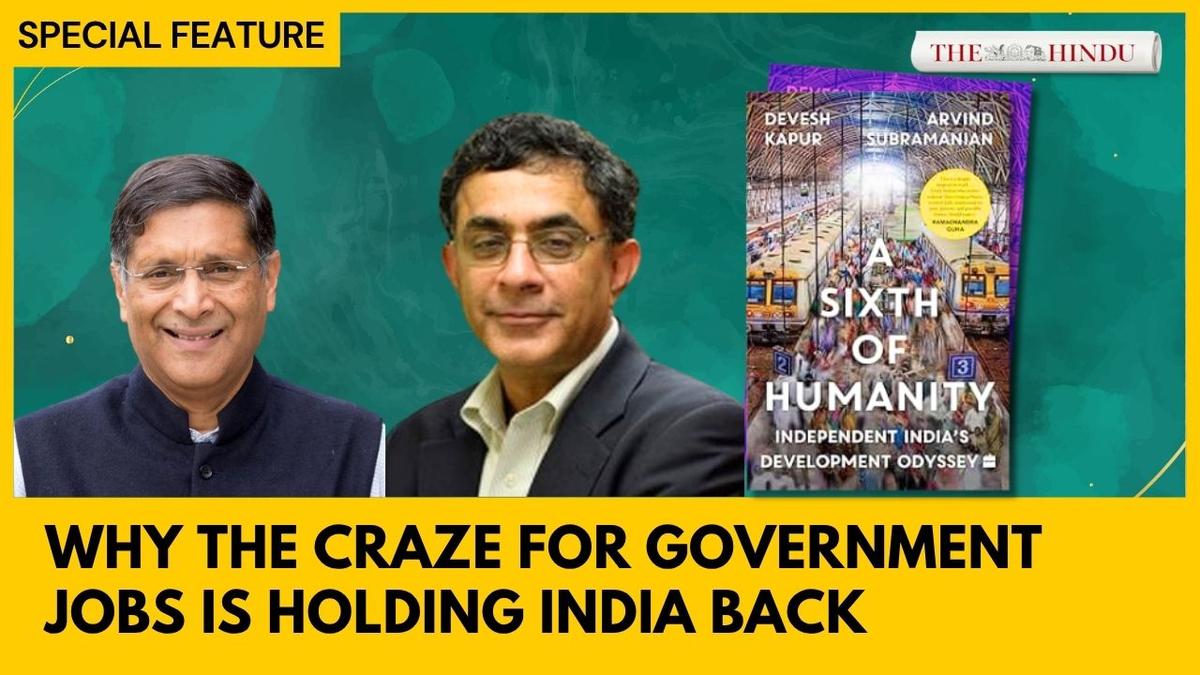
  • Watch: Arvind Subramanian and Devesh Kapur decode India’s development odyssey
    Watch: Arvind Subramanian and Devesh Kapur decode India’s development odyssey Business
  • Markets Open At Record High
    Markets Open At Record High Business
  • Market regulator SEBI plans to extend equity derivatives’ tenure to curb losses
    Market regulator SEBI plans to extend equity derivatives’ tenure to curb losses Business
  • Access Denied Business
  • NSE Files for ₹30,000-crore IPO; set to become India’s biggest-ever public issue
    NSE Files for ₹30,000-crore IPO; set to become India’s biggest-ever public issue Business

More Related Articles

Equity markets see high volatility, Sensex falls 150 points, nifty down 37 points Equity markets see high volatility, Sensex falls 150 points, nifty down 37 points Business
Bank credit outstanding to real estate rose to Rs. 28 lakh crore in July: RBI Bank credit outstanding to real estate rose to Rs. 28 lakh crore in July: RBI Business
Access Denied Business
Rupee plunges 20 paise to settle at 83.49 against U.S. dollar Rupee plunges 20 paise to settle at 83.49 against U.S. dollar Business
Nestle India’s September quarter profit slips 17.4% to ₹743 crore Nestle India’s September quarter profit slips 17.4% to ₹743 crore Business
U.S. Govt must remove tariffs, says Australian Trade Minister U.S. Govt must remove tariffs, says Australian Trade Minister Business
SiteLock

Archives

  • September 2026
  • August 2026
  • July 2026
  • June 2026
  • May 2026
  • April 2026
  • March 2026
  • February 2026
  • January 2026
  • December 2025
  • November 2025
  • October 2025
  • September 2025
  • August 2025
  • July 2025
  • June 2025
  • May 2025
  • April 2025
  • March 2025
  • February 2025
  • January 2025
  • December 2024
  • November 2024
  • October 2024
  • September 2024
  • August 2024
  • July 2024
  • June 2024
  • May 2024
  • April 2024
  • March 2024
  • February 2024
  • January 2024
  • December 2023
  • November 2023
  • October 2023
  • September 2023
  • August 2023
  • July 2023
  • June 2023
  • May 2023
  • April 2023
  • March 2023
  • February 2023
  • January 2023
  • December 2022
  • November 2022
  • October 2022
  • September 2022
  • August 2022
  • July 2022
  • June 2022
  • May 2022

Categories

  • Business
  • Nation
  • Science
  • Sports
  • World

Recent Posts

  • Chandni Chowk’s Town Hall to be developed as ‘Global Heritage Centre’: CM
  • Missing measure in India’s magnet mission
  • Dengue cases in Tamil Nadu decline for third consecutive year as per government data
  • 3 dead, three missing in Nilambur flash flood
  • Meloni plans to ban burqas and niqabs in Italian schools, cap foreign students in classrooms

Recent Comments

  1. Josephjab on UP Teacher Who Asked Students To Slap Muslim Classmate
  2. LarryKef on UP Teacher Who Asked Students To Slap Muslim Classmate
  3. Jasonnekly on UP Teacher Who Asked Students To Slap Muslim Classmate
  4. Jasonnekly on UP Teacher Who Asked Students To Slap Muslim Classmate
  5. Frankenrib on UP Teacher Who Asked Students To Slap Muslim Classmate
  • Access Denied Sports
  • First Reactions From First-Time MPs
    First Reactions From First-Time MPs Nation
  • Access Denied Business
  • Access Denied World
  • Dyf, Rampage and Flight Of Fancy impress
    Dyf, Rampage and Flight Of Fancy impress Sports
  • Access Denied World
  • Access Denied World
  • “Will Demolish Artificial Barrier Of 50 Per Cent Reservations “: Rahul Gandhi
    “Will Demolish Artificial Barrier Of 50 Per Cent Reservations “: Rahul Gandhi Nation

Editor-in-Chief:
Mohammad Ariff,
MSW, MAJMC, BSW, DTL, CTS, CNM, CCR, CAL, RSL, ASOC.
editor@artifex.news

Associate Editors:
1. Zenellis R. Tuba,
zenelis@artifex.news
2. Haris Daniyel
daniyel@artifex.news

Photograher:
Rohan Das
rohan@artifex.news

Artifex.News offers Online Paid Internships to college students from India and Abroad. Interns will get a PRESS CARD and other online offers.
Send your CV (Subjectline: Paid Internship) to internship@artifex.news

Links:
Associate Journalism
About Us
Privacy Policy

News Links:
Breaking News
World
Nation
Sports
Business
Entertainment
Lifestyle

Registered Office:
72/A, Elliot Road, Kolkata - 700016
Tel: 033-22277777, 033-22172217
Email: office@artifex.news

Editorial Office / News Desk:
No. 13, Mezzanine Floor, Esplanade Metro Rail Station,
12 J. L. Nehru Road, Kolkata - 700069.
(Entry from Gate No. 5)
Tel: 033-46011099, 033-46046046
Email: editor@artifex.news

Copyright © 2023 Artifex.News Newsportal designed by Artifex Infotech.