



Skip to content
  • Facebook
  • X
  • Linkedin
  • WhatsApp
  • YouTube
  • Associate Journalism
  • About Us
  • Privacy Policy
  • 033-46046046
  • editor@artifex.news
Artifex.News

Artifex.News

Stay Connected. Stay Informed.

  • Breaking News
  • World
  • Nation
  • Sports
  • Business
  • Science
  • Entertainment
  • Lifestyle
  • Toggle search form
  • Police officer dead, second injured in shooting at South Carolina park
    Police officer dead, second injured in shooting at South Carolina park World
  • Telangana DGP emphasises integrity, public trust and use of technology in policing
    Telangana DGP emphasises integrity, public trust and use of technology in policing Nation
  • Access Denied World
  • ‘Relaxed But Also Felt Very Bad’: R Ashwin’s Father On His International Retirement
    ‘Relaxed But Also Felt Very Bad’: R Ashwin’s Father On His International Retirement Sports
  • Israel Gaza Hamas War: 1,354 Killed In Gaza Strip, Over 6,000 Injured: Hamas As War Escalates
    Israel Gaza Hamas War: 1,354 Killed In Gaza Strip, Over 6,000 Injured: Hamas As War Escalates World
  • Jarrod Bowen Eases Pressure On West Ham Boss Julen Lopetegui To Leave Gary O’Neil In Danger
    Jarrod Bowen Eases Pressure On West Ham Boss Julen Lopetegui To Leave Gary O’Neil In Danger Sports
  • Columbia University Takes Back Deadline Set For Protesters To Leave Campus
    Columbia University Takes Back Deadline Set For Protesters To Leave Campus World
  • Access Denied Business
Sharpest pics of sun’s surface reveal previously unseen whirlpools

Sharpest pics of sun’s surface reveal previously unseen whirlpools

Posted on September 6, 2026 By admin


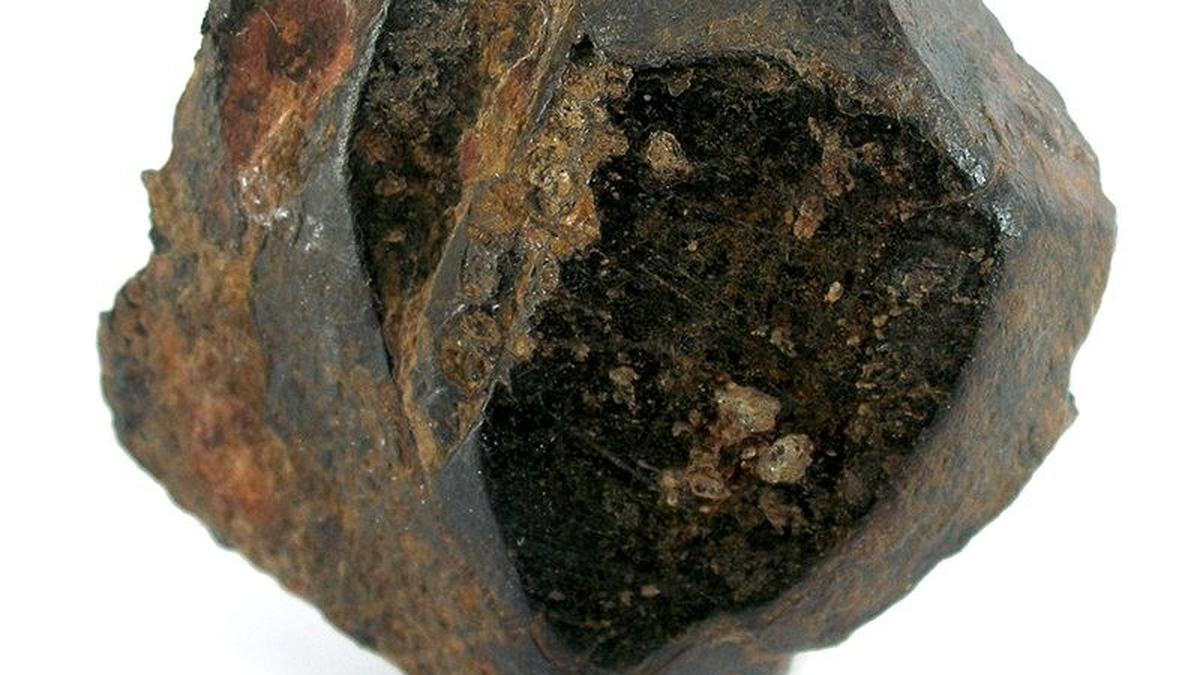
Scientists have used the world’s largest telescope to study the sun to capture the highest-resolution pictures yet of the sun’s surface, revealing small, violent plasma whirlpools moving across it.

The discovery could change how scientists understand the way energy and magnetic fields move through the sun’s atmosphere. These whirlpools seem like an efficient way to move energy and magnetic flux, and could also be responsible for braiding the sun’s magnetic fields at small scales.

Such braided fields are thought to store and release the energy that powers solar flares and other eruptions — and may help explain why the sun’s outer atmosphere is so unexpectedly hot.

The team’s findings were published in Nature on August 5.

Details on the edge

The part of the sun that we see is called the photosphere. This is a chaotic environment filled with a roiling mass of superheated plasma. The light we see on the earth is energy emitted by this plasma.

Astronomers have been taking pictures of the sun’s exterior for a long time, and they have always seen a beehive-like structure there. The cells in this structure are called convection cells. Each cell spans up to around 2,000 km — the distance from Mumbai to Guwahati — and lasts for 5-10 minutes before dissipating. The visible features of a convection cell are called granules. All these granules together form the outer visible layer of the sun.

In all the pictures taken of the sun’s surface in the past century, the edges of these granules were blurred. They looked like frayed cotton.

And for decades, solar physicists have wondered if these edges are really frayed or if they will find more detail if they observe them using a more powerful telescope. The new images have settled the debate.

“The weakness is in the telescope’s aperture,” the researchers — from the U.S. National Science Foundation National Solar Observatory (NSO), Germany’s Max Planck Institute for Solar System Research (MPS), and the High Altitude Observatory (HAO) — wrote in their paper in Nature.

It seems that with telescopes whose primary mirrors are smaller than 2 m wide, it is not possible for physicists to observe the fundamental perturbations on the sun’s surface.

Cleaning up the blur

For their study, the researchers turned to the NSF Daniel K. Inouye Solar Telescope (DKIST) in Hawaii. Perched near the 10,000-foot-high summit of the Haleakalā volcano, the DKIST features a giant 4-m primary mirror. It started scientific operations in late 2019.

The team used it to observe a magnetically active region on the sun called NOAA 14060, capturing light at a wavelength of 416 nanometres (which is visible light of a blue-violet colour). They also paired the telescope with a high-speed FastCam camera developed jointly by NSO and MPS. The camera had a stunning exposure time of 100 microseconds, capturing up to 740 frames per second.

With the help of this camera, the researchers took many pictures of the sun’s turbulent atmosphere. Not all of the pictures were clear.

Then, one member of the research team, Michiel van Noort of MPS, used an advanced image processing technology called multi-frame blind deconvolution to remove the blurring that occurs when the sun is photographed from the earth. Then the team combined multiple cleaned-up images to recover a clear image.

Dr. Noort used this technology to capture images of the sun’s surface of dimension 5,800 km x 4,350 km at a resolution of 19 km. This is like being able to spot a 10-rupee coin in Mumbai from Pune.

Thus, the team found that the edges of the solar granules are not smooth at all. Instead, there are innumerable small coils of plasma, each only 25-170 km long, separated by around 65 km. And they had their own little magnetic fields.

Wind over a river

The researchers also found that these small plasma coils were not stationary. They moved along the boundaries of the granules, twisting and interacting with one another. And as they did, they generated whirlpools in the plasma — vortices that spun rapidly and changed shape within seconds.

When a strong wind blows over a calm river, small whirlpools form on the water. Generally, physicists say, a vortex is formed at the interface where two adjacent fluids move past each other at different speeds. The same thing has been found happening on the sun.

Scientists have previously found such whirlpools in the atmosphere of gaseous planets like Jupiter. This is the first time scientists have seen such a wave moving on the surface of the sun.

These whirlpools in the sun’s plasma also rapidly grow in size. Using high-speed cameras, the scientists found that the fastest-growing vortices became 2.7-times larger than their original size in just 18 seconds. Even those that grew a little slower took only 71 seconds to reach this size. They rotated at about 1.6-2.8 km/s.

The scientists found that, over three minutes, these whirlpools constantly form, merge with each other, and break up again.

A new way

The team confirmed its observations with the DKIST using magneto-hydrodynamics simulations on a computer. In both cases, the vortices’ rotational speed and energy were the same. In other words, these whirlpools are essentially the sun’s engines: they capture the sun’s internal magnetic energy and radiate it out into the universe.

The simulations also suggested the whirlpools lie 100-400 km below the photosphere.

The findings give solar physicists a new way to investigate the boundary between convection and magnetism. The whirlpools generate turbulence and continuously distort the magnetic fields. In doing so, they could provide the small-scale motion needed to braid magnetic field lines and release magnetic energy higher in the atmosphere.

The next step is to determine how much energy these instabilities transport and how the small vortices are connected to the more energetic events of the sun’s atmosphere.

Shamim Haque Mondal is with the Physics Division, State Forensic Science Laboratory, Kolkata.

Published – September 07, 2026 09:00 am IST


Source link

Science

Post navigation

Previous Post: Massive landslide hits Sikkim’s Mangan district
Next Post: Nepal flood survivors join rescue and relief operations as they grieve, search for their loved ones

Related Posts

  • Ahead of Chandrayaan-4, IIT and PRL team decodes moon’s titanium-rich rocks
    Ahead of Chandrayaan-4, IIT and PRL team decodes moon’s titanium-rich rocks Science
  • Printing towards progress: How the printing press changed society
    Printing towards progress: How the printing press changed society Science
  • Models struggled to predict the 2026 monsoon’s rapid changes
    Models struggled to predict the 2026 monsoon’s rapid changes Science
  • Pro, pre, and postbiotics: the changing landscape of skincare
    Pro, pre, and postbiotics: the changing landscape of skincare Science
  • Obesity rare in rural children despite genetic susceptibility: study
    Obesity rare in rural children despite genetic susceptibility: study Science
  • What triggers the flowering of durians?
    What triggers the flowering of durians? Science

More Related Articles

Do animals understand death? Scientists are asking cockatoos for answers Do animals understand death? Scientists are asking cockatoos for answers Science
Black hole is observed snacking on sun-like star, bite by bite Black hole is observed snacking on sun-like star, bite by bite Science
How do noise-cancelling headphones work? How do noise-cancelling headphones work? Science
NASA astronauts won’t say which one of them got sick after almost eight months in space NASA astronauts won’t say which one of them got sick after almost eight months in space Science
Japan retrieves rare earth mud from deep seabed in test mission Japan retrieves rare earth mud from deep seabed in test mission Science
Update textbooks? Altermagnetism emerges as a new class of magnetic order Update textbooks? Altermagnetism emerges as a new class of magnetic order Science
SiteLock

Archives

  • September 2026
  • August 2026
  • July 2026
  • June 2026
  • May 2026
  • April 2026
  • March 2026
  • February 2026
  • January 2026
  • December 2025
  • November 2025
  • October 2025
  • September 2025
  • August 2025
  • July 2025
  • June 2025
  • May 2025
  • April 2025
  • March 2025
  • February 2025
  • January 2025
  • December 2024
  • November 2024
  • October 2024
  • September 2024
  • August 2024
  • July 2024
  • June 2024
  • May 2024
  • April 2024
  • March 2024
  • February 2024
  • January 2024
  • December 2023
  • November 2023
  • October 2023
  • September 2023
  • August 2023
  • July 2023
  • June 2023
  • May 2023
  • April 2023
  • March 2023
  • February 2023
  • January 2023
  • December 2022
  • November 2022
  • October 2022
  • September 2022
  • August 2022
  • July 2022
  • June 2022
  • May 2022

Categories

  • Business
  • Nation
  • Science
  • Sports
  • World

Recent Posts

  • Wayanad township houses on schedule, to be completed by Oct 31: Keralam Minister Siddique
  • Xi’s India visit to help diplomatic thaw, but business ties bound by suspicion | Analysis
  • Telangana Govt to construct new Haj House near Shamshabad international airport
  • Bamboo mass flowering and die-off can trigger ecological crisis and wildlife conflict, study warns
  • England vs Pakistan 3rd Test: Host bowls out new-look Pakistan for 133 on Day 1

Recent Comments

  1. Davidorend on UP Teacher Who Asked Students To Slap Muslim Classmate
  2. MichaelThamb on UP Teacher Who Asked Students To Slap Muslim Classmate
  3. Kennethaidek on UP Teacher Who Asked Students To Slap Muslim Classmate
  4. Richardlek on UP Teacher Who Asked Students To Slap Muslim Classmate
  5. Richardlek on UP Teacher Who Asked Students To Slap Muslim Classmate
  • Access Denied
    Access Denied Nation
  • Delhi Judge Pulls Up Lawyer Appearing From Park
    Delhi Judge Pulls Up Lawyer Appearing From Park Nation
  • Access Denied
    Access Denied Nation
  • TikTok Takes Down Over 20 Million Pakistani Videos For Violating Guidelines
    TikTok Takes Down Over 20 Million Pakistani Videos For Violating Guidelines World
  • Access Denied
    Access Denied Nation
  • Access Denied
    Access Denied Nation
  • No Binding Agreement For Any Airport Project In Kenya, Says Adani Group
    No Binding Agreement For Any Airport Project In Kenya, Says Adani Group Nation
  • Concerned over civilian deaths, Mirwaiz urges Pakistan to prioritise dialogue, restraint in PoK
    Concerned over civilian deaths, Mirwaiz urges Pakistan to prioritise dialogue, restraint in PoK World

Editor-in-Chief:
Mohammad Ariff,
MSW, MAJMC, BSW, DTL, CTS, CNM, CCR, CAL, RSL, ASOC.
editor@artifex.news

Associate Editors:
1. Zenellis R. Tuba,
zenelis@artifex.news
2. Haris Daniyel
daniyel@artifex.news

Photograher:
Rohan Das
rohan@artifex.news

Artifex.News offers Online Paid Internships to college students from India and Abroad. Interns will get a PRESS CARD and other online offers.
Send your CV (Subjectline: Paid Internship) to internship@artifex.news

Links:
Associate Journalism
About Us
Privacy Policy

News Links:
Breaking News
World
Nation
Sports
Business
Entertainment
Lifestyle

Registered Office:
72/A, Elliot Road, Kolkata - 700016
Tel: 033-22277777, 033-22172217
Email: office@artifex.news

Editorial Office / News Desk:
No. 13, Mezzanine Floor, Esplanade Metro Rail Station,
12 J. L. Nehru Road, Kolkata - 700069.
(Entry from Gate No. 5)
Tel: 033-46011099, 033-46046046
Email: editor@artifex.news

Copyright © 2023 Artifex.News Newsportal designed by Artifex Infotech.