


Even before November 1999, a host of exceptional wicketkeeper-batters had graced the international scene, not least India’s own Farokh Engineer and the wonderful Andy Flower from Zimbabwe. But from the time a left-hander from Western Australia stormed the Test firmament at the Gabba in Brisbane nearly 27 years back with a bruising 81 on debut, against a shell-shocked Pakistani outfit, wicketkeeper-batters have been looked at in an entirely different vein.
Adam Gilchrist rewrote the dynamics of Test batsmanship. He was a destructive opener in limited-overs cricket long before he played his first Test, and reeled off numerous wondrous knocks, including in the final of the 50-over 2007 World Cup when, with a squash ball for company, he bludgeoned his way to 149 against Mahela Jaywardene’s Sri Lanka in a decisive effort that took Australia to a hat-trick of titles. But it was in the red-ball game that Gilchrist set stall as a pioneer, providing not just meaningful heft to the Australian batting but scoring runs at such a furious clip that opponents were often ducking, unsuccessfully, for cover.
For the most part of his glittering career that encompassed 96 Tests, the left-hander had the luxury of batting behind a grand top six that used different methodologies to subjugate bowling attacks in all parts of the world. The sight of Gilchrist, the destroyer supreme, striding in purposefully at No. 7, was dispiriting or exhilarating, depending on which side of the fence one was. Gilchrist seldom disappointed; when he scored his runs, he did so with not just panache and chutzpah but also with a violent streak that damaged bowling figures as well as egos. How could anyone bat with such unchecked aggression at No. 7? How could someone fuse a no-holds-barred approach with such consistency (as an average of 47.60 at a strike-rate of 81.95 will unequivocally testify to)?
Gold standard
Gilchrist will remain the gold standard among wicketkeeper-batters, the platform from which the likes of Mahendra Singh Dhoni, more than anyone else, launched himself into the stratosphere. Gilchrist’s towering presence kept an entire generation – or more – of Aussie stumper-batters out of international reckoning. India, however, found a judicious balance; while Dhoni’s aggression in front of the stumps and his brilliance behind it precluded a dynamic new force breaking through, India were compelled to find a place, if only as a specialist batter, for Dinesh Karthik, the ebullient little right-hander from Chennai who was more than good enough to hold his own as a batter.
Karthik wasn’t the first Indian gloveman to play as a specialist batter. Nearly four decades before him, Budhi Kunderan donned that role, even opening the batting in England in 1967 alongside designated wicketkeeper Engineer. A couple of decades on, Chandrakant Pandit played as a middle-order bat with Kiran More slotting in as the wicketkeeper. Such was Karthik’s great natural ability – which he didn’t maximise, he will acknowledge – that in the Dhoni era, India fielded him as a full-fledged opener overseas, and with no little success. Alongside Wasim Jaffer, Karthik formed an excellent opening combine in Bangladesh and England in 2007, bringing up his only Test ton across the border and bettering that effort by emerging as India’s highest scorer in England, when they last won a Test series there by a slender 1-0 margin.

Karthik played his last eight Tests down the order, sometimes when Dhoni wasn’t available (including through retirement) and he donned the big gloves, and at others when he played alongside the Jharkhandi as a pure batter. Just one half-century in his last 14 Test innings meant he played the last of his 26 Tests in August 2018; his Test average of 25 was decidedly underwhelming, given his supreme gift as a batter, but that can happen when one is overeager and anxious to not just justify their selection but also state their case for a longer rope.
India now have a profusion of excellent wicketkeeper-batters across formats – Rishabh Pant, of course, tops that chart, especially when it comes to the red-ball variant, but there are a host of others that can’t be ignored. Among them are Sanju Samson and Ishan Kishan, exclusive when it comes to the white-ball version. And Dhruv Jurel, the 25-year-old from Agra whose first Test cap came as a wicketkeeper against England in Rajkot in February 2024 when Pant was out after his horrific road accident of 14 months previously and KS Bharat had played himself out of the XI with poor efforts in the first two Tests in Hyderabad and Visakhapatnam respectively.
The generational talent that Pant is, he kept almost exclusively from the time he made his Test debut in Nottingham in August 2018 and made a stunning 114 in his third appearance at the Oval till his single-car accident in December 2022 when India were suddenly forced to scramble for a replacement. Bharat, from Andhra, won the early nod for the home Tests against Australia in February 2023 and donned the big gloves in the final of the World Test Championship against the same opponents that June. KL Rahul was nominated the first-choice stumper for the two Tests in South Africa towards the end of the year, more to provide stability and class to the lower order in a line-up from which very few had played in South Africa previously. Bharat reclaimed his spot behind the sticks against England at home and played himself out of the XI following scores of 41, 28, 17 and 6 which meant that in seven Tests and 12 innings, he only averaged 20.09, a definite no-no given that the wicketkeeper’s was no longer a single-discipline specialised slot.

Out went the call to Jurel for the third Test in Rajkot with the series finely poised at 1-1, and it was immediately apparent that India had hit upon a gold mine. The right-hander made a poised 46 on debut, and upped the ante in the next match with scores of 90 and 39 not out, the first ensuring that India didn’t end up conceding a massive lead and the second taking them home in a tense run-chase when he and Shubman Gill put on 72 for the unfinished sixth-wicket stand.
This was in February 2024, when one wasn’t sure when Pant would be available for selection though in a characteristic show of gumption and guts, the stocky left-hander was far ahead of the timelines the doctors had tentatively outlined for a possible comeback to competitive cricket. Pant was ready for international cricket in September that year, making a remarkable recovery from a series of potentially life-threatening injuries to smash 109 on his comeback Test in Chennai against Bangladesh. Suddenly, Jurel faced an uncertain future. Despite an impressive start to his Test career, he had to bow before the irrepressible force that Pant was, though it was always on the cards that he could slot in alongside Pant, if not necessarily ahead of him.
In six of his last nine Tests, Jurel has occupied a specialist batter’s position between No. 4 and No. 8 (and that only because Akash Deep was employed as a nightwatchman at the Oval last August). On the three occasions when was the designated wicketkeeper, Pant was unavailable through injury after breaking his right foot in the Manchester Test against England in July last year. Despite the vast array of batting riches at India’s disposal, head coach Gautam Gambhir has identified in Jurel a dependable batting option, and the man from Uttar Pradesh has comprehensively justified that faith with two hundreds and a fifty in those nine Tests and 15 innings.

Jurel’s coming-of-age moment, if it can be called that, transpired in Ahmedabad last October with Pant still to recover from the broken foot. In India’s only innings against West Indies, he uncorked an excellent 125, then followed it up with 44 in the next Test in Delhi. With Pant returning to action against South Africa in November, Jurel continued on as a batter alone though like the rest of his colleagues, he had a series to forget with outings of 14, 13, 0 and 2 in a disastrous 0-2 result that has comprehensively dented India’s hopes of making a third WTC final in four cycles.
But instead of pressing the panic button and looking elsewhere, the decision-makers continued to invest their belief in him and Jurel has responded in style. Towards the end of June, he was a part of the India ‘A’ squad that travelled on the ‘shadow’ tour of Sri Lanka for two unofficial ‘Tests’, ostensibly at the insistence of Gambhir because of his felicity against the turning ball. Jurel warmed up nicely for the Test series to follow with scores of 141 not out, 14 and 53, and it was no surprise that he was picked for the first Test in Galle, when he weighed in with 51 and 7 in a winning cause.
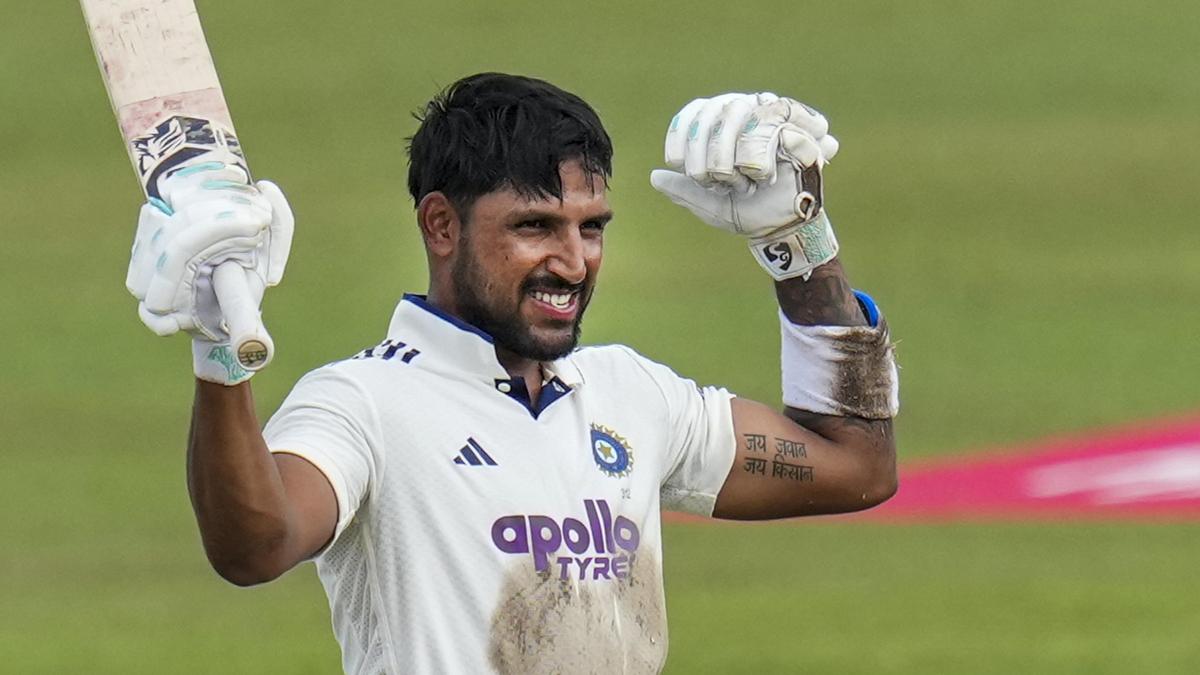
In Colombo last week, Jurel went one better with an unbeaten 115 during which he brought his technical expertise and his mental fortitude into play. He also kept wickets for a while when Pant was recovering from a blow to his right shoulder sustained while batting, and when he went back to the outfield, took a terrific running catch from point to get rid of Lahiru Kumara in Sri Lanka’s first innings. At every stage in every role, he has looked the part, making his presence felt with total commitment and a never-say-die spirit without seeking recourse to the flashy and the flamboyant.
Jurel was chosen for Sri Lanka for his ability to play spin with finesse, and it is hard now to see him being overlooked during the November Test tour of New Zealand where the challenges for batters will be vastly different. At No. 6, behind Pant, he has the technique to tackle the second new ball if that is what he is confronted with. Ravindra Jadeja behind him in the batting order and the possible return of Washington Sundar from injury mean he is a right-handed option around a plethora of left-handers, and while that alone can’t be a qualification, he has shown that he can hold his own against bowling of any kind in any conditions.
India are fortunate that in Jurel, they have a three-in-one cricketer with his entire future ahead of him. As a batting average of 40.68 from 12 Tests proves, he is every bit deserving of the show of confidence. A place in the starting XI in Wellington in November is no more than he deserves; one can rest assured that Jurel will be short on neither preparation nor fire when ‘Play’ is called at the Basin Reserve.