



“Nani, aaj kya banaya?” (”Grandma, what did you cook today?”)
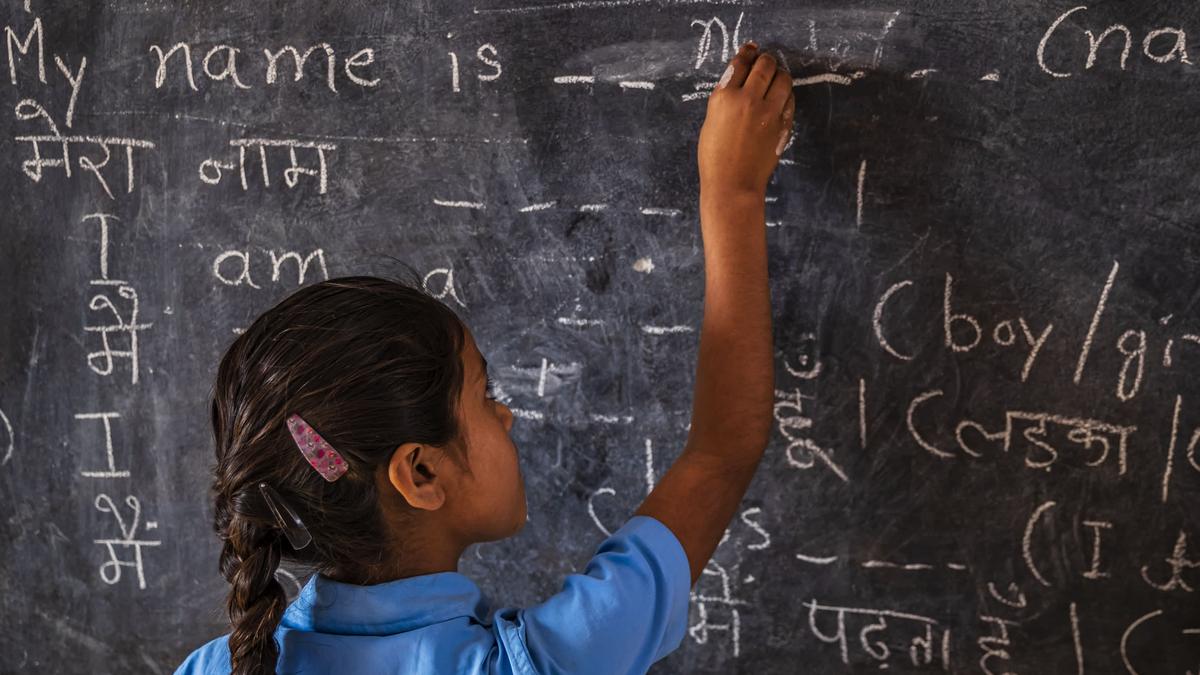
It’s a simple question that millions of Indians ask every day. But what if you asked it to an AI assistant? Would it understand the language? The accent? The mix of Hindi and English? What if the question was asked in Tulu, Bundeli, Kodava or Santali instead?
Artificial intelligence has become more advanced at answering questions, translating languages and even writing stories. But there’s a catch. Most AI systems learnt these skills from enormous amounts of digital data — books, websites, videos and conversations, much of it in English. For many Indian languages and dialects, especially those spoken by smaller communities, that kind of digital treasure trove simply doesn’t exist.
So how do you teach a machine to understand a country where languages change every few hundred kilometres, accents shift from district to district, and some words are spoken every day but have never been written down?
That’s the challenge researchers at AI4Bharat, a research lab at IIT Madras, have taken on. Their mission is ambitious: to build AI that can understand, speak and translate India’s many languages, making technology more accessible to millions. We spoke to Kaushal Bhogale, a PhD researcher at AI4Bharat, to find out how his team is teaching AI to speak India, one voice, one conversation and one language at a time.
Why are Indian languages harder for AI?
When people think of artificial intelligence, they often assume it can understand every language equally well. In reality, AI is only as good as the information it learns from.
Languages like English have a huge advantage. The internet is filled with English books, websites, subtitles, podcasts, news articles and videos. This gives AI billions of examples to learn from.
Many Indian languages, however, don’t have the same amount of digital content. Researchers call them “low-resource languages” because there simply isn’t enough data available for AI to learn from. As Kaushal explains, “Many Indian languages are considered low-resource languages.”
The challenge doesn’t end there. India is one of the most linguistically diverse countries in the world. The way people speak can change from one district to the next. The same language may have different accents, dialects or local words. In some communities, certain words and expressions are spoken every day but have no standard written form.
Photo: Special Arrangement
For an AI model, this is like trying to learn cricket without ever watching a match. It needs thousands, often millions, of real examples before it can recognise patterns, understand meaning and respond accurately. That’s why collecting language data from across India is such an important part of AI4Bharat’s work. It isn’t just teaching AI new words; it’s helping machines understand the richness and diversity of how India speaks.
The great voice hunt
How do you teach an AI to understand the way people across India speak? You start by listening.
For AI4Bharat, that has meant travelling to more than 500 districts across the country to collect speech data from people of different ages, regions and language backgrounds. But this isn’t as simple as carrying a microphone and pressing record.

Photo: Special Arrangement
The team first connects with local colleges and community organisations before setting up recording booths where volunteers can participate. Instead of asking them to read random sentences, researchers encourage them to talk about their lives. Participants might describe how their family celebrates Diwali, explain the dishes prepared during festivals, talk about wedding traditions, or share stories about their village and community.
These conversations do much more than teach AI new words. They capture accents, dialects, expressions and cultural traditions that make every language unique. “People are happy to share their life experiences,” says Kaushal. What the team expected to be one of the biggest challenges, getting people to speak freely, turned out to be one of the most rewarding parts of the project.
Behind the scenes, every recording goes through another important step. Human transcribers carefully listen to the audio and write down exactly what was said. These speech-and-text pairs become the training material for AI models, helping them learn how spoken words match written language.
In many ways, AI4Bharat isn’t just collecting voices. It is creating a living archive of how India speaks—one conversation at a time.
So…how does AI actually learn?
At first glance, it might seem almost magical that an AI can recognise speech or translate between languages. But the way it learns isn’t all that different from how humans do.
Think about a young child learning what a cat is. No one explains that a cat has whiskers, pointed ears or a long tail. Instead, the child sees hundreds of examples. Over time, their brain begins to notice patterns and can recognise a cat almost instantly.
AI learns in a similar way. Instead of looking at hundreds of examples, however, it studies thousands—or even millions. Researchers feed the system huge amounts of data, allowing it to discover patterns on its own.
For language AI, those examples come in the form of speech recordings paired with written transcripts. As the AI processes more and more of these speech-and-text pairs, it begins to connect sounds with words, words with meanings, and sentences with ideas. Eventually, it becomes good enough to transcribe spoken conversations, translate between languages or even respond to questions.
“Researchers found that as we keep showing the AI more examples, its ability to recognise patterns becomes better,” says Kaushal. “That’s why collecting data is so important.”
In other words, every conversation recorded by AI4Bharat becomes another lesson for the AI, helping it understand the many ways India speaks.
When AI discovered words that couldn’t be written
Collecting voices from across India revealed an unexpected challenge, not every spoken word has a standard written form.
After each recording, human transcribers write down exactly what they hear so the AI can learn to match speech with text. But many Indian communities use words and expressions that are spoken every day yet rarely written. Some dialects have no standard spelling, while others differ greatly from formal written language.

Photo: Special Arrangement
Instead of forcing these words into existing rules, the team developed new transcription guidelines to record them accurately. “The spoken language is very different from the written language,” explains Kaushal. “This is especially true for Indian languages because of their many accents and dialects.”

Photo: Special Arrangement
In the process, AI4Bharat isn’t just training AI, it is also helping document India’s rich linguistic heritage.
More than just translation
The work at AI4Bharat goes far beyond translating languages. Its tools can convert speech into text, read text aloud in natural-sounding voices, transliterate words between scripts, and power chatbots, educational apps and government services. The team is also developing technology that can read printed documents in different Indian scripts.
What makes this work especially valuable is that it is open source. AI4Bharat makes its models freely available for researchers and developers to build upon. Many of these tools are also available through Bhashini, the Government of India’s language technology platform, helping create digital services that work across India’s many languages.
Every voice matters
India is home to hundreds of languages and thousands of dialects, but much of the digital world still works best in English. If AI learns only from a few languages, millions of people risk being left behind.
AI4Bharat’s goal is to change that by making technology accessible in the languages people use every day. As Kaushal explains, the aim is to bring language technology for Indian languages closer to what already exists for English.
Every voice recorded today could help tomorrow’s AI understand another corner of India.
Did you know?
India was preparing for the AI wave a decade ago
Since we’re talking about AI, here’s something you might not expect: IIIT Hyderabad started preparing researchers for the AI revolution back in 2016, long before ChatGPT and AI tools became part of everyday conversations.
That year, the institute launched its Summer School on AI to help researchers understand a rapidly changing field. At the time, AI looked very different. Deep learning was still emerging, GPUs were unfamiliar to many researchers, and there were no ready-made tools like the ones we have today. One of the earliest sessions even taught participants how to assemble a GPU computer.
Over the years, the programme has evolved along with AI. What began with deep learning, machine learning and computer vision now covers large language models, vision-language models, multimodal AI and foundation models.
The audience has changed too. From just 33 external participants in its first edition, the school now brings together around 200 external participants, including students, researchers, professors and industry professionals. Even with countless AI courses available online, the programme continues to attract participants who want to understand the research behind the technology.
In fact, today’s students arrive with a much stronger understanding of AI than students did a decade ago, thanks to online courses and freely available tools.
So while AI may feel like a brand-new phenomenon, India’s AI community has been learning, experimenting and preparing for it for years.