



Skip to content
  • Facebook
  • X
  • Linkedin
  • WhatsApp
  • YouTube
  • Associate Journalism
  • About Us
  • Privacy Policy
  • 033-46046046
  • editor@artifex.news
Artifex.News

Artifex.News

Stay Connected. Stay Informed.

  • Breaking News
  • World
  • Nation
  • Sports
  • Business
  • Science
  • Entertainment
  • Lifestyle
  • Toggle search form
  • Access Denied World
  • Why did metal-organic frameworks win the 2025 chemistry Nobel?
    Why did metal-organic frameworks win the 2025 chemistry Nobel? Science
  • India A vs Pakistan A LIVE Score, Emerging Teams Asia Cup: Ramandeep Singh Takes Blinder, Pakistan 3 Down
    India A vs Pakistan A LIVE Score, Emerging Teams Asia Cup: Ramandeep Singh Takes Blinder, Pakistan 3 Down Sports
  • Access Denied
    Access Denied Nation
  • Tinkering towards a brighter future
    Tinkering towards a brighter future Science
  • Record 1.3 lakh pilgrims visit Amarnath shrine in 5 days in Kashmir
    Record 1.3 lakh pilgrims visit Amarnath shrine in 5 days in Kashmir Nation
  • Access Denied Sports
  • Access Denied World
India’s newest private physics institute hinges success on ‘less is more’

India’s newest private physics institute hinges success on ‘less is more’

Posted on July 27, 2026 By admin


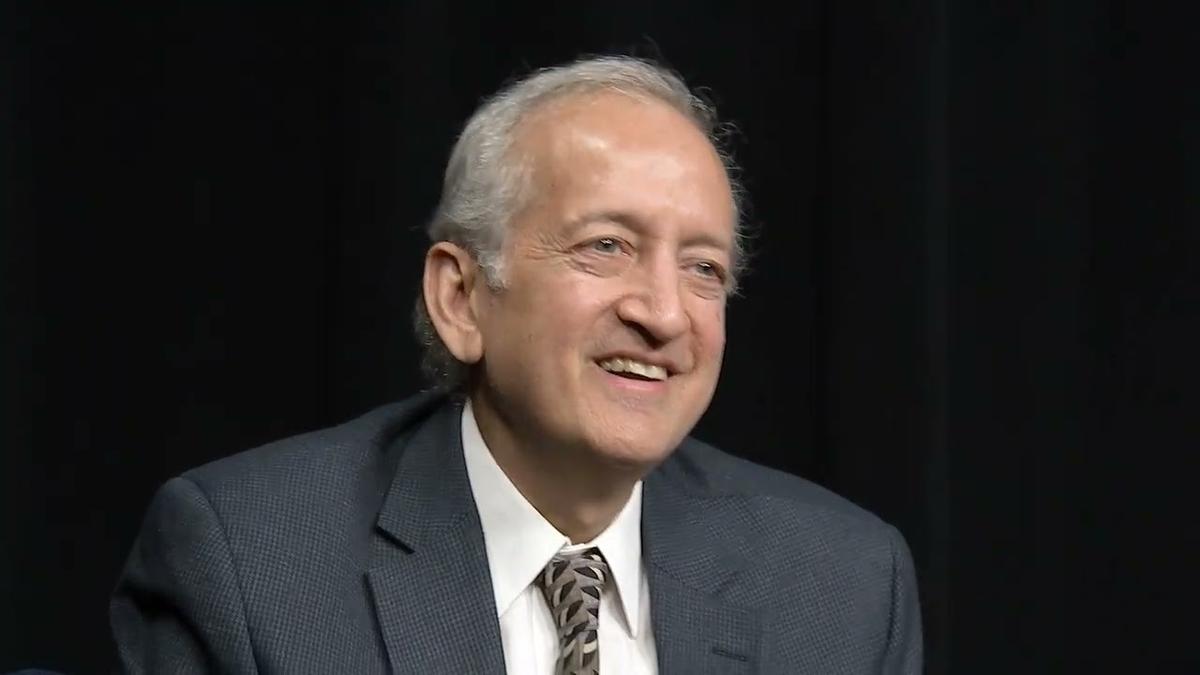
India does not lack respected homes for theoretical physics research. Asked why it needs another, Jainendra K. Jain — founding director of the Lodha Theoretical Physics Institute (LTPI) — answers by describing what the place will not do. It will be “smaller” than the Tata Institute of Fundamental Research (TIFR) , narrower in scope than IISc (Indian Institute of Science)  or ICTS (International Centre for Theoretical Sciences)  and, funded entirely by private money, spared much of the bureaucracy that comes with the state.

“These other institutes are fantastic,” Jain says of TIFR, ICTS, IISc and Allahabad’s HRI (Harish Chandra Research Institute). “We can all be very proud of them.” What will set LTPI apart, he argues, is focus and freedom. Where TIFR spreads across biology, chemistry, even climate science, LTPI will do one thing — theoretical physics — and stay small: a steady state of about 10 to 12 full-time faculty, some 40 postdoctoral researchers and a rotating cast of visitors.

‘Paradise for theoretical physicists’

The larger difference, he said in an interview, is that private capital lets the institute sidestep the approvals that decelerate public science in India. Making a faculty offer at a government-funded institute can take a year of clearances; at LTPI, he says, a couple of colleagues who agree on a candidate can simply extend one. “There will be no caps on travel or group size, no teaching load, no committee paperwork” — frictions that, he says, can leave a professor barely “five minutes a day” for research.

He anticipates this to be a “paradise for theoretical physicists,” modelled on Princeton’s Institute for Advanced Study (IAS) and Canada’s Perimeter Institute, where people “come, they think about physics, they talk to each other, and push each other to make discoveries.”

One casualty of that design, however, is the doctoral programme. LTPI will not award PhDs, at least initially. “In an institute which has only 10 or 12 faculty members, giving a PhD cannot really be done at this stage, because all the faculty members would just be teaching all the time,” said Prof. Jain. Doctoral students may still pass through as visitors through collaborations, he adds, but the institute will be built around faculty, postdocs and guests.

Jain states

Prof. Jain brings impeccable credentials to the experiment. In June 2025 he became the first scientist of Indian origin to win the Wolf Prize in Physics, shared with James Eisenstein and Mordehai Heiblum, for explaining how electrons behave in two dimensions under strong magnetic fields. His contribution, conceived over a Christmas break in 1988, was the “composite fermion” — an electron bound to quantum vortices — which accounted for the so-called fractional quantum Hall effect and gave rise to what are now called Jain states. The link to computing is real but indirect.

Certain composite-fermion states are predicted to harbour exotic ‘Majorana modes’ — particles that keep a record of how they’ve been moved around one another —, that could in principle store information non-locally and so form unusually robust “topological” qubits. Prof. Jain is quick to clarify he “does not build” quantum computers, and that no such qubit has yet been demonstrated. Microsoft’s much-publicised Majorana work, he notes, draws on the same ideas but uses a different, nanowire-based system.

Philanthropic universities

The financial muscle behind the institute is Abhishek Lodha, chief executive of the listed developer Lodha, whose family pledged close to a fifth of the company — roughly ₹20,000 crore — to the Lodha Foundation in 2024. The foundation, which describes its giving as a “philanthropy of excellence,” runs the Lodha Genius Programme for gifted students and has now seeded two research institutes: the Lodha Mathematical Sciences Institute, launched in 2025, and LTPI. Each is to receive about $100 million over eight to ten years. 

Private money seeding Indian science is not new. Jamsetji Tata pledged half his personal wealth to found IISc, which opened in 1909; the Tatas went on to establish TIFR and TISS (Tata Institute of Social Sciences), and the Birlas built BITS Pilani. More recent philanthropic universities — Ashoka, Azim Premji, Krea — continue that line. The perennial question, put to Jain during the interview, is endurance: C.V. Raman built the Raman Research Institute with his own funds partly to keep the government at arm’s length, yet such ventures often come to lean on the state over time. Jain’s answer is an endowment large enough to sustain the institute from its returns in perpetuity, and he says he intends to study the charters of the IAS and Perimeter — the latter founded by BlackBerry’s Mike Lazaridis and still running after 25 years — to see how they endured.

Measure of success

He resists the idea that publicly funded science is fading. Even nominally, private US universities such as Harvard, and public ones such as his own Penn State, run on substantial government funding and have world-class facilities, he points out. A private institute is meant to “complement” the public system and offer a proof of concept, not replace it. The gap is stark at home: India spends about 0.64% of GDP on research, against the 2% to 5% of the United States, China, Israel and South Korea, with private industry contributing a far smaller share.

The measure of success, Jain suggests, will not be citation counts — metrics he considers increasingly hollow in an age when AI can draft a passable paper — but discoveries. “We want people from abroad to come to India and provide a proof of principle, which shows that great, stimulating research and discoveries can be made in India,” said Prof. Jain.

jacob.koshy@thehindu.co.in

Published – July 30, 2026 09:15 am IST



Source link

Science

Post navigation

Previous Post: Indian-origin woman shot dead in Canada; suspect arrested
Next Post: Kerala govt. launches Digital Square programme to boost digital learning in primary schools

Related Posts

  • Scientists urged to rethink ‘smoking gun’ signals in topological physics
    Scientists urged to rethink ‘smoking gun’ signals in topological physics Science
  • Conservation in the Global South erases human rights, researchers say
    Conservation in the Global South erases human rights, researchers say Science
  • Sci-Five | The Hindu Science Quiz: On Autism
    Sci-Five | The Hindu Science Quiz: On Autism Science
  • Toothbrush, showerhead are breeding places for viruses
    Toothbrush, showerhead are breeding places for viruses Science
  • Mouse embryos grown in space for first time: Japan researchers
    Mouse embryos grown in space for first time: Japan researchers Science
  • Huge energetic flare from magnetic neutron star detected
    Huge energetic flare from magnetic neutron star detected Science

More Related Articles

‘Samudrayaan set to explore ocean bed by 2025 end’ ‘Samudrayaan set to explore ocean bed by 2025 end’ Science
What makes the brain the most complicated object in the universe What makes the brain the most complicated object in the universe Science
Previously unknown alloy found in Hiroshima blast debris Previously unknown alloy found in Hiroshima blast debris Science
Scientists brace for a ’flood of junk’ papers written with AI help Scientists brace for a ’flood of junk’ papers written with AI help Science
Nobel Prize 2023 for Medicine awarded to Katalin Karikó and Drew Weissman for their work in mRNA vaccines Nobel Prize 2023 for Medicine awarded to Katalin Karikó and Drew Weissman for their work in mRNA vaccines Science
Research rewrites where, when humans first domesticated horses Research rewrites where, when humans first domesticated horses Science
SiteLock

Archives

  • August 2026
  • July 2026
  • June 2026
  • May 2026
  • April 2026
  • March 2026
  • February 2026
  • January 2026
  • December 2025
  • November 2025
  • October 2025
  • September 2025
  • August 2025
  • July 2025
  • June 2025
  • May 2025
  • April 2025
  • March 2025
  • February 2025
  • January 2025
  • December 2024
  • November 2024
  • October 2024
  • September 2024
  • August 2024
  • July 2024
  • June 2024
  • May 2024
  • April 2024
  • March 2024
  • February 2024
  • January 2024
  • December 2023
  • November 2023
  • October 2023
  • September 2023
  • August 2023
  • July 2023
  • June 2023
  • May 2023
  • April 2023
  • March 2023
  • February 2023
  • January 2023
  • December 2022
  • November 2022
  • October 2022
  • September 2022
  • August 2022
  • July 2022
  • June 2022
  • May 2022

Categories

  • Business
  • Nation
  • Science
  • Sports
  • World

Recent Posts

  • Tamil Nadu Budget 2026: TVK government merely changed names of DMK’s schemes, criticises Udhayanidhi Stalin
  • Come 15th, we’ll be ready with all the answers: Gambhir
  • Bihar model schools makeover: Principals vow to follow renaming, repainting directives
  • Vijay government’s debut Budget strikes a balance between welfare and fiscal prudence
  • Yakshagana entering formal academic sphere a welcome move: Patla Satish Shetty

Recent Comments

  1. Arturocew on UP Teacher Who Asked Students To Slap Muslim Classmate
  2. RobertMix on UP Teacher Who Asked Students To Slap Muslim Classmate
  3. JamesSmalo on UP Teacher Who Asked Students To Slap Muslim Classmate
  4. JamesSmalo on UP Teacher Who Asked Students To Slap Muslim Classmate
  5. LouieExtip on UP Teacher Who Asked Students To Slap Muslim Classmate
  • How will Australia’s social media ban work? | Explained
    How will Australia’s social media ban work? | Explained World
  • Sensex Rises 1,300 Points, Adani Stocks Rally As Flagship Firm Jumps 4%
    Sensex Rises 1,300 Points, Adani Stocks Rally As Flagship Firm Jumps 4% Nation
  • Access Denied
    Access Denied Nation
  • Voices Of 80 Crore Stifled To Save Chair Of A Few During Emergency: Jyotiraditya Scindia
    Voices Of 80 Crore Stifled To Save Chair Of A Few During Emergency: Jyotiraditya Scindia Nation
  • “One Of Our Greatest Ever”: Mitchell Marsh Praises Adam Zampa Ahead Of His 100th ODI
    “One Of Our Greatest Ever”: Mitchell Marsh Praises Adam Zampa Ahead Of His 100th ODI Sports
  • Asia Cup 2023: Reserve day only for India-Pakistan Super 4s game causes an uproar
    Asia Cup 2023: Reserve day only for India-Pakistan Super 4s game causes an uproar Sports
  • Access Denied
    Access Denied Nation
  • Israel says attacks against Iran will ‘increase significantly’ next week; Britain condemns Tehran targeting Diego Garcia air base
    Israel says attacks against Iran will ‘increase significantly’ next week; Britain condemns Tehran targeting Diego Garcia air base World

Editor-in-Chief:
Mohammad Ariff,
MSW, MAJMC, BSW, DTL, CTS, CNM, CCR, CAL, RSL, ASOC.
editor@artifex.news

Associate Editors:
1. Zenellis R. Tuba,
zenelis@artifex.news
2. Haris Daniyel
daniyel@artifex.news

Photograher:
Rohan Das
rohan@artifex.news

Artifex.News offers Online Paid Internships to college students from India and Abroad. Interns will get a PRESS CARD and other online offers.
Send your CV (Subjectline: Paid Internship) to internship@artifex.news

Links:
Associate Journalism
About Us
Privacy Policy

News Links:
Breaking News
World
Nation
Sports
Business
Entertainment
Lifestyle

Registered Office:
72/A, Elliot Road, Kolkata - 700016
Tel: 033-22277777, 033-22172217
Email: office@artifex.news

Editorial Office / News Desk:
No. 13, Mezzanine Floor, Esplanade Metro Rail Station,
12 J. L. Nehru Road, Kolkata - 700069.
(Entry from Gate No. 5)
Tel: 033-46011099, 033-46046046
Email: editor@artifex.news

Copyright © 2023 Artifex.News Newsportal designed by Artifex Infotech.