





For six weeks, the country that had spent decades calling football soccer could talk about little else.
The game poured into the United States through its airports and railway stations, occupied its downtowns and suburbs, and turned stadium parking lots into temporary republics of colour, song and shared obsession. Argentinians carried their mate through hotel lobbies. Mexicans arrived with sombreros and booming brass bands. Brazilians brought drums, Colombians danced, the English colonised pubs and supporters from countries separated by oceans discovered one another on trains, concourses and pavements.
In New York, Philadelphia, Boston, Atlanta, Miami, Dallas, Los Angeles and the other host cities, football was no longer an immigrant game.
For one extraordinary summer, it had taken over the American psyche.
The US has always possessed the infrastructure for sporting excess: enormous arenas, endless commercial possibilities, a culture fluent in spectacle and a population drawn from nearly every footballing nation on earth. The World Cup brought all those elements together on a scale the tournament had never previously attempted.
Forty-eight nations, 1,039 players and 104 matches featured in the tournament co-hosted by the USA, Mexico and Canada. A record 6,810,966 spectators attended, more than the combined totals of the previous two World Cups in Russia and Qatar. The 16 venues operated at 99.7% capacity, with an average attendance of 65,490.
The figures described the tournament’s size. They could not fully capture its presence.
There were supporters who crossed continents and families who crossed generations. Fathers who had discovered Argentina through Diego Maradona returned with sons who had fallen in love with Lionel Messi. Children wore the shirts of countries they had never visited. Diaspora communities that usually experienced international football through television suddenly found their teams appearing a short drive away.
A Brazilian home match could emerge in New Jersey. Argentina could turn Atlanta or Dallas into Buenos Aires for an evening. The Haitians could revel in defeat, while the African diaspora celebrated the march of nine of the continent’s nations into the knockout rounds.
America did not simply host the world. Much of the world was already living within it.
That was why the atmosphere felt different from the carefully imported FIFA spectacle. The passion did not have to be manufactured. It existed in Queens and New Jersey, in South Florida’s Latin American communities, among West Africans in the Washington corridor and South Asians who followed Argentina from one end of the country to the other.
They filled the spaces between the matches. They turned hotel breakfasts into fan gatherings, railway platforms into debates and city streets into improvised parades. The World Cup became visible even to Americans who had no ticket and little previous relationship with the sport.
And the football rewarded them.
Success stories
The expanded tournament offered concerns about excess, but it also allowed unfamiliar stories to develop alongside the established powers. Cape Verde supplied one of its most romantic journeys. Norway and Erling Haaland eliminated Brazil. Egypt reached the pre-quarterfinals and pushed Argentina to the edge. By the semifinals, the old hierarchy had returned through Spain, Argentina, France and England, but the road towards it had been crowded with resistance.
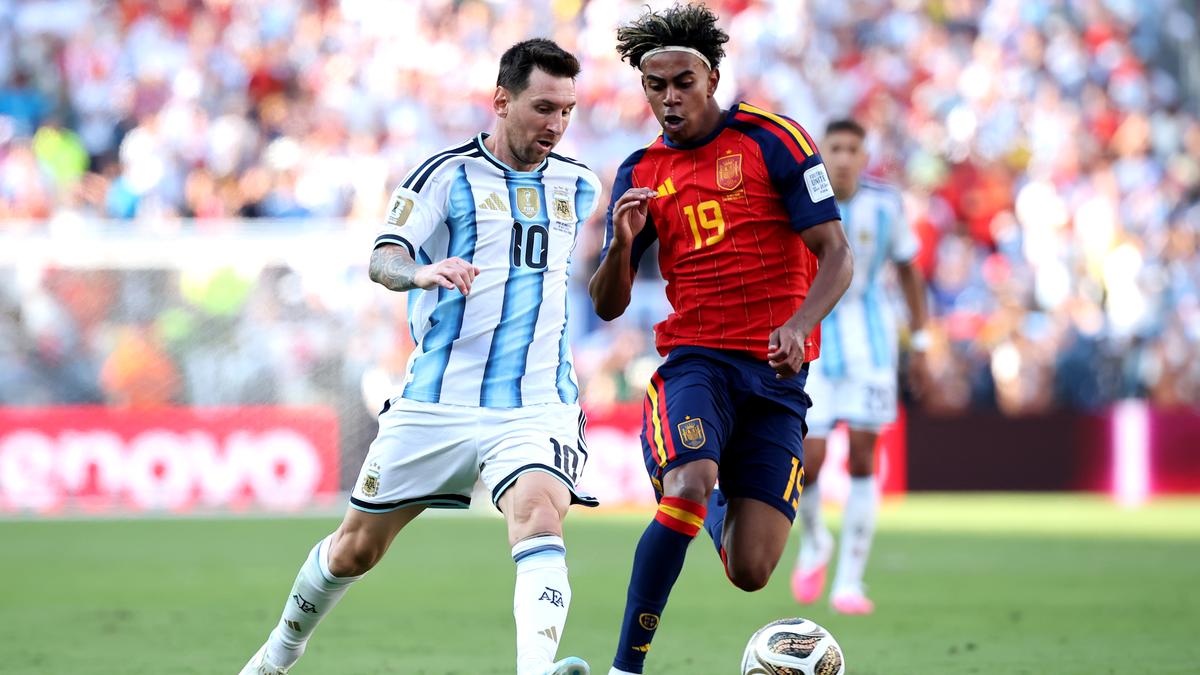
The leading players who arrived with reputations largely lived up to them. Messi extended his World Cup appearance record to 34 matches and, at 39 years and 25 days, became the oldest outfield player to feature in a final. Kylian Mbappe, Haaland, Harry Kane and Jude Bellingham contributed goals and moments worthy of the stage. Rodri controlled the tournament’s decisive matches and was rightly named its finest player, not overshadowed by the glamorous goal-scorers who have a penchant of hogging all the attention.
Spain’s teenagers offered a glimpse of what might come next. Lamine Yamal and Pau Cubarsí became only the fourth and fifth teenagers to appear in a men’s World Cup final, joining Pele, Giuseppe Bergomi and Mbappe in the exclusive group to have done so and finished as champions. Their eight appearances were also the most played at a World Cup before turning 20.
The tournament became a meeting point between football’s past and future. Messi pursued one last title while Yamal began building a legacy of his own.
There was entertainment almost everywhere. The 308 goals surpassed the previous tournament record of 172, while the average of 2.96 per game was the highest since the 1970 World Cup in Mexico. Long-range shooting returned as a significant weapon, while late goals repeatedly transformed knockout matches.
Arsene Wenger, FIFA’s chief of global football development, believed the tournament would be remembered for its physical intensity, increased competitive balance and the performances of its biggest stars. Gianni Infantino went considerably further, declaring that the World Cup had not merely broken records but “smashed” and “destroyed” them.
FIFA rarely misses an opportunity to proclaim its own success.
But this was not a flawless tournament.
There were moments when football’s American takeover began to resemble football being taken over by America.
Shakira performs during the World Cup final half-time show.
| Photo Credit:
REUTERS
Matches were divided by mandatory three-minute hydration breaks, even in air-conditioned or closed-roof stadiums, creating pauses conveniently suited to television advertising. The final received a Super Bowl-style extended half-time show. Commercial messaging seemed to occupy almost every unclaimed second, leaving traditionalists wondering whether FIFA had discovered new ways to monetise the game’s natural rhythm.
Ticket prices placed many matches beyond the reach of ordinary supporters, even if the stands ultimately remained full. Travel between distant host cities was expensive and exhausting. The scale that made the tournament historic also made it cumbersome.
There were more serious concerns around refereeing and VAR. Portugal’s victory over Croatia became an almost continuous video review, with four goals disallowed in a single match. Egypt’s dramatic defeat to Argentina produced accusations of inconsistency after a goal was ruled out, appeals for a late penalty involving Mohamed Salah were rejected and Argentina scored its winner soon afterwards. The Egyptian Football Association formally questioned the fairness and transparency of the officiating.
Argentina’s quarterfinal against Switzerland brought further arguments over a red-card decision, while a tournament promoted as the most technologically advanced in history often demonstrated that more cameras did not necessarily produce greater agreement.
Balogun controversy
Nothing damaged that trust more than the case of Folarin Balogun. The US striker was sent off following a VAR review, ordinarily carrying an automatic one-match suspension. But after President Donald Trump telephoned Infantino and publicly intervened, FIFA lifted the ban, allowing Balogun to face Belgium. FIFA argued that its disciplinary committee had independently determined that the offence did not merit suspension, but the optics were devastating.

Balogun is given the marching orders during the round of 32 game against Bosnia and Herzegovina.
| Photo Credit:
REUTERS
Belgium coach Rudi Garcia called it a decision that would hurt both the World Cup and the US. UEFA officials viewed it as a breach of established protocol, while the episode created the impression that football’s laws could be renegotiated through access to political power.
It was an uncomfortable reminder that FIFA’s closeness to the American President had become one of the tournament’s persistent subplots.
That relationship reached its awkward conclusion during the final presentation.
After Spain defeated Argentina 1-0 in New Jersey, Trump joined Infantino to present the medals and trophy. He was loudly booed by sections of the crowd but remained on the podium after Rodri had received the World Cup, standing prominently among the Spanish players as they started their celebrations.
The image was difficult to ignore: a President accustomed to occupying every available camera angle standing beside a team whose greatest moment should have belonged entirely to them.
For all FIFA’s excess, the political intrusion, the refereeing arguments and the relentless commercialisation, the tournament demonstrated something long suspected but never previously tested on such a scale.
The US is ready for football.
Not merely for a version of it packaged as occasional entertainment, stripped of its culture and sold between other American sports. It was ready for the full, unruly game: the tribalism and tension, the tactical arguments, the national longing, the heartbreak of elimination and the songs that continued long after the players had left.
The country did not suddenly abandon baseball, basketball or American football. Nor did everyone stop calling the game soccer. But for six weeks, the distinction had hardly mattered.
Americans learned the names. They debated VAR. They complained about referees. They arranged work and travel around kick-off times. They discovered that a scoreless match could be gripping despite their own sports regularly producing double-triple digit scores.
The World Cup came seeking a host. It left with a newfound audience.