



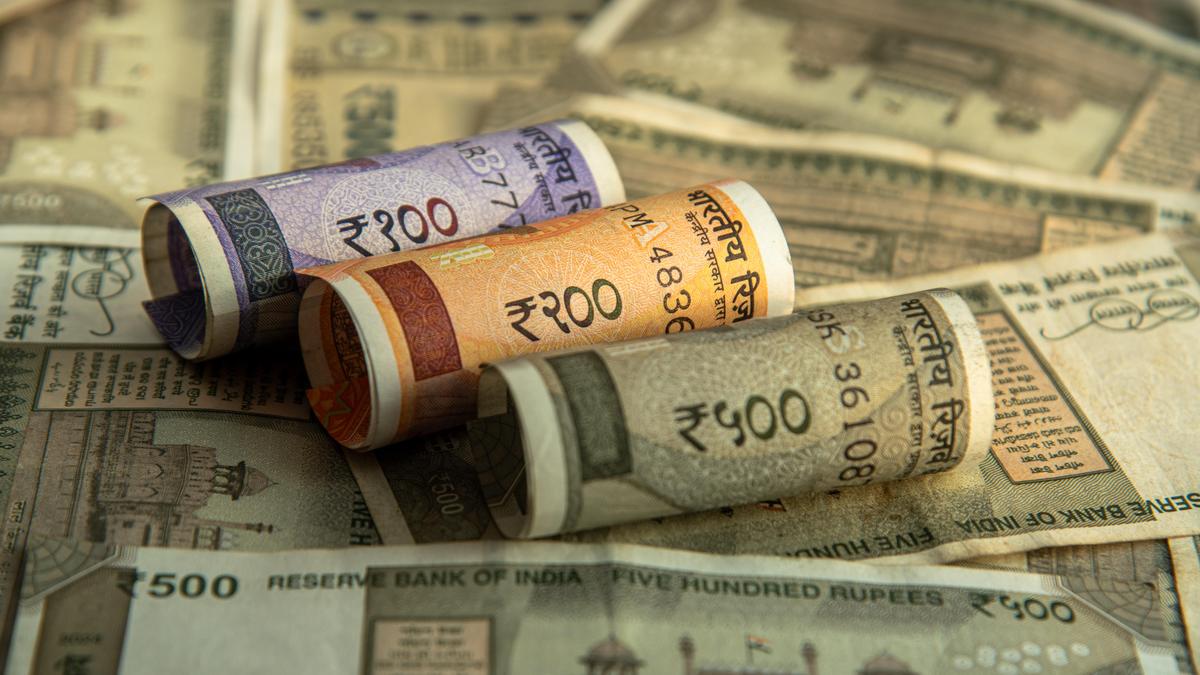
India, which is among the five largest economies of the world, is still toying with the idea of introducing plastic currency, three decades after Australia put in place a full series of its denominations and as many as 60 nations use such currency in some form.
Early this month, the Reserve Bank of India’s (RBI) currency printing subsidiary invited global Expressions of Interest (EoI) for supplying polymer substrates with embedded security features, signalling its most concrete step towards implementation since the original 2009 proposal.
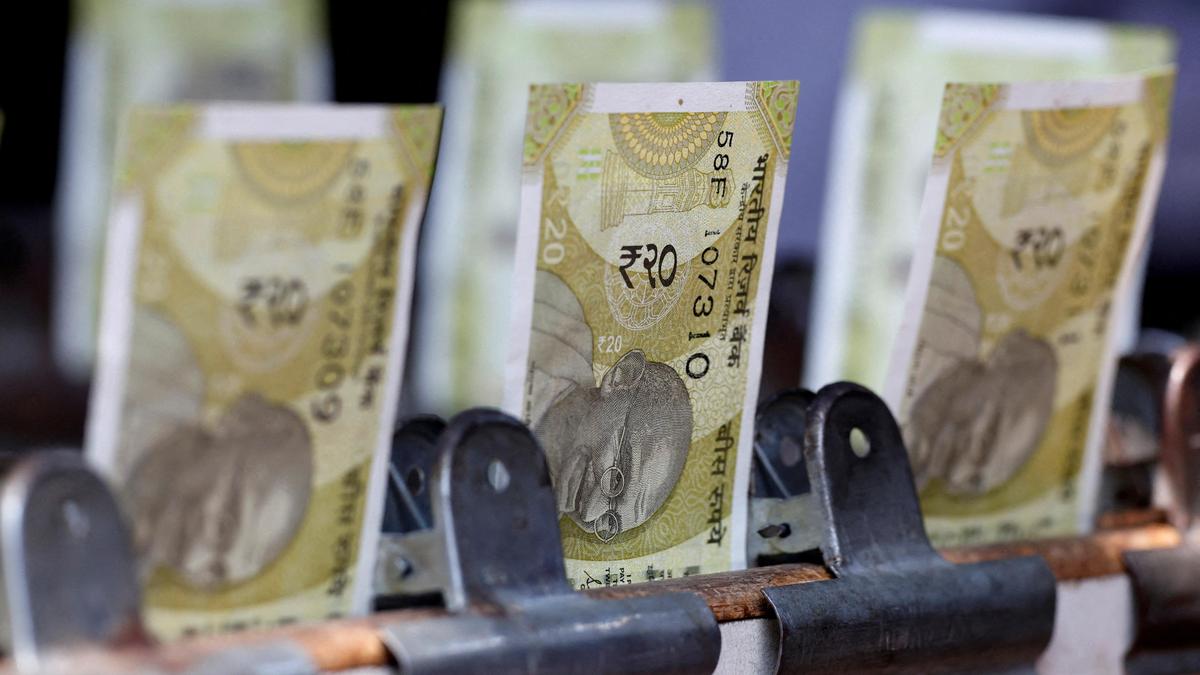
Plastic banknotes, which last 2.5 to 4 times longer than cotton-paper notes, depending on denomination, require highly specialized biaxially oriented polypropylene—derived from petroleum and natural gas, a sector that has a direct correlation with environmental concerns.
Although polymer currency offers an opportunity to modernise cash management by enhancing durability, reducing lifecycle costs and strengthening security; apprehensions are on its production cost as some calculations project that it can approach or even exceed the face value of low-denomination notes. Many countries have found that the production cost alone was 20–24% of the currency’s value for low denominations.
The supporters of plastic currency nevertheless say lower replacement frequency can justify the higher production cost. ₹10 and ₹20 notes see the highest frequency of handling and physical deterioration, leading to disproportionately high replacement costs.
Polymer notes could potentially deliver large lifecycle savings in these lower denominations, even though they are not the largest by value, since the ₹500 note has consistently been the single most widely circulated denomination in India over the last five years, both by volume and by value, according to RBI annual reports.
Sustainability concerns centered around higher initial carbon footprints, plastic waste disposal, and the need for specialized recycling facilities; even as a previous study commissioned by the RBI and conducted by The Energy and Resources Institute (TERI) found that the extended circulation lifespan will stand in good stead because fewer notes would need to be manufactured and transported over time, giving polymer a smaller overall carbon footprint than paper.
Key queries
The logic behind RBI’s latest move to revive the plastic currency comes at a time when the country is fast going less cash-intensive and digital transactions expanding exponentially. While the stand of both the RBI and the government may seem justifiable, certain queries remain unanswered.
Why should India invest heavily in plastic currency, most importantly due to the volatility in petrochemical prices owing to the West Asian crisis led global disruptions. Since polymer is derived from polypropylene, fluctuations in crude oil prices could increase manufacturing costs of plastic currency over time.
India is dependent on imports for polypropylene, which constitutes for roughly a fifth of domestic consumption; even as major domestic players as Reliance Industries and Indian Oil Corporation are undertaking major capacity expansion aimed at scaling capacity significantly by 2030.
Secondly, why at a time when digital payments are booming? The Unified Payments Interface (UPI) now processes more than 24,000 crore transactions annually, accounting for 85% of retail digital payments, while currency-to-GDP ratio (the percentage of total cash in circulation relative to GDP), which had hit a low of 8.7% in two decades during demonetisaton in 2016-17, has stayed above 11%, reflecting a structural shift in payment behaviour.
The monetary system’s dichotomy or currency demand paradox, as coined by RBI, showed that UPI grew exponentially amid steady growth in currency in circulation, which exceeded ₹41 lakh crore by 2025-26 against ₹16-17 lakh crore a decade earlier. This apparently could be due to informal sector and low digital acceptance in rural pockets where digital connectivity is poor.
Cost curve
In India, data on the cost of printing banknotes is not available per denomination but the RBI provides the cost of security printing as part of its income statement in the annual reports, which show that the aggregate expenditure on printing currency was ₹5,101 crore in FY2023-24, ₹6,373 crore in FY2024-25 and ₹4,875 crore in FY2025-26.
Moreover, India reportedly spends nearly ₹5,000 crore annually to replenish and maintain its stock of banknotes and destroys 20-24 billion soiled notes every year, most of them lower denominations, under its Clean Note Policy.
Polymer banknotes typically cost 30–60% more to manufacture than traditional cotton-paper notes as they use specialised polypropylene substrates, transparent windows, sophisticated anti-counterfeiting features and complex printing technologies.
Added to these costs, ATMs, currency sorting machines, vending machines and banknote processing equipment may require recalibration to handle polymer notes. Commercial banks, cash logistics companies and retailers would incur transition costs during the initial rollout.
A research paper in the International Journal of Economics, found the cost almost doubled in lead up to the period of demonetisation (2016), driven by the printing and issue of two new series of banknotes (₹500 and ₹2000) to replace all prior series of the same denomination in circulation. Since demonetisation, ₹200 has also been issued, leading to an increase in the cost of printing banknotes.
Average cost per note printed, it noted, follows a similar pattern, rising from ₹1.5 pre-2016 to ₹2.7 during demonetisation, and resettling to pre-demonetisation levels as of 2019; suggesting that the marginal costs of printing currency in India may not always decrease with increased supply.
Historical perspective
RBI first mooted in 2009 to introduce 100 crore ₹10 polymer banknotes. In 2012, the Ministry of Finance informed the Parliament that the notes would be introduced on a pilot basis in five cities — Kochi, Mysuru, Jaipur, Bhubaneswar, and Shimla, selected for their diverse climatic conditions. The primary objective was to increase the shelf life but the project was shelved due to technological challenges.
In 2013 and 2014, the Parliament was informed that the Government remained committed to the pilot project, after which the project apparently went silent because of demonetisation and its appurtenant costs, including in printing new series.
What next?
Bharatiya Reserve Bank Note Mudran has now invited eligible domestic and international manufacturers to submit bids by August 18 for manufacturing opacified polymer substrate sheets designed for banknote printing. RBI Governor Sanjay Malhotra had last month confirmed that polymer currency was again under active consideration.
As India moves towards a digital rupee and deeper financial digitisation, the long-term demand for physical cash may expand slowly, potentially reducing the economic justification for large-scale polymer adoption.
A currency is efficient only when its production and maintenance costs remain a small proportion of its purchasing power. It is not about choosing between paper and plastic; but about designing a smarter, more efficient cash ecosystem in an economy where over ₹41 lakh crore worth of currency remains in circulation despite the UPI revolution.