

Skip to content
  • Facebook
  • X
  • Linkedin
  • WhatsApp
  • YouTube
  • Associate Journalism
  • About Us
  • Privacy Policy
  • 033-46046046
  • editor@artifex.news
Artifex.News

Artifex.News

Stay Connected. Stay Informed.

  • Breaking News
  • World
  • Nation
  • Sports
  • Business
  • Science
  • Entertainment
  • Lifestyle
  • Toggle search form
  • England Interim Head Coach Marcus Trescothick Not Planning Long-Term Future
    England Interim Head Coach Marcus Trescothick Not Planning Long-Term Future Sports
  • Storm Goretti knocks out power for hundreds of thousands across Europe
    Storm Goretti knocks out power for hundreds of thousands across Europe World
  • Saudi Crown Prince MbS says getting ‘closer’ to Israel normalisation
    Saudi Crown Prince MbS says getting ‘closer’ to Israel normalisation World
  • Access Denied
    Access Denied Nation
  • Access Denied Sports
  • “Not Won Trophy For 18 Years”: RCB Sent Message As Rajat Patidar Takes Captaincy Over Virat Kohli
    “Not Won Trophy For 18 Years”: RCB Sent Message As Rajat Patidar Takes Captaincy Over Virat Kohli Sports
  • Access Denied
    Access Denied Nation
  • CRICKET | Spotlight on Sai Sudharsan’s search for a big score
    CRICKET | Spotlight on Sai Sudharsan’s search for a big score Sports
In the Strait of Hormuz, Iran draws its red lines

In the Strait of Hormuz, Iran draws its red lines

Posted on July 1, 2026 By admin


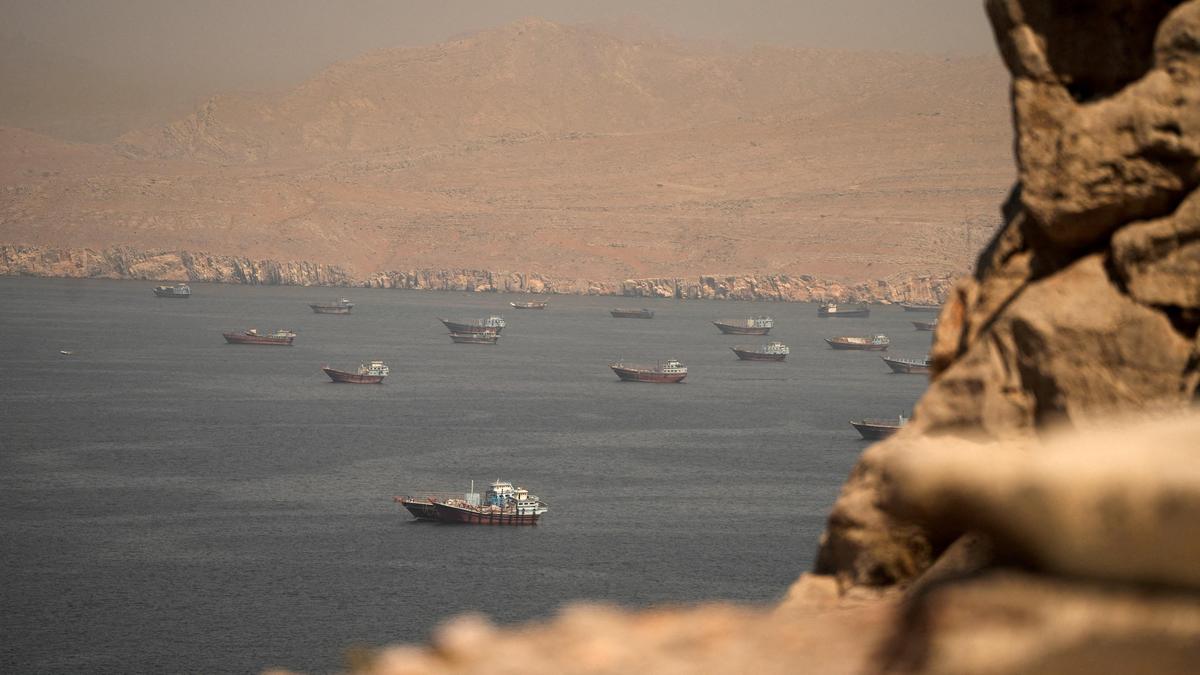
Forty days of war, more than sixty days of tense negotiations, and then a memorandum of understanding. Yet, the U.S. still has no easy solution to a problem that did not exist before it joined Israel in launching its war against Iran on February 28, 2026: who will manage the Strait of Hormuz?

The strait, a critical energy and economic chokepoint connecting the Persian Gulf with the Arabian Sea through the Gulf of Oman, was open to international shipping before the war. That changed within days of the U.S. attack, when Iran asserted control over the waterway. Since then, Washington has tried a range of measures to restore free navigation — it bombed Iran’s naval assets; U.S. President Donald Trump issued repeated ultimatums, threatening to destroy Iran’s critical infrastructure. When he announced a ceasefire on April 8, he declared that the strait would reopen. In mid-April, he imposed a blockade on Iranian ports and later launched the short-lived Operation Project Freedom to protect commercial shipping transiting the strait. None of these measures persuaded Iran to restore free passage.

After the MoU was signed between the U.S. and Iran on June 17, Mr. Trump again said Hormuz would be fully reopened for toll-free shipping. Iran did open a new route for passage, along its coastline, which it said would be safe. But this did not resolve the crisis. Last week, an oil tanker off Oman’s coast was attacked by Iranian drones, after which the U.S. carried out attacks on Iran. Tehran retaliated, targeting U.S. bases in the region. While both sides agreed to halt tit-for-tat attacks, Iran has ruled out direct technical talks with the U.S., which were scheduled to continue this week, casting doubts on the implementation of the MoU.

At the heart of the problem lies a simple question: who controls the Strait of Hormuz?

What the MoU says

Under Article 5 of the MoU, Iran has promised to “make arrangements” for the “safe passage of commercial vessels, with no charges for 60 days only from the Persian Gulf to the Sea of Oman and vice versa”. It says commercial traffic would immediately start and Iran would remove mines and other technical impediments for traffic within 30 days of signing the memorandum. The next line of the article holds enormous significance for the future of the strait. It says Iran will conduct talks with Oman “to define the future administration and maritime services in the Strait of Hormuz, in discussions with other Persian Gulf littoral states, in line with applicable international law and the sovereign rights of coastal states”.

The agreement doesn’t say passage would be free of charges in the future — that provision is applicable for only 60 days. It says Iran — not the U.S. — will hold talks with its neighbours to define the future status of the strait. In other words, Iran hasn’t given up its claims or control over the strait in the MoU. Rather, it has reasserted them.

The U.S., which has already lifted its maritime blockade, is not happy with leaving the levers of one of the world’s most important waterways in the hands of a state it sought to topple just four months ago. When U.S. Secretary of State Marco Rubio visited the region last week, he pressed Persian Gulf countries to push against the Iranian plan. Oman opened an alternative route, along its coast, to transit Hormuz. Soon after Mr. Rubio left, Iran attacked a Singapore-flagged tanker off Oman’s coast. Earlier, the Islamic Revolutionary Guard Corps (IRGC) had warned that traffic through “non-designated routes” could be dangerous. Tehran knew the attack risked escalating tensions with the U.S., but it appeared willing to take that risk rather than surrendering control of Hormuz. Mr. Trump called the drone attack a “foolish violation” of the ceasefire, and struck Iran, triggering a retaliatory response from Tehran.

Why Hormuz matters

From Iran’s point of view, two decisions it took proved critical to its own survival in the war — the regionalisation of the war by targeting American bases and energy infrastructure across the Persian Gulf, and the closure of the Strait of Hormuz. By retaining its grip on Hormuz despite American threats, attacks and blockade, Iran has demonstrated deterrence capability. Iran believes the war has fundamentally altered the region’s strategic landscape and that control over Hormuz is central to deterring future attacks. What it wants to do is to assert Iranian control and “sovereignty” over the strait—a game-changing move which could solidify Iran’s position as a powerful regional player in the Persian Gulf. Enforcing a service fee or insurance costs is only part of this broader objective.

Tehran wants vessels to use its designated route, coordinate with the newly created Persian Gulf Strait Authority (PGSA), and, eventually, pay for “services” provided by littoral states, drawing on models used in the Strait of Malacca and the Singapore Strait. “These are our territorial waters,” Iran’s Parliament Speaker and top negotiator with the U.S. said on June 30 in a televised interview. “Iran will never, under any circumstances, retreat from this position,” he added. Iranians want to institutionalise this new mechanism for long-term management of the strait. And Gulf countries, including Oman, Qatar, Saudi Arabia and even the UAE, are in talks with Tehran.

Mr. Trump still seems serious about negotiations with Iran. Despite Iran’s remarks that technical talks were called off over last week’s strikes, he sent Steve Witkoff and Jared Kushner to Qatar. With mid-term elections looming and his approval ratings falling, Mr. Trump’s military options are constrained, at least for now. But he is also confronting a new reality in the Persian Gulf. The country he wanted to submit to U.S.-Israeli demands is now setting the terms of the regional order.

Published – July 01, 2026 04:02 pm IST


Source link

World Tags:Strait of Hormuz, strait of hormuz fee charge, vessels in strait of hormuz, west asia war

Post navigation

Previous Post: Telangana’s OGH doctors perform 36-hour surgery to transplant five organs on one patient
Next Post: Science Quiz | On historical diseases that changed history

Related Posts

  • China seeks deeper economic ties with ASEAN at summit talks as South China Sea disputes lurk
    China seeks deeper economic ties with ASEAN at summit talks as South China Sea disputes lurk World
  • Access Denied World
  • Access Denied World
  • South Africa investigates mystery of plane that arrived with more than 150 Palestinians from Gaza
    South Africa investigates mystery of plane that arrived with more than 150 Palestinians from Gaza World
  • What Kate Middleton Said In Video
    What Kate Middleton Said In Video World
  • U.K. PM Keir Starmer set to ban ‘harmful’ social media for under-16s
    U.K. PM Keir Starmer set to ban ‘harmful’ social media for under-16s World

More Related Articles

At least 10 dead in Florida but Hurricane Milton not as bad as feared At least 10 dead in Florida but Hurricane Milton not as bad as feared World
Woman Gives Birth To ‘Miracle’ Baby Mid-Flight With Help Of UK Doctor Woman Gives Birth To ‘Miracle’ Baby Mid-Flight With Help Of UK Doctor World
Impeachment complaint filed against Philippine Vice President Duterte following her threat to President Impeachment complaint filed against Philippine Vice President Duterte following her threat to President World
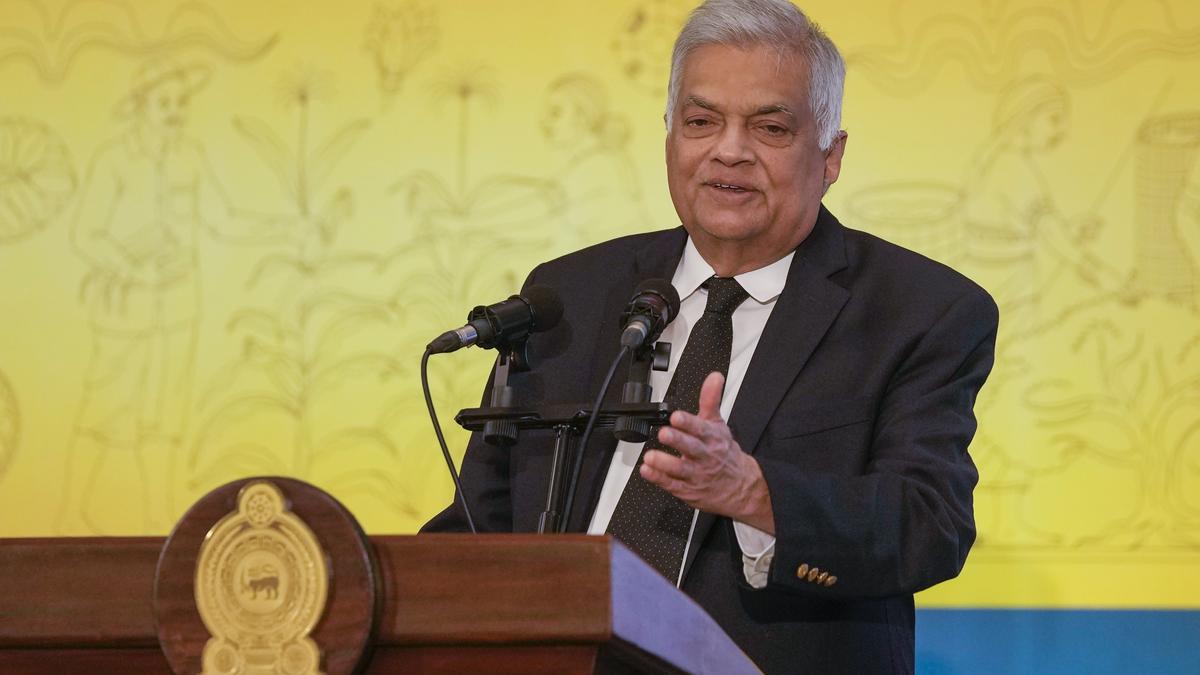
Sri Lanka needs to connect with India to benefit from its industrial success: President Wickremesinghe Sri Lanka needs to connect with India to benefit from its industrial success: President Wickremesinghe World
Women At 31% Higher Risk Of Developing Long Covid Than Men: Study Women At 31% Higher Risk Of Developing Long Covid Than Men: Study World
IMO pauses its Gulf vessel evacuation plan after Iran attacks ship IMO pauses its Gulf vessel evacuation plan after Iran attacks ship World
SiteLock

Archives

  • July 2026
  • June 2026
  • May 2026
  • April 2026
  • March 2026
  • February 2026
  • January 2026
  • December 2025
  • November 2025
  • October 2025
  • September 2025
  • August 2025
  • July 2025
  • June 2025
  • May 2025
  • April 2025
  • March 2025
  • February 2025
  • January 2025
  • December 2024
  • November 2024
  • October 2024
  • September 2024
  • August 2024
  • July 2024
  • June 2024
  • May 2024
  • April 2024
  • March 2024
  • February 2024
  • January 2024
  • December 2023
  • November 2023
  • October 2023
  • September 2023
  • August 2023
  • July 2023
  • June 2023
  • May 2023
  • April 2023
  • March 2023
  • February 2023
  • January 2023
  • December 2022
  • November 2022
  • October 2022
  • September 2022
  • August 2022
  • July 2022
  • June 2022
  • May 2022

Categories

  • Business
  • Nation
  • Science
  • Sports
  • World

Recent Posts

  • T.N. Minister Nirmalkumar accuses Stalin, Udhayanidhi of tasking Senthilbalaji to lure TVK MLAs to topple govt.
  • Through The Magnificent Life, artist Rajesh RV imagines a world of harmony and hope
  • Man who survived two natural disasters in Venezuela’s La Guaira vows to never return
  • FIFA World Cup 2026: Ecuador coach Sebastián Beccacece steps down after exit
  • Kerala Cricket Association lifts its 3-year ban on Sreesanth

Recent Comments

  1. Derricktof on UP Teacher Who Asked Students To Slap Muslim Classmate
  2. Davidreect on UP Teacher Who Asked Students To Slap Muslim Classmate
  3. Eugenerep on UP Teacher Who Asked Students To Slap Muslim Classmate
  4. Haroldgox on UP Teacher Who Asked Students To Slap Muslim Classmate
  5. MichaelBiavy on UP Teacher Who Asked Students To Slap Muslim Classmate
  • Access Denied Business
  • Access Denied Sports
  • Access Denied
    Access Denied Nation
  • PM’s Clean Drive With Schoolchildren To Mark 10 Years Of Swachhata Campaign
    PM’s Clean Drive With Schoolchildren To Mark 10 Years Of Swachhata Campaign Nation
  • Access Denied World
  • Bangladesh police arrest Hasina-era former parliament speaker
    Bangladesh police arrest Hasina-era former parliament speaker World
  • Disengagement of troops in four areas in Eastern Ladakh, says China
    Disengagement of troops in four areas in Eastern Ladakh, says China World
  • Access Denied Business

Editor-in-Chief:
Mohammad Ariff,
MSW, MAJMC, BSW, DTL, CTS, CNM, CCR, CAL, RSL, ASOC.
editor@artifex.news

Associate Editors:
1. Zenellis R. Tuba,
zenelis@artifex.news
2. Haris Daniyel
daniyel@artifex.news

Photograher:
Rohan Das
rohan@artifex.news

Artifex.News offers Online Paid Internships to college students from India and Abroad. Interns will get a PRESS CARD and other online offers.
Send your CV (Subjectline: Paid Internship) to internship@artifex.news

Links:
Associate Journalism
About Us
Privacy Policy

News Links:
Breaking News
World
Nation
Sports
Business
Entertainment
Lifestyle

Registered Office:
72/A, Elliot Road, Kolkata - 700016
Tel: 033-22277777, 033-22172217
Email: office@artifex.news

Editorial Office / News Desk:
No. 13, Mezzanine Floor, Esplanade Metro Rail Station,
12 J. L. Nehru Road, Kolkata - 700069.
(Entry from Gate No. 5)
Tel: 033-46011099, 033-46046046
Email: editor@artifex.news

Copyright © 2023 Artifex.News Newsportal designed by Artifex Infotech.