





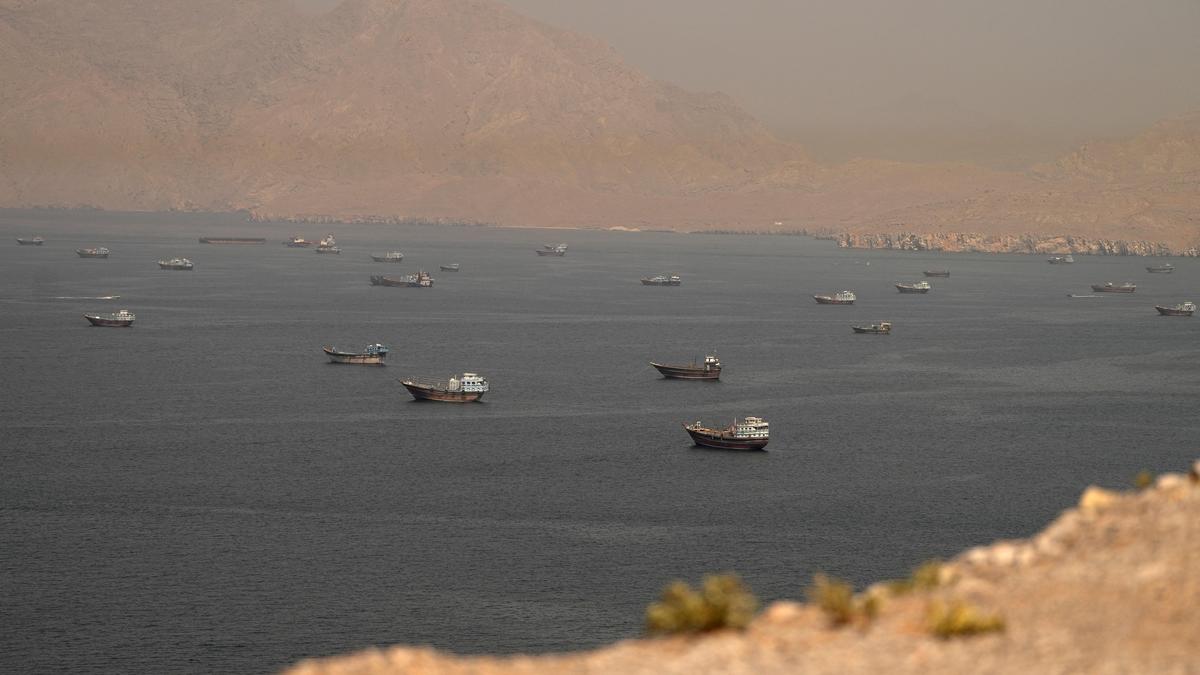
Celebrating the MoU between Iran and the U.S., President Donald Trump said it was time to start the engines and let the oil flow. Yet one of the biggest challenges facing shipowners and crews lies largely out of sight, beneath the waterline. “Ships are not designed to remain indefinitely idle. Even when stationary, a ship remains a continuously living industrial system requiring maintenance, preservation and regulatory oversight,” says Ajithkumar Sukumaran, retired Additional Director General of Shipping.
For vessels that have spent prolonged periods at anchor, restarting operations is not as simple as weighing anchor and proceeding to sea. Extended waiting periods create a chain of technical, regulatory and human-factor challenges that can take weeks or even months to fully address.
Among the most immediate concerns is underwater biofouling — the accumulation of marine organisms on hull surfaces, propellers and seawater intake systems. In the warm waters of the Gulf, where sea temperatures can remain high for much of the year, marine growth can develop rapidly. What begins as a thin biological film can soon evolve into layers of algae, barnacles and other organisms that significantly affect vessel performance. “Warmer regions of Persian Gulf areas promote rapid growth of marine organisms on the hull surfaces, both on the open hull and underwater,” says Priyatham Ramidi, P&I Marine Surveyor.
The consequences extend far beyond appearance. Ship hulls are shaped and designed to reduce water resistance. A fouled hull increases this resistance, forcing engines to work harder to maintain speed. That means a loss of efficiency.
Even moderate levels of fouling can lead to substantial increases in fuel consumption, while severe fouling can dramatically reduce propulsion efficiency. For large tankers and container vessels, the additional fuel costs can run into hundreds of thousands of dollars over the course of a trading cycle.
The problem becomes particularly acute after prolonged anchorage. Anti-fouling coatings used on modern vessels are generally designed to perform best when ships are moving regularly through the water. When vessels remain stationary for weeks or months, these protective systems become less effective and marine growth accelerates.
Propellers are especially vulnerable. Even relatively small accumulations of marine organisms on propeller blades can disrupt water flow, reduce thrust and increase vibration. Rudders, thruster tunnels and azimuth propulsion units may experience similar effects. By the time vessels are ready to resume trading, some may require underwater inspections and cleaning operations before they can return to efficient service.
This may well present a business opportunity for such underwater cleaning services offered by Indians along our coast. The majority of the stranded ships are eastbound and they will head out and hug the Indian coast before turning east below Sri Lanka. And they can drift in the sea for a day or more to get the cleaning done.
Sea chests present another concern. These recessed compartments on the ship’s hull are openings into the sea. Through these, seawater is sucked in by pumps and used for cooling in various machineries all over the ship. Extended periods at anchor increase the risk of marine growth accumulating around sea chest gratings at these openings. Partial blockages can reduce cooling efficiency, potentially leading to overheating of critical machinery once operational demands increase.
For engineers preparing a vessel for departure, checking the condition of seawater systems becomes a priority. Strainers, filters, pumps and coolers must be inspected to ensure adequate flow rates. In some cases, underwater inspections may be required to determine the extent of fouling before a vessel can safely resume operations.
Yet underwater growth is only one part of a much larger picture.

The prolonged waiting period effectively creates a form of unintended lay-up. Although ships may remain technically operational, many systems are forced into conditions for which they were not originally designed.
Main propulsion engines, for example, benefit from regular operation. Long periods of inactivity can increase the risk of cylinder liner corrosion, sticking piston rings and deterioration of lubrication films. Fuel systems may also be affected. Reduced fuel consumption and extended storage periods can contribute to sludge formation and contamination in fuel tanks and pipelines, says Mr. Sukumaran.
Auxiliary engines and generators face a different challenge, he adds. Because ships at anchor still require electrical power, these units often continue operating for extended periods, sometimes under relatively low loads. Such conditions can encourage incomplete combustion, carbon deposits and reduced efficiency. “Boilers, compressors, pumps and purification systems likewise require continuous monitoring and maintenance despite the vessel remaining stationary,” says Mr. Sukumaran.
The challenge is compounded by delays to planned maintenance schedules. Many critical tasks require the attendance of specialist technicians from equipment manufacturers or shore-based service companies. In a disrupted security environment, such visits become impossible. Maintenance that would normally be completed on schedule has been postponed, increasing the risk of equipment failures later.
Above deck, the Gulf’s harsh environment creates its own difficulties. Temperatures exceeding 40 degrees Celsius, combined with high humidity and salt-laden air, accelerate corrosion on exposed steel structures, says Mr. Ramidi. Deck piping, hatch covers, cranes, mooring equipment and safety fittings all require constant attention.
Anchor chains, hawse pipes, winches and mooring systems are subjected to prolonged exposure while vessels remain stationary. Life-saving appliances and firefighting equipment also require periodic inspection and testing to ensure compliance with safety regulations.
In normal circumstances, ship crews manage these tasks through carefully planned maintenance programmes. However, prolonged uncertainty could have disrupted these tasks on the stranded ships.
Also read: Cautious Indian shipowners seek govt. help
Crew welfare has emerged as one of the most important concerns associated with the disruption. Many seafarers may find themselves serving beyond their expected contract periods because of difficulties arranging crew changes. Flight availability, visa restrictions, security concerns and uncertainty regarding vessel movements can all complicate relief arrangements.
Crew changes today happen at points on the voyage off countries that offer ease of boarding and deboarding a seafarer. Colombo sea has become a popular onboarding point for Indian seafarers. Vizhinjam is seeking to offer these services.
Extended service periods create risks that go beyond simple inconvenience. Fatigue, stress and declining morale can affect alertness and decision-making. Seafarers who have spent months under uncertain conditions may face increasing mental-health pressures, particularly if communication with families becomes difficult or future travel arrangements remain unclear.
The operational consequences can be significant. Reduced alertness affects watchkeeping performance, maintenance quality and overall safety management. As vessels prepare to return to sea, ensuring that crews are physically and mentally prepared becomes as important as verifying machinery readiness.
Regulatory compliance presents another challenge. Ships operate within a framework of statutory certificates, classification requirements and periodic surveys. Annual surveys, intermediate inspections and other regulatory examinations may become difficult to complete during extended disruptions.
Surveyors from classification societies and flag administrations were unable to safely access vessels. In some cases, temporary extensions were granted, while remote survey techniques were used where permitted. Nevertheless, once conditions stabilise, a surge in demand for inspections is likely to create bottlenecks.
The commercial consequences extend throughout the supply chain. Delayed cargoes, disrupted schedules and increased operating costs can generate disputes between owners, charterers and cargo interests. “Time-sensitive cargoes may have deteriorated, potentially triggering insurance claims and contractual disagreements,” says Mr. Ramidi who is an insurance surveyor.
Insurance itself becomes more complicated during periods of elevated risk. War-risk premiums have arisen. And they need to stabilize at lower levels for ships to start revving up again.
Even after technical preparations are completed, the voyage itself may remain challenging. Mariners transiting through the region will need to navigate a security environment that may still contain residual risks. Temporary routing measures, navigational warnings and heightened vigilance will likely remain necessary for some time.
Bridge teams must carefully verify radar systems, electronic charts, communications equipment and emergency systems before departure. Passage plans may require revision to account for temporary routing arrangements, security zones or other restrictions. Risk assessments and pre-departure briefings will assume heightened importance.
The restart of Gulf shipping is unlikely to resemble the simple reopening of a maritime corridor. Instead, it will be a carefully managed process of industrial reactivation involving hundreds of ships, thousands of seafarers and a vast network of surveyors, technicians, insurers and service providers.