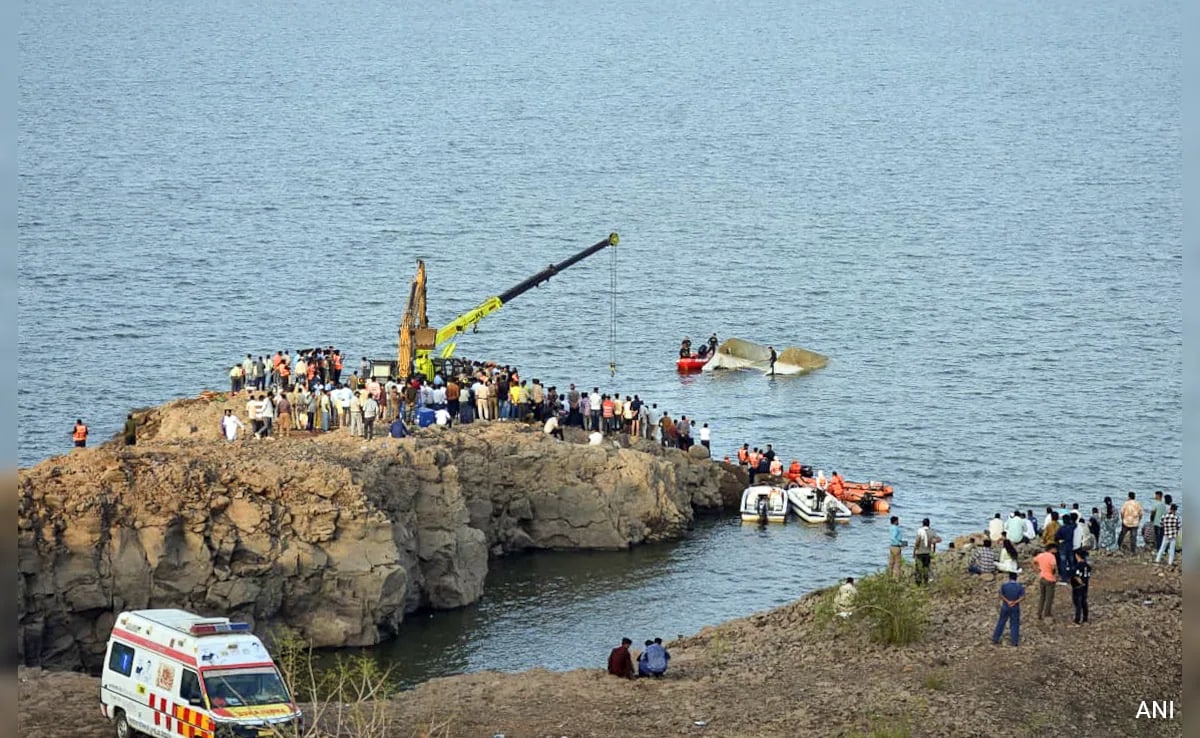



The story so far: An explosion at the Barzan gas facility in Ras Laffan, Qatar, claimed the lives of 12 Indian workers and one Pakistani worker on June 21. While local authorities have just begun their investigation, QatarEnergy, the country’s national energy company that maintains the gas facility, said the blast occurred when workers were restarting it — alluding to a well-known risk, but seemingly poorly managed in India, of a type of industrial activity called a transient process.
How can restarting be dangerous?
An industrial plant is often at its most dangerous not when it is running at full capacity because that is what it was designed to do. It is more dangerous when it is starting up or shutting down because during these transient operations, the facility is moving from one state to another.
In fact, a typical industrial facility will spend more than 90% of its time in steady-state operations, i.e. when it is not switching between states. In this period, variables like temperature, pressure, and flow rates are fixed and/or predictable. On the other hand, data assessed by organisations like the Centre for Chemical Process Safety consistently show that nearly 50% of all process safety incidents occur during the remaining 10% of the time, when the facility is in a transient mode.
Recent examples of such accidents in India include the Escientia Advanced Sciences explosion in Andhra Pradesh in 2024, the Amudan Chemicals explosion in Maharashtra in 2024, and the Vedanta power plant explosion in Chhattisgarh in April this year.
Why are transient processes so risky?
In technical terms, during transient operations, engineers say the safety envelope of a plant is being tested in real-time.
During a startup, such as the one at Ras Laffan Port in Qatar, the facility’s equipment is subjected to rapid changes in temperature and pressure. This introduces thermal stress: different parts of a metal structure expand at different rates. So if a pipe is heated too quickly, the physical expansion can cause mechanical
failure or creep, leading to the containment being breached.
In chemical reactors like those at Amudan Chemicals, the concentrations of reactants during the initial charge are not at their equilibrium. This can lead to an exothermic runaway, a situation where a chemical reaction releases heat faster than the cooling system can remove it, causing the temperature to rise exponentially, risking an explosion.
As in the Vedanta pipeline burst in April in Chhattisgarh, equipment that had been idle or had been under-maintened was suddenly pressurised. In this part of the restart phase, hidden issues like dead-legs, i.e. sections of pipe that do not have flow, allowing moisture and corrosion to accumulate, or oxygen ingress, i.e. air leaking into a system that should be inert, become threats.
If a system is not properly purged by using an inert gas like nitrogen to displace oxygen and/or volatile vapours, introducing a spark or heat during a startup can trigger a vapour cloud explosion.
Which Indian laws/rules apply to such accidents?
The Factories Act 1948 applies to almost all the accidents as it addresses the operator’s duties to prevent fires and explosions, mandate safeguards and disclosures, and have emergency plans when dealing with hazardous processes.
The 1989 Manufacture, Storage and Import of Hazardous Chemicals Rules under the Environment Protection Act 1986 aims to prevent vapour cloud explosions and other chemical mishaps by requiring safety reports, on-site emergency plans, risk assessments, notifications of major accidents, and controls for ignition sources, leaks, runaway reactions, etc.
The 2010 Central Electricity Authority Regulations may apply if any sources of ignition or electrical equipment interact with a flammable gas or mix of gases.
Under the 1989 Rules, the section on ‘Major Accident Hazard’ further demands periodic hazard reviews, emergency drills, and documented standard operating procedures for ‘abnormal’ states of operation, which include transient processes.
The Boilers Act 1923 and the various State boiler rules address the inspection and certification of boilers and pressure systems, conditions of safe operations, the qualifications of operators, and periodic inspections, including after repairs or periods of shutdown.
Finally, environmental and labour laws are respectively invoked when there have been hazardous emissions and the working conditions, contractors’ responsibilities, maintenance and shutdown safety operations, and the worker’s training and access to safety equipment are relevant.
What is process-safety engineering?
Preventing disasters during transient operations requires a great amount of care but also requires operators and workers to apply specific engineering concepts that have been designed to catch errors before they occur in the form of fires or explosions.
The first is the pre-startup safety review. It takes the form of a multi-disciplinary formal inspection that experts conduct before any highly hazardous chemical is introduced to a process. Specifically, the review ensures hardware is built to design specifications, the software (control logic) has been tested, and the ‘peopleware’ (i.e. operators) are trained on the specific startup procedures.
Second, ‘management of change’ is a protocol that engineers use to evaluate the impact of any modification — whether due to changes in the raw materials, equipment or personnel — before it is implemented. The power plant mishap in Chhattisgarh occurred after the plant had a new owner (Vedanta) and a subsequent restart. An effective ‘management of change’ could have required a full structural integrity audit of the ageing pipelines to ensure they could handle the forces of a restart after a period of dormancy.
What are HAZOP and LOPA?
HAZOP is short for ‘hazard and operability study’ — a systematic way to identify deviations from a facility’s design intent. HAZOPs typically focus on steady-state operations and would be interested in questions like how a pipe would behave if there is no flow inside it. For transient operations, engineers use procedural HAZOPs, where they analyse every single step of the startup manual.
So during the Ras Laffan gas facility’s startup, for instance, engineers conducting a procedural HAZOP might have asked, “What if a technical malfunction occurs exactly at the moment when gas is introduced into a component?” Then, depending on the possible modes of failure, they would have installed automatic kill-switches that would isolate the component instantly.
Layer-of-protection analysis, or LOPA, is likewise a semi-quantitative tool that operators use to check if there are enough independent protection layers to prevent an accident. One layer could be the operator, another could be an alarm, a third could be a relief valve, a fourth could be a blast wall, and so on.
LOPA is useful in high-risk transient operations because operator vigilance alone is not strong enough to prevent a small error from escalating rapidly, and often involves passive or automated response systems.
What role does human error play?
During steady-state operations, industrial facilities that are well-equipped have advanced digital automatic controllers, called distributed control systems, to handle the changes in parameters required to keep the facility from suffering damage. But during transient operations, operators may switch many automated loops to manual — which can place an enormous cognitive load on operators. This has been called the ‘out-of-the-loop performance problem’.
It happens when “operators of automated systems [find themselves] handicapped in their ability to take over manual operations in the event of automation failure,” according to a 1995 research article in the journal Human Factors. “This is attributed to a possible loss of skills and of situation awareness arising from vigilance and complacency problems, a shift from active to passive information processing, and change in feedback provided to the operator.”
At the Escientia incident in 2024, for instance, the startup of a new campaign involved manual solvent transfers. When humans are required to make rapid-fire decisions amidst alarm flooding, a state where a control room receives hundreds of alarms simultaneously, the probability of a human factor error can also increase significantly.
Many industrial accidents in India and abroad over time have also been traced back to shortcuts that operators took during one or more of these processes. According to one comprehensive review published in the Journal of Safety Research in 2023, when a facility operates normally for some time and accidents become rarer, the costs of safety remain visible whereas the benefits of safety become harder to find. If at the same time the facility is under pressure to increase production, the operator can be driven to take more risks — until a major accident reminds them why those safety measures existed in the first place.