


When Vishal Moghe’s bada khayal rendition at the Lab @ Shanta auditorium on June 7 hooked the audience with a lilting aalap in Raag Jhinjhoti, you could sense a shift. A collective stirring in the hushed, air-conditioned air that also echoed a rarefied atmosphere insulated from the surrounding commercial city streets.
Over the next hour and a half, every time Moghe and his accompanists landed perfectly in sync on the sam after an avartanand the laya (tempo) of the bandishes progressed, one could hear the small sounds of appreciation quintessential to the city’s classical music aficionados.
“If you wish to play more, we will listen,” Harish, an organiser from Prakriti Foundation, smilingly signalled after the third bandish, mirroring the audience’s keen enthusiasm to soak in the non-quotidian music recital in the city. A sizable crowd had stayed back after the book launch ofThe Secret Master — Arun Kashalkar and a Journey to the Edge of Music on June 6.
“I wish Chennai got to engage more with this form and other parts of India with Carnatic music. Both Carnatic and Hindustani musicians and their ecosystems as a whole would benefit from a closer and sustained interaction,” pointed out author and journalist Sumana Ramanan. Her literary non-fiction is both a biographical account of her guru, Arun Kashalkar, a khayal artiste in Mumbai’s fringe classical music circles, and an analytical narrative of the history, evolution, and current ecosystem of the Hindustani form.
“It’s also an intense meditation on what it means to learn a form. The struggles of learning, of the rigor and practice, of the isolation and insulation,” pointed out celebrated Carnatic music exponent TM Krishna.
He was in conversation with the author, highlighting the book’s context in the present-day profit and social-media-driven Indian cultural ecosystem, where classical music rings out more as a compromised commodity than the previously held connoisseur’s citadel.
Sumana has been keenly tracking this evolution over the past decade, when she started learning khayal — an art form that calls for much improvisation, vigor and rigour — in earnest.

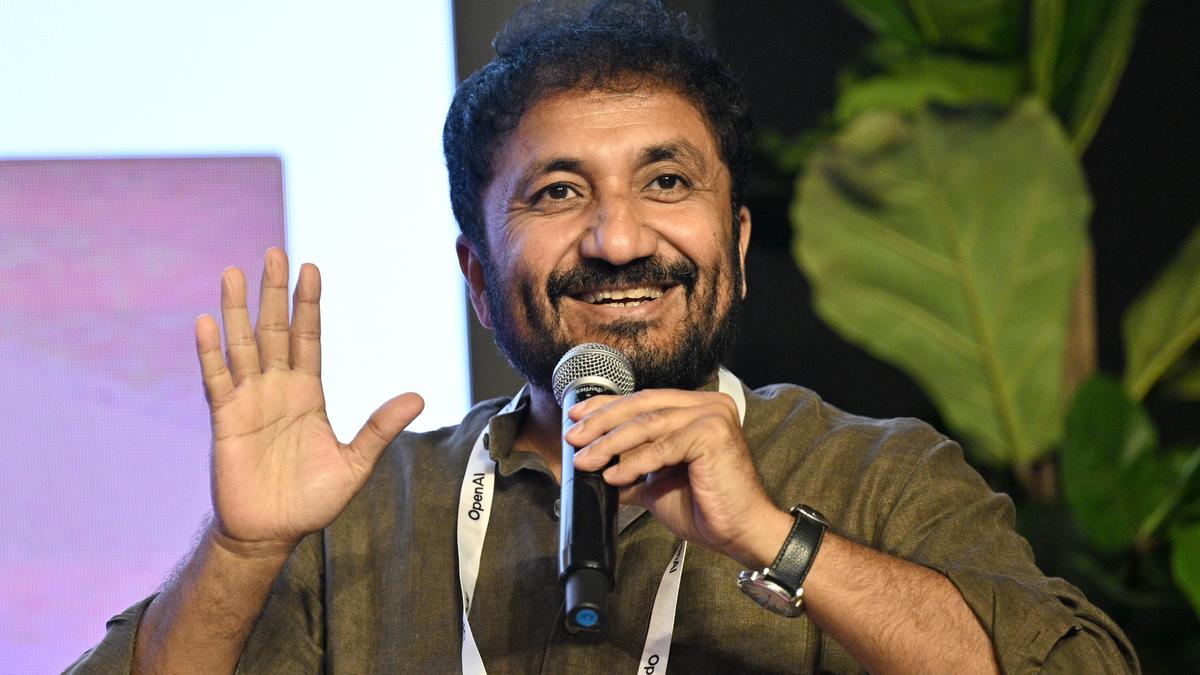
Vishal Moghe’s khayal performance
| Photo Credit:
Special Arrangement
“A combination of things drew me to khayal. One, is that it has one of the largest ranges of tempo of any music in the world. I like the progression from very slow to very fast; you can explore all the tempos in between, and that changes the whole character of the music,” she shares.
It was also in 2016 that the spark for this book was lit after Sumana heard Kashalkar quite providentially at a smaller concert in Mumbai and decided to join his community-styled tutelage.
Explaining to Krishna on why she wrote the book, the author recounted that in learning from Kashalkar — a proponent of a traditional khayal style amalgamated from three gharanas — she saw that he was part of a larger fringe culture. There were other musicians who were marginalised, all of them practitioners of complex styles of the classical music form.
“I wanted to understand why this fringe exists. I have sought to analyse the dynamics of the mainstream and trace the evolution of khayal’s ecosystem. I interviewed all the main players in the mainstream in Mumbai, an important hub for the music. I have also addressed other uncomfortable issues in the book because I did not want it to be a hagiographic account of one musician,” adds Sumana.
One such issue explored as a refrain throughout the book is Kashalkar’s calling to the music and the physical and psychological toll it has taken. Sumana writes in detail what it meant to her guru and his family for his star to be on an ascent and then gradually withdraw from the limelight as businesses and corporate sponsorships started calling the shots and AIR declined. This journey encapsulates a theme of “madness” over the music, as Krishna pointed out.
Such austere, internally-focussed artistic journeys appear to throw up another dichotomy: artistes remain (or choose to be) largely insulated from the political and socio-religious conversations around them. Sumana highlights as a positive example how khayal exponents still acknowledge and celebrate the syncretic origins of the form and hark back to the Islamic contributions and the ustads’ achievements.
However, the art form itself remains vulnerable to the many tonal shifts arising from the interplay between the political and cultural forces in its milieu.
“In a way, my book is a critique of what passes for Indian culture today, which is increasingly driven by three things: Hindu supremacism, which is a political and not a religious ideology; an extreme form of capitalism and commodification; and bite-sized, superficial entertainment and the resulting distaste of the market for difficult pleasures. At the same time, my book is a tribute to a less visible strand of Indian culture,” says the author.
What seems to be the need of the hour is a substantial host of enlightened and enabling sponsors and organisations who can take a long-term view and are willing to consistently nurture emerging talent.
Take the National Centre for the Performing Arts (NCPA). It has attempted to spotlight some khayal and other Hindustani talent in recent years through initiatives like the Citi Urja series in Mumbai. But its investment in the propagation of these forms remains a mere drop in the ocean compared to the crores spent on Western orchestras. Performance platforms away from the epicentres of Hindustani music, too, do not seem to strike a note for the market.
Moghe (also a student of Kashalkar), for instance, performed another concert in a small but popular hall in Chennai on June 7. But such Hindustani performances are few and far in between in the city. In a day when most local artistes struggle to secure a circuit outside of the Margazhi season, a jugalbandi of sorts between the North and the South to expand their respective classical music forms may seem to be a pipedream.

Khayal, an ongoing conversation
| Photo Credit:
Special Arrangement
“The problem in the South is that the only kind of Hindustani music we experience is one built around corporate sponsorships and superstar talent. This has to change. One thing I believe in strongly, whether it’s for Carnatic or khayal or dhrupad, is that we need more smaller performing spaces in Chennai that can harvest better economies of scale and act as hubs, especially for younger musicians,” points out Krishna.
Sumana emphasises that in the 21st Century, it is increasingly hard for even ‘secret masters’ to leaven the effects of the market-driven culture and the increasing pay-gap for young musicians.
“We need institutional frameworks that will give these gurus money and other resources. For the guru-shishya parampara to survive and its benefits to be retained, society as a whole has to recognise the value of the intangible heritage of classical music and make it viable for gurus and students to make a living from it,” she says.
The author holds out hope for an expanded gurukul-like system for the performing arts throughout the country, a dialogue initiated by institutions like the NCPA to determine what the gurus actually need and an active art beat so journalists can hold the powers that be more accountable.
As Sumana puts it, “As of now, I think khayal is in a precarious state. But I have ended the book on an ambivalent note, quoting a Chinese proverb: Dying embers can still start a fire.”
Published – June 12, 2026 03:41 pm IST